




Neoclassical Side Cabinet
A neoclassical side cabinet brings balanced proportion and measured classical ornament into a room through refined timbers and disciplined marquetry.
Neoclassical Side Cabinet
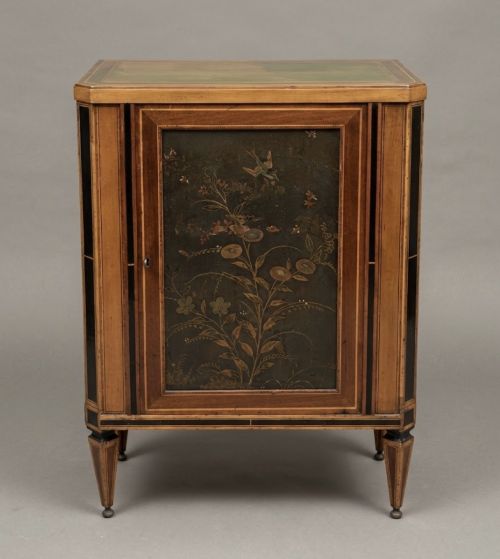
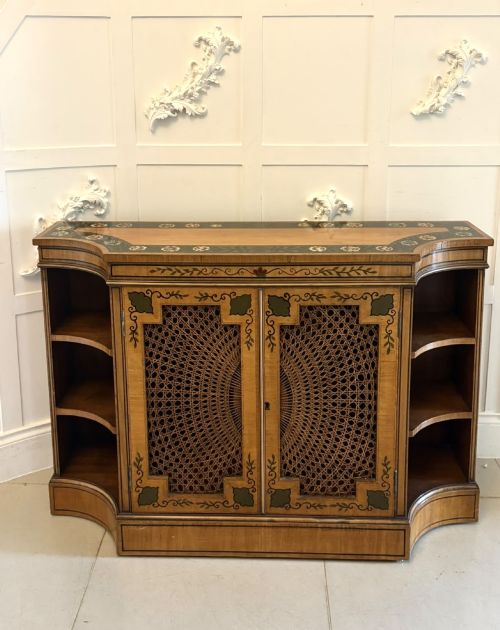
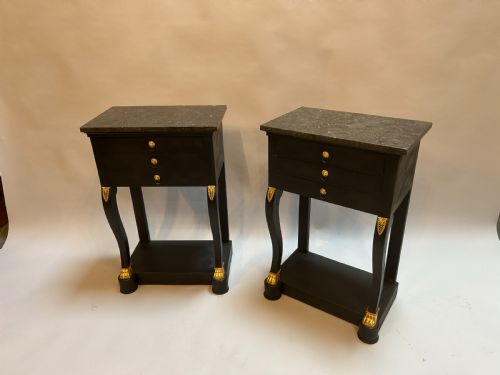
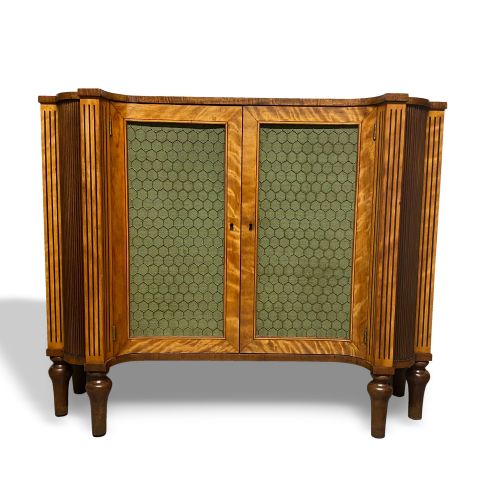
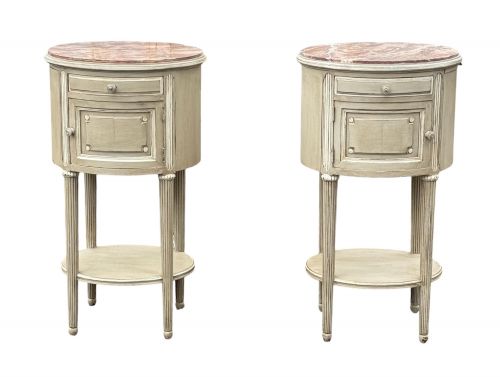
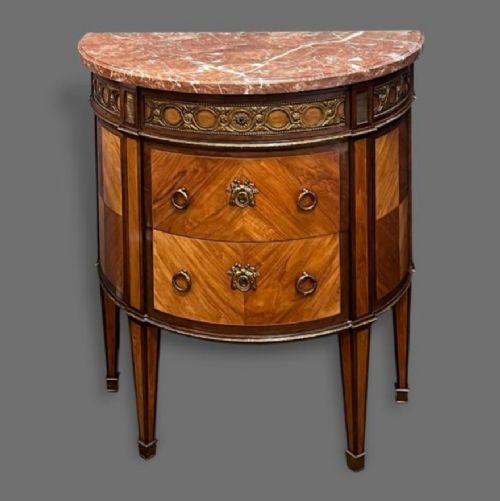
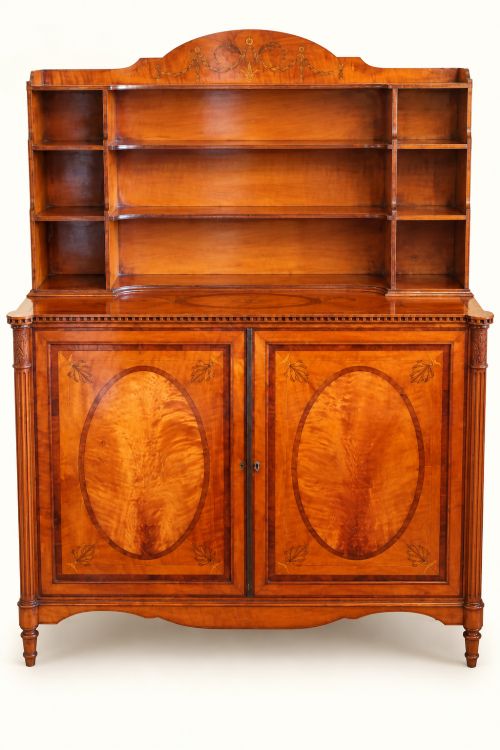
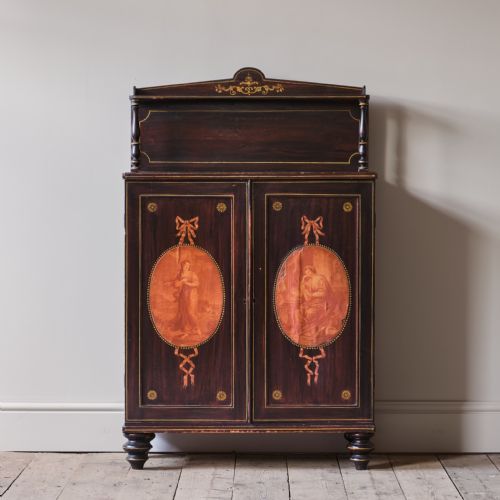
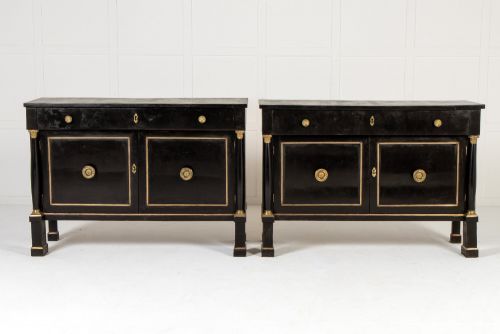
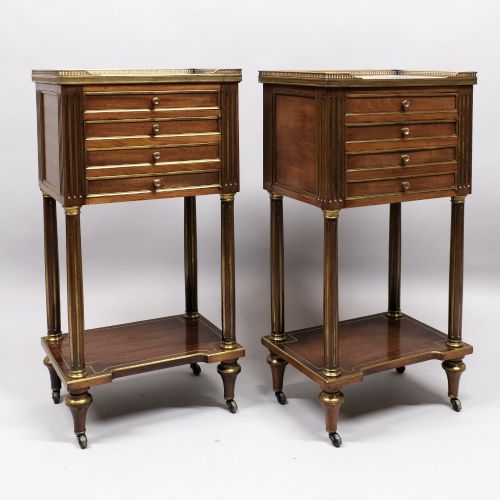
A neoclassical side cabinet combines balanced proportion and restrained classical ornament, appearing across eighteenth and nineteenth century periods alongside later revival iterations. You will frequently meet demi-lune commodes, bow-fronted side cabinets, and compact bedside cupboards bearing this classical designation.
These pieces emerge from diverse regional workshops across England, France, Italy, and Sweden. Makers frequently deployed satinwood, mahogany, and walnut as structural bases for intricate marquetry and painted decoration.
Materials and technique
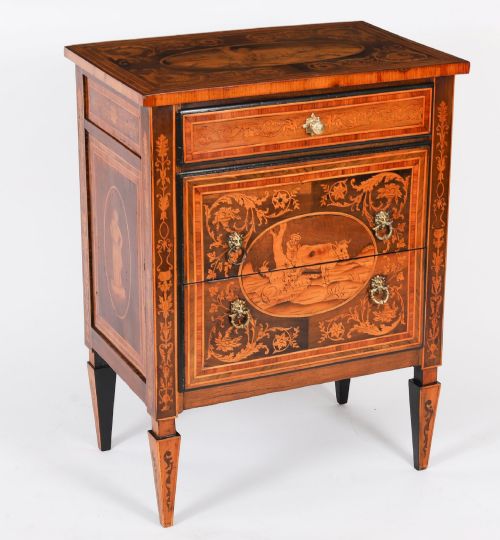
Cabinetmakers constructed carcass frames from mahogany, walnut, or pine, applying surface veneers of satinwood and harewood. These timber surfaces received detailed inlay work alongside hand-painted botanical or classical motifs.
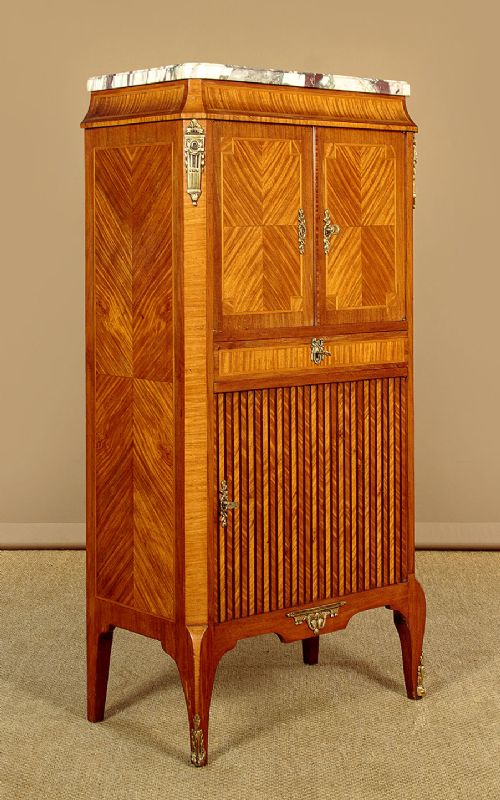
Gilt bronze and ormolu mounts punctuate corners and friezes, paired frequently with inset slabs of fossil or white marble across top surfaces. Brass detailing and parcel gilding complete the architectural vocabulary of these forms.
Neoclassical Side Cabinet Retail Price Guide 2026
Typical asking prices for neoclassical side cabinet among the pieces listed under this phrase on Sellingantiques today, from the lower quarter to the upper quarter. They describe what is for sale here now, not the wider market.
Several pieces arrive disguised as polite bedside tables while secretly guarding midnight reading.
Judging execution
Quality rests upon the precision of the timber matching and the crispness of the marquetry cutting. Superior examples exhibit seamless continuity in grain across drawer fronts and doors.
The weight and chasing of ormolu mounts dictate the upper tiers of production, alongside the integration of heavy, well-figured marble tops that fit their rebates precisely.
Maple and Co.·Edwards and Roberts·Pietro Ferrario
The Neoclassical Side Cabinet Glossary
- Demi-lune
- Half-moon shape characteristic of commodes and side cabinets designed to sit flush against a wall. This profile became particularly popular during the Sheraton revival period.
- Marquetry
- The art of applying decorative pieces of veneer to a structure to form intricate pictorial designs. Craftsmen utilised contrasting woods like boxwood and satinwood to create depth.
- Ormolu
- Gilt bronze mounts applied to furniture edges, feet, and friezes for decorative accent. The technique involves applying a mercury and gold amalgam to bronze.
- Commode
- A low chest of drawers or cabinet designed for domestic storage. These pieces frequently feature marble tops and sophisticated veneered surfaces.
- Chiffonier
- A small sideboard or tall cabinet equipped with doors enclosing shelves. This form evolved during the nineteenth century for drawing room use.
Neoclassical Side Cabinet: Frequently Asked Questions
Where should I place a side cabinet?
These cabinets suit dining rooms, hallways, and drawing rooms where surface display meets practical storage needs. Their shallow depths allow placement in narrow circulation spaces.
Pairing a demi-lune cabinet beneath a mirror creates a traditional focal point in an entrance hall. They also function effectively as serving surfaces or lamp tables.
How do I maintain marble tops?
Marble surfaces require prompt wiping of liquid spills to prevent staining through the porous stone structure. Use dry cloths for routine dusting rather than abrasive scouring pads.
Applying neutral stone soap occasionally helps preserve the polished finish without damaging historical patination. Avoid acidic cleaning agents entirely.
How do I distinguish revival periods?
Revival pieces often display machine-cut veneers and standardised hardware compared to eighteenth-century originals. Construction techniques inside drawers reveal structural clues regarding age.
Examine timber shrinkage and backing boards to establish manufacturing eras accurately. Stylistic cues also align with Victorian and Edwardian revival preferences.
Are these pieces suitable for daily use?
Sturdy carcases and durable marble or timber tops allow for regular domestic placement. Drawers and cupboards provide functional storage for modern household items.
Careful placement away from direct heat sources prevents timber warping and veneer separation. Routine wax polishing maintains the protective barrier on wood surfaces.