
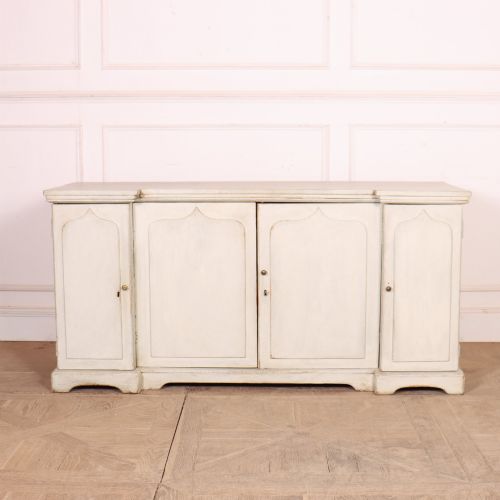
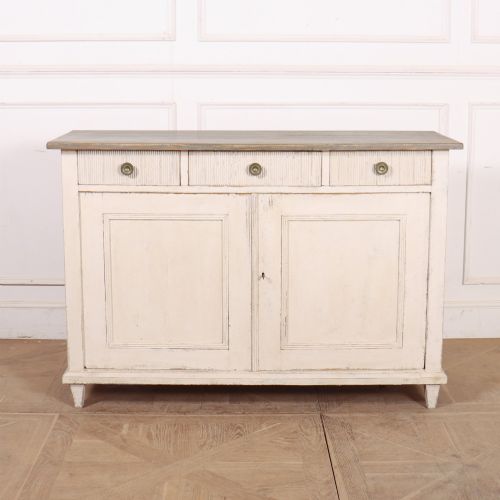
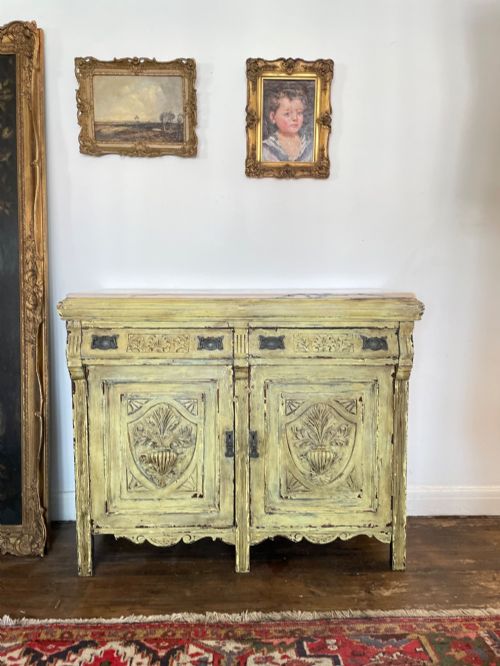
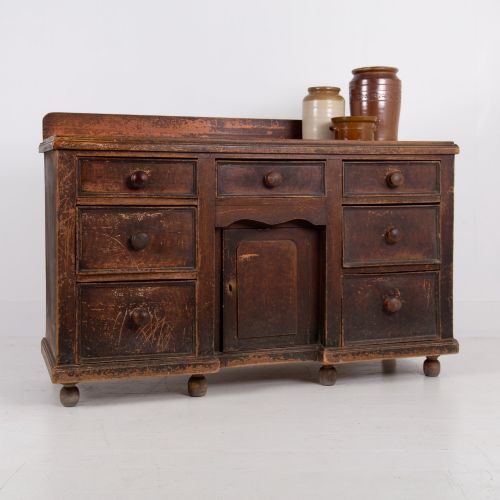
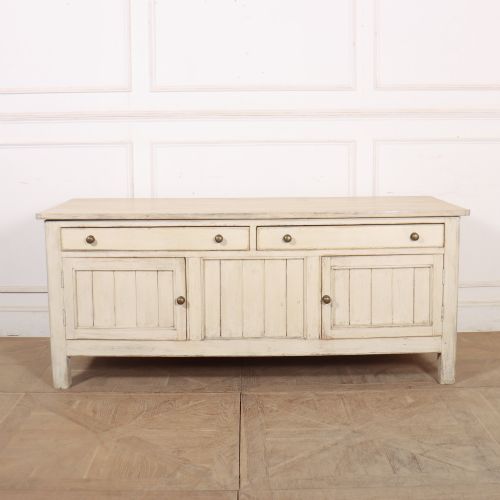


Vintage Painted Credenza
A vintage painted credenza brings warmth and layered history to a room through weathered pigment and practical storage.
Vintage Painted Credenza
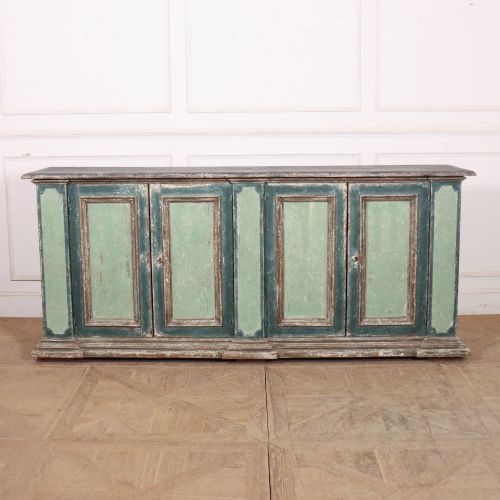
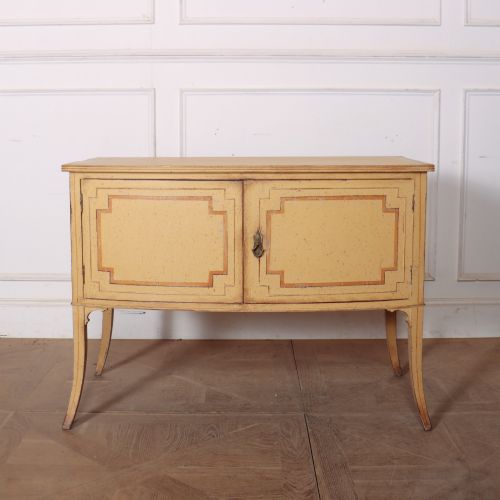
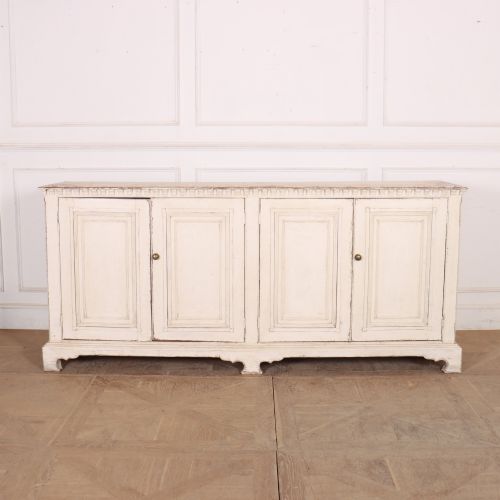
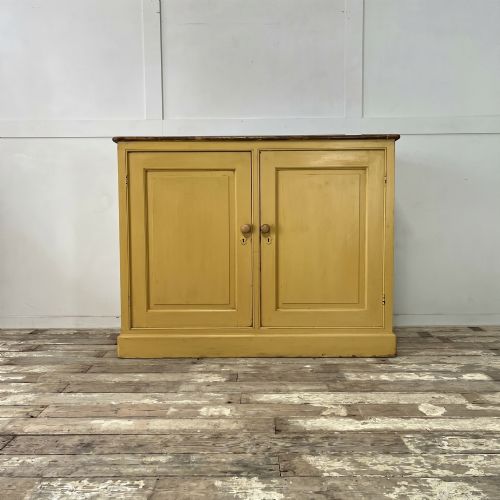
A vintage painted credenza encompasses heavy timber sideboards, dresser bases, and cabinets decorated with surface pigment. These storage forms span the eighteenth and nineteenth centuries, originating from English country houses, continental workshops, and Scandinavian farmhouses. Buyers seek them for their combination of functional cabinetry and decorative surface character.
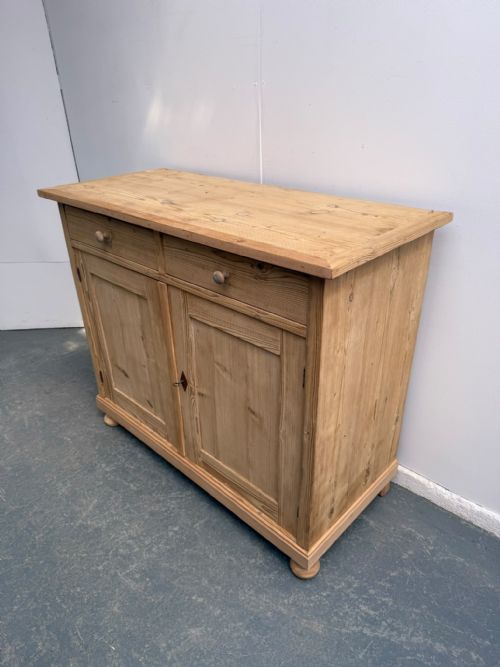
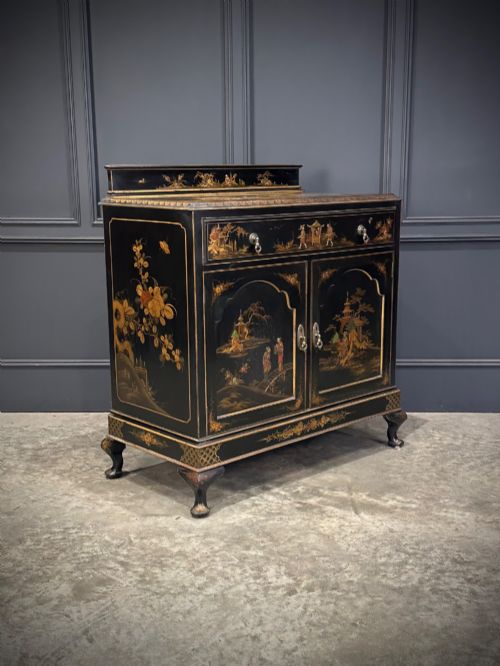
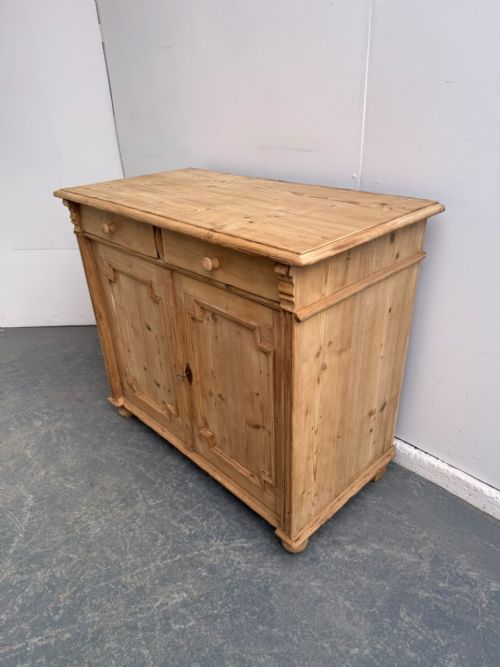
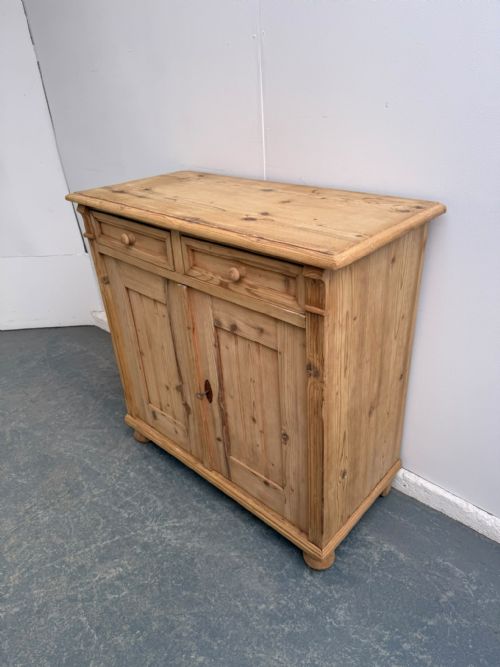
The selection on this page relies heavily on nineteenth-century painted pine dresser bases, side cabinets, and cupboards. Pieces range from straightforward school cupboards and kitchen storage to elaborate Chinoiserie japanned cabinets and satinwood commodes. English country and regional European examples appear frequently among the listings.
Form dictates function across these designs, balancing enclosed shelving with drawer space for dining or living areas. Structural formats include breakfront sideboard bases, enfilades, and shallow storage cupboards built for domestic utility. Each piece reflects the specific regional furniture traditions of its origin.
Materials and construction
Constructed primarily from pine, oak, and regional hardwoods, these cabinets rely on traditional joinery methods suited to heavy daily use. Pine forms the core of most country kitchen dressers and school cupboards, while satinwood and kingwood appear on finer neoclassical commodes. Secondary elements utilise brass hardware, iron hinges, and occasionally marble tops.
Surface treatment defines the aesthetic, utilising original paint, black lacquer, japanning, or decorative varnishes like Vernis Martin. Many utilitarian pine pieces display accumulated layers of historic paint or clean wax finishes over plain wood. Finer items incorporate hand-painted botanical or figurative motifs on satinwood and lacquered grounds.
Vintage Painted Credenza Retail Price Guide 2026
Typical asking prices for vintage painted credenza among the pieces listed under this phrase on Sellingantiques today, from the lower quarter to the upper quarter. They describe what is for sale here now, not the wider market.
Evaluating craftsmanship and finish
The integrity of the surface pigment separates standard utility pieces from exceptional decorative examples. Original paint retention, whether in the form of early country colours or detailed Chinoiserie lacquer, commands greater interest than later repainting. The interaction between wear patterns and remaining pigment reveals the true age of the finish.
Construction heft and proportion dictate the calibre of the cabinetry. Well-proportioned breakfront frames, smooth-running drawers, and tight joints indicate superior workshop production. Finer decorative pieces also demonstrate precise brass or ormolu mounts and carefully fitted marble tops.
The Vintage Painted Credenza Glossary
- Credenza
- A flat-topped sideboard or cabinet used for storage and serving. In this selection, the term encompasses related heavy sideboards and dresser bases.
- Dresser Base
- A low wooden sideboard featuring drawers and cupboards, historically used in kitchens for food preparation and storage. They often include potboards or open shelving below.
- Japanning
- A European imitation of East Asian lacquerwork using resin-based varnishes and raised metallic decoration. It appears on early twentieth-century Chinoiserie cabinets.
- Demi-Lune
- A half-moon shape characteristic of commodes and side cabinets designed to sit flush against a wall. This profile is common in satinwood neoclassical pieces.
- Vernis Martin
- A type of simulated oriental lacquer developed in France using polished layers of varnish. This technique is found on eighteenth and nineteenth-century commodes.
Vintage Painted Credenza: Frequently Asked Questions
What is a vintage painted credenza used for?
These pieces function primarily as credenzas, sideboards, and deep storage cabinets in dining rooms, hallways, or living spaces. The internal shelving and drawers accommodate dinnerware, linens, and household items.
The sturdy flat tops also provide a surface for displaying lamps, books, or decorative objects while anchoring a room visually.
How do I care for original painted wood?
Keep painted furniture out of direct sunlight and away from rapid temperature shifts to prevent the timber from splitting and the pigment from flaking. Dust gently with a dry microfibre cloth rather than using harsh liquid cleaners.
Wax finishes benefit from occasional gentle buffing, while fragile painted surfaces require a minimalist touch to preserve the historic finish.
How can I tell a nineteenth-century piece from an eighteenth-century one?
Eighteenth-century examples often display hand-cut joinery, pegged joints, and earlier regional proportions associated with country workshops. Pigments from this era typically show deeper natural weathering and patination.
Nineteenth-century items, including Victorian pine and school cupboards, generally feature more standardised construction methods alongside heavier hardware and distinct regional paint applications.
Where were these painted cabinets made?
The listings span English country workshops, Scottish dairies, French provincial studios, and Scandinavian farmhouses. Each region developed distinct local forms, such as French buffets or Swedish linen cupboards.
Imported styles like Chinoiserie and Italian neoclassical designs also feature prominently among continental and British production.