

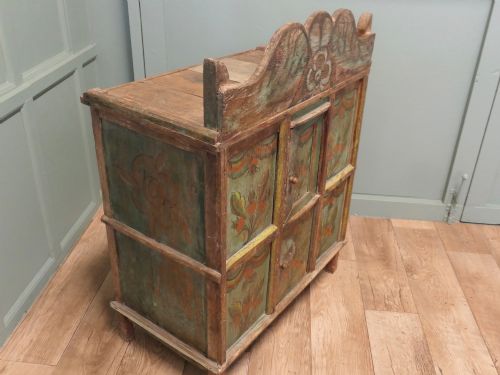




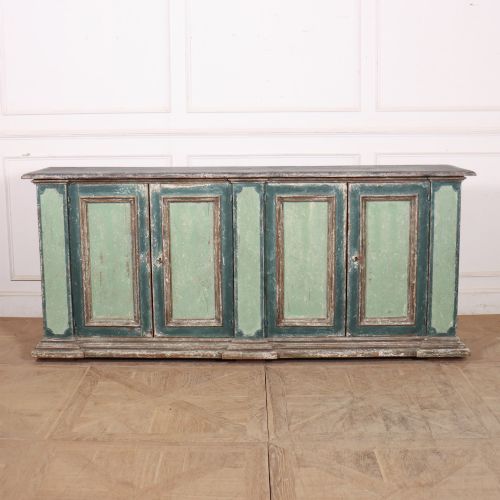


Green Painted Sideboard
A green painted sideboard brings functional storage and characterful colour to a room, drawing on centuries of vernacular furniture traditions.
Green Painted Sideboard
A green painted sideboard spans robust kitchen dressers, dresser bases, serving tables, and fitted cupboards originating from English, French, Italian, and Scandinavian workshops. These domestic storage pieces serve dining rooms and kitchens alike, providing deep drawers and cupboard space beneath substantial timber tops.
The green painted sideboard category encompasses everything from country house potboard serving tables to provincial commodes and shop fittings. Surviving examples date primarily from the eighteenth and nineteenth centuries, often retaining layers of old or original surface pigment over native timber carcasses.
Materials and construction
Construction relies heavily on solid pine, oak, and mixed woods joined with traditional cabinetmaking methods suited to heavy domestic use. Carcasses are built to endure, housing multiple drawers and panelled doors that support daily wear in busy kitchens and pantries.
Surfaces receive layers of oil or water-based paint, sometimes applied over older schemes to yield a tactile, weathered finish. Metal hardware such as iron hinges, brass pulls, and drop handles complete the construction of these utilitarian pieces.
Green Painted Sideboard Retail Price Guide 2026
Typical asking prices for green painted sideboard among the pieces listed under this phrase on Sellingantiques today, from the lower quarter to the upper quarter. They describe what is for sale here now, not the wider market.
Current listings feature eighteenth and nineteenth-century pieces constructed from pine, oak, and painted wood, originating from English, French, and Scandinavian workshops.
Assessing quality and authenticity
Quality rests upon the integrity of the original timber frame and the character of the surviving surface finish. Pieces retaining their early or original green paint layer possess greater historic interest than later, modern repaints.
Proportion and domestic utility distinguish finer pieces, such as those with balanced drawer arrangements, integrated potboards, or distinctive regional mouldings. The relationship between the structural joinery and the worn patina dictates the overall standing of an example.
Melissa White
The Green Painted Sideboard Glossary
- Potboard
- An open slatted lower shelf fitted to a dresser base or serving table, traditionally used for storing heavy earthenware pots. This practical platform elevates the main carcass off the floor.
- Dresser base
- A low, heavy table with drawers, often fitted with cupboards below, designed for food preparation and storage in the kitchen. It forms the lower half of a traditional kitchen dresser.
- Commode
- A low cabinet or chest of drawers, frequently featuring shaped serpentine fronts and decorative painted finishes common in continental European interiors. These pieces often incorporate marble tops.
- Serpentine
- A gently undulating furniture front curved in a convex-concave-convex shape, requiring skilled woodworking. This profile appears frequently on eighteenth and nineteenth-century commodes and buffets.
Green Painted Sideboard: Frequently Asked Questions
What rooms suit a green painted sideboard?
These practical storage items fit naturally into kitchens, dining rooms, and hallways where extra surface space and deep drawers are required. Their substantial timber frames and enclosed cupboards help organise tableware, linens, or provisions.
The varied shades of green complement neutral walls and natural wood floors, adding a grounded splash of colour. They function equally well as standalone serving tables during meals or as daily storage stations.
How do I care for painted wooden surfaces?
Protect the old paintwork by dusting regularly with a dry, soft cloth and avoiding harsh chemical cleaning sprays or abrasive pads. Keeping the timber away from direct heat sources prevents the wood from drying out and the paint from cracking.
Wax can be applied sparingly to unpainted interior surfaces or robust tabletops to maintain the wood. Gentle handling preserves the historic patina accumulated over generations of domestic use.
Are these sideboards authentic antiques?
The pieces originate primarily from the eighteenth and nineteenth centuries, constructed by regional carpenters and provincial workshops across Britain and Europe. Materials typically include solid pine and oak bearing the marks of genuine age and wear.
While some surfaces show layers of historic paint applied over time, others retain their original decorative schemes. Each item carries construction details and tool marks consistent with hand-built furniture of its period.
What is the difference between a dresser base and a sideboard?
A dresser base generally originates from a kitchen or pantry context, featuring deep drawers and occasionally an open potboard shelf underneath for heavy domestic vessels. These pieces were designed primarily for food preparation and robust storage.
Sideboards and buffets often emerged from dining rooms or formal parlours, tending towards enclosed cupboards and refined styling such as serpentine fronts. Both forms provide ample surface area and internal capacity for household storage.