
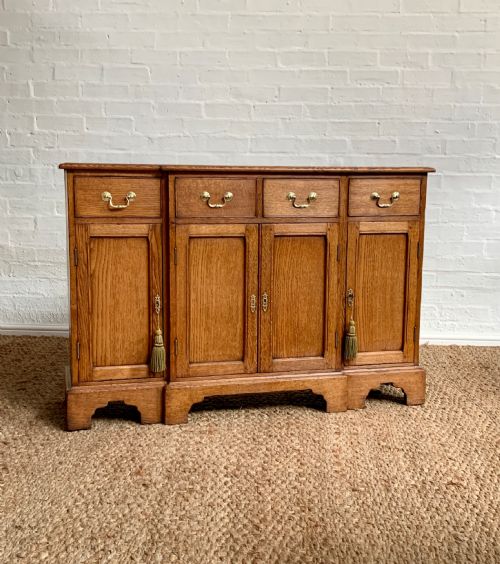
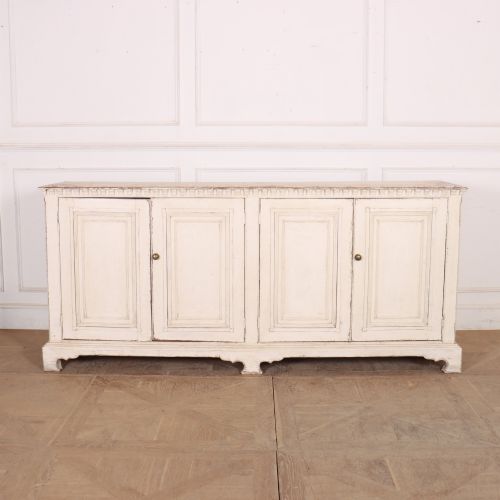


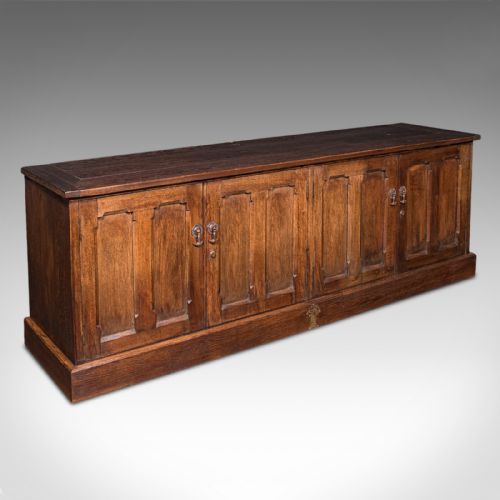


Four Door Sideboard
A four door sideboard provides substantial storage and a strong architectural presence in a dining room or hallway.
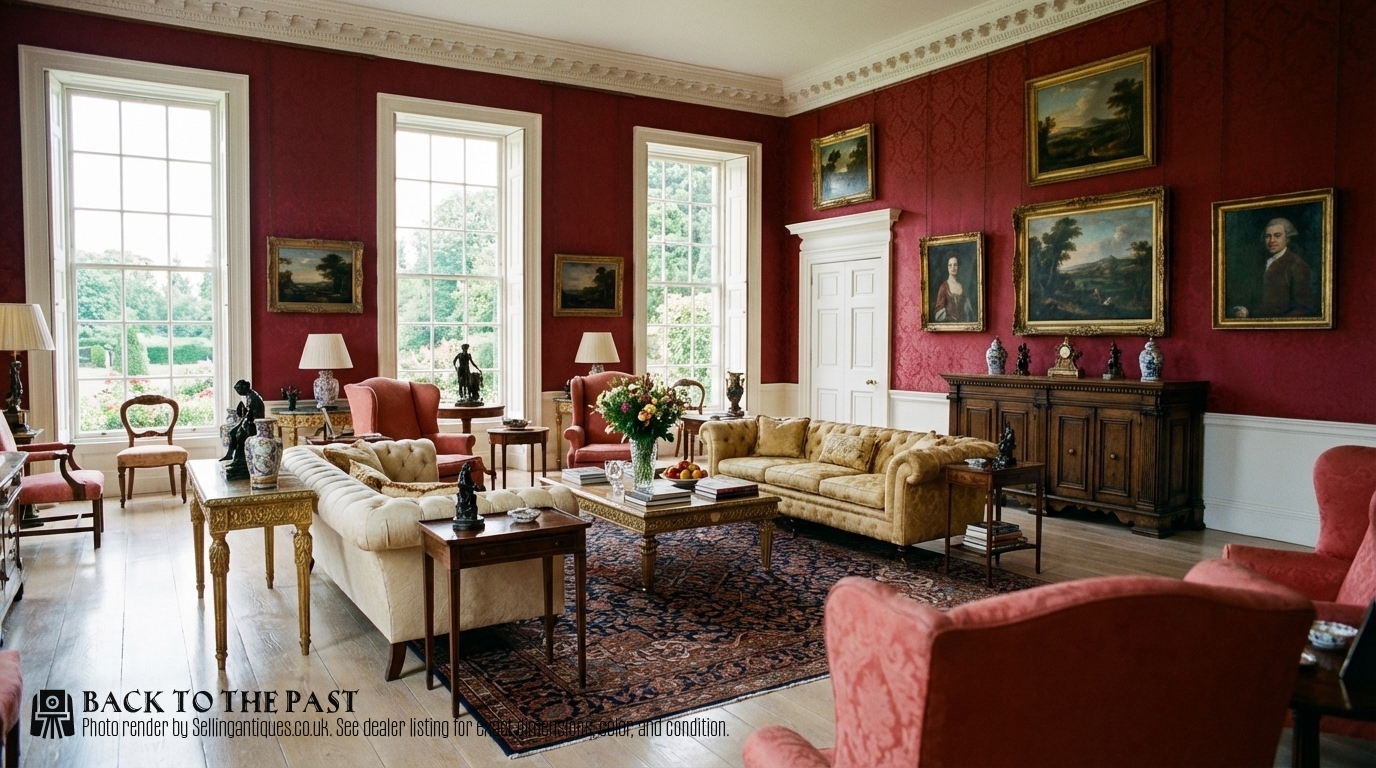
Four Door Sideboard
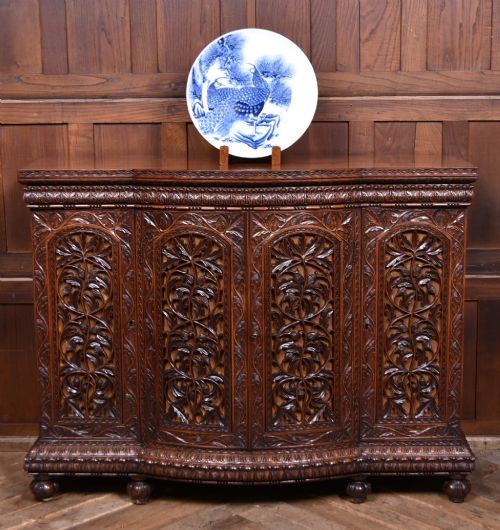
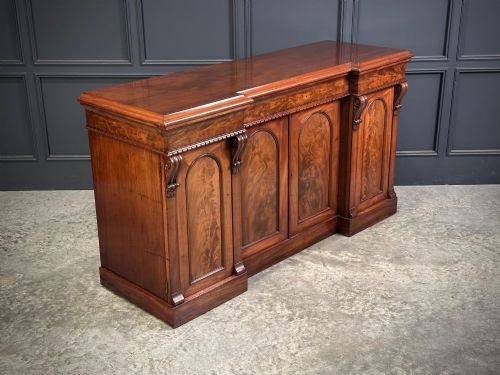
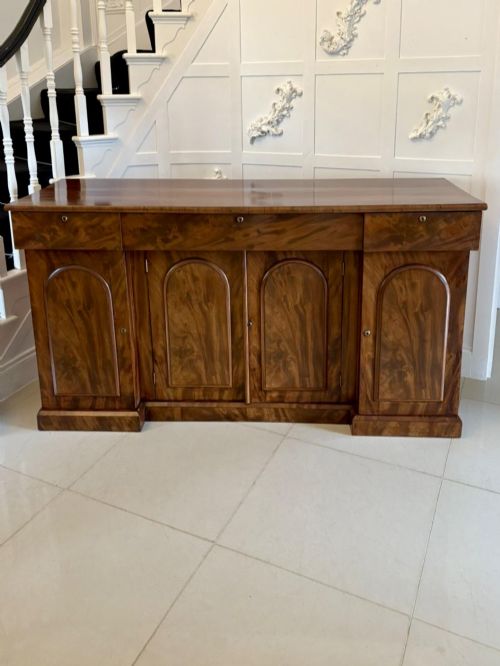
A four door sideboard is a substantial storage piece designed for dining rooms and large living spaces, offering extended surface space and deep interior capacity. When searching for a four door sideboard, buyers encounter numerous Victorian flame mahogany examples alongside Regency rosewood breakfront pieces and substantial oak formats from the nineteenth century.
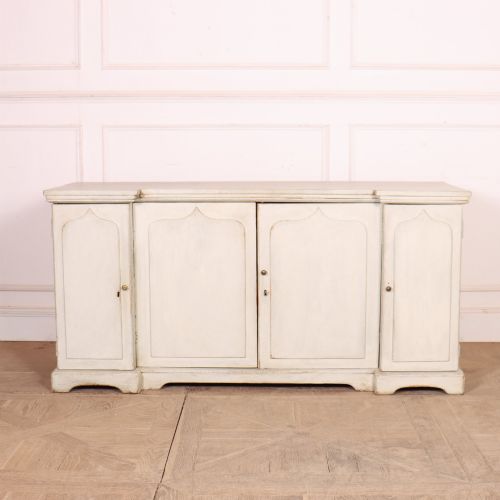
The selection ranges from traditional English mahogany and burr walnut credenzas to French enfilades and Italian walnut cabinets. Many incorporate breakfront configurations, glazed display sections, or painted finishes that reflect regional domestic traditions across the eighteenth and nineteenth centuries.
How they were made
Cabinet makers utilised dense hardwoods such as mahogany, oak, rosewood, and walnut for the primary carcases, often applying figured veneers to the four cupboard doors to create striking grain patterns. Secondary timbers like pine appeared in carcase backs and internal shelving.
Ornamentation relied on brass inlay, ormolu mounts, marquetry, and carved architectural details, whilst painted surfaces utilised oil-based pigments on pine and hardwood structures.
Listings feature four door sideboards spanning the eighteenth, nineteenth, and early twentieth centuries, constructed from mahogany, oak, walnut, pine, and rosewood.
What varies in quality
The standard of a four door sideboard depends heavily on the selection of timber veneers, where symmetrical flame mahogany or burr walnut figure marks superior workshop production. Construction methods, such as the thickness of drawer linings and the precision of the door alignment within the breakfront frame, separate standard utility pieces from exhibition-grade commissions.
The integration of secondary materials like cast brass mounts, hand-cut glass panes, and intricate marquetry defines the upper tier of craftsmanship. Pieces retaining original polished finishes and matching internal drawer configurations command greater appreciation among collectors.
The Four Door Sideboard Glossary
- Breakfront
- A cabinet design where the central section projects forward from the flanking outer cupboards. This configuration adds visual depth and architectural weight to large storage pieces.
- Credenza
- A low cabinet, typically lacking the high back of a traditional sideboard or dresser base. Victorian examples frequently feature four doors and glazed display compartments.
- Enfilade
- A suite of rooms or a long cabinet featuring a continuous sequence of doors across the front elevation. French and Italian versions often display painted finishes.
- Flame mahogany
- Timber cut from the fork of the mahogany tree where the grain branches, creating a distinctive flickering flame pattern. Cabinet makers used these veneers symmetrically across door panels.
- Marquetry
- The art of applying small pieces of wood veneer to a structure to form decorative patterns or pictorial designs. This technique appeared on high-status nineteenth-century credenzas.
- Chiffonier
- A compact sideboard or low cupboard equipped with shelving or drawers, popular during the Regency and Victorian periods for dining room service.
Four Door Sideboard: Frequently Asked Questions
Where should I place a four door sideboard?
These large cabinets require a substantial wall with adequate clearance for the four doors to open fully. Dining rooms, wide hallways, and spacious living areas provide the necessary scale to balance their visual weight.
Ensure the surrounding furniture allows enough floor space for traffic flow around the projecting breakfront or straight front formats.
How do I maintain wood finishes?
Regular dusting with a dry, soft cloth preserves the original polish on mahogany, walnut, and rosewood surfaces. Avoid placing antique timber furniture near direct heat sources or strong sunlight to prevent veneer cracking.
Applying a traditional beeswax polish occasionally helps nourish the grain and protects the historic timber from drying out over time.
Can these sideboards hold heavy tableware?
Period four door sideboards were built by cabinet makers to support heavy ceramics, glass, and silverware within their deep cupboards. Solid mahogany and oak carcases offer robust internal storage for everyday dining items.
Check the internal shelving supports to ensure they distribute weight evenly across the fixed partitions inside the main cabinet sections.
How do I distinguish Regency from Victorian styles?
Regency pieces often exhibit classical restraint with rosewood veneers, brass inlay, and sharp architectural lines dating from the early nineteenth century. Victorian versions tend to feature heavier proportions, elaborate carved mouldings, and rich flame mahogany or burr walnut figures.
Examining the construction of internal drawer linings and the style of decorative mounts helps clarify the manufacturing period.