

Painted Side Cabinets
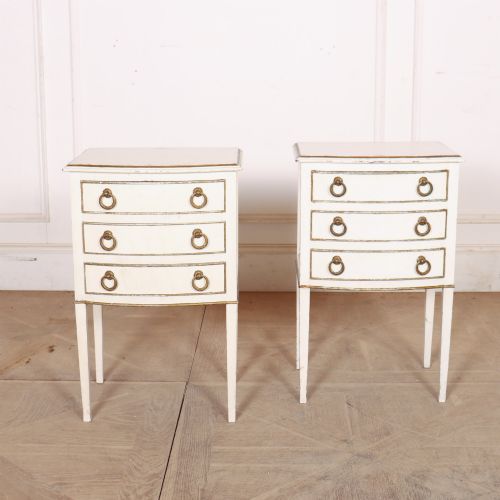
These painted side cabinets span European and Asian workshops, offering storage surfaces finished in cream, gilt, and lacquer.
Painted Side Cabinets
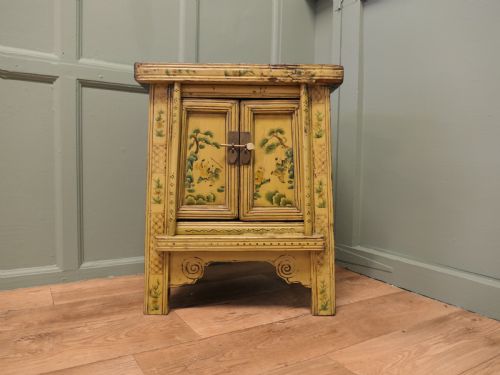
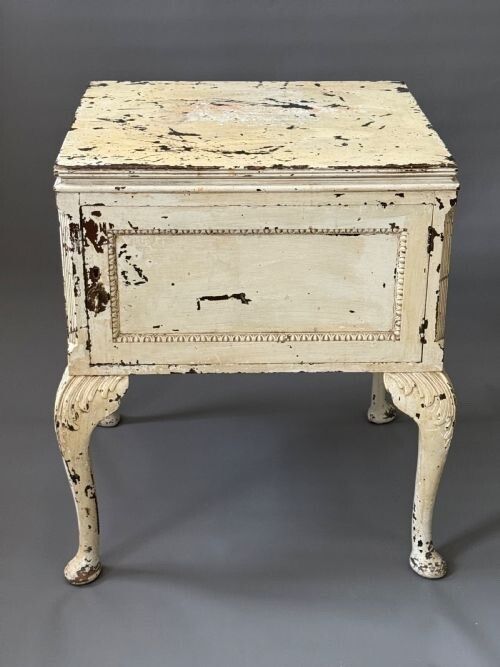
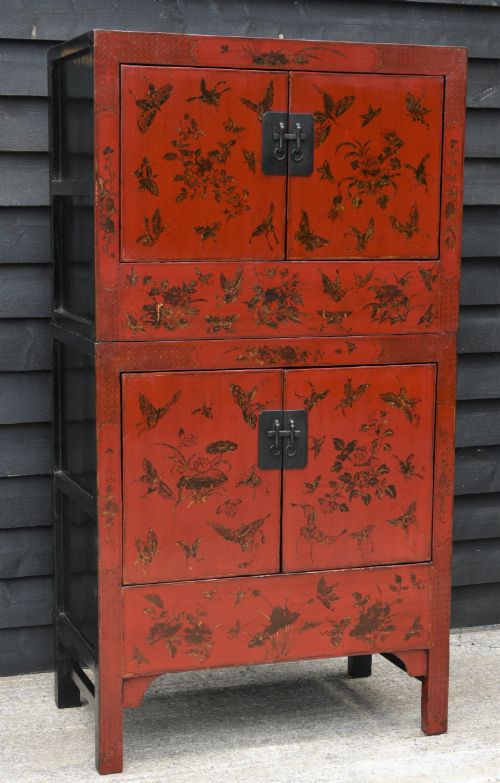
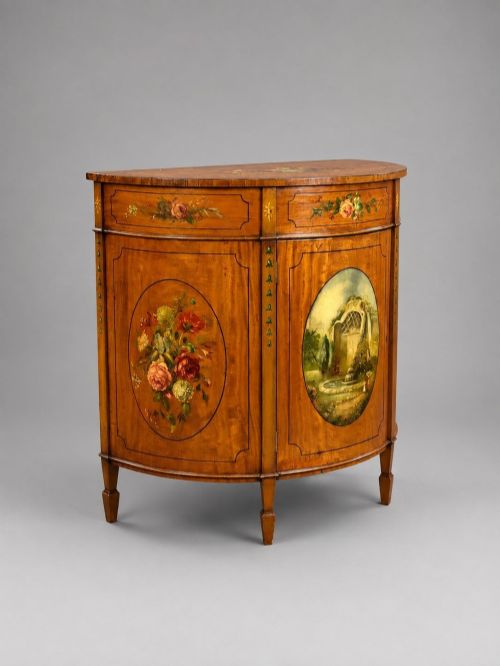
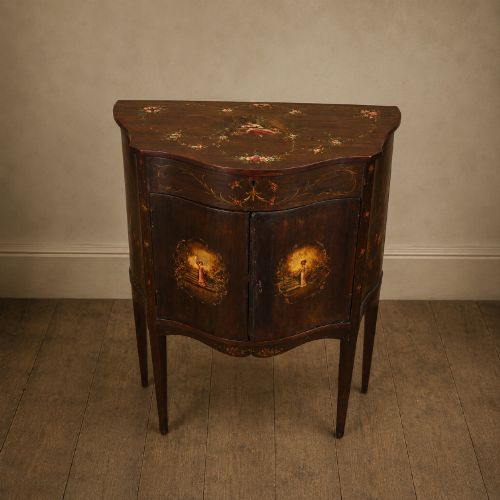
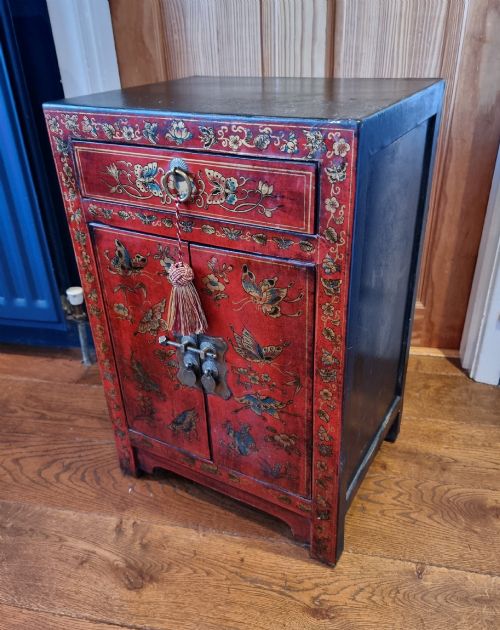
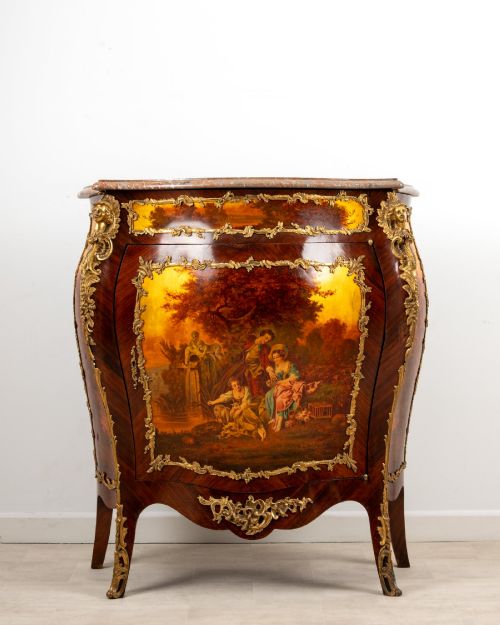
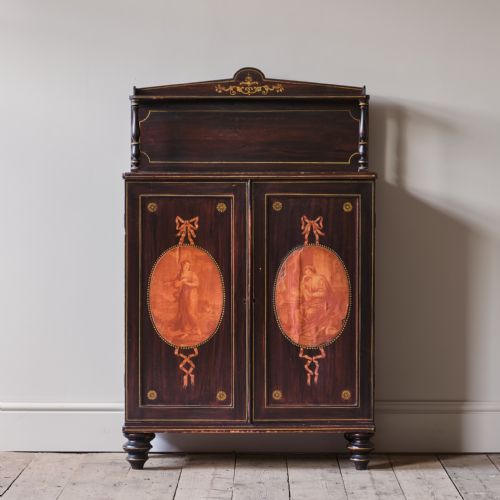
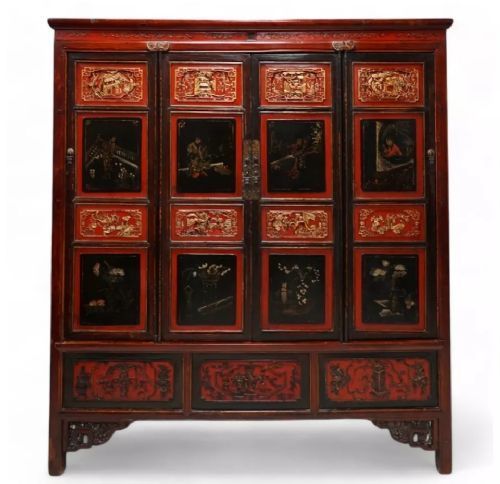
Painted side cabinets comprise a varied group of storage furniture, including bedside tables, commodes, and cupboards designed for domestic use. The search phrase covers pieces originating from diverse traditions, from British Sheraton Revival satinwood to French Vernis Martin designs and Chinese lacquered marriage cabinets.
Examples frequently date from the nineteenth century through the Edwardian period and the 1920s and 1930s. Buyers will regularly encounter compact bedside formats alongside larger Italian and Dutch cupboards intended for living spaces and bedrooms.
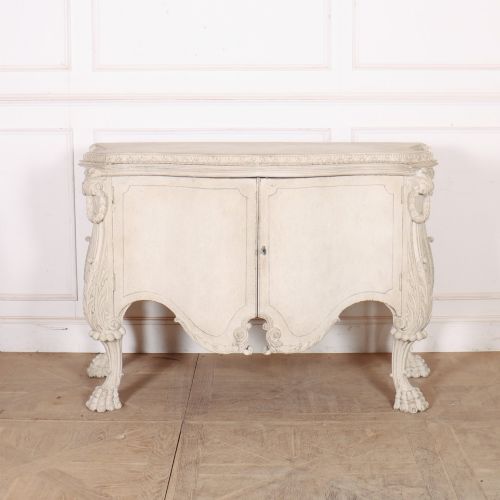
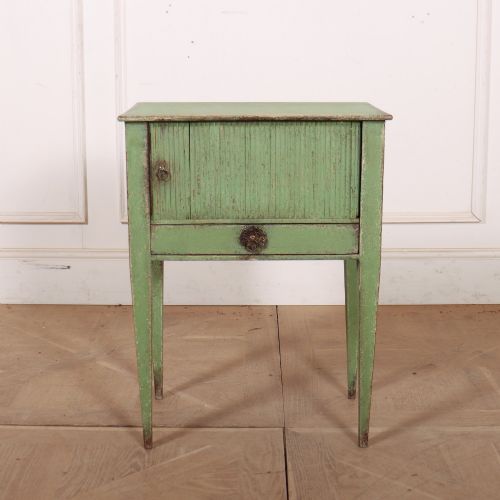
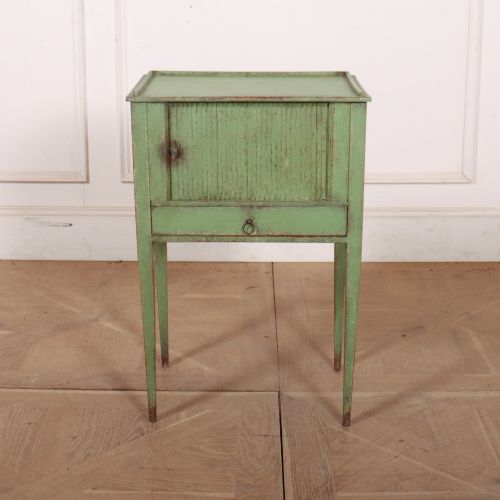
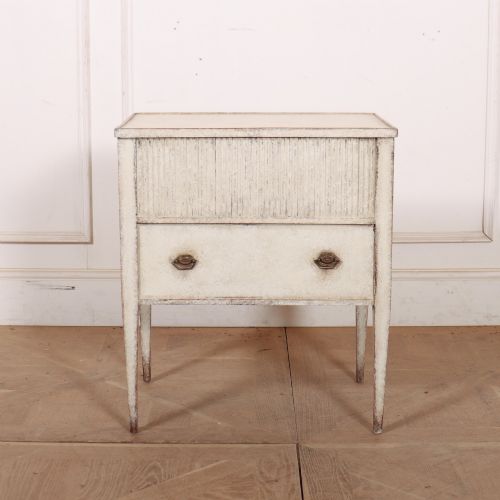
Construction forms range from serpentine shapes and demi-lune commodes to simple pine storage cupboards. Many incorporate functional drawers, marble tops, or brass mounts alongside their decorative surface finishes.
Materials and construction
Cabinet makers utilised a foundation of solid timbers such as pine, oak, maple, and mahogany, frequently applying specialised veneers like satinwood, kingwood, or walnut. Pine served as a sturdy structural base for painted and waxed surfaces in regional European workshops.
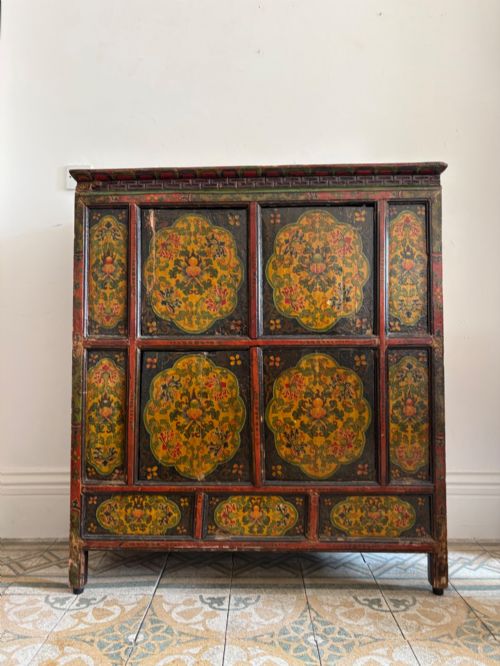
Decorative finishes define this category, combining hand-applied paint, lacquer, and japanning with Chinoiserie motifs, floral decoration, and simulated rosewood graining. French and Italian pieces often integrated applied brass mounts, ormolu, and inset marble tops to elevate the design.
A few cabinets spent decades disguised in plain wax or heavy paint before their original Chinoiserie and floral layers finally saw daylight.
Assessing quality and execution
The standard of a painted side cabinet rests upon the skill of the surface decoration and the preservation of the original finish. Hand-painted pictorial details, delicate Chinoiserie motifs, and intact lacquer layers command greater attention than simple utility paint applications.
Structural integrity and material selection further differentiate pieces, seen in the choice of finer cabinet woods like satinwood and kingwood versus standard pine. The inclusion of matching marble tops, cast brass mounts, and well-fitted drawers reflects superior workshop execution.
Maple and Co.
The Painted Side Cabinets Glossary
- Chinoiserie
- European decorative style reflecting Chinese artistic traditions. It appears on cabinets through motifs of figures, landscapes, and gold or black lacquer.
- Vernis Martin
- Simulated Japanese varnish perfected by the Martin brothers in eighteenth-century France. The technique was later revived on nineteenth-century commodes and cabinets.
- Demi-Lune
- Half-moon shape utilised for cabinet fronts and commodes. This curved form became popular during the Sheraton Revival and Edwardian periods.
- Ormolu
- Gilt-bronze mounts applied to furniture. These decorative elements frame doors and corners on French styles.
- Japanning
- European imitation of Japanese and Chinese lacquering techniques. It involves building up layers of varnish and paint, often with raised motifs.
Painted Side Cabinets: Frequently Asked Questions
What rooms suit painted side cabinets?
These cabinets function well as bedside tables, hallway storage, or accent pieces in living spaces. Their compact proportions allow them to fit easily into smaller interior layouts while providing surface area and enclosed storage.
Larger variations, such as commodes and cupboards, serve effectively in dining rooms or bedrooms for linens and tableware. The diverse range of finishes enables them to complement both traditional and eclectic modern room schemes.
How should I clean a painted cabinet?
Maintenance requires gentle dusting with a soft, dry cloth to protect delicate painted surfaces and lacquer work. Avoid chemical cleaning agents and excessive moisture, which can damage aged finishes and historic paint layers.
Wax can be applied sparingly to unpainted wooden interior elements, but decorated exteriors require minimal intervention. Keeping pieces away from direct sunlight and heat sources preserves the stability of the wood and the integrity of the paint.
Are these cabinets purely decorative?
While the painted and lacquered exteriors provide strong visual interest, these pieces were built for practical storage. Interiors typically feature shelves, drawers, or cupboard space intended for household items and personal belongings.
Many examples combine utility with ornamentation, offering functional marble tops for everyday use alongside decorative panel work. Their dual nature makes them practical additions to active living environments.
How do I distinguish regional styles?
Regional characteristics appear through specific wood choices, hardware, and decorative motifs. French and Italian examples frequently display marble tops and ormolu mounts, whereas British pieces often showcase satinwood and Sheraton Revival influences.
Asian lacquer cabinets employ traditional red or black finishes with specific hardware suited for marriage or storage purposes. Dutch and Scandinavian pieces lean towards simpler painted pine constructions with distinctive regional colour palettes.