
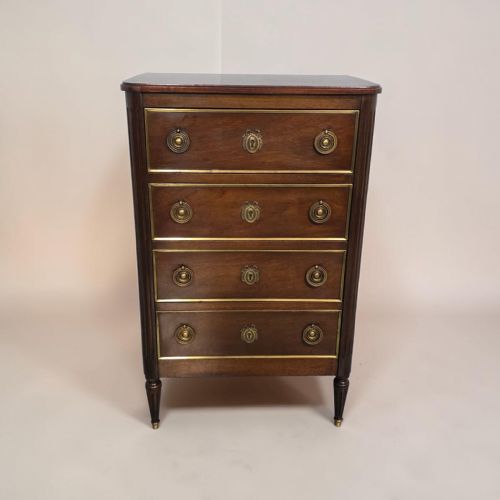
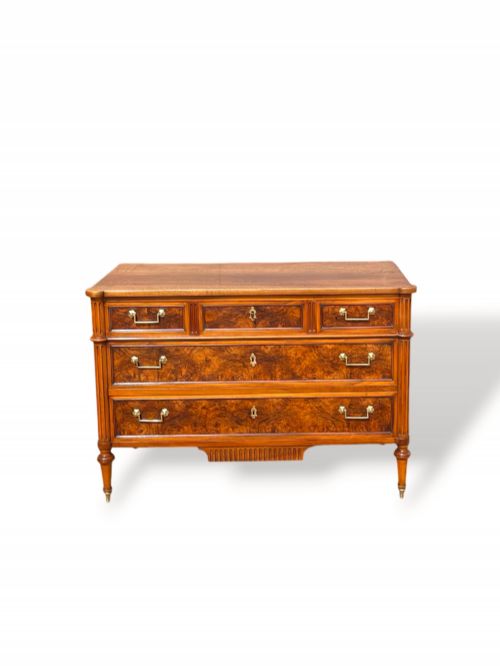
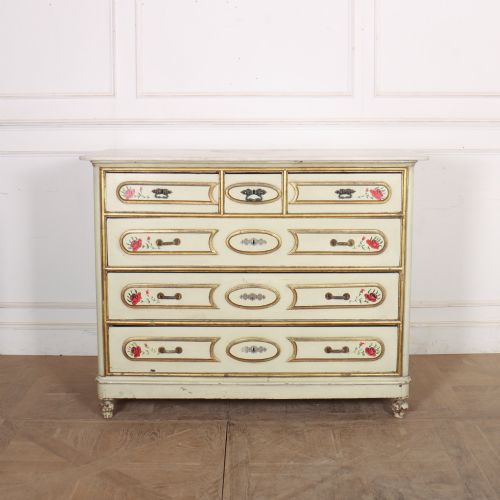

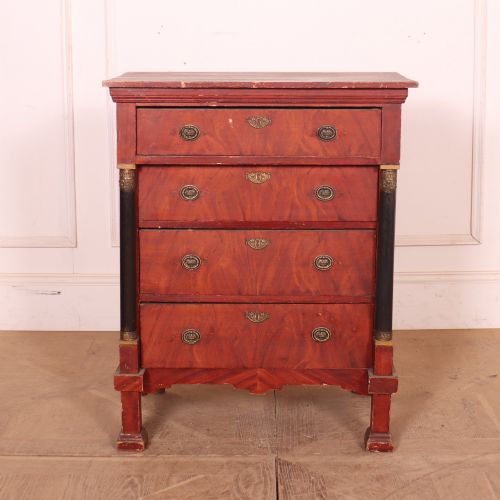


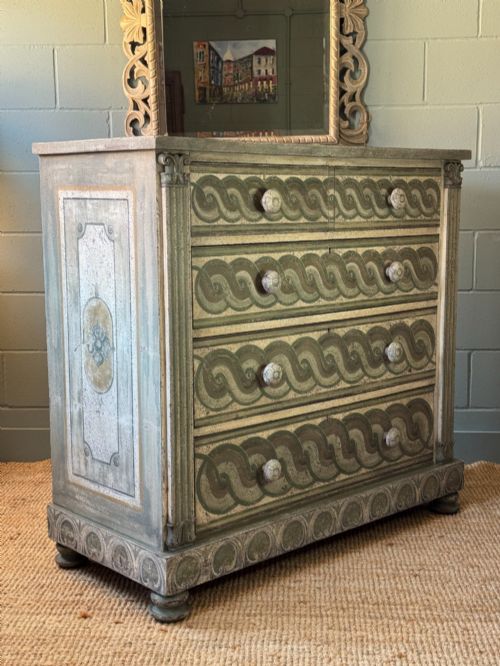
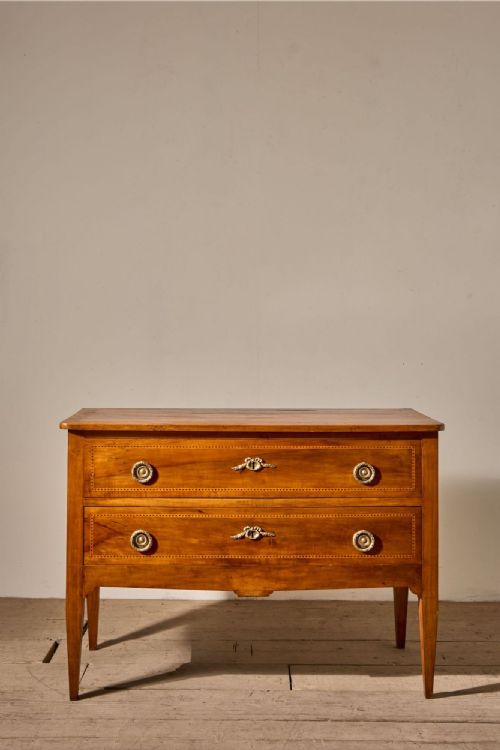
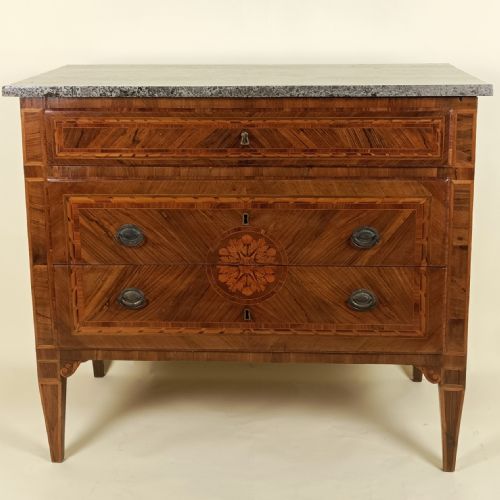


Antique Neoclassical Commode
An antique neoclassical commode brings symmetry, refined marquetry, and architectural discipline to a room.
Antique Neoclassical Commode
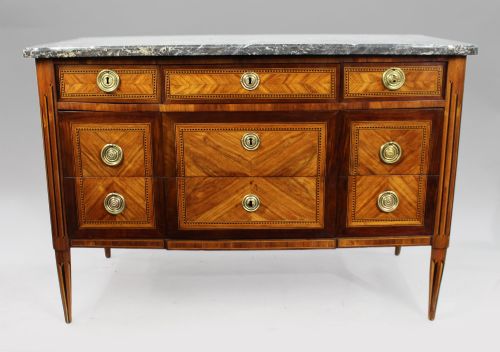
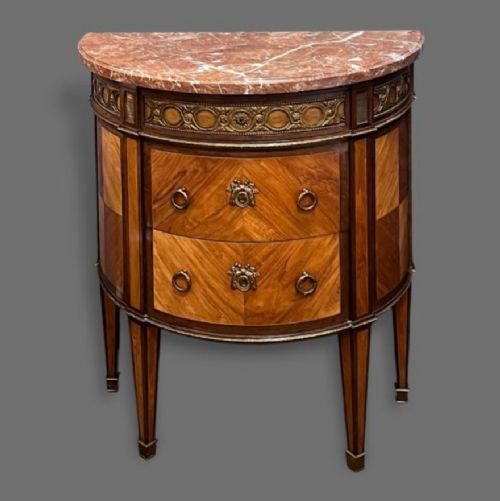
When you search for an antique neoclassical commode, you encounter disciplined storage furniture rooted in eighteenth and nineteenth-century design. The evidence shows these pieces span forms from straight-front chests of drawers and demi-lune side cabinets to serpentine and breakfront commodes.
Originating across England, France, Italy, Sweden, Spain, and the Netherlands, they bridge regional cabinet-making traditions with classical restraint. You will meet examples finished in rich mahogany, walnut, satinwood, and birch, alongside painted Swedish Gustavian pieces and marble-topped French designs.
How they were made
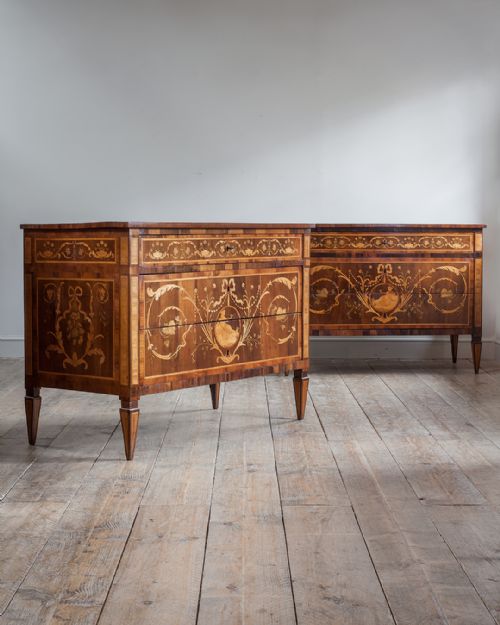
Cabinet-makers relied on solid timbers of mahogany, walnut, oak, and cherry as foundational carcases, often applying veneers of satinwood and kingwood to create geometric or pictorial marquetry. Parquetry patterns and intricate inlay define many of the continental and revival pieces recorded in the evidence.
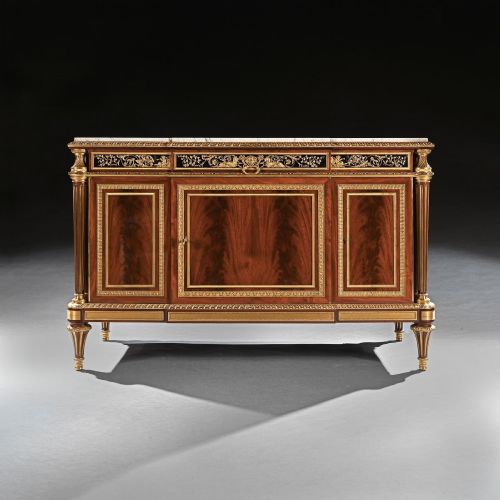
Surfaces frequently feature decorative paint finishes, particularly in Swedish Gustavian and Empire revival examples, while heavy use of ormolu mounts and cast brass hardware accents French and Italian forms. Marble tops in white and coloured varieties complete the construction of many eighteenth and nineteenth-century examples.
Listings feature commodes spanning the eighteenth, nineteenth, and early twentieth centuries, incorporating satinwood, walnut, mahogany, and painted pine.
What varies in quality
Quality rests upon the crispness of the timber marquetry and the architectural proportion of the carcase. Pieces by recorded makers or exhibition-standard workshops display superior handling of veneers and more ambitious serpentine or demi-lune forms.
The integration of original marble slabs, finely chased ormolu mounts, and hand-painted surface decoration distinguishes standard regional furniture from exceptional cabinet work.
Henry Dasson·James Hicks·Mon Krieger·Pietro Ferrario
The Antique Neoclassical Commode Glossary
- Commode
- A low chest of drawers or cabinet designed for domestic storage. In neoclassical contexts, it often stands as a principal decorative piece in a reception room.
- Demi-lune
- A half-moon shape characteristic of neoclassical side cabinets and commodes. This curved profile allows the furniture to sit flat against a wall while softening room geometry.
- Marquetry
- The art of applying decorative pieces of veneer to a structure to form intricate designs. Craftsmen use various coloured woods to build pictorial or geometric scenes.
- Ormolu
- Gilt bronze mounts applied to furniture edges, feet, and handles. This technique adds metallic contrast to timber and marble surfaces.
- Gustavian
- The Swedish interpretation of neoclassical design championed under King Gustav III. It is known for restrained classical lines and pale painted finishes.
Antique Neoclassical Commode: Frequently Asked Questions
Where should I place an antique neoclassical commode?
These commodes suit reception rooms, hallways, and bedrooms where their architectural form and decorative surfaces can be appreciated. Demi-lune shapes work particularly well in narrow hallways or against flat corridor walls.
Ensure the piece has adequate clearance from direct heat sources and sunlight to protect vulnerable wood veneers and painted finishes.
How do I care for marble-topped commodes?
Marble tops require gentle cleaning with a soft cloth and neutral soap to avoid dulling the stone. Acidic liquids like wine or citrus should be wiped away immediately to prevent staining.
Lift the marble slab carefully if dismantling the commode for transport, as stone tops on these pieces are frequently loose or secured simply by weight.
What is the difference between Empire and Gustavian commodes?
Empire commodes display the heavier, militaristic classical influence of the nineteenth century, often featuring dark mahogany timbers and prominent brass or ormolu mounts. Swedish Gustavian pieces reflect an earlier, lighter neoclassical taste dominated by pale painted woodwork and restrained carving.
Both styles share roots in classical symmetry, but Gustavian furniture prioritises airiness while Empire designs project formal authority.
How do I identify marquetry from parquetry?
Marquetry involves assembling diverse wood veneers to create pictorial scenes, floral motifs, or complex scrolls. Parquetry relies on geometric arrangements like cubes, chequers, or herringbone patterns.
Both techniques appear frequently on eighteenth and nineteenth-century neoclassical commodes across Italy, France, and the Netherlands.