

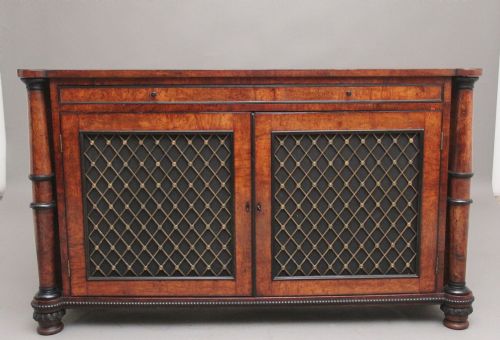
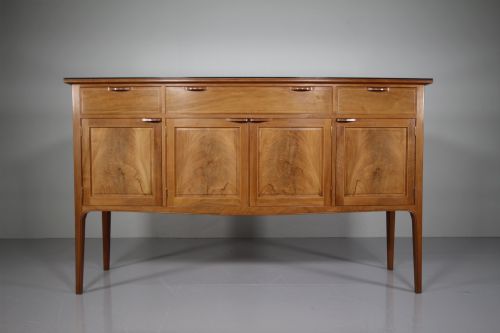
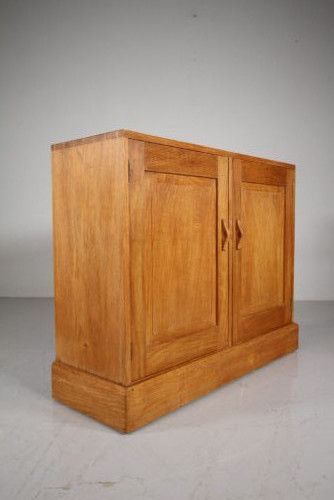
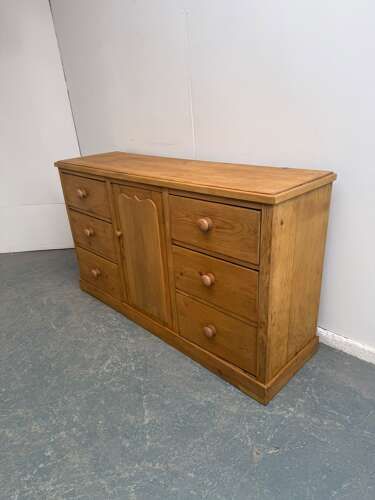
Antique English Credenza
An antique english credenza brings formal display and storage to a room, offering rich timbers and glass fronts that catch the light.
Antique English Credenza
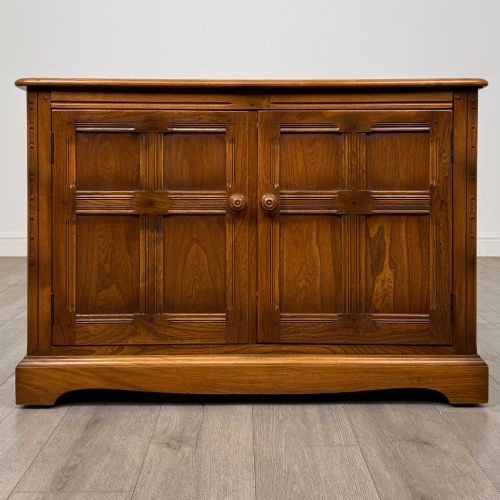
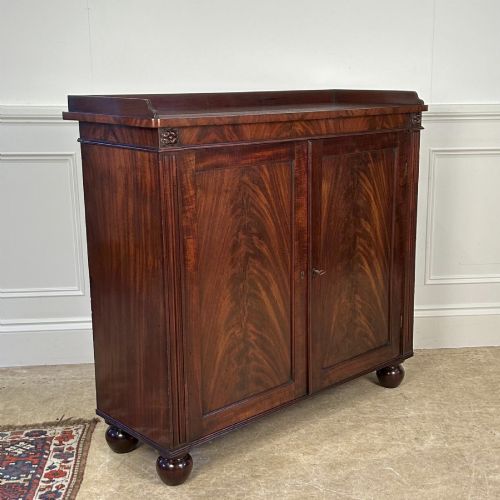
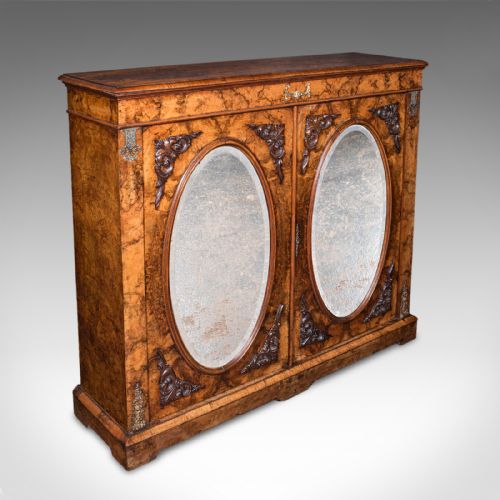
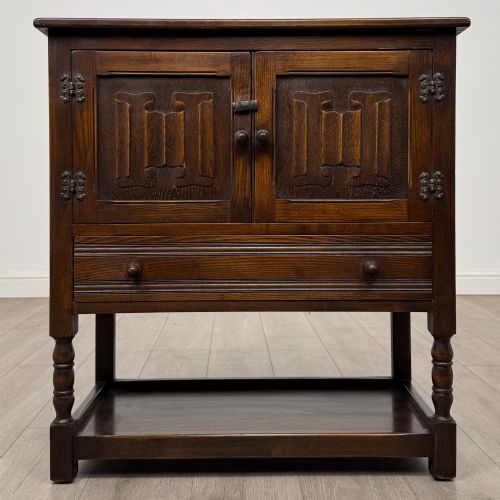
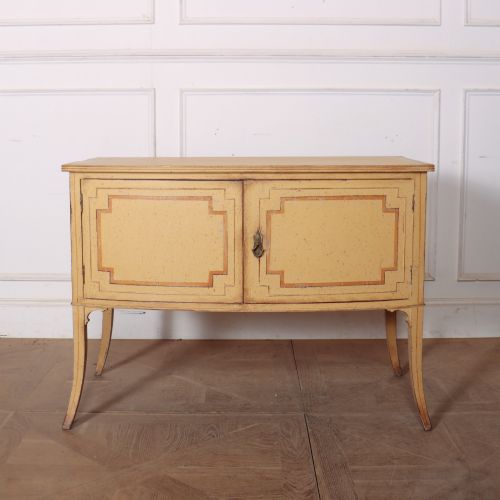
When you search for an antique english credenza, you encounter low display cabinets and sideboards designed for drawing rooms and formal spaces. The pieces appearing in records span walnut, burr walnut, and ebonised finishes with glass doors for showing china or decorative objects. Victorian examples from around the middle of the nineteenth century dominate this category, often featuring classical overtones and refined proportions.
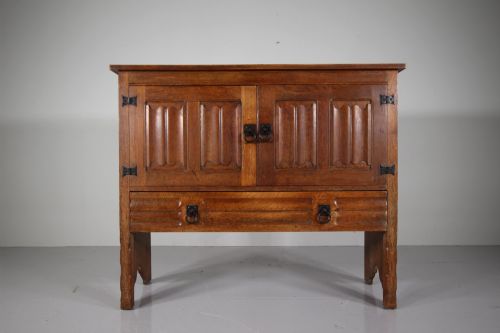
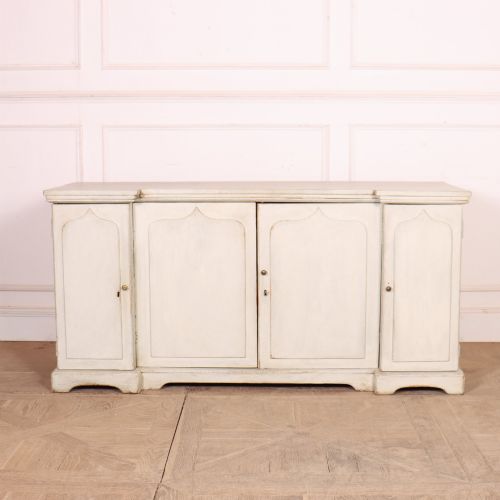
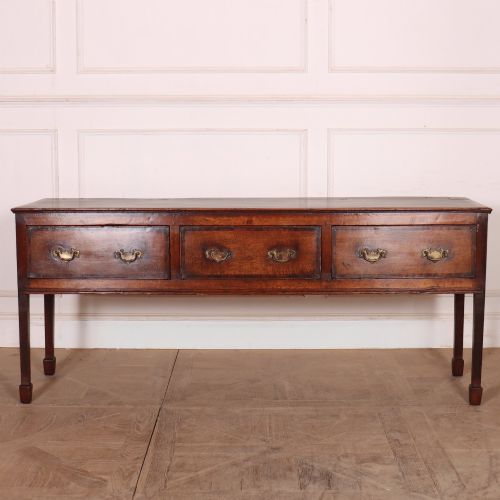
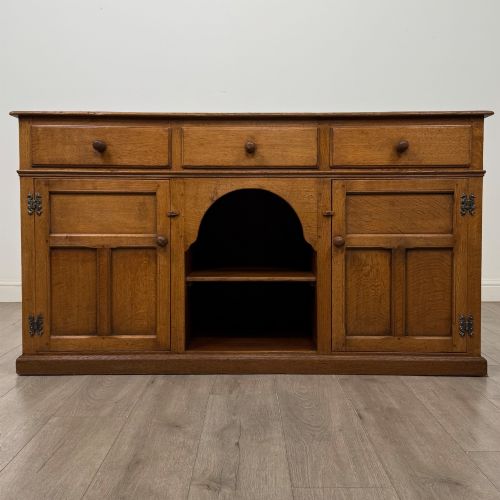
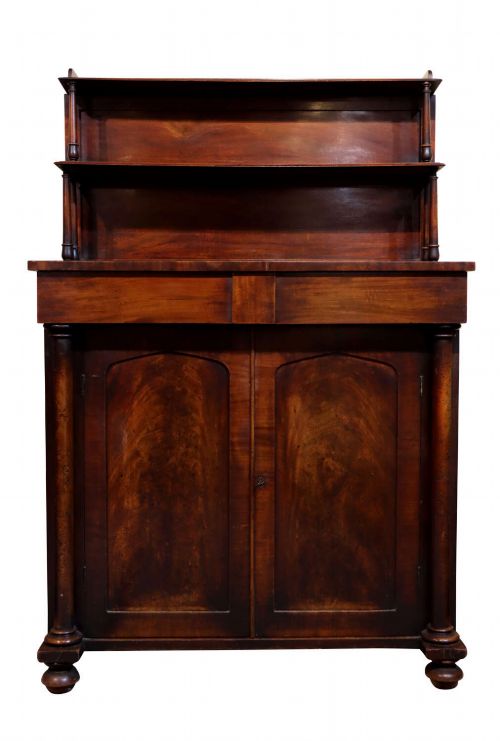
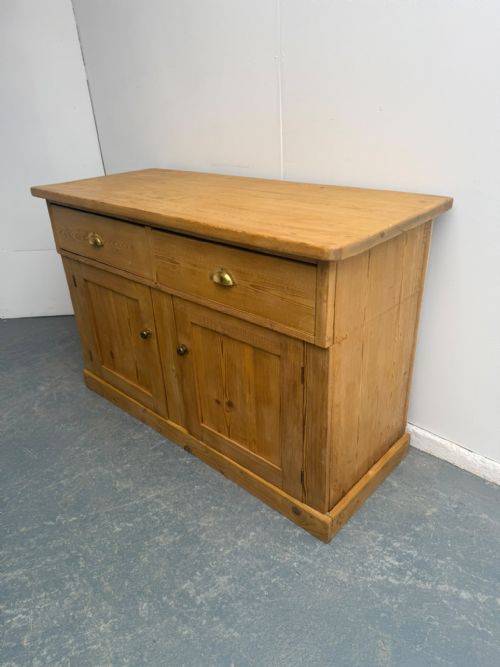
Alongside dedicated credenzas, related sideboard and cabinet forms share the floor, constructed from oak, mahogany, and rosewood across Georgian, Regency, and Victorian periods. These range from robust potboard bases and dresser bases in English oak to elegant rosewood cabinets with brass inlay. Buyers seeking this phrase thus navigate a broader family of low English storage furniture where display and service meet.
Materials and Construction
Cabinet makers relied heavily on native and imported timbers, pairing structural oak and pine with decorative veneers of walnut, pollard oak, burr elm, and satinwood. Solid woods formed the frames and carcasses, whilst figured veneers added striking grain patterns to drawer fronts and doors. Ebony stringing, brass inlay, and Tunbridgeware details further enriched the surfaces of finer examples.
Joinery techniques matched the demands of the form, utilising dovetailed drawers and panelled construction to ensure stability over centuries of use. Glass panels were hand-glazed into wooden doors, and painted finishes appeared on vernacular pine and country pieces. Metal hardware, from brass handles to iron hinges, was integrated securely into the timber framework.
Antique English Credenza Retail Price Guide 2026
Typical asking prices for english credenza among the pieces listed under this phrase on Sellingantiques today, from the lower quarter to the upper quarter. They describe what is for sale here now, not the wider market.
Several pieces double as window seats, proving that nineteenth-century carpenters expected furniture to multitask.
Judging Quality
Quality rests upon the selection of timber and the ambition of the decorative scheme, distinguishing simple utility furniture from grand drawing room pieces. Finer credenzas and cabinets display exceptional figure in walnut or rosewood veneers, balanced proportions, and crisp execution of inlay such as brass or ebony stringing. Lesser pieces rely on plain timbers and standard joinery without decorative flourishes.
The integrity of the original surfaces and mounts also dictates the standing of a piece. Original glass, unblemished veneers, and matching hardware elevate an item above one with heavy replacement parts or stripped finishes. The harmony between the cabinet carcass and its decorative details reveals the skill of the original workshop.
Gillows
The Antique English Credenza Glossary
- Credenza
- A low cabinet or sideboard designed for display and storage, often featuring glass doors and classical ornament. This form gained prominence in the nineteenth century for drawing room use.
- Breakfront
- A piece of furniture where the central section projects forward from the flanking wings. This architectural arrangement creates depth and shadow on large cabinets.
- Chiffonier
- A compact sideboard or low cabinet typically fitted with shelves enclosed by doors, popular during the Regency and Victorian periods.
- Potboard
- An open slatted lower shelf incorporated into traditional oak dresser bases. Originally intended for storing pots and kitchen utensils.
- Marquetry
- Decorative veneer work formed by fitting together small pieces of different coloured woods to create pictorial or geometric patterns.
Antique English Credenza: Frequently Asked Questions
How do I date an antique cabinet?
Dating relies on identifying the primary timbers, construction methods, and prevailing decorative styles of the period. Georgian pieces often show plain oak or mahogany, whilst Victorian examples introduce burr walnut and ebonisation.
Examining the drawer construction, backboards, and hardware helps confirm the era of manufacture. Subtle shifts in architectural motifs, from George III restraint to Victorian ornamentation, provide further clues.
Where should I place a credenza?
A credenza suits a dining room, drawing room, or wide hallway where its low profile allows artwork or mirrors to hang above it. The flat top surface provides space for lamps and decorative objects.
Because these cabinets often include glass doors, placing them away from direct sunlight protects both the timber veneers and any items displayed inside.
Are these pieces made of solid wood?
Many pieces combine solid structural frames with decorative veneers applied to secondary woods. Oak, pine, and mahogany commonly form the carcasses, whilst walnut, rosewood, and satinwood appear as fine veneers.
This method prevented warping on large surfaces and allowed cabinet makers to showcase striking grain patterns. Solid timbers remain standard on simpler country and vernacular items.