

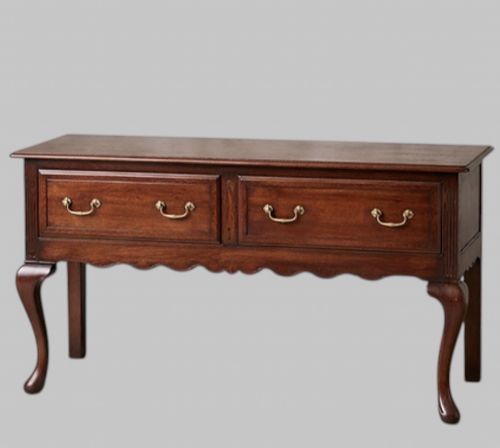
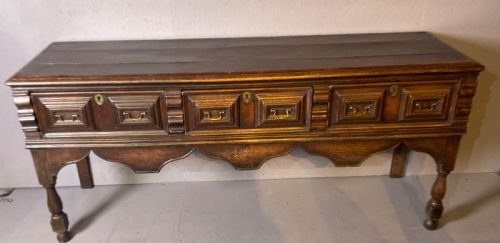


Scalloped Apron Sideboard
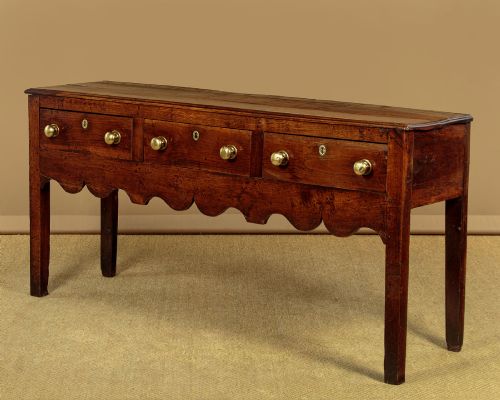
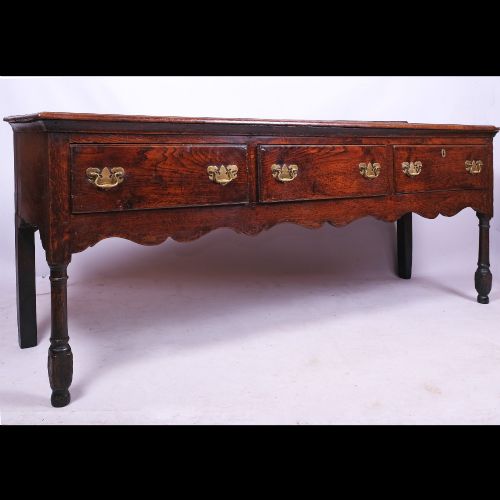
These scalloped apron sideboard pieces are sturdy wooden boards and bases from earlier centuries, offering timeless surface space and practical storage for any interior.
Scalloped Apron Sideboard
When you search for a scalloped apron sideboard, you encounter substantial timber furniture built to serve dining and serving roles in traditional homes. These items bridge the gap between simple side tables and large kitchen dressers.
Most examples appearing here span from the seventeenth century through to the Victorian era, heavily leaning towards Georgian and English country aesthetics. You will frequently find forms designated as dresser bases, sideboards, and serving tables.
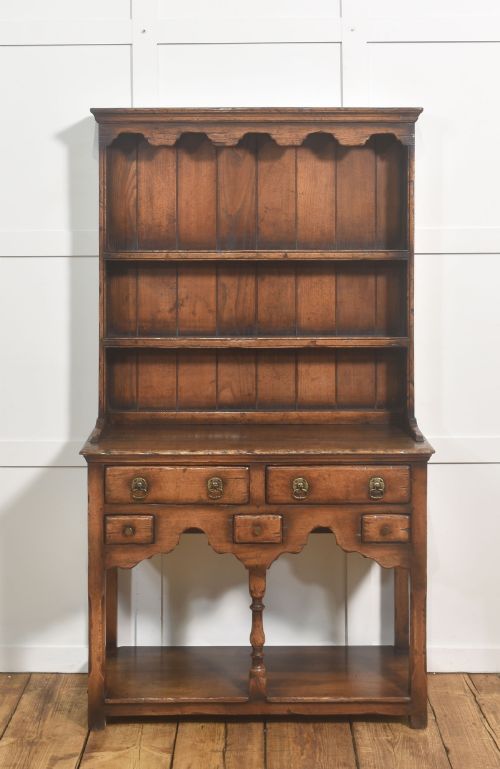
Many of these designs incorporate open potboards beneath the main surface or feature plate racks rising above the timber top. Oak remains the predominant wood across the selection, complemented by occasional maple and fruitwood specimens.
Construction and materials
Makers constructed these sturdy items primarily using solid oak, alongside regional hardwoods like maple and fruitwood. Artisans joined heavy timber boards using traditional pegged and jointed methods to ensure lasting stability.
Surface treatments range from waxed and polished natural wood grains to painted finishes on select French and English pieces. Iron and brass hardware often provides functional hinges and pulls where doors or drawers are present.
A sturdy oak potboard sits quietly near the floor, having spent centuries guarding heavy pots from damp flagstone kitchens.
Assessing quality and character
The distinction between standard utility furniture and superior examples lies in the selection of timber and the fineness of the joinery. Heavier, well-figured oak boards with pleasing patination elevate a piece above simpler vernacular items.
Proportion and decorative restraint dictate the visual appeal of these serving surfaces. Pieces retaining their original hardware and untouched timber surfaces hold greater interest for collectors than heavily altered items.
The Scalloped Apron Sideboard Glossary
- Dresser base
- A low wooden table with drawers used for food preparation and storage in older kitchens. It forms the foundation beneath taller plate racks.
- Potboard
- A low open shelf fitted beneath a dresser base to store pots, pans, and heavy crockery. This structural shelf also helps brace the legs.
- Cabriole leg
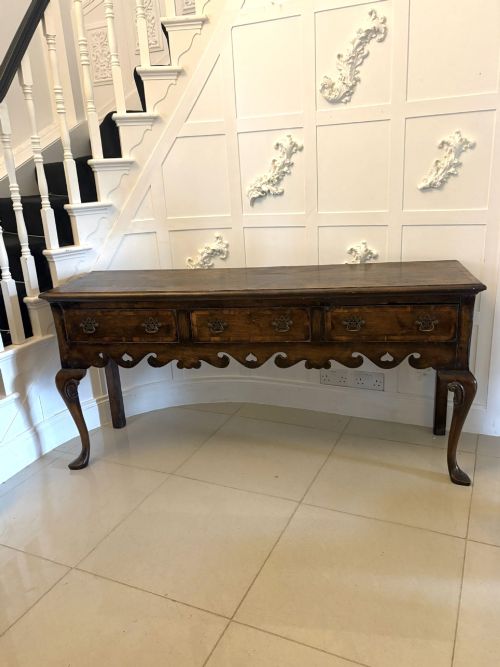
- A furniture leg that curves out at the knee and tapers inward to the foot, inspired by animal limbs. It appears frequently on refined Georgian designs.
- Plate rack
- A wall-mounted or integrated shelving unit designed to display plates on edge. These racks sit directly atop many traditional dresser bases.
- Oak
- A hard, heavy timber native to Britain and Europe, prized for its durability and prominent grain. It serves as the primary material for the majority of these pieces.
Scalloped Apron Sideboard: Frequently Asked Questions
What is a scalloped apron sideboard?
A scalloped apron sideboard refers to a low wooden serving table or dresser base featuring an ornamental curved cut along the lower wooden border. These sturdy surfaces originate from seventeenth, eighteenth, and nineteenth-century traditions.
They provide both a wide timber top and under-counter storage or open potboards. The grouping includes regional English, Welsh, and continental farmhouse forms.
How were these sideboards used originally?
These wooden bases served as primary work surfaces and storage hubs in large kitchens and dining halls. Households utilised the top boards for carving meats and plating food before service.
The drawers and open lower potboards held everyday ceramics, heavy cookware, and linens. Over time, many transitioned into principal display furniture for formal dining spaces.
How do I care for antique oak furniture?
Maintain antique oak surfaces by dusting regularly with a dry, soft cloth and applying a traditional beeswax polish sparingly. Avoid placing wooden furniture near direct heat sources or in fluctuating humidity.
Protect the timber from standing liquids and sharp objects to preserve the historic patina. Gentle care ensures the dry joints and aged wax remain stable for decades.
How can I tell a Georgian piece from a Victorian one?
Georgian examples, produced during the eighteenth century, typically display simpler, robust proportions and hand-carved details like cabriole legs or open potboards. Oak and fruitwood construction dominates this earlier era.
Victorian items from the nineteenth century often incorporate heavier machine-cut elements and alternative hardware styles. Examining the drawer construction and timber shrinkage offers further clues to the exact manufacturing period.