

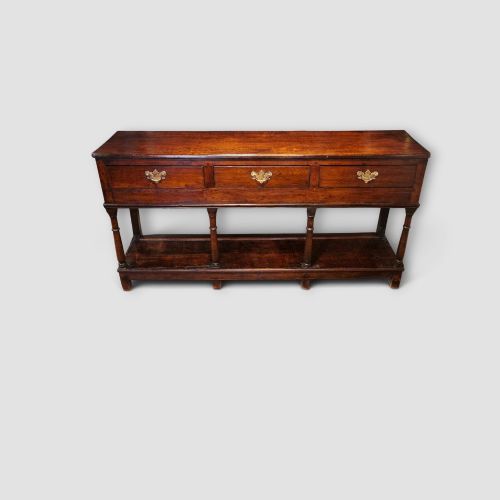
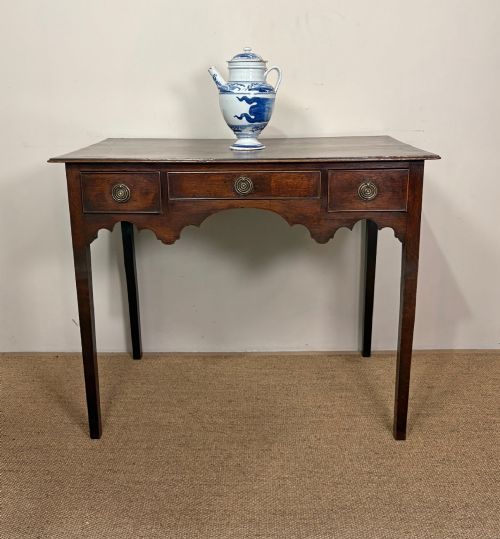
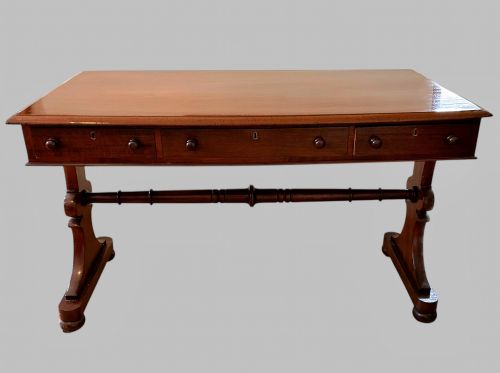
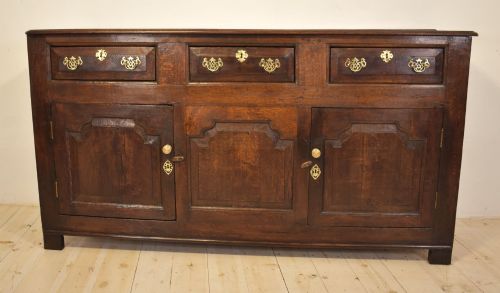
Three Drawer Server
A three drawer server provides a steady working surface and deep under-counter storage, combining utility with regional character.
What a three drawer server is
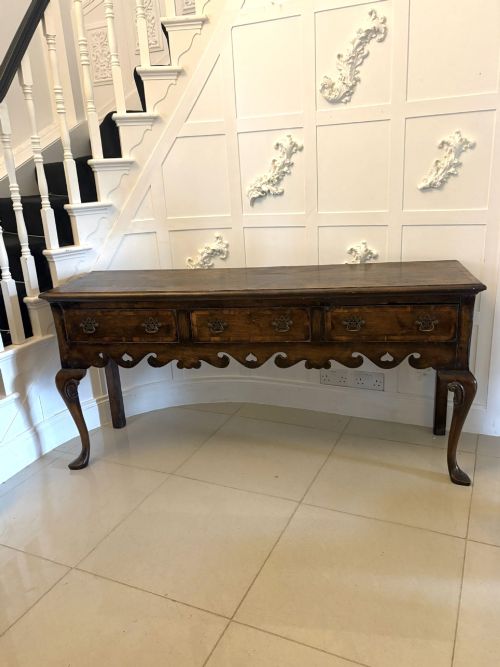
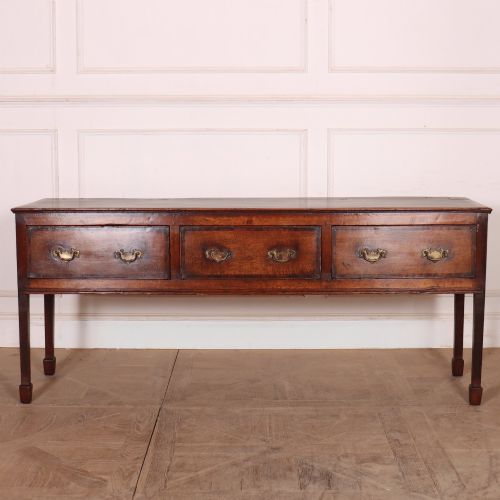
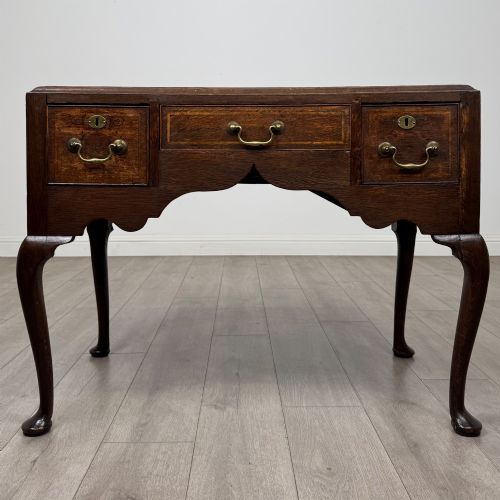
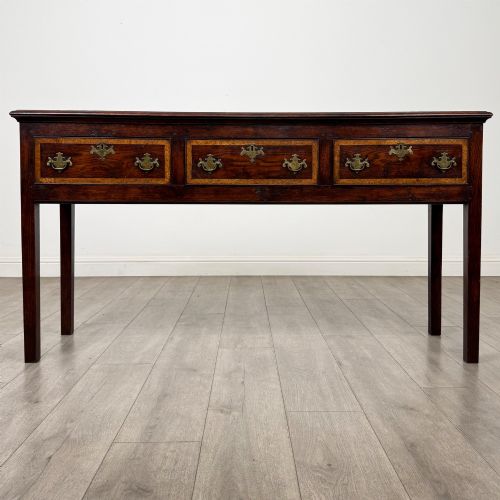
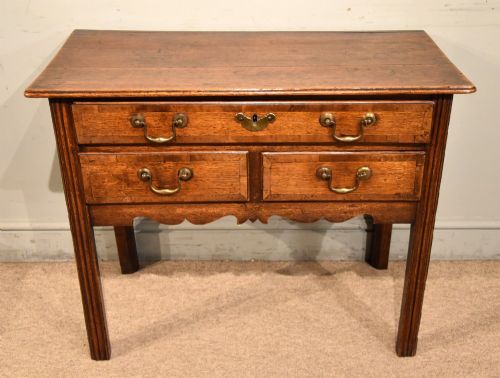
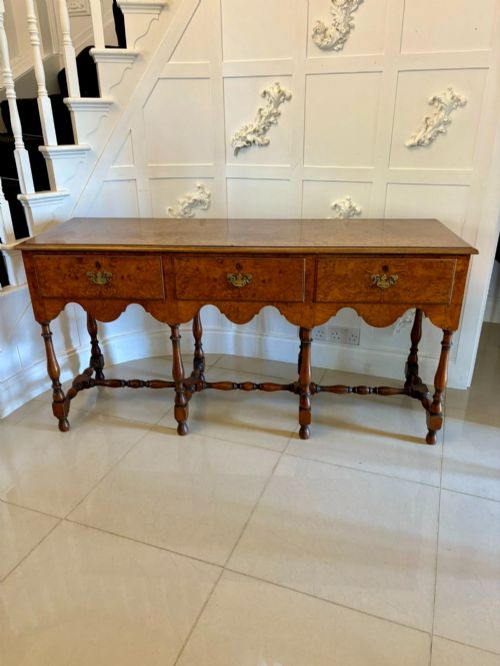
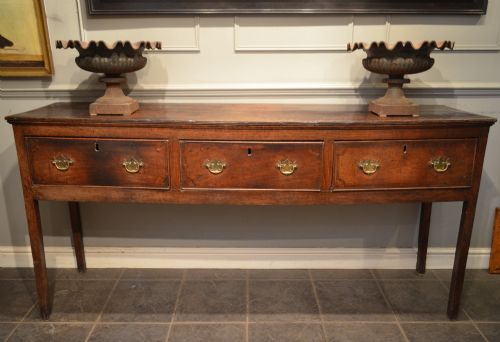
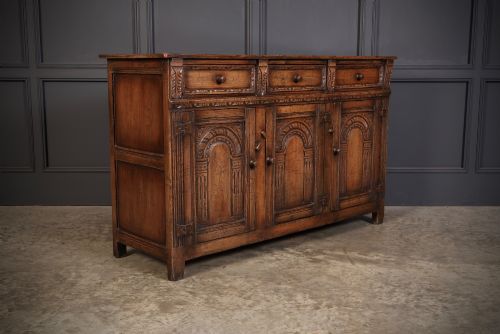
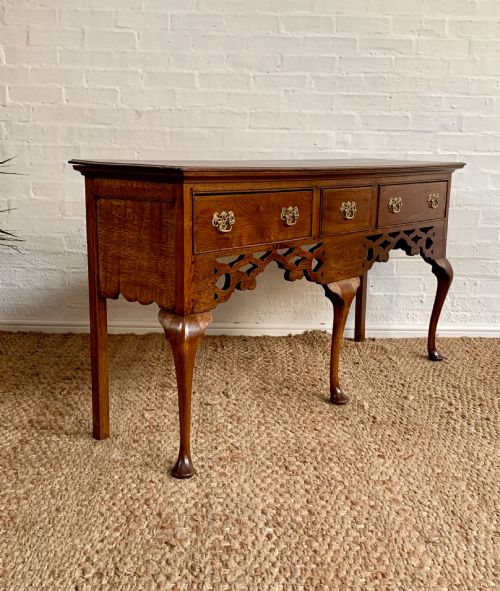
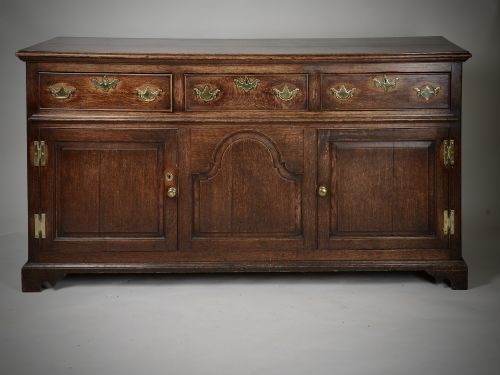
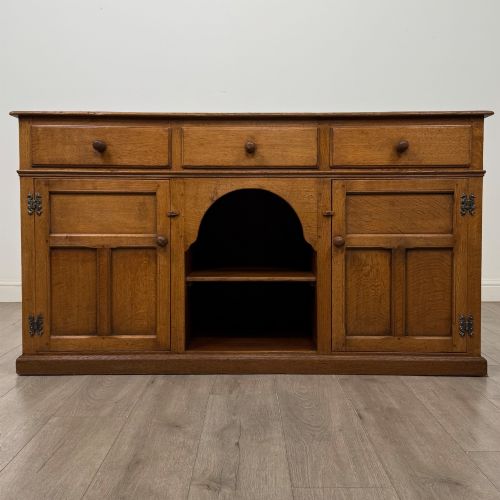
When you search for a three drawer server, you are looking at substantial timber case furniture designed for food preparation and storage. These pieces typically feature a long rectangular top above a row of three drawers, standing on sturdy legs or a low base.
On this page, you are most likely to meet country pieces originating from France and Britain. The selection spans the Edwardian period, the Georgian era, and the nineteenth century, including rustic country and French provincial styles.
Forms range from oak dresser bases and serving tables to dairy prep tables and long servers. They appear in regional timbers such as oak, pine, sycamore, fruitwood, chestnut, cherry wood, and elm.
How they were made
Joiners built these servers using solid regional hardwoods and softwoods. Oak, chestnut, cherry wood, elm, and fruitwood formed the structural frames and drawer fronts, while pine and sycamore frequently served for secondary parts and working tops.
Construction relied on traditional timber framing, geometric mouldings, and simple drawer boxes. Hardware typically consisted of brass handles and fittings secured to the drawer faces.
Retail Price Guide 2026
Typical UK retail prices for three drawer server, calculated from the Sellingantiques database of over a million retail prices indexed since 2003. This retail price guide relies exclusively on Sellingantiques data; no external sources or auction records are used, so the figures do not describe the wider market.
Listings feature oak, brass, sycamore, pine, and fruitwood across Edwardian, Georgian, nineteenth-century, and 1860 periods.
What varies in quality
Quality in these servers rests on the choice of timber and the integrity of the construction. Dense hardwoods like oak and cherry wood provide greater durability than softer woods, while crisp geometric mouldings show the hand of a more capable joiner.
The balance of proportions and the preservation of original surfaces distinguish finer examples from plain utility pieces. Grain variation in woods like sycamore and fruitwood adds visual depth to better-finished items.
The Three Drawer Server Glossary
- Dresser base
- The lower portion of a traditional kitchen or dining dresser, featuring a flat top and drawer storage. It stands independently as a serving table or sideboard.
- Geometric moulding
- Raised wooden profiling applied in repetitive geometric patterns to drawer fronts or frames. This technique adds architectural detail, particularly seen on pieces from the Georgian period.
- Dairy prep table
- A utilitarian wooden table designed for food production, often featuring clean scrubbed tops in timbers like sycamore and pine. They were built for heavy daily use in farmhouses.
- Provincial style
- Furniture made in regional workshops outside capital cities, utilising local woods and traditional local designs. These pieces emphasise practicality and rustic charm over courtly fashions.
Frequently Asked Questions
What is a three drawer server used for?
These pieces served historically for food preparation, serving meals, and storing kitchen utensils or dining linens in domestic settings.
Today, they function well in dining rooms, kitchens, or hallways as sideboards, providing a long surface and three accessible drawers.
How do I identify a Georgian server?
Georgian servers often feature formal stylistic elements such as geometric mouldings and construction in dense timbers like oak.
They display the restrained proportions and traditional joinery characteristic of eighteenth-century British cabinet making.
What woods were used for servers?
Makers utilised whatever regional timbers were locally available and suited to heavy use. Hardwoods like oak, chestnut, cherry wood, and fruitwood provided durable frames and decorative grain.
Softer or lighter woods such as pine and sycamore frequently appeared in dairy prep tables and secondary framing.
Are French servers different from British ones?
French servers often employ regional hardwoods like chestnut and cherry wood alongside elm, reflecting local woodworking traditions.
They frequently display French provincial characteristics, distinguishing them from British pieces made in oak or pine.