

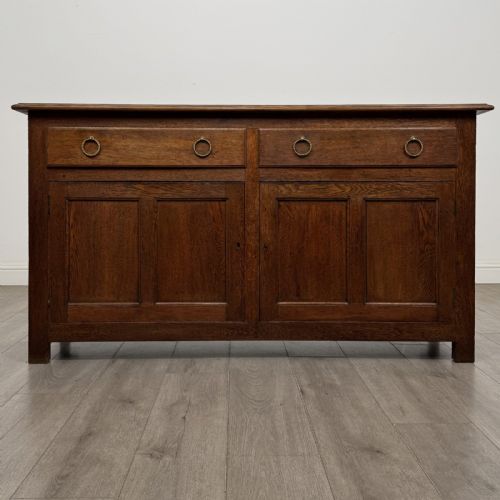

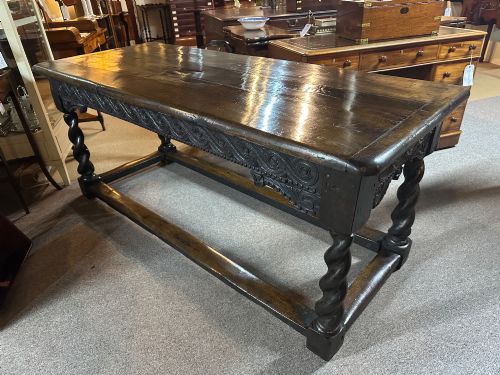
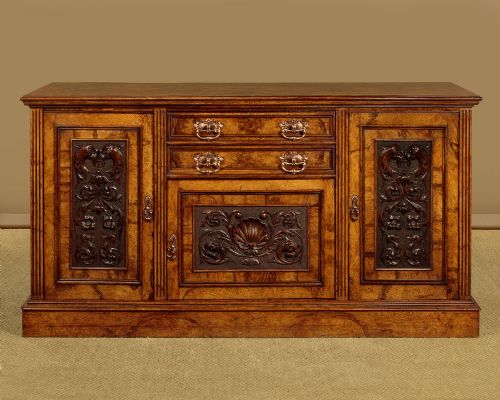
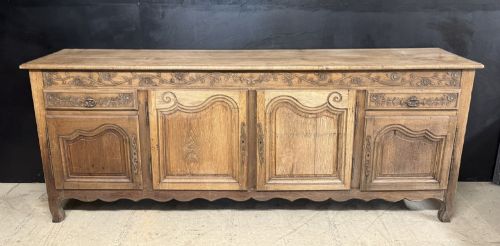
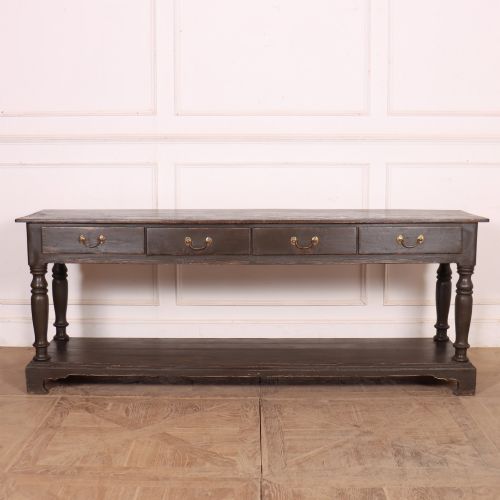
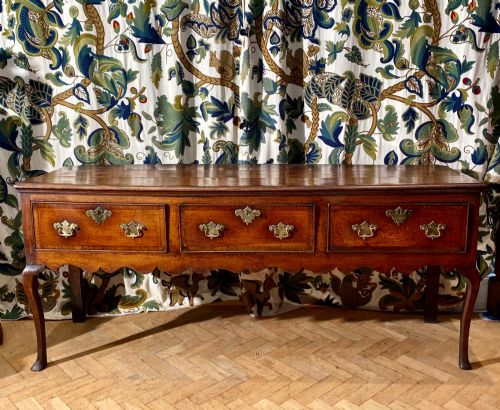
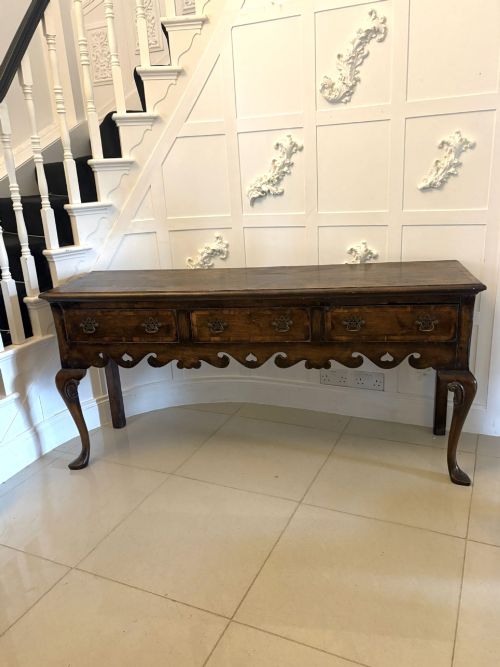
Traditional Oak Server
A traditional oak server delivers robust utility and rich grain, grounding a dining room or hallway with substantial timber and historic character.
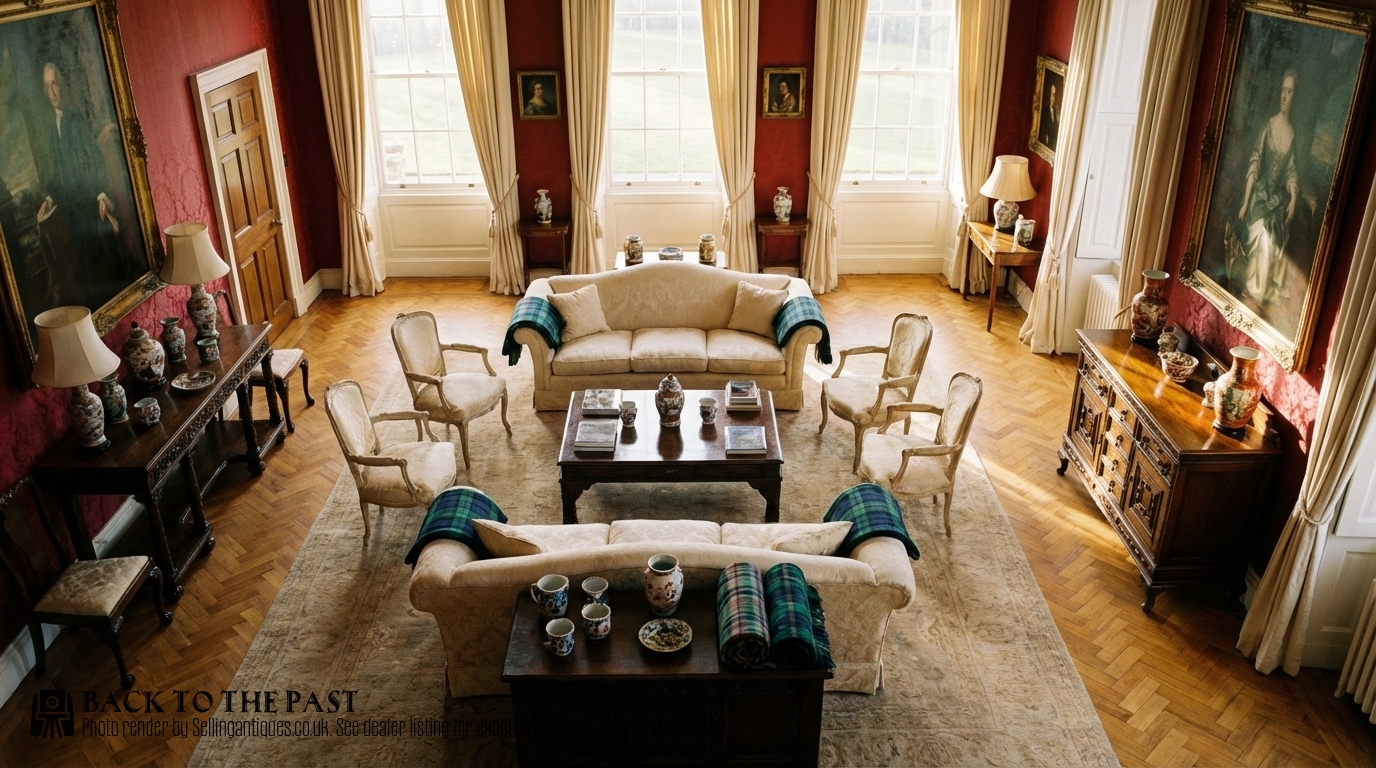
Traditional Oak Server
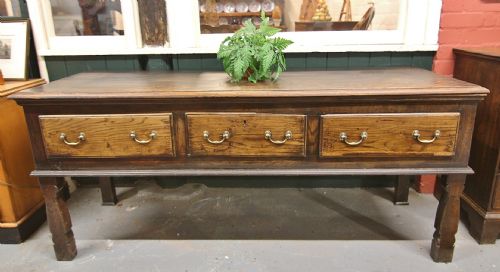
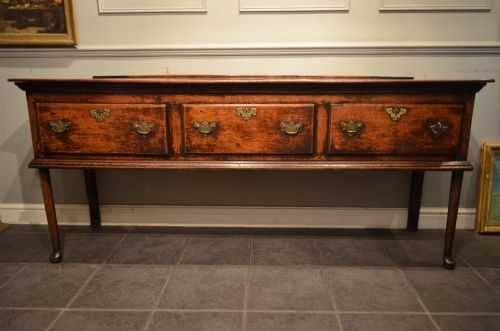
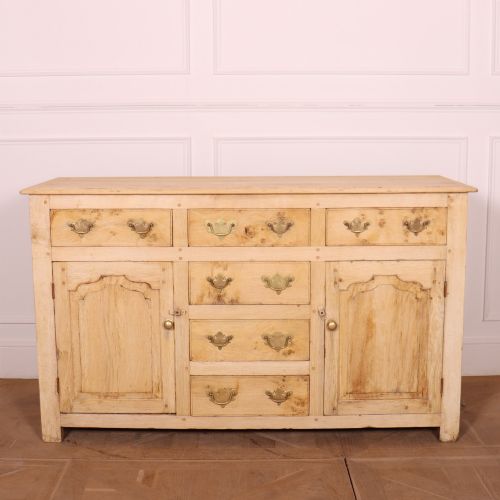
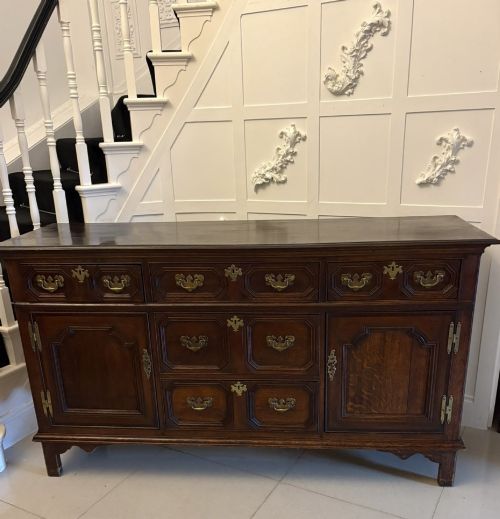
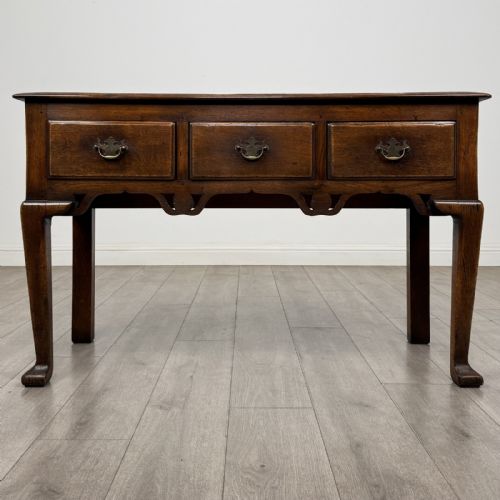
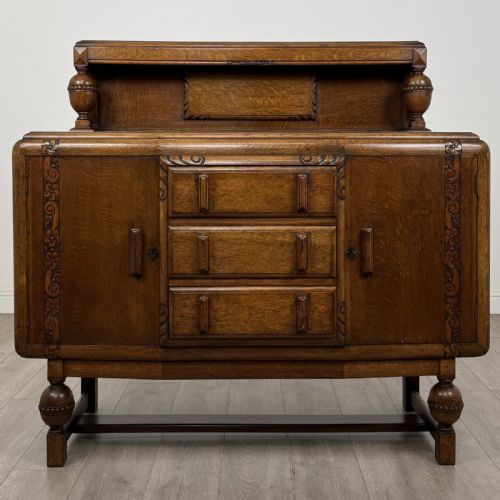
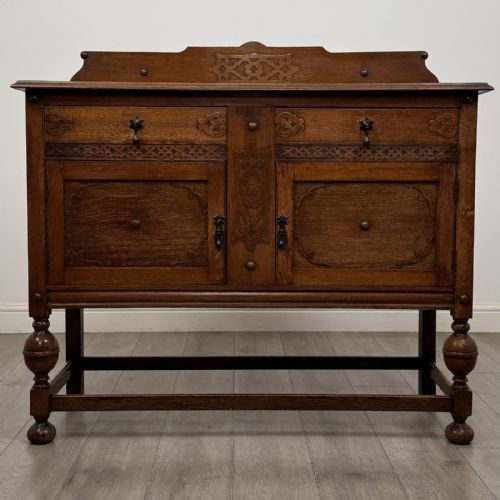
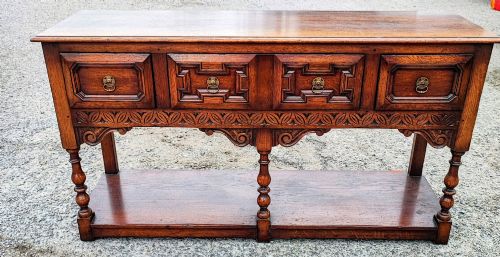
When you search for a traditional oak server, you examine practical dining furniture encompassing dresser bases, sideboard cabinets, and low serving tables. These sturdy forms serve to hold tableware, linen, and food in domestic spaces.
The pieces on this page span several centuries, reaching from the eighteenth century through the Victorian and Edwardian eras into the early twentieth century. You will frequently encounter Georgian and Edwardian examples alongside revival styles like Jacobean and Queen Anne.
Forms vary from open potboard dresser bases to narrow side tables and drawer-laden serving tables. Regional variations such as Lancashire pieces and Dutch imports appear amongst domestic English furniture.
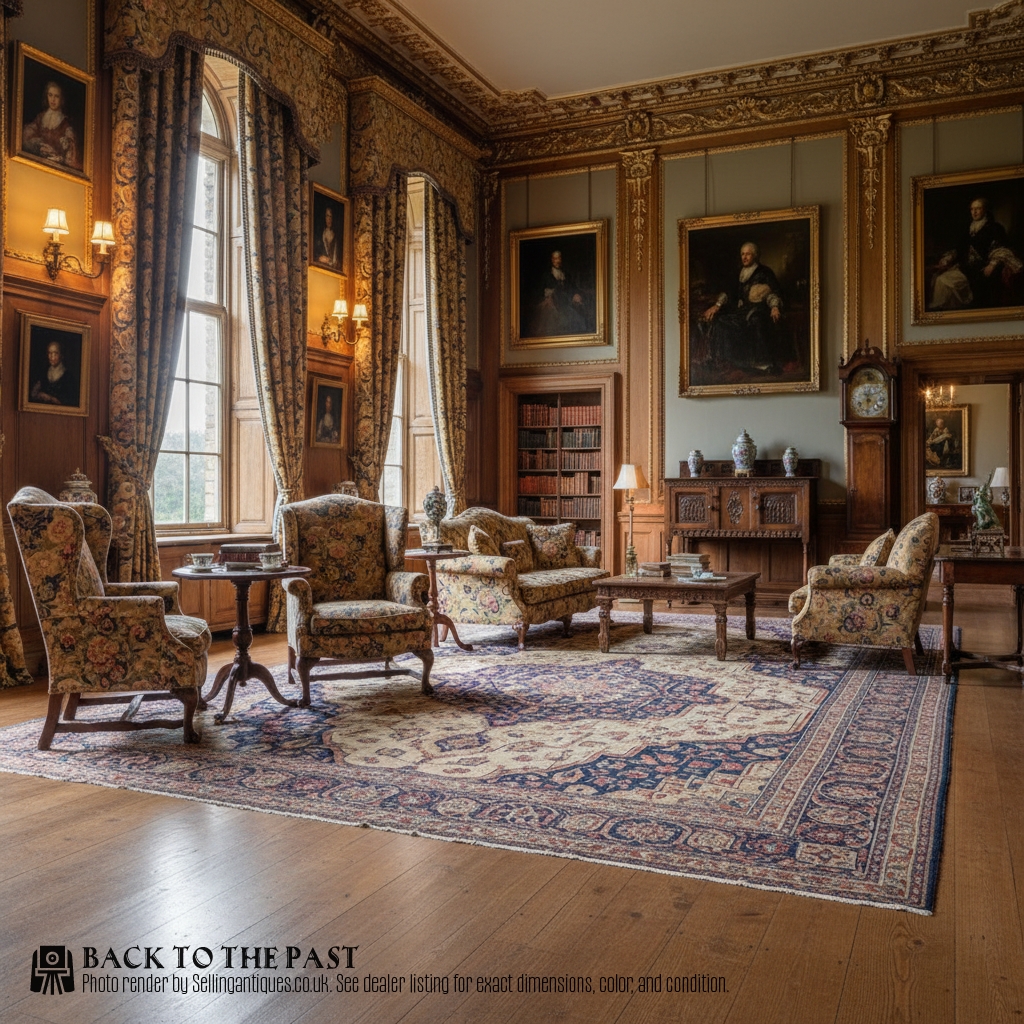
Judging quality in oak furniture
Quality rests in the selection of timber and the integrity of the joinery rather than surface embellishment alone. Superior examples display dense, well-figured oak boards and hand-cut joints that remain rigid across centuries of use.
Proportion and execution distinguish finer pieces from standard utility items. A well-balanced silhouette with crisp carving and original brass hardware demonstrates a higher standard of workshop production.
Traditional Oak Server Retail Price Guide 2026
Typical asking prices for traditional oak server among the pieces listed under this phrase on Sellingantiques today, from the lower quarter to the upper quarter. They describe what is for sale here now, not the wider market.
Early harvest tables stretch over nine feet long, built specifically to feed hungry farm hands after a hard day in the field.
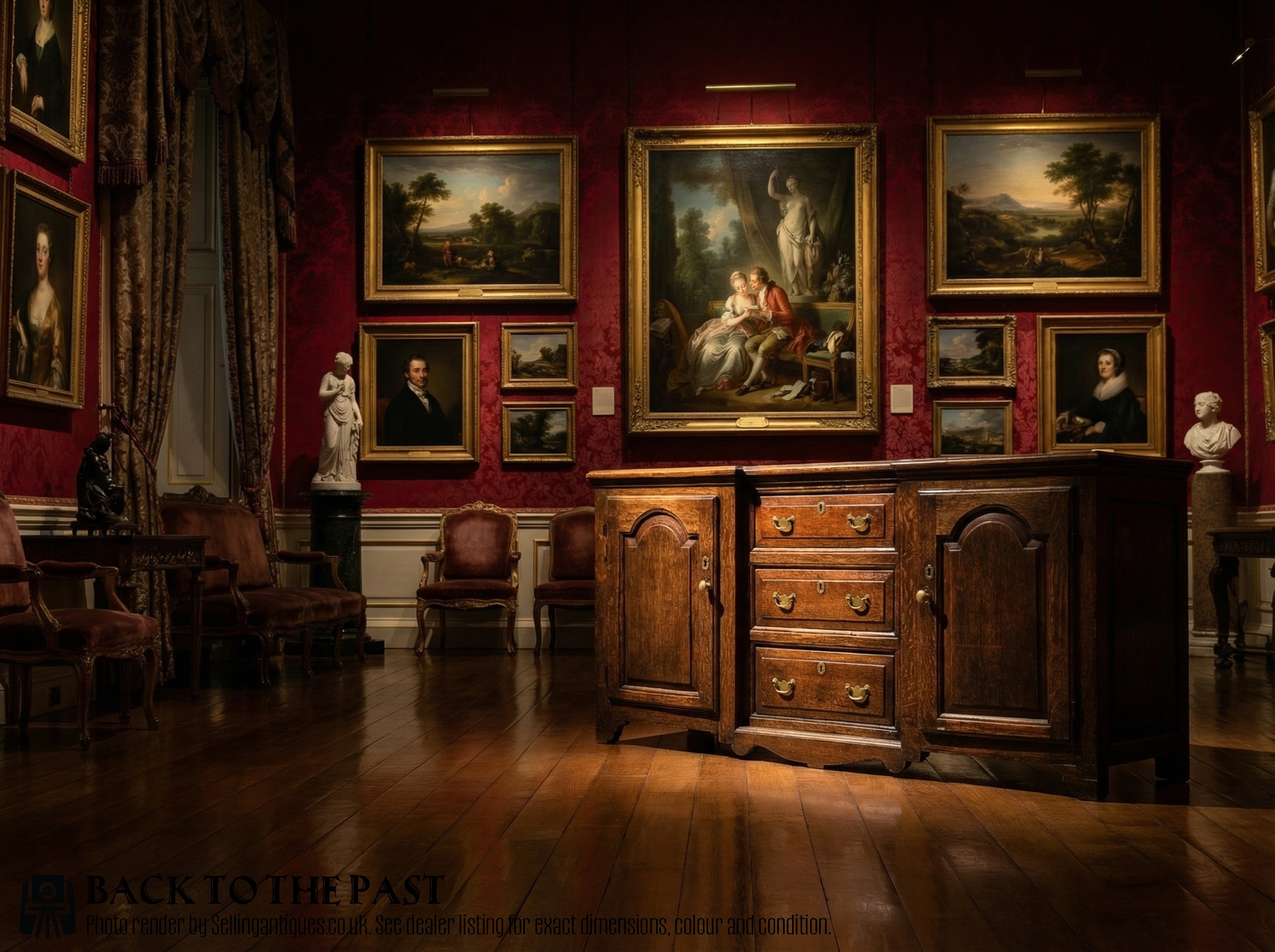
The Traditional Oak Server Glossary
- Potboard
- A lower open shelf built into the base of a dresser, originally designed for storing heavy pots and pans. This platform defines many traditional country pieces.
- Dresser base
- The lower section of a kitchen or dining dresser, functioning independently as a sideboard or serving table with drawers and cupboards. It stands lower than a full dresser.
- Linenfold
- A style of carved wooden panelling that resembles folded fabric, popular during the Tudor period and revived in later centuries. It adds texture to cupboard doors.
- Jacobean revival
- A nineteenth and twentieth century design movement copying seventeenth century English furniture styles. Pieces feature heavy turned legs, geometric moulding, and dark finishes.
- Cabriole leg
- A furniture leg that curves out and then in, resembling an animal's curving leg. This form appears on revival pieces influenced by eighteenth century design.
Traditional Oak Server: Frequently Asked Questions
How do I use a traditional oak server today?
These pieces function as dining room sideboards for storing dinnerware, serving food during meals, or displaying lamps and ceramics in a hallway.
Their substantial timber surfaces and deep drawers accommodate modern storage needs while introducing historic warmth to contemporary interiors.
What is the difference between a sideboard and a dresser base?
A dresser base originally formed the lower half of a kitchen dresser designed for food preparation and storage, often featuring an open potboard beneath.
A sideboard serves a similar dining room function but typically lacks the open lower shelf, offering enclosed cupboards or drawers down to the floor.
How do I date an oak server?
Dating relies on examining construction marks, timber thickness, hardware, and style indicators such as drawer dovetails and tool marks. Eighteenth-century pieces show hand-sawn boards and irregular construction, while Edwardian and 1920s revivals often display machine assistance and standardised fittings.
Revival pieces from around nineteen hundred frequently copy earlier Jacobean or Georgian forms, requiring careful inspection of the wood's inner surfaces to determine its true age.
How do I care for antique oak furniture?
Maintain oak surfaces by dusting with a dry cloth and applying natural beeswax occasionally to nourish the timber. Avoid placing these pieces near direct heat sources or strong sunlight, which can dry out the wood and cause splitting.