



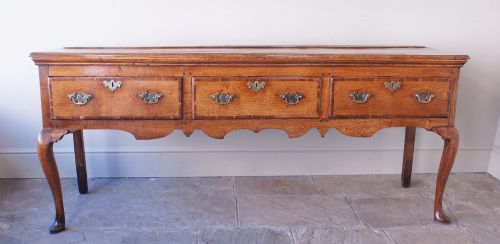
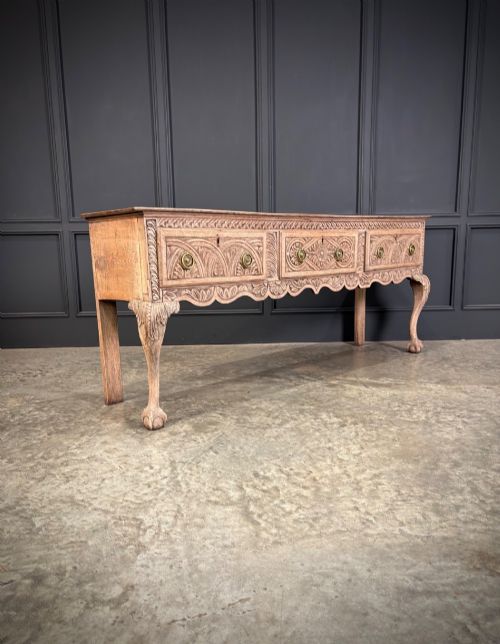
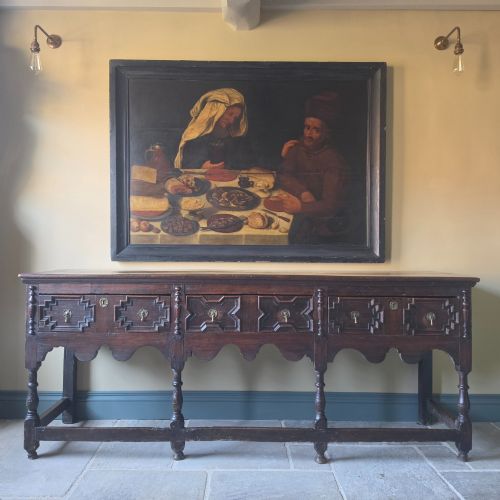
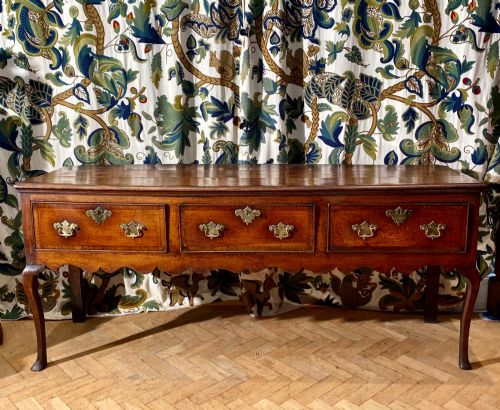
Low Oak Sideboard
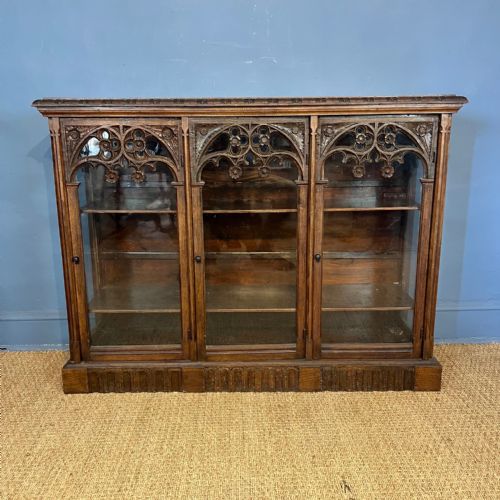
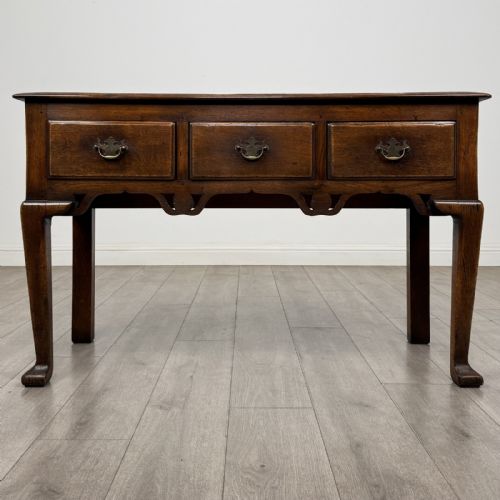
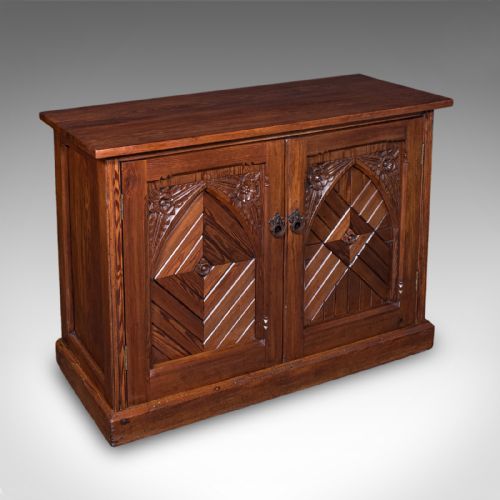
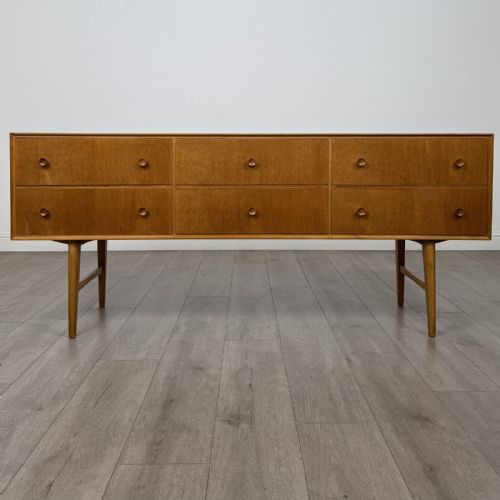
When searching for a low oak sideboard, buyers encounter centuries of utilitarian storage furniture ranging from country dresser bases to Edwardian cupboards.
Low Oak Sideboard
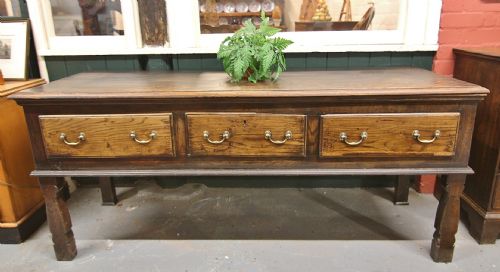
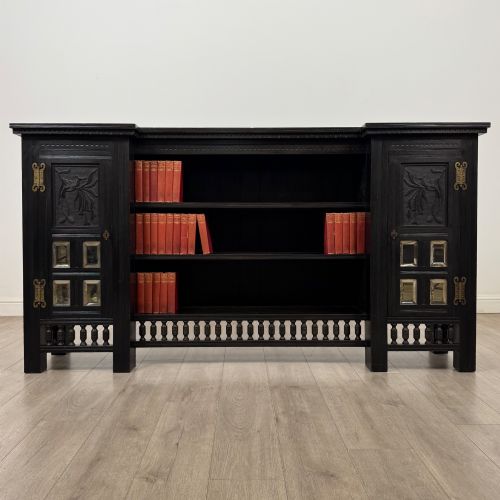
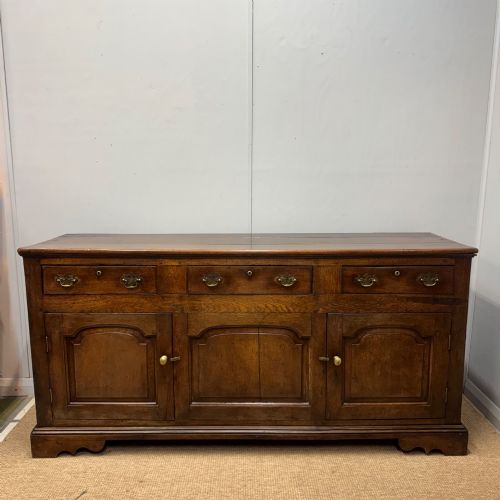
A low oak sideboard primarily encompasses forms such as dresser bases, low cupboards, and compact cabinets designed for domestic utility. These pieces frequently date from the seventeenth, eighteenth, and nineteenth centuries, alongside later Edwardian and twentieth-century interpretations.
Regional British examples from locations such as Shropshire, Cheshire, and Lancashire feature prominently among the available inventory. Buyers will also encounter French provincial variants and stylistic revivals, including Jacobean and Gothic expressions.
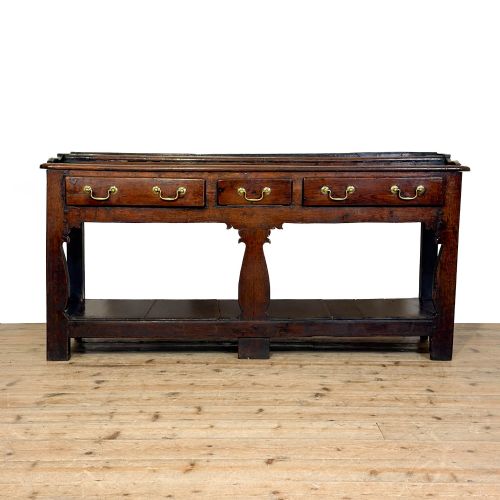
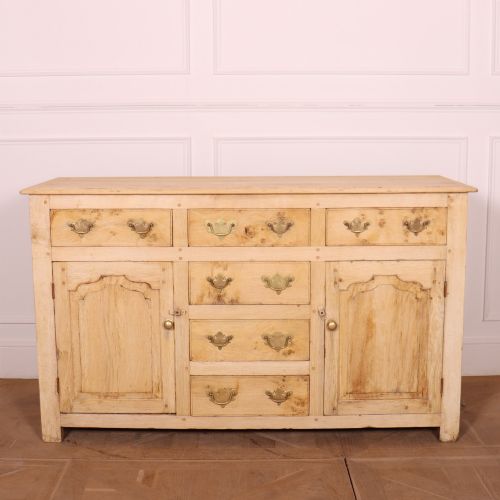
The category bridges the gap between open-topped dressers and enclosed server cabinets. Many examples incorporate open potboards beneath drawers, while others utilise panelled doors to conceal interior storage.
Materials and construction methods
Solid timber forms the structural core of these items, with oak dominating alongside secondary woods like fruitwood, elm, and pollard oak. Cabinetmakers joined frame and panel components using traditional pegging and mortise and tenon techniques.
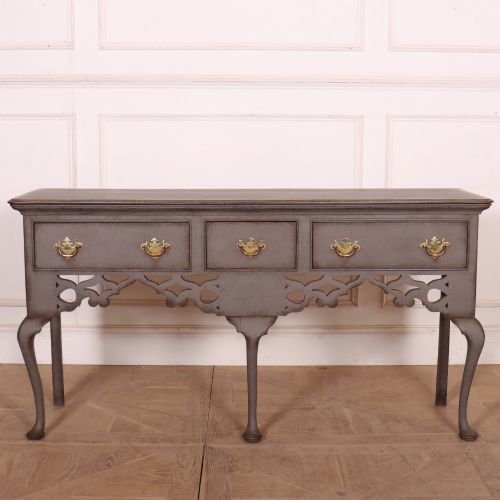
Metal hardware such as brass drop handles, backplates, and iron hinges provide functional articulation and contrast against the timber grain. Certain pieces incorporate painted finishes or applied decorative elements like linenfold carving and ebony detailing.
Low Oak Sideboard Retail Price Guide 2026
Typical asking prices for low oak sideboard among the pieces listed under this phrase on Sellingantiques today, from the lower quarter to the upper quarter. They describe what is for sale here now, not the wider market.
Materials extend beyond standard oak to include contrasting fruitwood, elm, and applied painted finishes across regional workshops.
Distinctions in construction and material quality
Superior examples display careful timber selection, where boards share consistent grain patterns and rich natural patination developed through age. Finer pieces demonstrate precise joinery and retention of original hardware, including period brasses.
Lesser or heavily restored variants may exhibit mismatched timber replacements, unsympathetic modern fixings, or compromised structural framing. The crispness of carved details, such as panel mouldings or decorative motifs, further separates utilitarian output from high-grade commissions.
Waring and Gillow·Reynolds Of Ludlow·Heals Of London·Gillow And Co
The Low Oak Sideboard Glossary
- Dresser base
- An independent lower cabinet featuring surface boards for food preparation or display, typically paired with rows of working drawers above cupboards or an open shelf tier.
- Potboard
- An open slatted or boarded lower shelf positioned between the legs of a dresser base, traditionally used for storing ceramic platters and heavy kitchen pots.
- Enfilade
- A long sideboard or cabinet featuring multiple cabinet doors arranged in a continuous line, commonly associated with continental European dining rooms.
- Linenfold
- A carved wood panel motif resembling folded drapery or linen fabric, frequently utilised on late medieval and revival-style cupboard doors.
- Pollard oak
- Timber sourced from trees cut close to the trunk to encourage dense, highly figured branch growth, prized for its swirling decorative grain patterns.
Low Oak Sideboard: Frequently Asked Questions
What is a low oak sideboard used for?
These pieces served historically as utility surfaces for preparing food and storing household tableware within kitchens and dining rooms. Modern interiors utilise them as functional storage credenzas or media consoles.
Their substantial top surfaces and drawer configurations offer practical organisation while introducing historic timber warmth to contemporary living spaces.
How do I date an antique oak sideboard?
Dating relies on examining construction methods, tool marks, timber selection, and regional design characteristics. Eighteenth-century examples often display hand-sawn boards and pegged joints.
Later Edwardian and twentieth-century iterations generally reveal standardised machine milling and different interior hardware fixings that reflect contemporary production standards.
What is a potboard dresser base?
A potboard base incorporates an open lower shelf positioned just above floor level between the legs of the cabinet. This platform provided practical storage for heavy pots and serving dishes.
Georgian regional pieces from Wales and the border counties frequently utilised this open lower tier to add stability to the frame.
Are these sideboards made of solid oak?
Most traditional pieces rely on solid native oak for their primary structural frames, drawer fronts, and top surfaces. Secondary woods occasionally appear in hidden structural areas.
Revival pieces and later twentieth-century editions may also incorporate specialised veneers like burr walnut or pollard oak over solid carcases.