

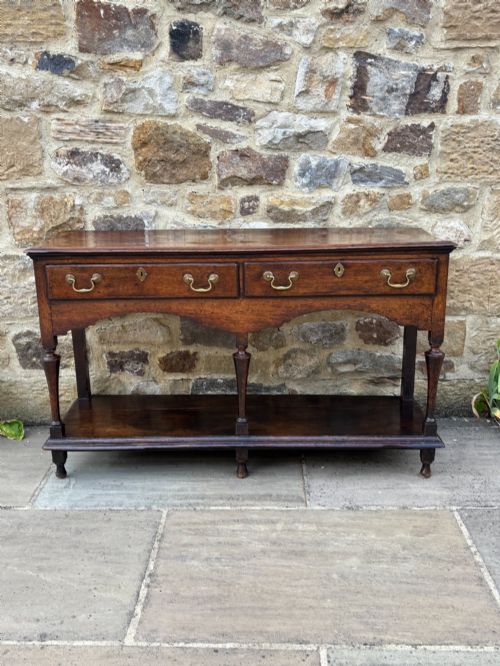
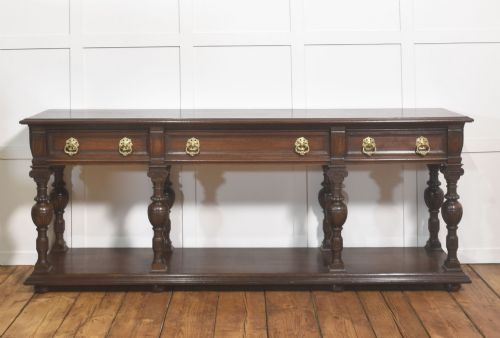
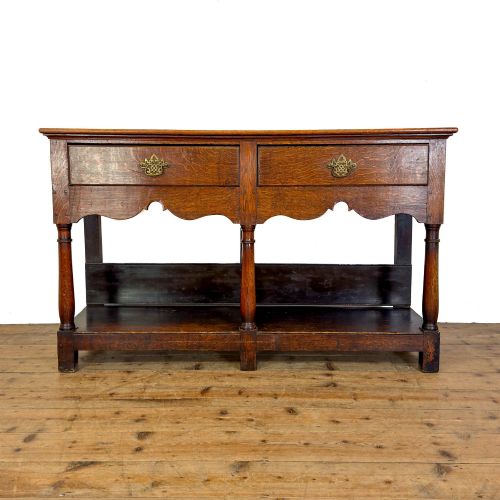

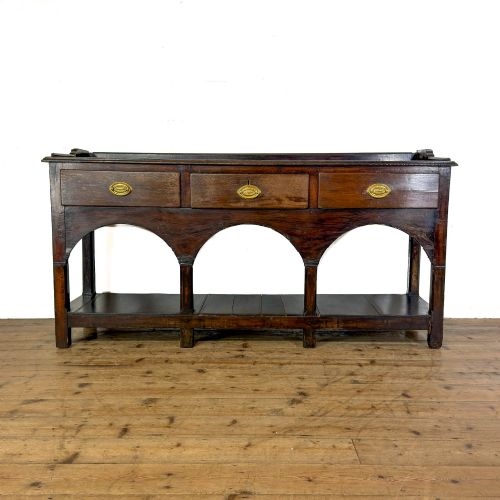



Potboard Dresser Base
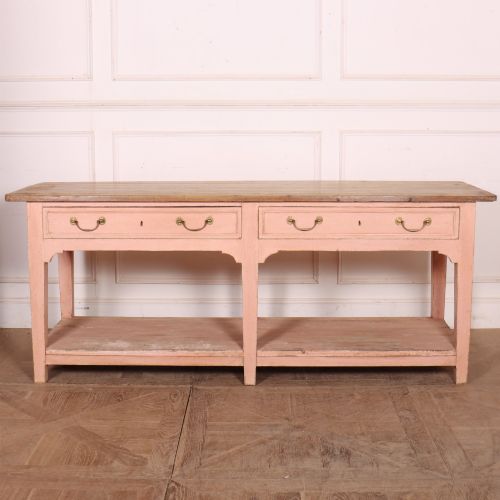
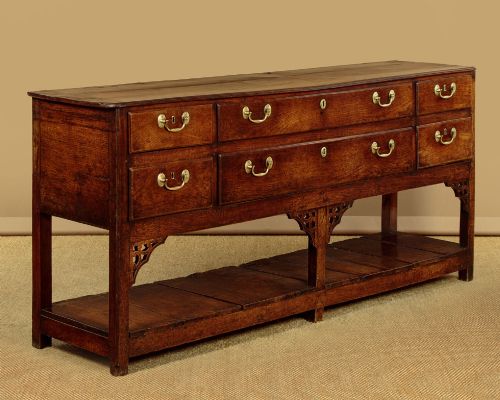
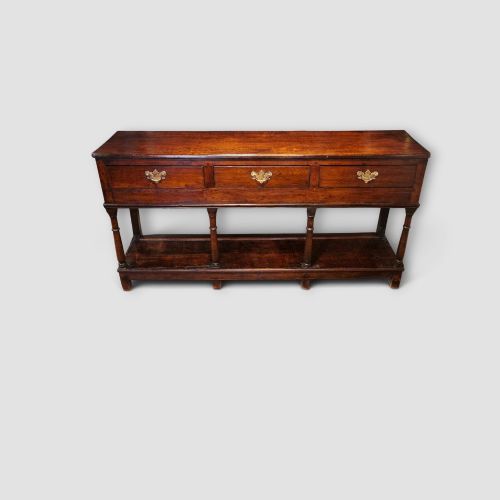
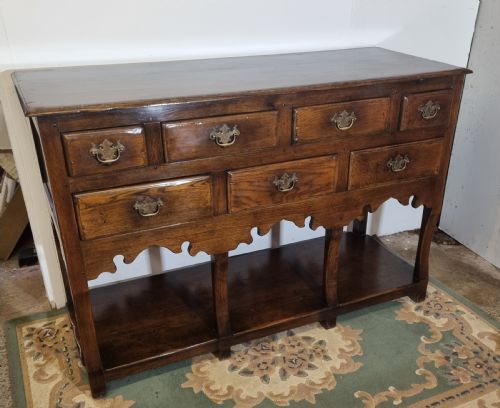
A potboard dresser base brings historic utility and timber warmth to a room, offering a wide surface above a low display shelf.
Understanding potboard dresser bases
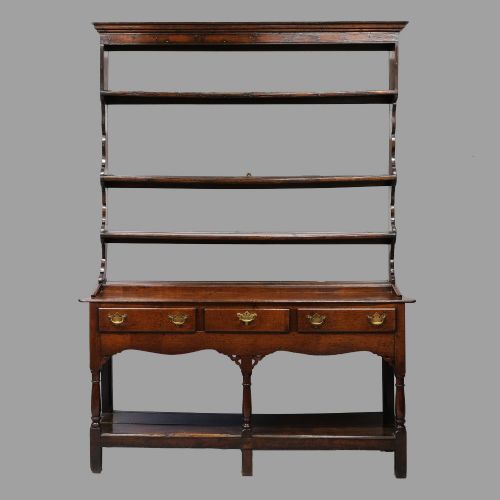
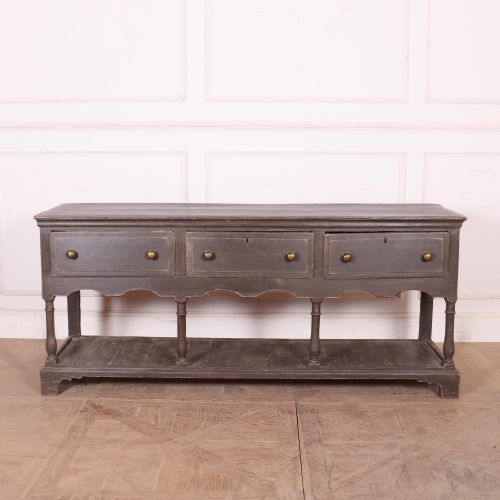
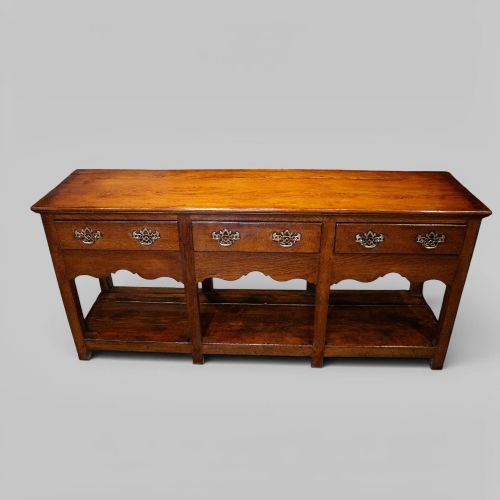
A potboard dresser base is a heavy timber serving table or sideboard defined by a lower open shelf, historically used for storing heavy pots and pans. When you search for a potboard dresser base, you encounter substantial furniture items spanning the eighteenth and nineteenth centuries, originating from English and Welsh workshops. Most examples found here are constructed from native hardwoods, often showing long service in country kitchens and dining rooms.
The form typically combines a bank of drawers or cupboards across the upper section with turned or square legs supporting the low potboard beneath. Georgian and eighteenth-century pieces appear frequently alongside nineteenth-century interpretations. These items function as versatile sideboards in modern interiors, providing generous surface space and open display capacity.
Materials and construction
Makers relied on durable native timbers such as oak, elm, pine, and occasionally fruitwoods, joined using traditional pegged mortise and tenon techniques. Many surfaces show the marks of hand-planing and saw work rather than mechanical processing, while some regional examples feature painted finishes or subtle inlay work.
Hardware components like brass drawer pulls or handles punctuate the timber facades, though older pieces frequently retain traces of replacement fittings or original drop handles. The lower potboard is fixed securely between the legs to provide structural rigidity to the entire framework.
Retail Price Guide 2026
Typical UK retail prices for potboard dresser base, calculated from the Sellingantiques database of over a million retail prices indexed since 2003. This retail price guide relies exclusively on Sellingantiques data; no external sources or auction records are used, so the figures do not describe the wider market.
Listings demonstrate that oak remains the dominant material for these dresser bases, complemented by elm, pine, and painted finishes.
Distinguishing quality and character
The standard of a potboard dresser base rests upon timber selection, proportion, and the preservation of original surfaces. Pieces fashioned with thick oak boards, deep drawer configurations, and untouched patination sit at the upper end of the scale.
Proportion and scale also dictate desirability, with smaller formats and regional Welsh variations commanding distinct interest due to their compact footprints and distinctive drawer arrangements, such as spice drawers or multi-drawer banks.
The Potboard Dresser Base Glossary
- Potboard
- The lower open shelf fixed between the legs of a dresser base, traditionally designed to hold heavy kitchen pots. This feature distinguishes the form from standard sideboards.
- Welsh dresser
- A regional term often applied to dresser bases and their matching upper plate racks originating from Wales. These pieces frequently exhibit distinctive timber choices and drawer layouts.
- Dresser base
- The lower cabinet or serving table portion of a dresser, featuring a flat top surface and storage drawers. Many survive independently without their original upper shelving units.
- Elm
- A tough, fibrous timber frequently utilised for secondary framing, drawer linings, or structural elements within country furniture. It resists splitting and provides robust support.
- Georgian
- The design period spanning the reigns of the four Georges, characterised by balanced proportions and regional vernacular interpretations in oak and mahogany. Pieces from this era show structured joinery.
Frequently Asked Questions
What was a potboard dresser base used for?
These pieces served as central work tables and storage units in historic kitchens and living spaces. The top surface accommodated food preparation and serving, while the lower shelf held heavy pots and utensils.
In modern homes, they function as practical sideboards in dining rooms or hallways, providing deep drawers and display space for tableware.
How do I date an oak dresser base?
Dating relies on examining construction methods, timber characteristics, and hardware configurations. Eighteenth-century examples often display hand-sawn board marks, pegged joints, and vernacular framing traits specific to English and Welsh workshops.
Later nineteenth-century pieces may show standardised machining techniques, different secondary woods, and modified drawer construction methods.
Are these dressers English or Welsh?
Both origins appear frequently across historical records and current listings, with Welsh examples often noted for specific regional drawer layouts and local timber combinations. English country pieces share similar utilitarian robust construction.
Distinguishing between them depends on subtle regional vernacular traits in the joinery and proportion rather than distinct functional differences.
Can I use a dresser base as a kitchen island?
The generous surface area and sturdy timber construction make these bases suitable for placement in large kitchens as serving stations or freestanding prep tables. Their open lower shelves provide convenient storage for baskets and large items.
Care should be taken to protect historic wood finishes from excessive moisture and heat during daily use.