

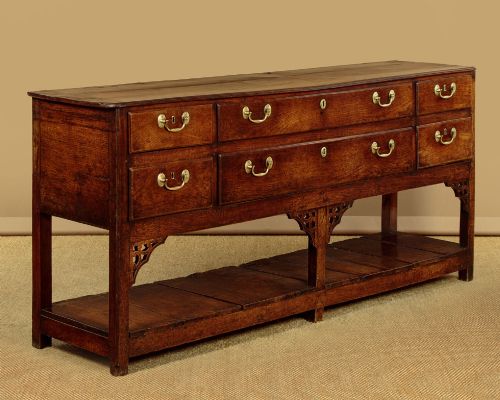
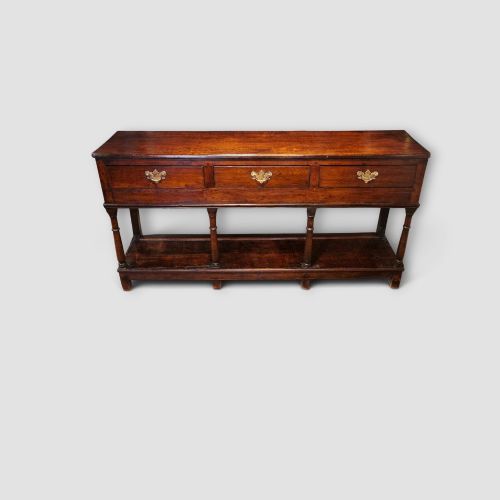
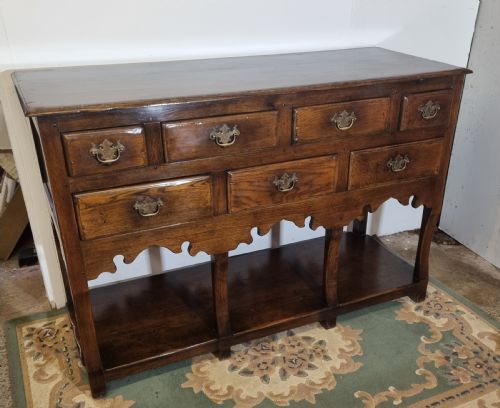
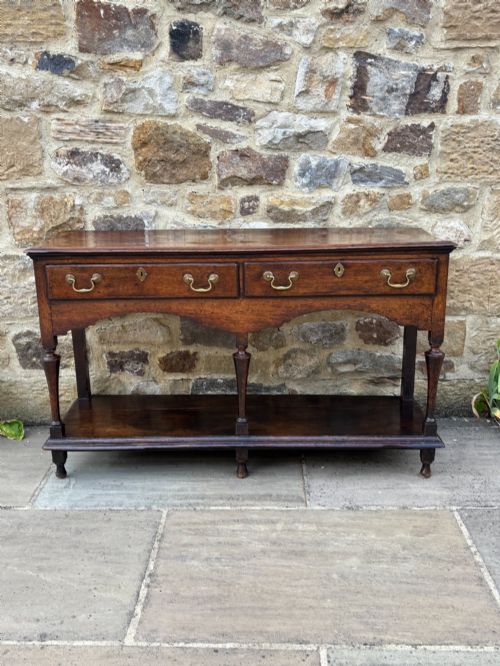

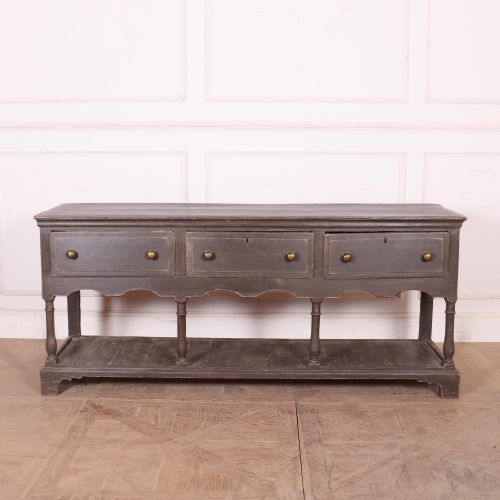

Oak Potboard Sideboard
An oak potboard sideboard brings honest timber and utility into a room, offering low display shelves beneath deep working surfaces.
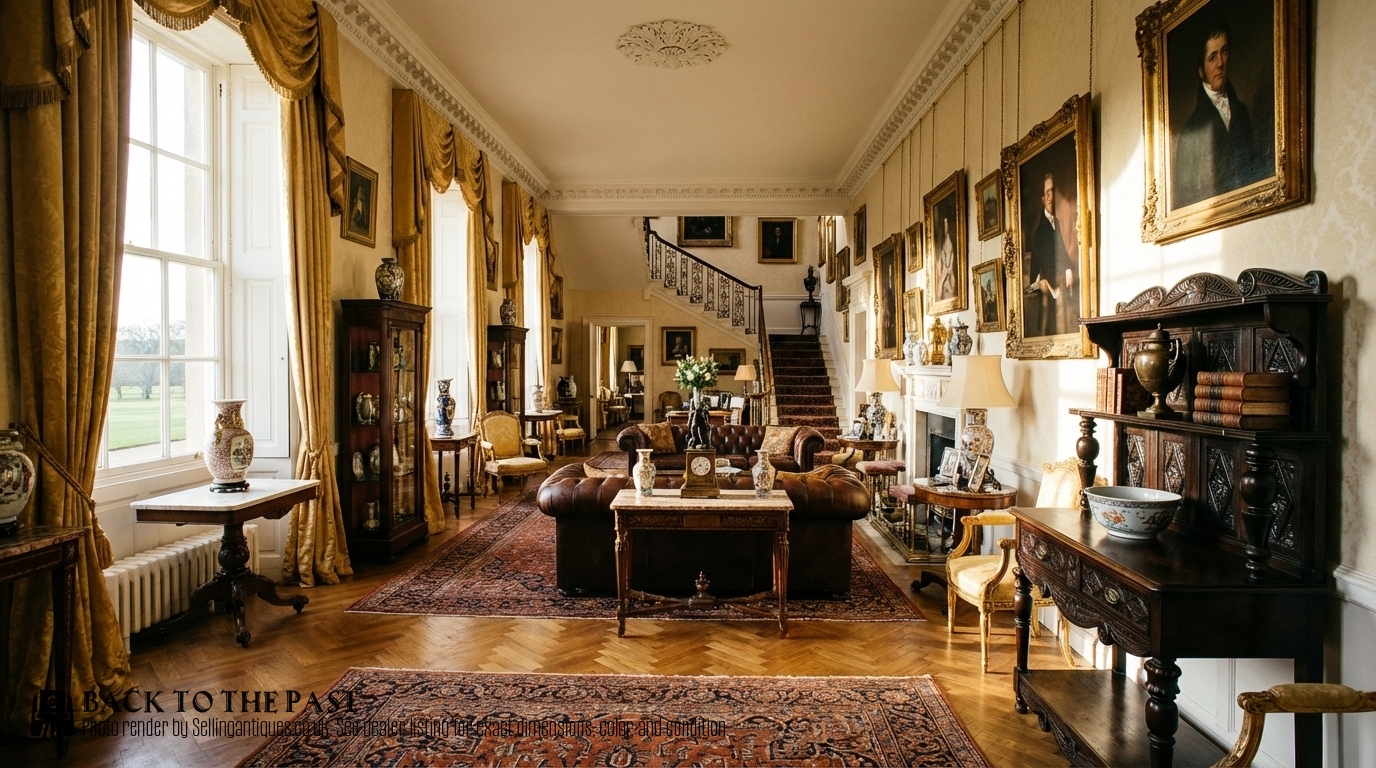
What an oak potboard sideboard is
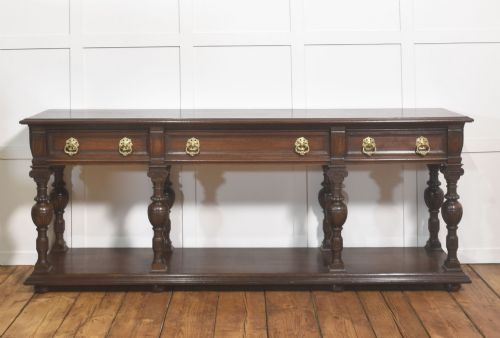
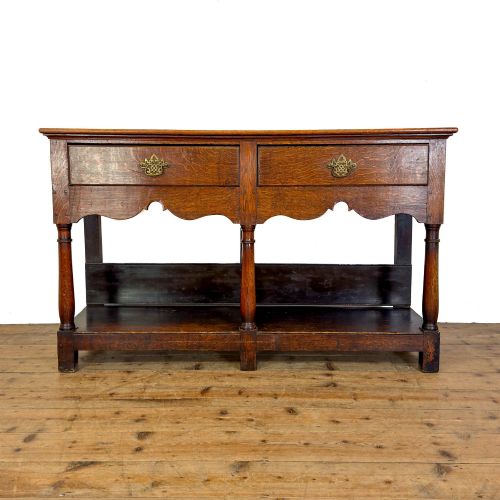
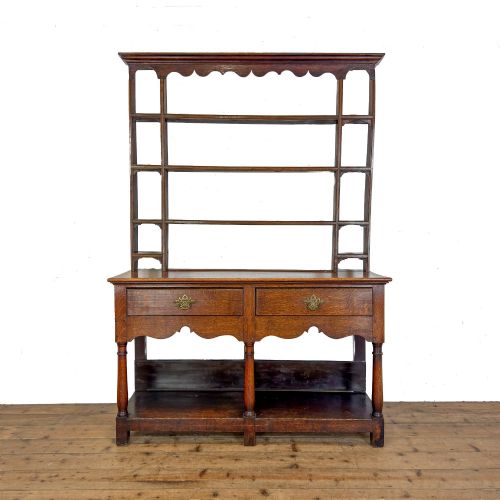
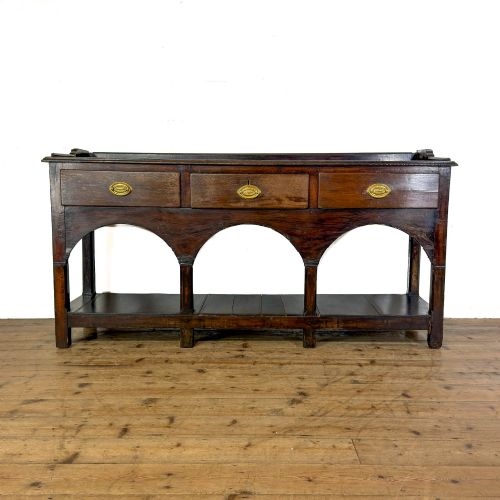
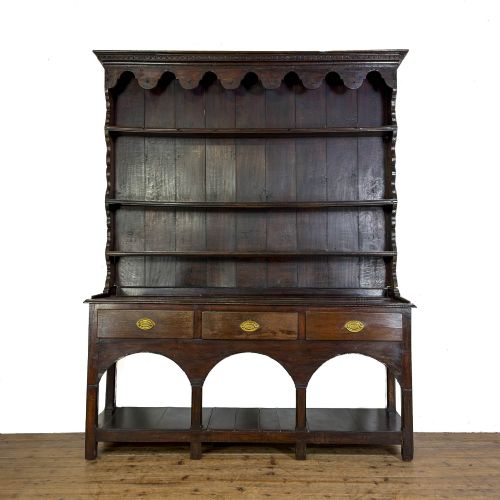
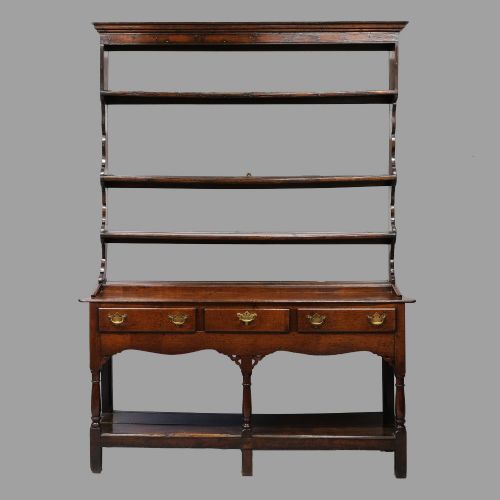
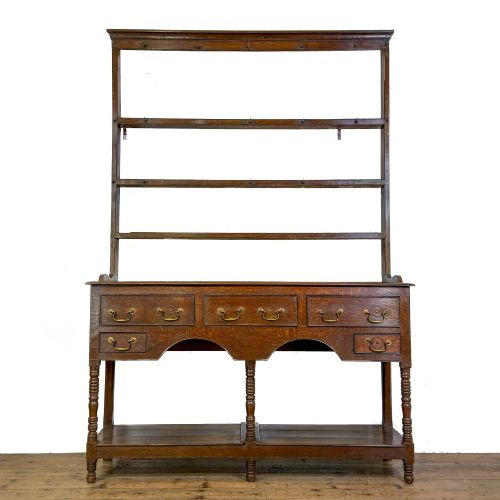
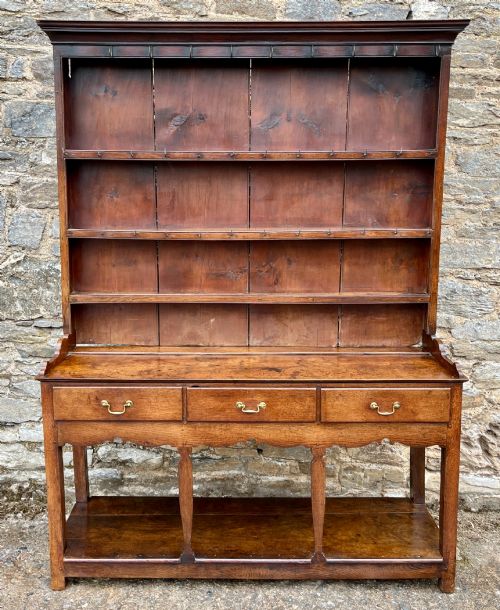
The oak potboard sideboard combines the low dresser base with a slatted lower shelf, creating a sturdy piece designed for domestic storage and display. These items bridge Georgian country craftsmanship and later revival interpretations, appearing in both low formats and taller designs with attached racks.
Buyers encountering this group will frequently find 18th century examples alongside Regency and 1920s Georgian revival pieces. Welsh origins feature prominently in the historical record, alongside general English country styles that emphasise practical timber construction.
Forms vary between compact small proportions and longer three-drawer configurations built to accommodate dining or kitchen requirements. The inclusion of the lower potboard tier remains the defining characteristic uniting these dresser bases and sideboards.
What varies in quality
The distinction between ordinary and exceptional examples rests in the proportion of the timber, the depth of colour in the oak, and the integrity of the original joints. Pieces retaining their early surface patination and untouched brass hardware demonstrate superior historical value.
Subtle details such as fine cockbeading around drawers, cleanly executed geometric carvings, and well-balanced proportions separate simpler country workshop pieces from more ambitious regional commissions.
Retail Price Guide 2026
Typical UK retail prices for oak potboard sideboard, calculated from the Sellingantiques database of over a million retail prices indexed since 2003. This retail price guide relies exclusively on Sellingantiques data; no external sources or auction records are used, so the figures do not describe the wider market.
The inventory records oak as the sole primary timber alongside brass hardware.
The Oak Potboard Sideboard Glossary
- Potboard
- The lower open shelf incorporated into a dresser base, traditionally used for storing pots and pans. This slatted or boarded tier sits just above the floor.
- Dresser Base
- The lower section of a kitchen or dining dresser, functioning as a sideboard with drawers and cupboards. It stands independently when separated from its upper plate rack.
- Georgian Revival
- A style popular in the early 20th century that deliberately copied the proportions and timber vocabulary of 18th-century cabinet making. These later pieces adapt earlier forms for modern domestic settings.
- Geometric Carvings
- Low-relief ornamentation cut directly into the wooden framework, often featuring intersecting lines and rectangles typical of early joinery. This decorative treatment enhances the drawer rails of select 18th-century pieces.
- Rack
- The upper shelving unit designed to sit atop a dresser base for displaying ceramic plates and platters. Some surviving examples integrate this superstructure directly with the potboard base.
Frequently Asked Questions
What is a potboard base?
A potboard base refers to a low sideboard featuring an open lower shelf beneath the main surface. This design allowed households to store heavy earthenware pots and utensils close to the floor.
Over time, these sturdy lower shelves became a defining regional characteristic of Welsh and English country furniture.
How do I date an oak sideboard?
Dating relies on examining construction methods, timber grain, and hardware. Earlier 18th-century pieces often display pegged joinery, hand-planed boards, and simpler drawer linings.
Later Regency and 1920s revival pieces tend to show more uniform milling and machine-cut elements while continuing traditional forms.
Were these pieces used in kitchens?
These sideboards served as primary working furniture in domestic kitchens and dining rooms. The thick top provided a solid surface for food preparation, while drawers held cutlery and linens.
The lower potboard kept heavy kitchenware accessible yet tidy off the stone floor.
What distinguishes Welsh dressers?
Welsh examples frequently incorporate deep potboard shelves and robust proportions suited to rural domestic life. Carmarthenshire and other regional workshops developed distinct local variations in drawer layouts and carving.
Many of these pieces were built as joined high dressers complete with plate racks above the base.