







Antique Oak Pot Board
An antique oak pot board brings solid country joinery and a low storage shelf straight into a modern kitchen or hallway.
Antique Oak Pot Board
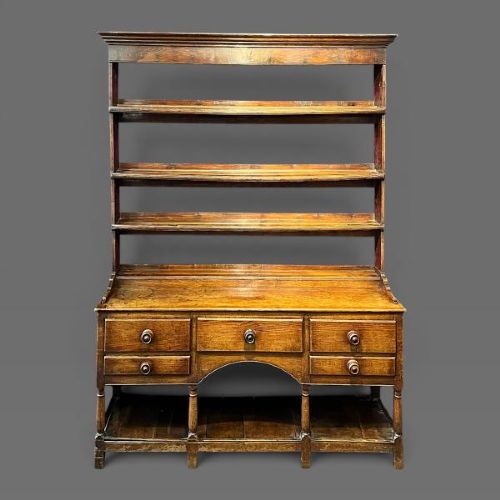
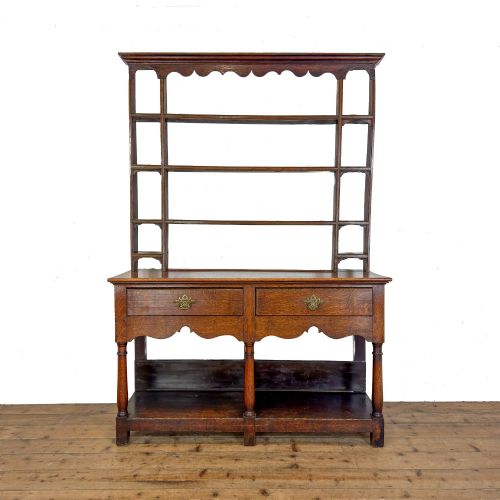
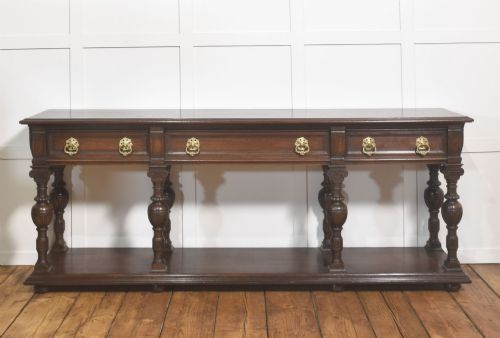
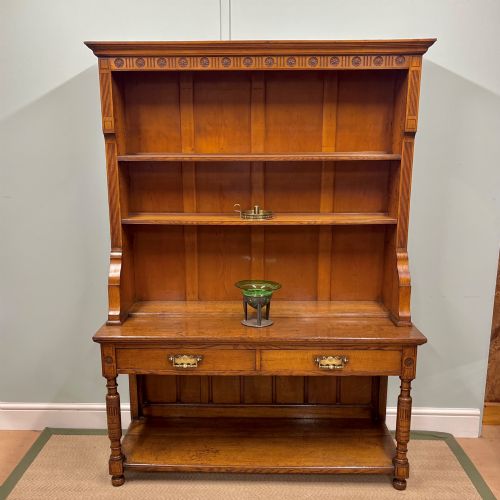
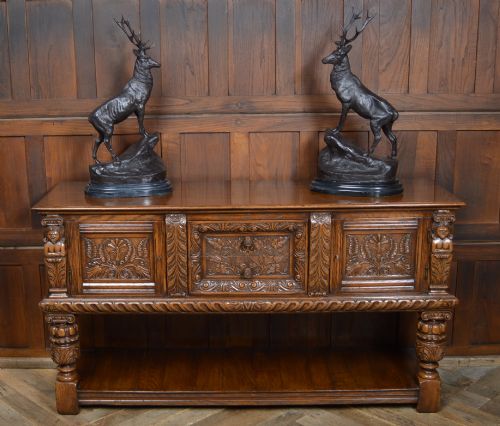
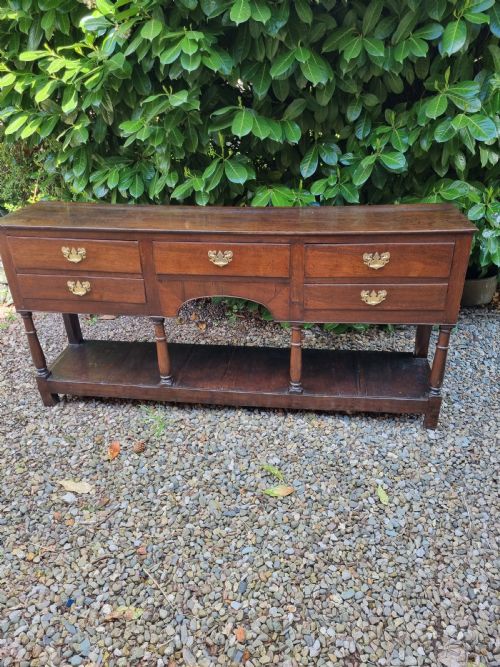
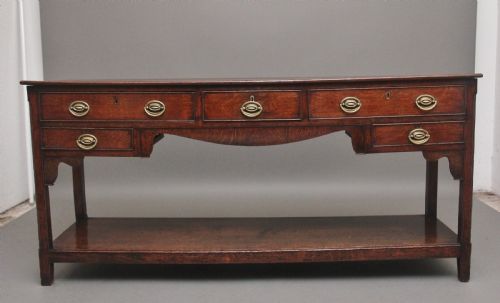
When you search for an antique oak pot board, you look at sturdy serving furniture built around a low open platform set near the floor. These pieces appear mostly as dresser bases and Welsh dressers originating from eighteenth century and nineteenth century regional workshops.
The form combines working drawer space above with a pot board below, originally designed to keep heavy kitchen utensils and pots off damp flagstone floors. Surviving examples range from plain country furniture to formal Georgian designs featuring plate racks and panelled cupboards.
How they were made
Joiners built these frames predominantly from solid oak, sometimes incorporating secondary timbers like pine for drawer linings and backing boards. Construction relied on pegged mortise and tenon joints to withstand heavy domestic use over centuries.
Hardware such as brass handles and iron hinges appear on many pieces, alongside occasional fruitwood marquetry inlay or painted finishes. Surfaces developed rich patination through decades of daily cleaning and natural wear.
Antique Oak Pot Board Retail Price Guide 2026
Typical asking prices for oak pot board among the pieces listed under this phrase on Sellingantiques today, from the lower quarter to the upper quarter. They describe what is for sale here now, not the wider market.
Listings feature oak dressers spanning from the 18th century through the 1920s, including Georgian and Victorian periods.
What varies in quality
The standard of an antique oak pot board rests on the proportion of the base and the integrity of the timber used in the lower shelf. Better examples retain thick original boards on the pot shelf rather than modern replacements fitted later.
Proportion and drawer arrangement set the finer vernacular pieces apart from heavier revival items made in the twentieth century. Original timber surfaces with deep colour and minimal alteration command greater interest from collectors.
Liberty of London
The Antique Oak Pot Board Glossary
- Pot board
- The low open shelf fixed between the lower legs of a dresser base, designed to hold pots and pans. This signature feature defines the entire group of furniture.
- Dresser base
- A low cabinet with drawers across the top and open storage or cupboards below, standing without an upper plate rack. These form the primary structure for most pot board examples.
- Welsh dresser
- A large kitchen sideboard paired with an upper plate rack for displaying ceramics and pewter. Regional variations show distinct drawer counts and moulding styles.
- Vernacular furniture
- Domestic pieces built by local country joiners using regional traditions rather than following strict metropolitan pattern books. Oak construction and practical utility mark these items.
- Patina
- The surface sheen and deep colour developed by timber over generations through handling, polishing and exposure to light. Original patination indicates an untouched antique surface.
Antique Oak Pot Board: Frequently Asked Questions
What is a pot board dresser?
A pot board dresser is a heavy wooden sideboard featuring a low shelf near the floor beneath the main drawers. Country households utilised this lower platform to store heavy cookware off cold flagstone surfaces.
Most examples date from the eighteenth and nineteenth centuries, originating from regional workshops in England and Wales. They combine functional storage with solid oak construction.
How do I style one at home?
These pieces fit naturally into kitchens, dining rooms and hallways as serving surfaces or display cabinets. The low pot board offers ideal storage for large bowls, baskets or heavy books.
Pairing the timber top with simple ceramics or glassware highlights the grain and age of the wood. Ensure the room has stable humidity to protect the antique oak frame.
Are these pieces made of solid oak?
Most antique pot board furniture uses solid oak for the primary frame, top and structural members. Secondary timbers like pine occasionally appear in drawer bottoms or back panels.
Individual makers selected quarter sawn oak to ensure stability and reveal distinctive medullary rays in the grain. Replacement boards sometimes occur on the lower shelf due to historical damp wear.