

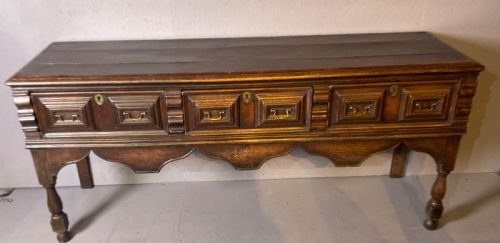


Scalloped Apron Dresser Base
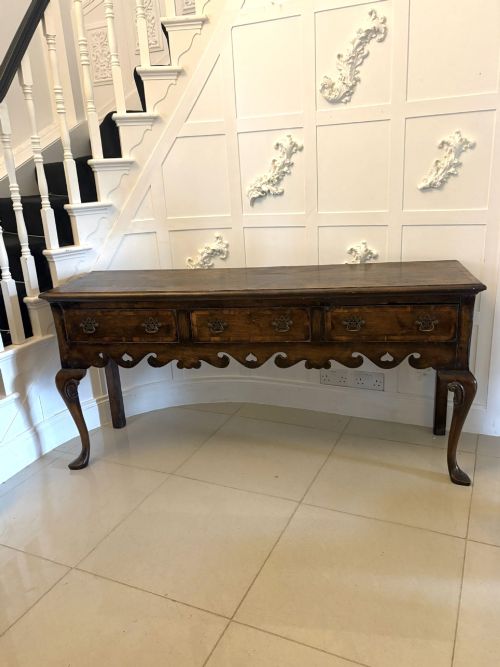
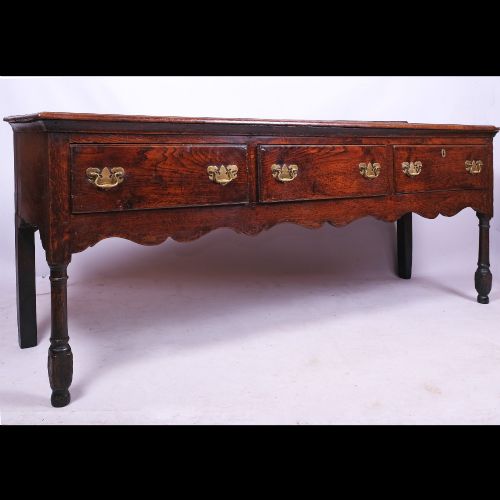
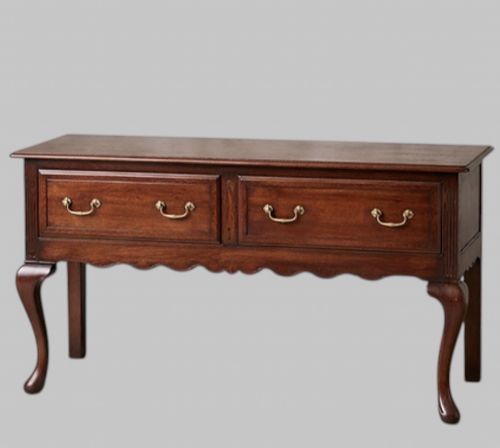
A scalloped apron dresser base is a heavy timber serving piece valued for its shaped lower rail and honest English utility.
What a scalloped apron dresser base is
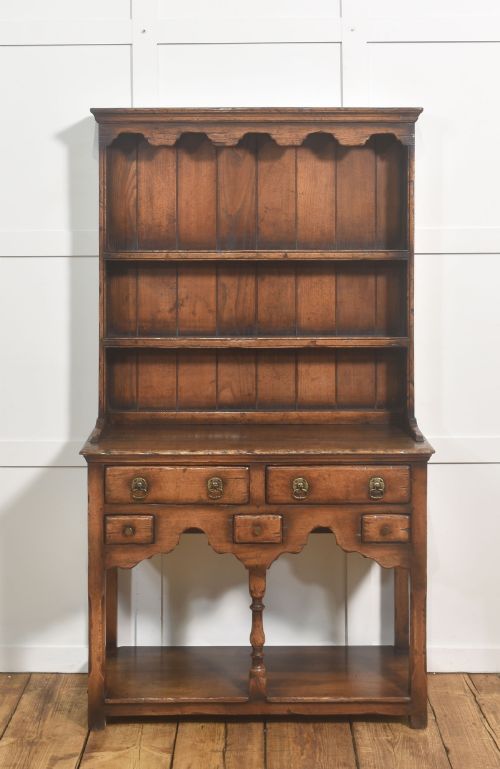
A scalloped apron dresser base is a substantial timber table designed for domestic storage and display, usually fitted with drawers across the top and a surface beneath. When you search for this form, you encounter heavy oak construction that reflects centuries of English domestic life.
The versions you are most likely to meet on this page span the eighteenth and nineteenth centuries, including items made during the Georgian period and later revivals. They function equally well as console tables or traditional kitchen bases.
Makers shaped the lower rails into distinctive curves and arcs, giving these sturdy items a lighter visual profile. The survivors range from vernacular eighteenth-century pieces to later nineteenth-century interpretations built in the Georgian taste.
How they were made
Makers built these pieces primarily from solid oak, selecting timber for its strength and distinctive grain pattern. Boards were joined using traditional methods suited to heavy furniture.
Brass hardware such as handles and escutcheons often complements the dark timber, though many surfaces rely entirely on the natural warmth of polished wood. Open pot boards beneath provide structural stability while offering space for storage.
Retail Price Guide 2026
Typical UK retail prices for scalloped apron dresser base, calculated from the Sellingantiques database of over a million retail prices indexed since 2003. This retail price guide relies exclusively on Sellingantiques data; no external sources or auction records are used, so the figures do not describe the wider market.
Listings on this site span the Georgian period, the eighteenth century, and the nineteenth century, utilising solid oak and brass.
What varies in quality
Quality in a dresser base rests on the crispness of the timber's age and the proportion of the shaped apron beneath the drawers. Earlier eighteenth-century examples show hand-cut joinery and patination that decades of use create.
Later nineteenth-century revivals in the Georgian taste vary according to how closely the maker adhered to traditional proportions and timber selection. A successful piece maintains structural integrity while preserving the distinct character of its shaped front.
The Scalloped Apron Dresser Base Glossary
- Dresser base
- A low wooden furniture form featuring drawers and occasionally an open shelf beneath, designed for storage and serving. These pieces formed the backbone of traditional English interiors.
- Apron
- The horizontal timber member beneath the drawers that connects the legs, often shaped into curves or scallops. This decorative element softens the heavy geometry of the base.
- Pot board
- An open lower shelf fitted between the legs of a dresser base, traditionally used for storing pots and heavy kitchen equipment. It adds rigidity to the overall frame.
- Georgian taste
- A design style reflecting the classical symmetry and proportions of the eighteenth century, frequently revived in later periods. Items in this taste follow established architectural rules.
Frequently Asked Questions
What is a scalloped apron dresser base?
It is a heavy wooden table featuring drawers and a decorative curved lower rail. These pieces served practical storage functions in traditional English homes.
They appear in oak across the eighteenth and nineteenth centuries, often functioning as serving tables or console surfaces today.
How do I style a dresser base?
Place the piece against a dining room or hallway wall to make use of its surface and low storage capacity. The open lower shelf accommodates books or baskets.
Keep surrounding objects simple to let the timber grain and the shaped apron remain the visual focus of the room.
Are these pieces made from solid oak?
The listings show oak as the primary material for these items, valued for its durability and heavy grain. Makers relied on this timber for structural strength.
Brass elements sometimes appear on drawers, though the focus remains on the warm tones of aged wood.
How do I tell an 18th century piece from a 19th century one?
Eighteenth-century examples display the natural wear and surface patination of prolonged domestic use. Their joinery reflects early hand-tool techniques.
Nineteenth-century pieces built in the Georgian taste often show cleaner timber surfaces and later interpretations of traditional forms.