








Country House Oak Server
A country house oak server provides sturdy utility and timeworn character, bringing practical surface space and enduring British craftsmanship to an interior.
Country House Oak Server
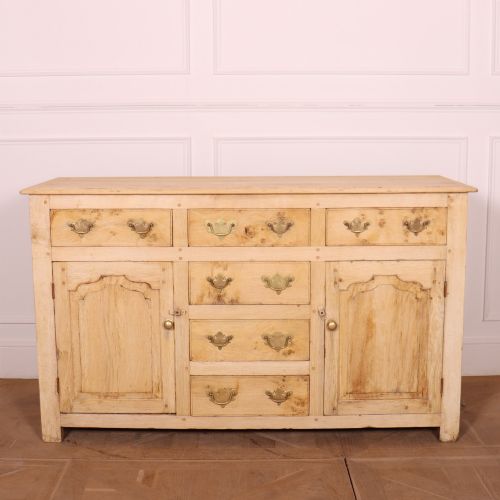
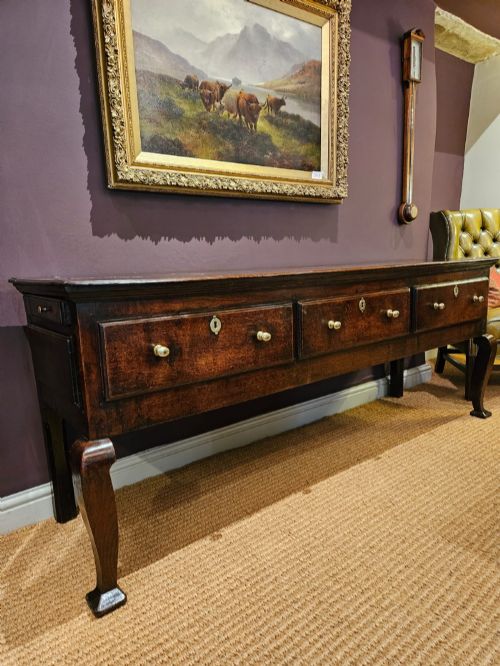
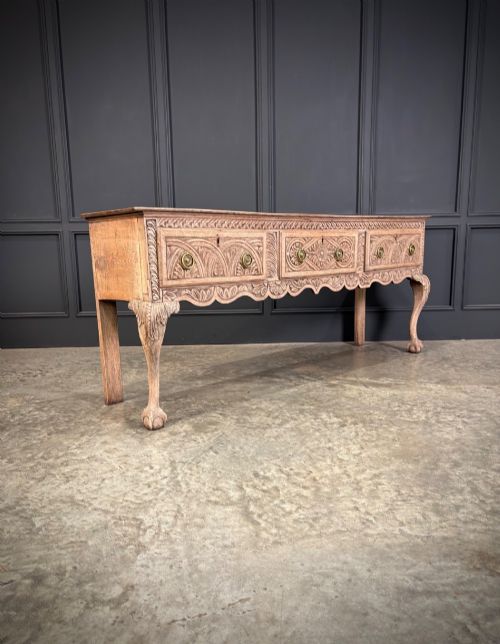
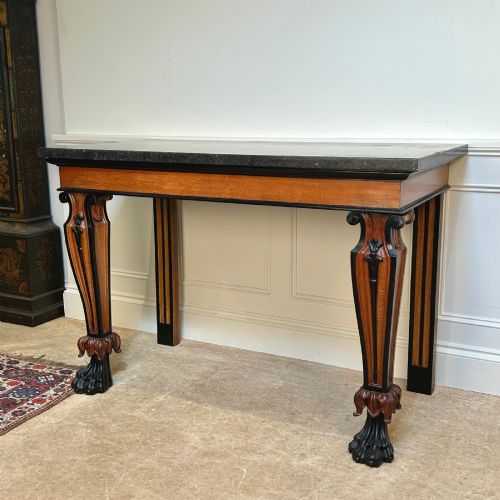
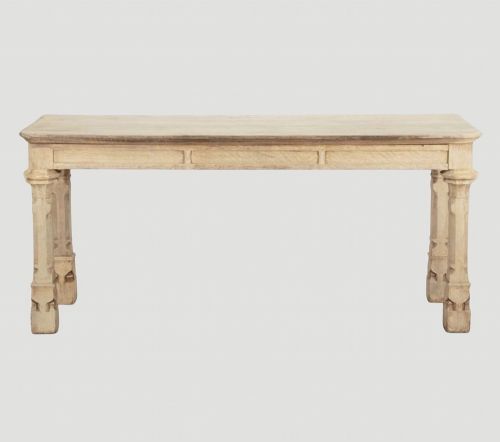
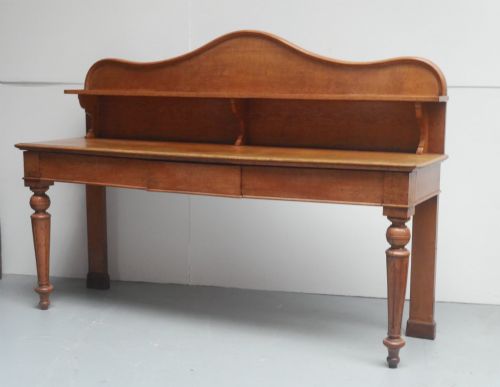
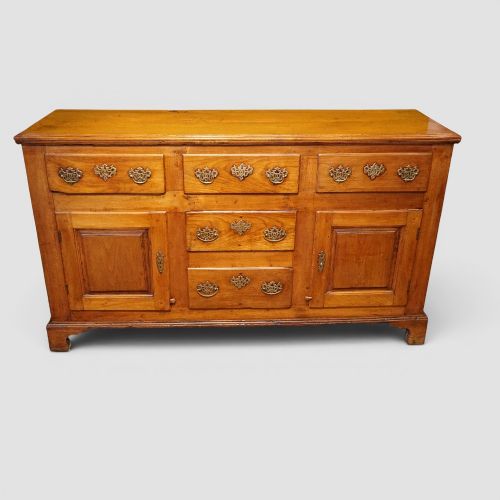
When searching for a country house oak server, you encounter functional dining and hall furniture originating from various periods, including the seventeenth, eighteenth, and nineteenth centuries. The pieces on this page primarily take the form of dresser bases, serving tables, and console tables designed for heavy domestic service.
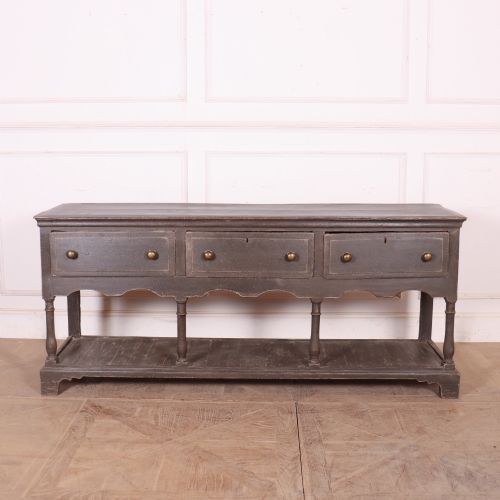
The dominant forms span from Georgian dresser bases with open potboards to Regency console tables and early nineteenth-century housemaid cupboards. These items reflect traditional English, Welsh, Scottish, and French provincial origins, showing practical proportions suited to long-standing domestic traditions.
Materials and construction methods
Solid oak serves as the primary structural material, frequently complemented by fruitwood accents and occasional painted surfaces or ebonised wood details. Natural timber surfaces display visible grain structures developed through decades of historical use.
Hardware elements incorporate brass and steel fixtures to secure doors and drawers. Selected pieces feature bleached oak finishes or marble tops, demonstrating varied regional workshop practices across the recorded periods.
Country House Oak Server Retail Price Guide 2026
Typical asking prices for country house oak server among the pieces listed under this phrase on Sellingantiques today, from the lower quarter to the upper quarter. They describe what is for sale here now, not the wider market.
Listings feature items spanning the 17th century through to the 1920s, constructed predominantly from solid oak, fruitwood, and occasional painted surfaces.
Assessing quality and character
Quality rests upon the integrity of the timber framing, the retention of original surface patination, and the balance of proportions across the base and top. Pieces retaining their structural honesty without excessive intervention command greater interest from buyers seeking authentic period character.
The refinement of leg turnings, drawer construction details, and the integration of secondary woods such as fruitwood distinguish standard regional utility items from finer formal Georgian and Regency examples.
The Country House Oak Server Glossary
- Dresser base
- A low utilitarian storage cabinet featuring drawers and sometimes an open lower shelf known as a potboard. This form predates the addition of upper plate racks.
- Potboard
- An open lower tier fitted beneath a dresser base to store heavy kitchen pottery and metalware. It provides structural stability to the leg assembly.
- Lowboy
- A small side table with one or more rows of drawers, typically standing on four tall legs. These pieces functioned as dressing tables or serving surfaces.
- Fruitwood
- Dense hardwood derived from fruit-bearing trees such as pear or apple, utilised for secondary framing and decorative contrasting elements. It offers a smooth texture and warm tone.
- Bleached oak
- Timber treated to lighten its natural dark coloration while preserving the underlying grain pattern. This finish appears across multiple nineteenth-century examples.
Country House Oak Server: Frequently Asked Questions
What is a country house oak server?
A country house oak server is a heavy utilitarian table or cabinet built to handle domestic food preparation and serving tasks. These pieces usually take the form of dresser bases or serving tables.
Originating across the seventeenth through nineteenth centuries, they provide wide surfaces and deep drawers for storage in hallways and dining rooms.
How do I date an oak server?
Dating relies on examining construction joints, timber species, and overall stylistic markers such as leg turnings and handle hardware. Georgian and seventeenth-century pieces display hand-cut joinery methods.
Regional variations, including Welsh and Scottish proportions, also help place an item within a specific historical century.
Where were these servers used?
These servers stood primarily in large kitchens, service corridors, and dining rooms of country houses. Domestic staff utilised the surfaces for plating meals and storing serving dishes.
Today, buyers place them in modern dining rooms, kitchens, and entrance halls as functional sideboards.
Are painted finishes period correct?
Many historical utility pieces received coats of paint to protect the timber or match evolving interior decoration schemes. Painted English and French provincial surfaces appear across eighteenth and nineteenth-century examples.
These historic finishes contribute to the decorative character valued by collectors.