
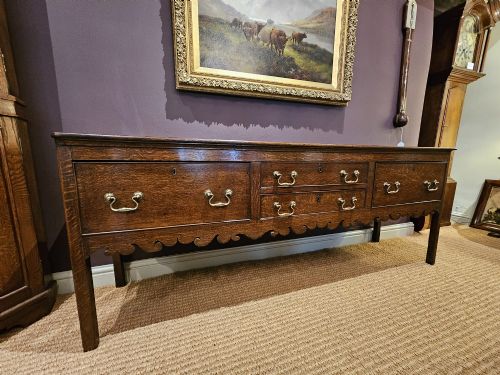
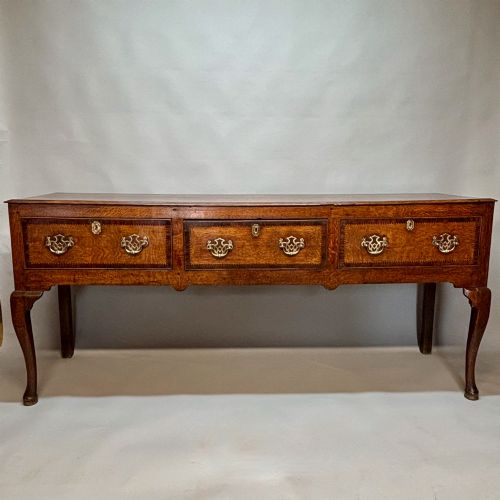
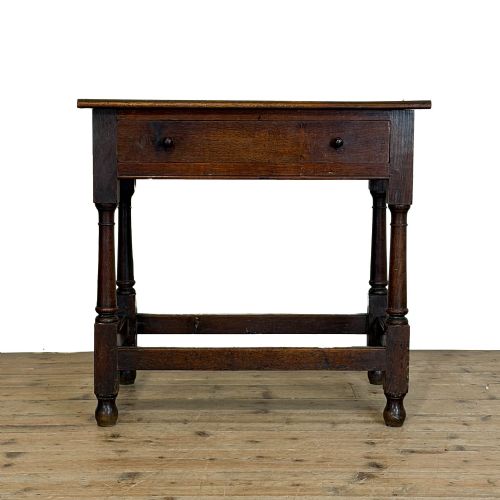
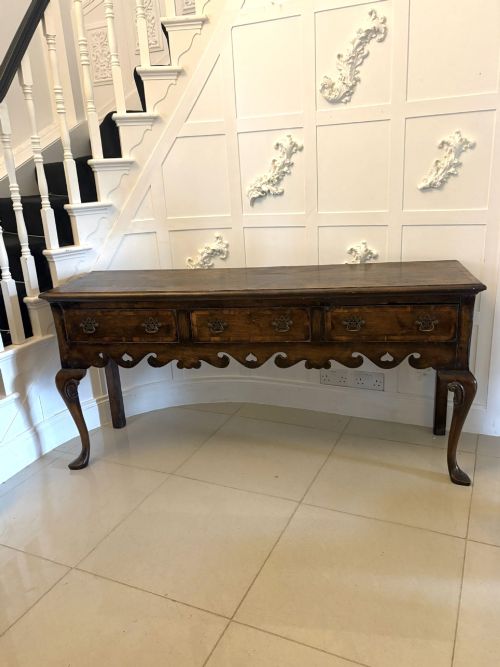
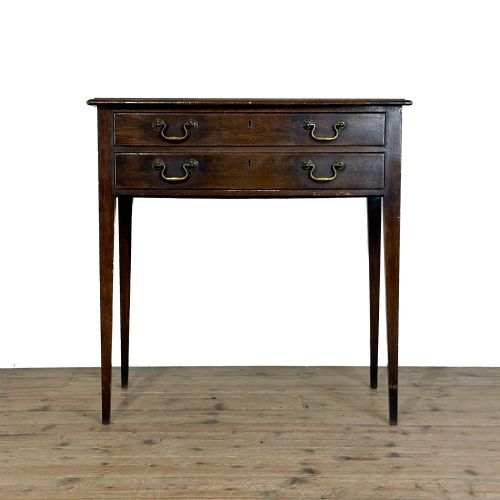
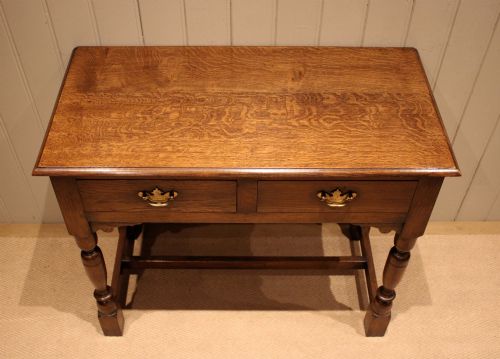
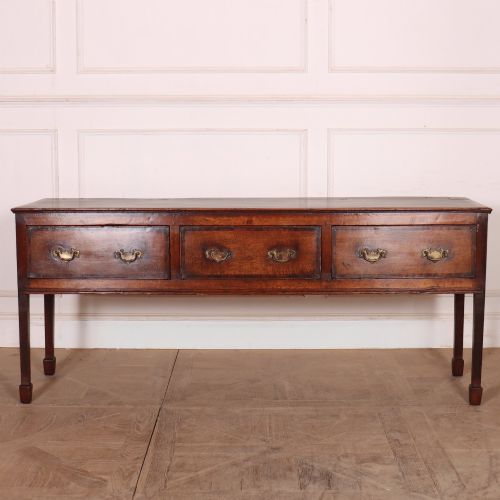


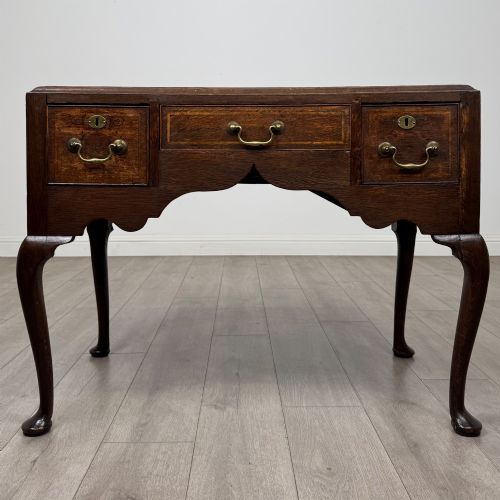
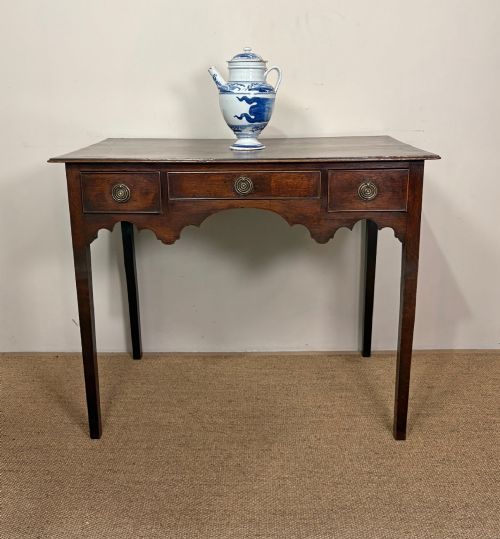
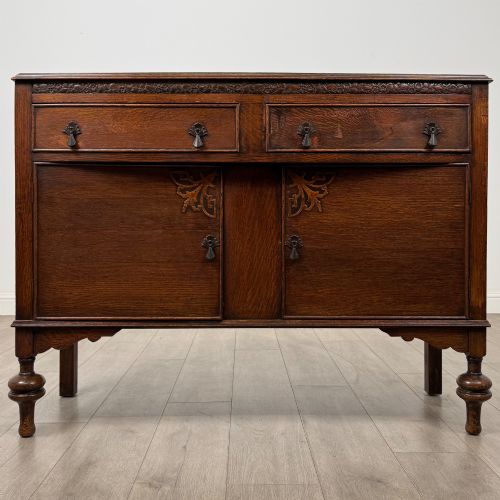
Oak Server with Drawers
When you need an oak server with drawers, you are looking at substantial timber storage pieces built for practical service across multiple centuries.
Oak Server with Drawers
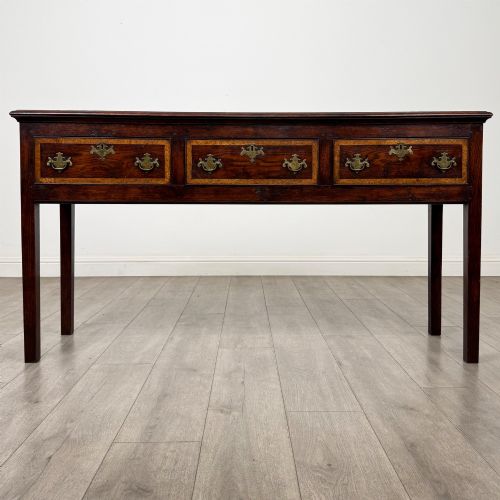
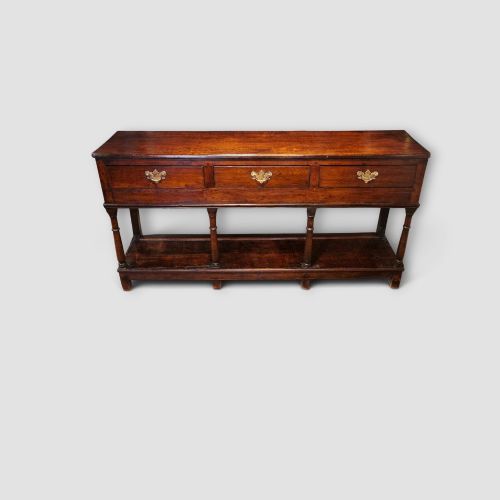
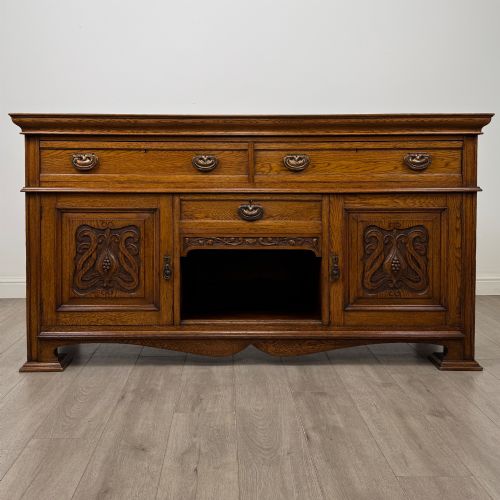
An oak server with drawers encompasses a varied group of utilitarian furniture, ranging from early low dressers and lowboys to later revival sideboards and serving tables. You are most likely to meet Georgian and 19th Century examples on this page, alongside 20th Century revivals constructed in solid oak.
The functional forms span dresser bases with potboards, side tables with single or multiple drawers, and heavily carved buffet tables. Regional vernacular styles, such as Welsh and Lancashire pieces, sit alongside formal Georgian designs and Arts & Crafts interpretations.
Origins stretch from the late 17th Century through the Edwardian era and into the 1930s, showing how domestic storage needs evolved while timber choice remained consistent. These pieces served dining rooms, halls, and kitchens as dependable surfaces and drawer storage.
Materials and construction
Construction relies primarily on solid oak, frequently paired with secondary timbers like fruitwood, and sometimes accented with burr walnut veneers. Metal hardware involves brass and copper for drawer pulls and handles, while iron structural bracing appears on selected items.
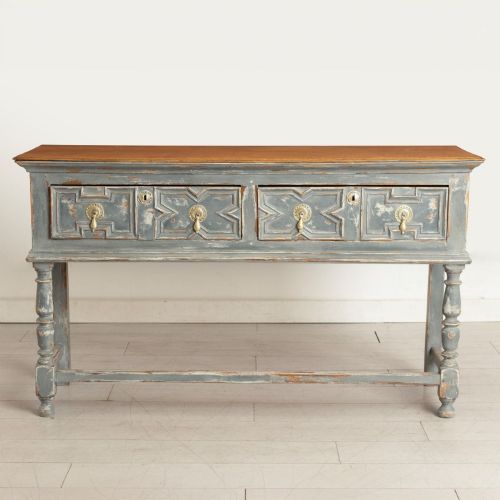
Joinery methods range from traditional pegged mortise and tenon frames on earlier pieces to machine-cut joints on 20th Century examples. Surface detailing is achieved through carved enrichment, geometrical mouldings on drawer fronts, and turned supports such as barley-twist legs.
Oak Server with Drawers Retail Price Guide 2026
Typical asking prices for oak server with drawers among the pieces listed under this phrase on Sellingantiques today, from the lower quarter to the upper quarter. They describe what is for sale here now, not the wider market.
Several pieces feature fierce Green Man carvings keeping watch over your cutlery.
Judging construction and finish
Quality reveals itself in the selection of the timber grain, the weight of the solid oak boards, and the integrity of the drawer construction. Hand-cut dovetails and smooth drawer runners separate meticulously built pieces from simpler utilitarian items.
The depth and crispness of carved details - whether geometric mouldings on 17th Century drawer fronts or Green Man motifs on later revival pieces - demonstrate the hand of a skilled maker. Original brass or copper hardware and undisturbed surface patination elevate the standing of a server.
Beresford & Hicks London·Phillips Bristol
The Oak Server with Drawers Glossary
- Dresser base
- The lower section of a traditional kitchen or dining room dresser, featuring rows of drawers and frequently an open potboard beneath.
- Lowboy
- A small 18th Century table with one or more tiers of drawers and cabriole or straight legs, used as a side table or dressing table.
- Potboard
- An open slatted or solid lower shelf incorporated into the base of a dresser or server for storing pots and serving dishes.
- Barley-twist
- A type of turned wooden furniture support carved in a helical spiral, popular in 17th Century work and later revived in the 19th and 20th Centuries.
- Geometrical moulding
- Raised mouldings applied to drawer fronts in rectilinear geometric patterns, characteristic of late 17th Century joinery.
Oak Server with Drawers: Frequently Asked Questions
What is an oak server with drawers?
An oak server with drawers is a sturdy wooden storage piece designed for domestic service, providing a flat top surface paired with under-counter drawer space.
These items encompass various forms including low dressers, sideboards, and serving tables produced across several centuries.
How do I date an oak server?
Dating relies on examining construction methods, timber characteristics, and stylistic details like hardware and mouldings. Early pieces from the 17th and 18th Centuries display hand-cut joinery and pegged frames.
Later 19th and 20th Century examples often incorporate revival styles such as Jacobean, Carolean, or Arts & Crafts motifs alongside standardised hardware.
Where were these pieces used?
These servers were traditionally placed in dining rooms, kitchens, or great halls to assist with meal preparation and tableware storage.
The drawers held linens and cutlery, while the top surface and lower shelves accommodated serving dishes and large platters.
How do I care for solid oak furniture?
Solid oak benefits from a stable indoor environment away from direct heat sources and extreme humidity fluctuations, which can cause timber movement.
Regular dusting with a dry cloth and occasional application of appropriate wax helps maintain the surface sheen and nourishes the wood.