

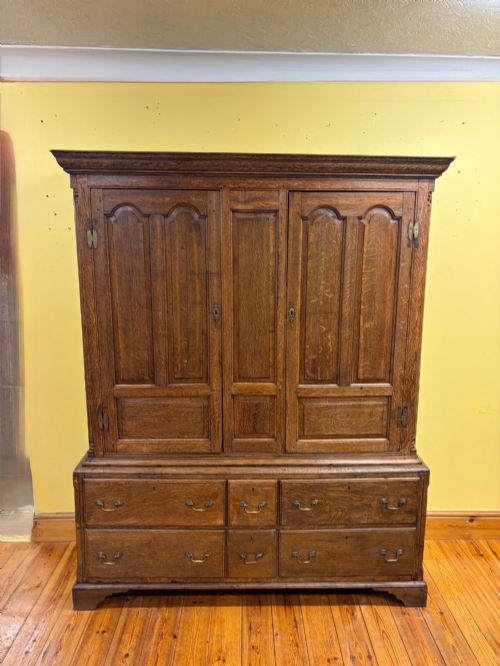
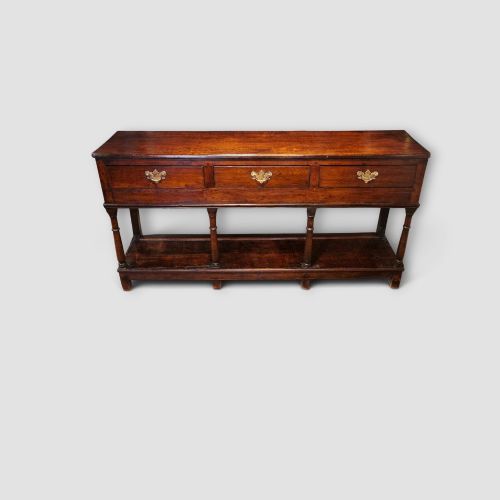
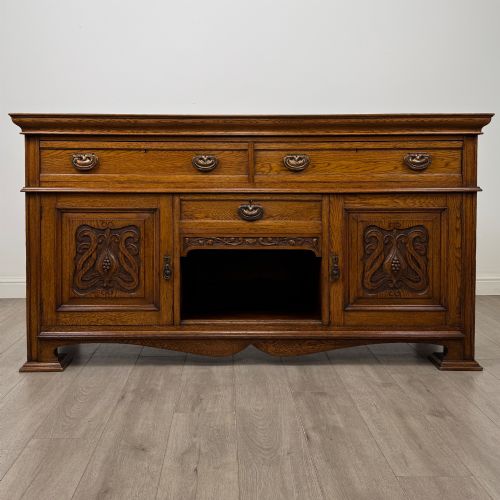
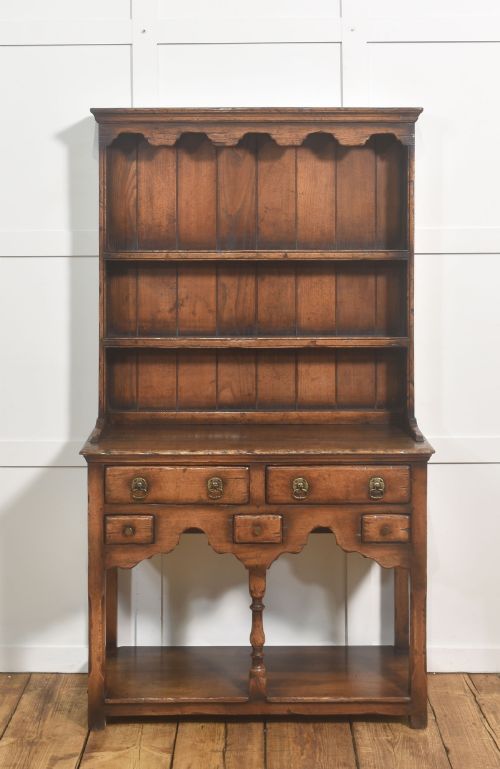
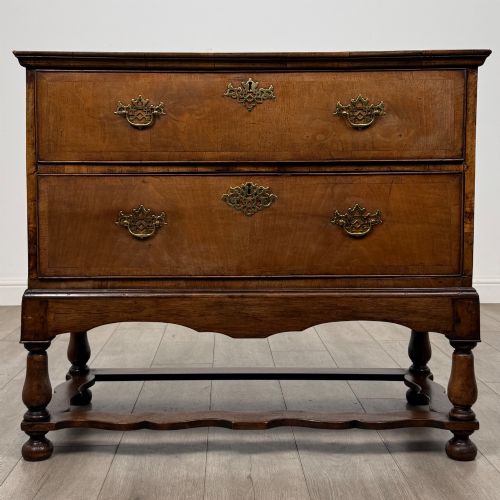
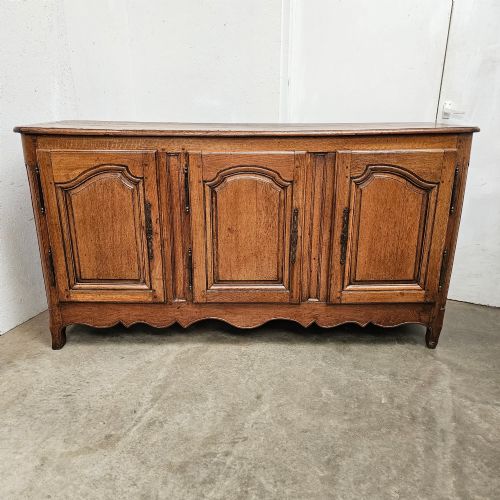
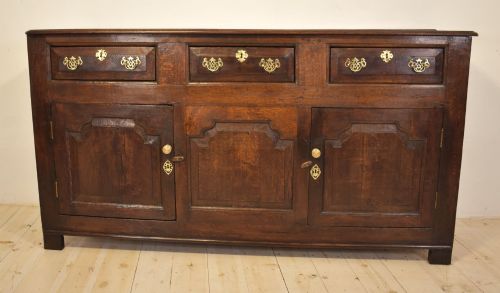
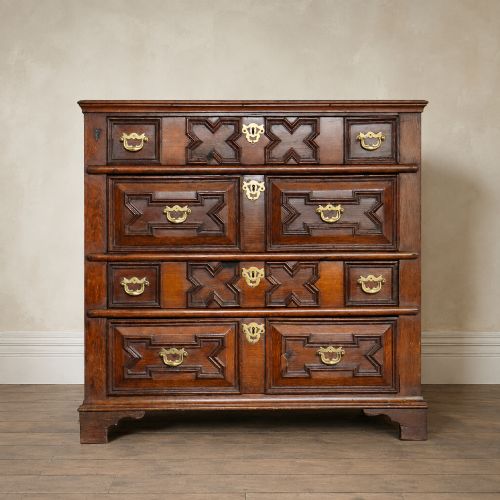
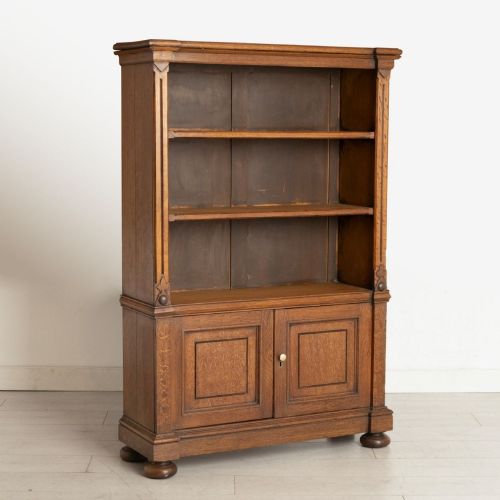
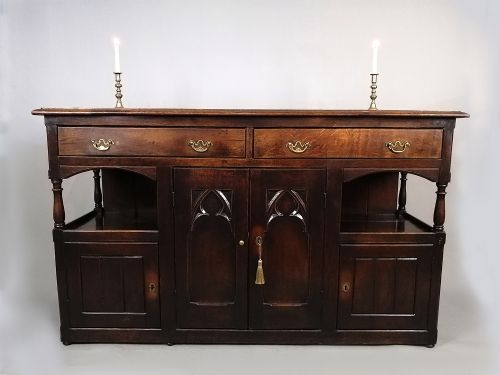
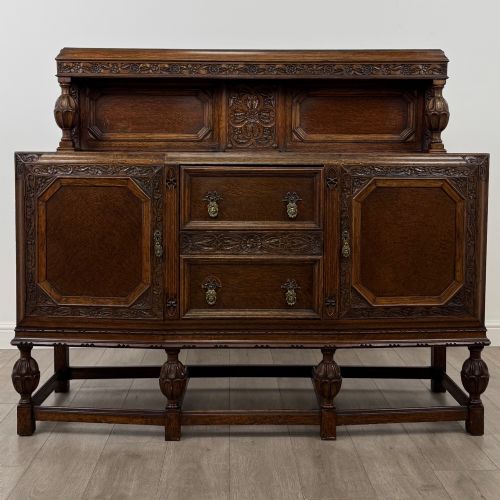
Brown Oak Dresser Base
Brown oak dresser base furniture pieces offer sturdy utility and rich grain, bringing practical historic storage into a modern room.
What They Are
A brown oak dresser base is a substantial utilitarian furniture piece designed for storage and surface workspace. These items appear across the eighteenth century, Georgian, and Regency eras, reflecting traditional English country craftsmanship.
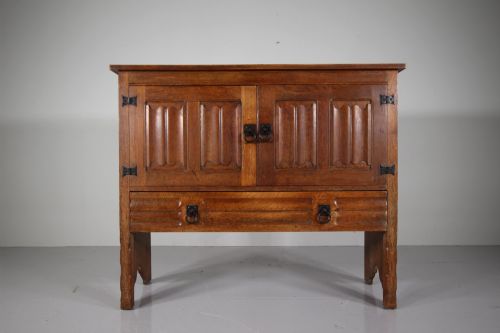
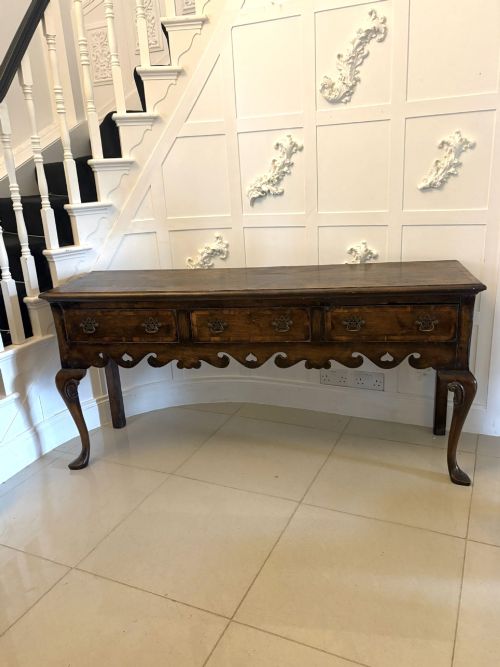
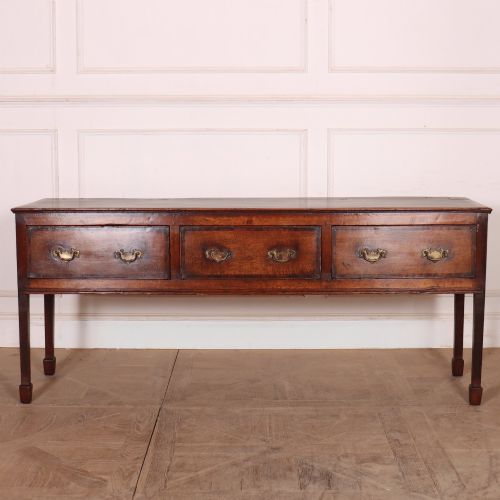
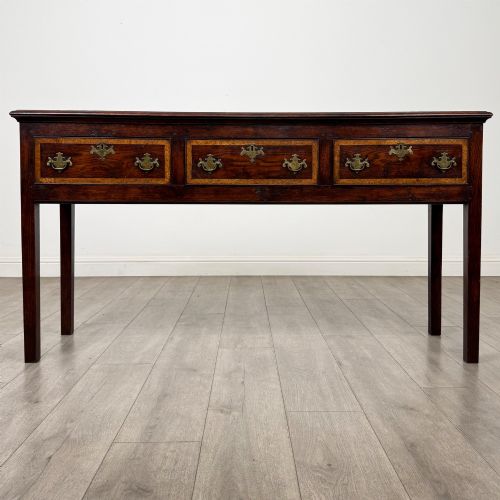
The selections available here range from small antique examples dated around eighteen hundred down to mid-eighteenth-century potboard variants. Buyers mostly meet sturdy timber sideboards and low cupboards equipped with drawers and surface tops.
How They Were Made
Carpenters constructed these items primarily from solid oak, utilising native timber with strong figure and deep colour. Construction relied on traditional joinery methods suited to heavy daily use.
Makers incorporated brass and iron hardware, such as handles and hinges, to secure doors and drawers. These metal fittings provide functional contrast to the dark timber surfaces.
Retail Price Guide 2026
Typical UK retail prices for brown oak dresser base, calculated from the Sellingantiques database of over a million retail prices indexed since 2003. This retail price guide relies exclusively on Sellingantiques data; no external sources or auction records are used, so the figures do not describe the wider market.
Listings span the eighteenth century, Georgian period, and Regency era, constructed entirely from oak with brass and iron hardware.
What Varies In Quality
Quality rests in the selection of the oak timber and the preservation of the original surface patina. Finer pieces display rich grain patterns and proportioned drawer arrangements that mark superior workshop output.
The integrity of the construction and the retention of period brass or iron hardware elevate certain examples above simpler vernacular builds. Honest signs of age contribute to the character of better specimens.
The Brown Oak Dresser Base Glossary
- Potboard
- An open lower shelf built into the base of a dresser for storing heavy kitchen pottery. This practical lower tier distinguishes specific country house forms.
- Georgian
- The design period spanning the reigns of the first four Georges, noted for proportion and classical restraint. Furniture from this era shows disciplined decorative vocabulary.
- Regency
- The stylistic period covering the early nineteenth century up to eighteen thirty. Pieces from this phase sometimes show simpler lines or heavier proportions.
- Vernacular
- Objects made by local craftsmen for regional use rather than high London workshops. These items prioritise direct utility over metropolitan fashion.
Frequently Asked Questions
What is a brown oak dresser base?
A brown oak dresser base is a low wooden storage unit featuring drawers and sometimes a lower shelf, built primarily during the eighteenth and early nineteenth centuries. They served as functional work surfaces and storage hubs in traditional homes.
Today, buyers use them as sideboards in dining rooms or hallways. Their sturdy timber construction makes them resilient for daily placement.
How do I date an oak dresser base?
Dating relies on observing construction methods, timber characteristics, and hardware styles. Eighteenth-century examples often display hand-cut joints and vernacular design traits.
Later Regency pieces might show shifts in proportion or simpler drawer linings. Comparing the timber patination helps confirm the age of the piece.
Where were these dressers made?
Most pieces originate from English country workshops, with regional variations found in areas like Wales. Local carpenters utilised native oak timber available in their immediate surroundings.
This regional production explains the diverse proportions and hardware choices seen across different items. Each piece reflects the materials accessible to the maker.
Can I use a dresser base in a modern kitchen?
These bases function well as freestanding kitchen islands or sideboards for dishware storage. Their solid oak tops provide durable work surfaces.
Ensure the height matches your requirements before placement. The deep drawers accommodate modern kitchen utensils and linens.