
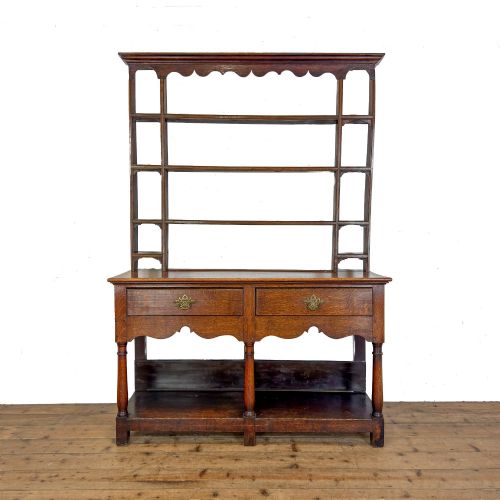

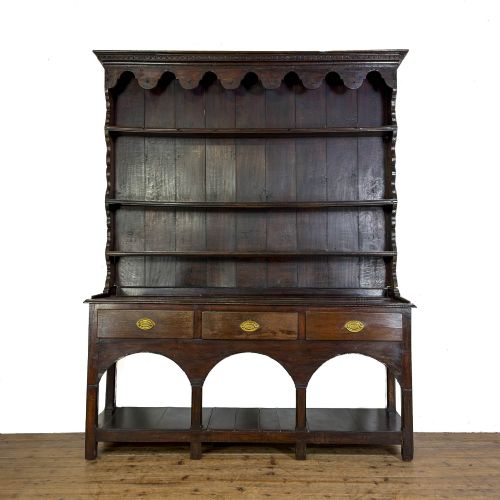
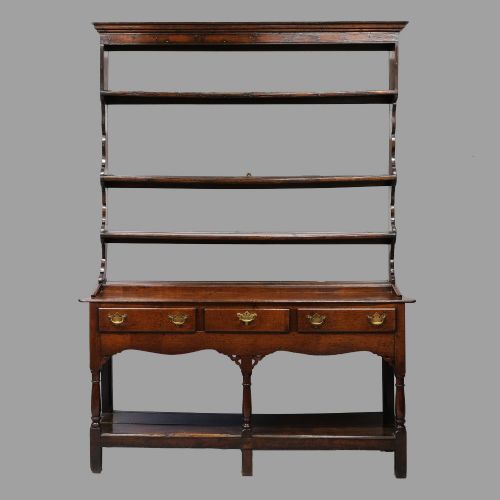
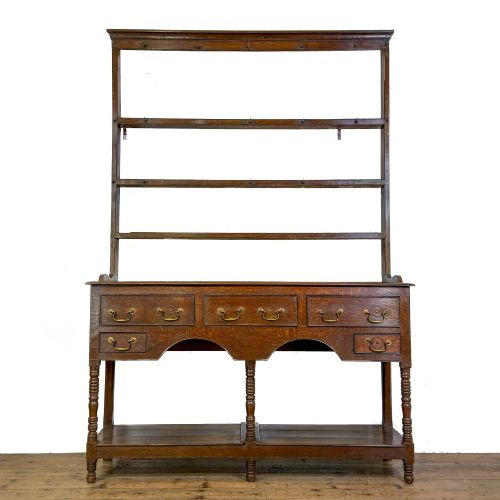



Welsh Oak Potboard Dresser
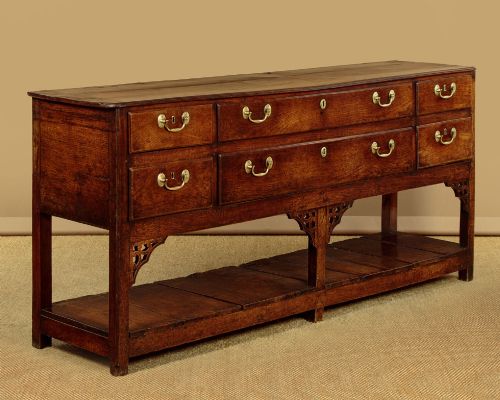
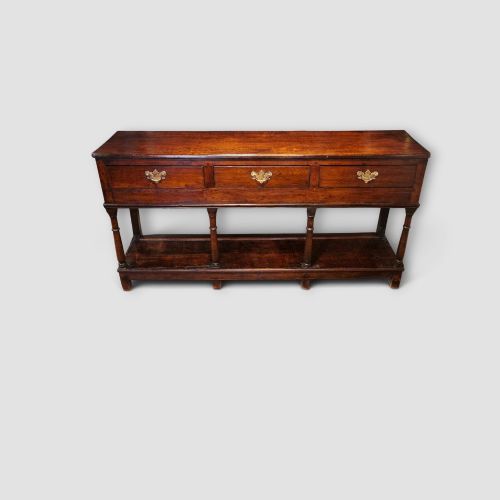
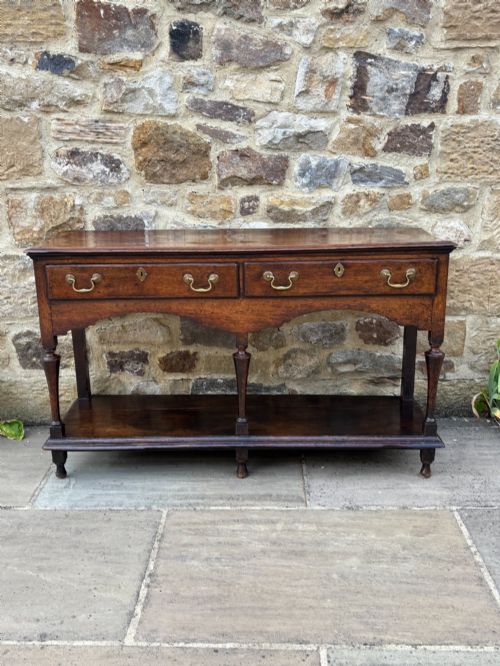
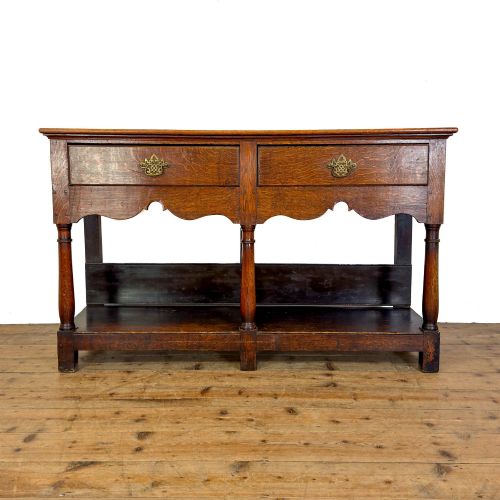
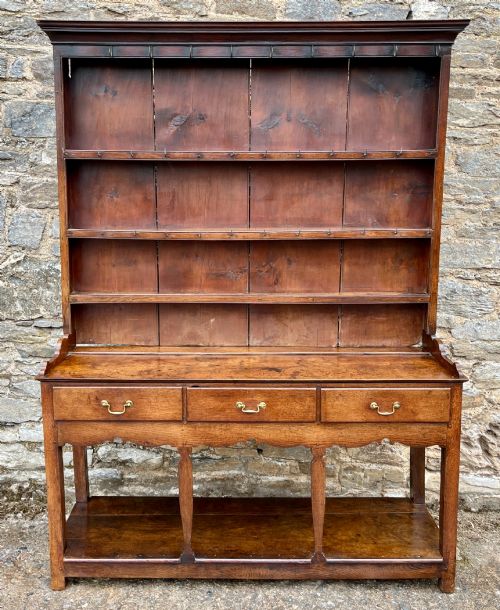
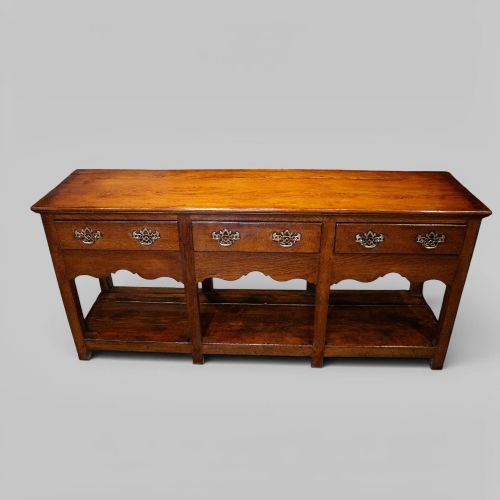
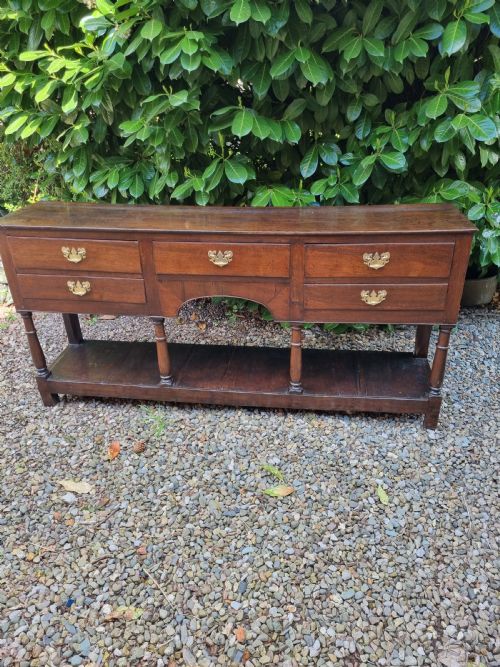
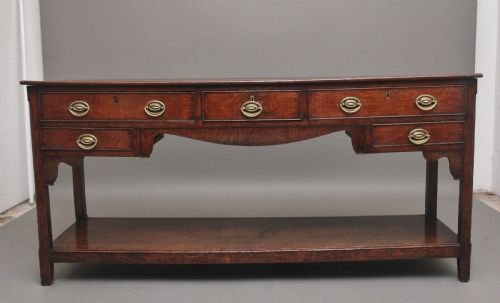
A welsh oak potboard dresser combines a sturdy timber base with an open lower shelf designed for displaying heavy kitchen wares.
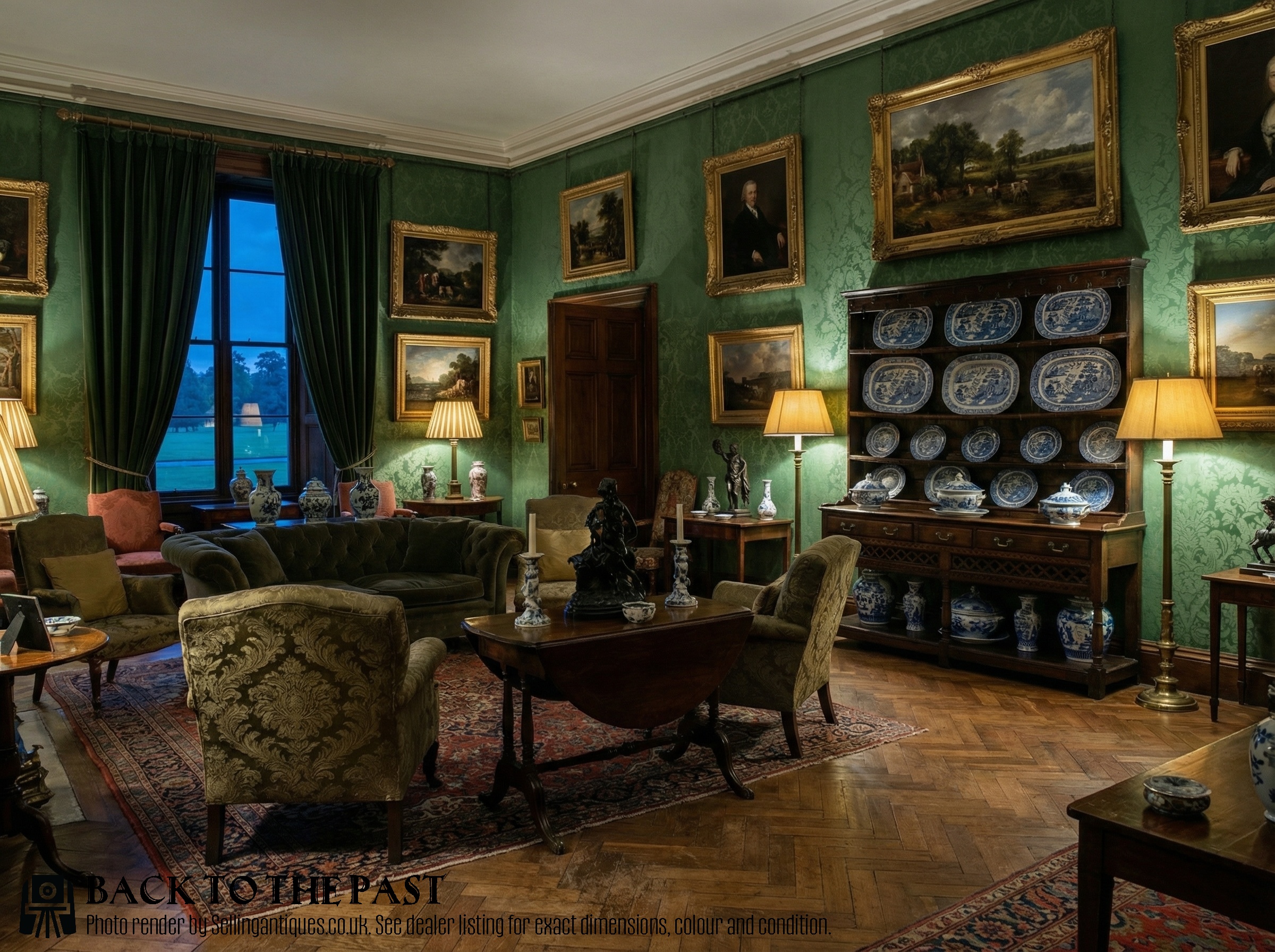
Welsh Oak Potboard Dresser
When searching for a welsh oak potboard dresser, buyers encounter substantial timber furniture originating primarily from the eighteenth and nineteenth centuries. These pieces typically manifest as either a low base unit with drawers or a high joined version incorporating an open plate rack. Regional variations from Carmarthenshire, Cardiganshire, and Glamorgan frequently appear across the selection.
The most common formats present a series of drawers above a flat lower tier, known as the potboard, which stands upon short feet or stile extensions. Many examples retain their original upper plate racks, whilst others survive solely as dresser bases. Dating predominantly from the Georgian and Regency periods, these items reflect traditional vernacular domestic utility.
Construction and Materials
Surfaces often display the natural warmth and figuring of aged timber developed through decades of daily use and waxing. Certain examples feature painted finishes or geometric carvings applied to drawer fronts and friezes. Regional workshops utilised locally available hardwoods to build robust furniture intended for heavy farmhouse service.
The listings feature oak, ash, elm, and pine construction across pieces originating from the seventeenth, eighteenth, and nineteenth centuries.
Judging Quality and Proportion
Quality rests significantly upon original proportions, with smaller, rarer formats commanding distinct attention from collectors. The survival of an original upper plate rack attached to the lower base elevates the historical integrity of the piece. Timber selection and surface patination further separate standard farmhouse items from exceptional vernacular examples.
Structural originality, including untouched drawer bottoms, period hardware, and minimal timber replacement, dictates the desirability of a dresser. Regional idiosyncrasies and regional vernacular detailing from specific Welsh valleys indicate the care invested by the original cabinetmaker. The balance between the deep top boards and the lower potboard dictates visual harmony.
The Welsh Oak Potboard Dresser Glossary
- Potboard
- The lower open shelf situated near the floor of a dresser base, traditionally utilised for storing heavy pots and pans. This defining lower tier rests just above the feet.
- Dresser Base
- The lower portion of a full dresser, functioning as a sideboard with drawers and cupboards above the potboard. Many survive independently without their upper racks.
- Plate Rack
- The upper shelving unit fixed above the dresser base, featuring grooves and rails for displaying ceramic plates and platters vertically. Original racks match the timber and age of the lower base.
- Vernacular
- Furniture made by local country craftsmen following regional traditions rather than metropolitan fashion. These pieces emphasise utilitarian strength and regional stylistic quirks.
- Joinery
- The method of connecting pieces of wood utilising pegged joints and mortises without relying on modern metal fasteners. Traditional vernacular work depends heavily on these robust structural linkages.
Welsh Oak Potboard Dresser: Frequently Asked Questions
What is a potboard on a dresser?
The potboard is the low, open shelf positioned near the floor between the legs of a dresser base. It provided practical storage for heavy kitchen utensils and earthenware.
Over generations, this sturdy lower tier acquired a warm, polished surface from daily domestic life.
Did all dressers come with plate racks?
Many dressers were constructed as two-part pieces incorporating an upper open plate rack designed to display ceramic wares. Other examples were built solely as dresser bases with drawers and a potboard.
Surviving pieces frequently present either integrated high racks or lower sideboard formats depending on their original rural kitchen context.
How do I date an oak dresser?
Dating relies upon examining construction techniques, timber characteristics, drawer dovetailing, and hardware styles. Pieces from the eighteenth century often display hand-carved details and pegged joinery.
Later nineteenth-century examples tend to show standardised construction methods and different secondary woods like pine.
Where were these dressers made?
These pieces originate from Welsh farming communities and rural workshops across regions such as Carmarthenshire, Cardiganshire, and Glamorgan. Local cabinetmakers utilised native timbers to construct durable furniture suited for country houses.
Regional vernacular styles distinguish these Welsh pieces from English farmhouse equivalents.