
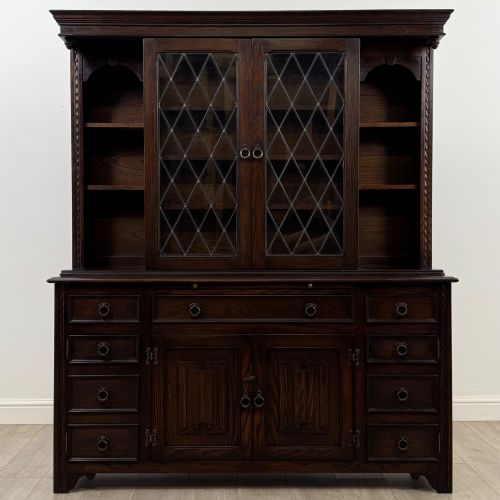
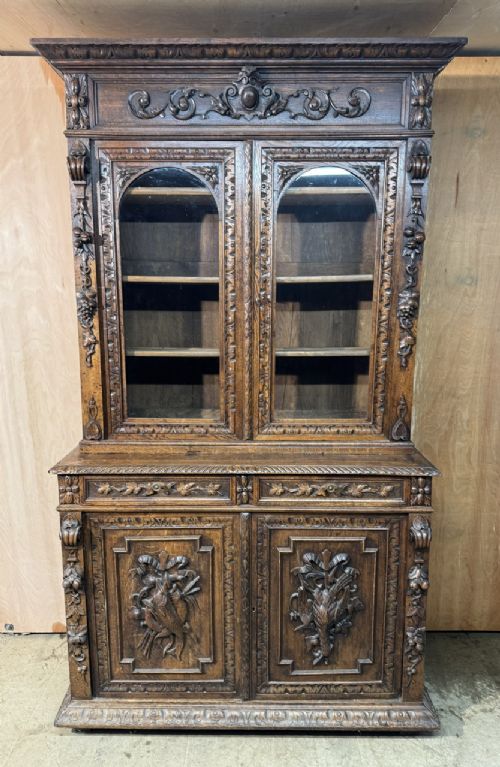
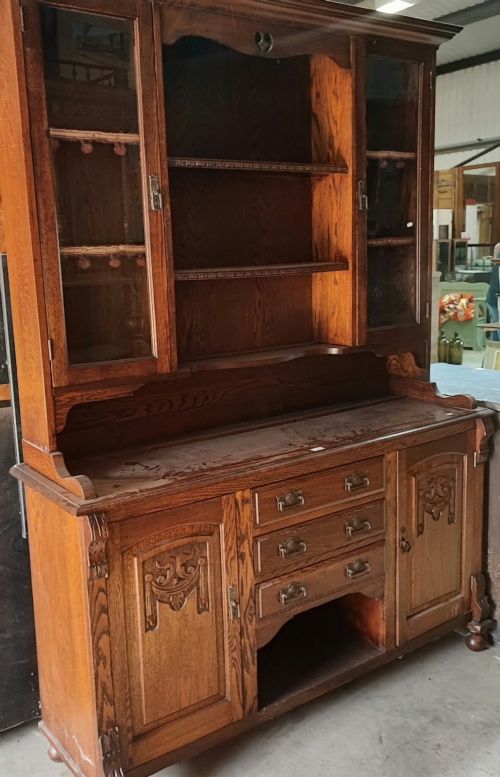
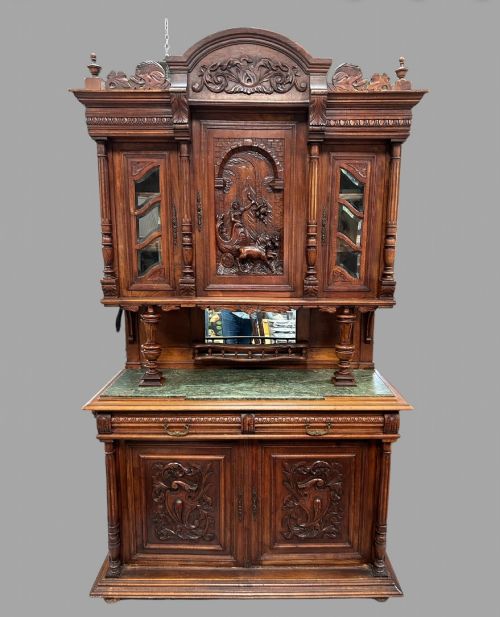


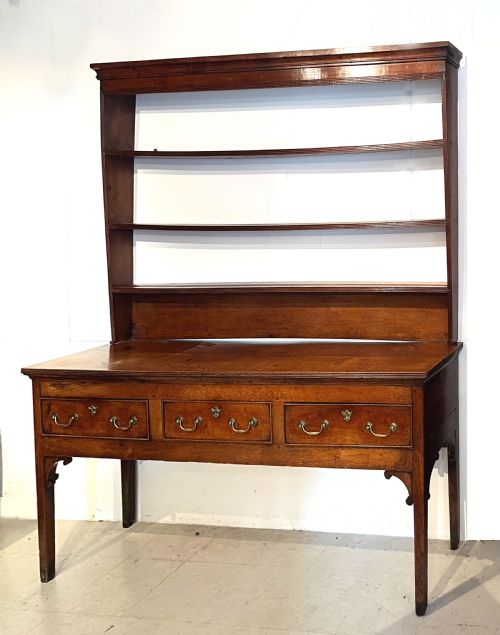


Antique Oak Display Hutch
An antique oak display hutch brings centuries of craft and practical storage into a room, offering glazed shelving and sturdy timber surfaces for domestic display.
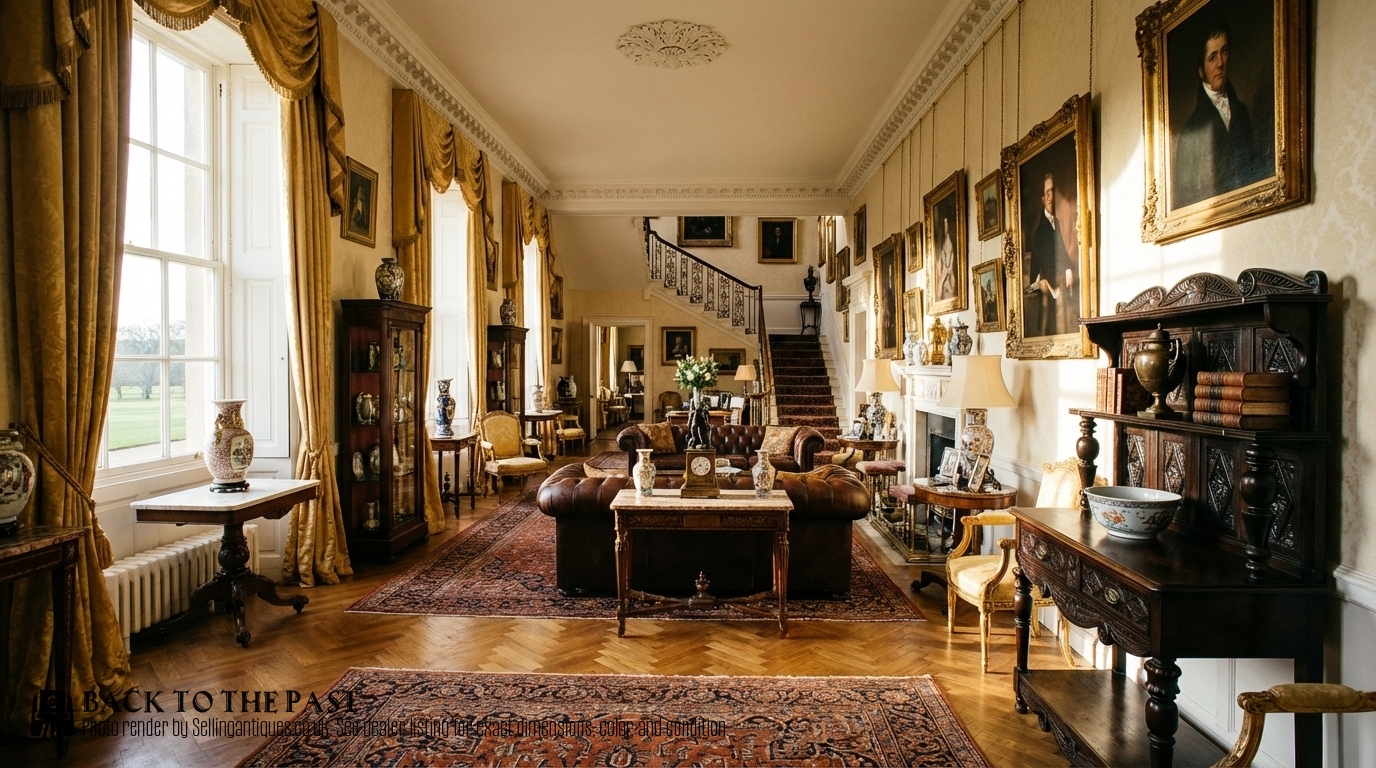
Antique Oak Display Hutch
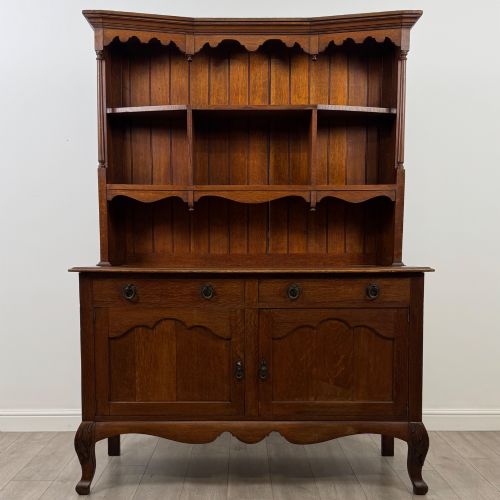
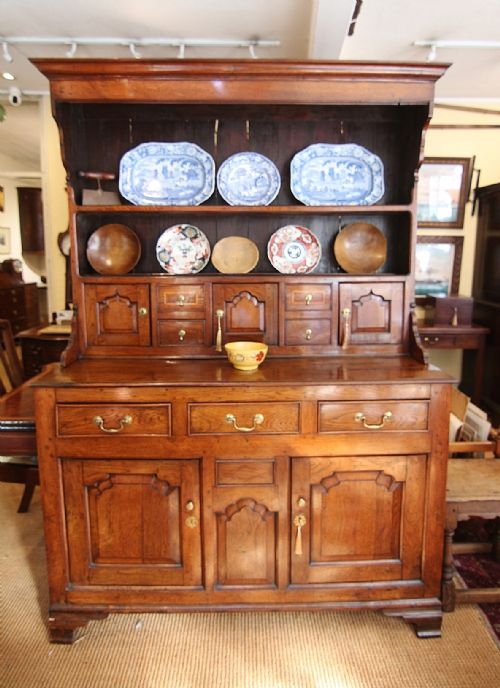
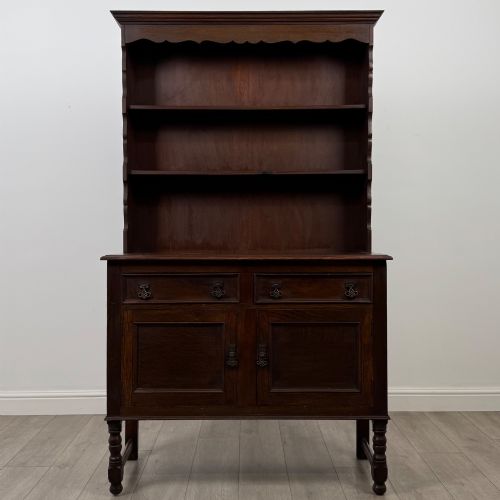
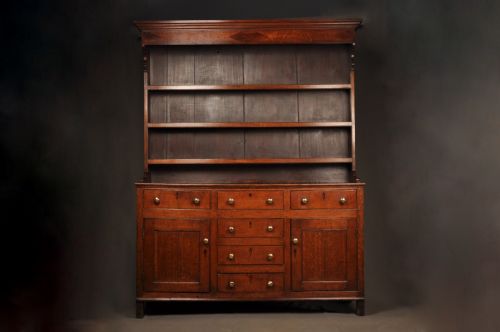
When you search for an antique oak display hutch, you meet a range of heavy timber storage pieces that span several centuries of British and continental design. The inventory on this page draws heavily on vernacular and formal traditions, showing the sturdy utility of earlier periods alongside later revival styles.
The most common forms here include Welsh dressers, glass-fronted cabinets, and two-part bookcases that combine enclosed lower cupboards with upper open or glazed display racks. These pieces originate across various regional traditions, from provincial French workshops to Welsh valleys and English country cottages.
Periods represented stretch from the eighteenth century through the Victorian era and into the early twentieth century, taking in Edwardian and Arts and Crafts examples. Buyers find everything from simple geometric-carved country pieces to imposing glazed units with brass hardware.
Materials and Construction
Joiners built these cabinets primarily using solid oak timbers, occasionally incorporating secondary woods like mahogany or walnut within specific provincial or revival pieces. Carpenters utilised traditional framing techniques, dovetailing drawers and securing panels to handle the substantial weight of the dense timber.
Glass panels appear in glazed doors and upper display sections, frequently held by lead or wooden glazing bars. Hardware such as metal handles, iron hinges, and brass fittings complete the construction, alongside occasional bone details or inlaid sections that add subtle contrast to the dark wood.
Antique Oak Display Hutch Retail Price Guide 2026
Typical asking prices for oak display hutch among the pieces listed under this phrase on Sellingantiques today, from the lower quarter to the upper quarter. They describe what is for sale here now, not the wider market.
Listings feature oak predominantly, supported by brass, glass, iron, and occasional bone or mahogany accents across eighteenth-century to twentieth-century periods.
Craft and Character
Quality in these pieces rests upon the crispness of hand-carved details, such as geometric patterns, green man motifs, or provincial foliage. Finer examples display harmonious proportions between the upper display rack and the lower cupboard base, with timbers that have aged to a deep, warm tone.
The integrity of the original construction, including fitted doors, stable shelves, and intact glass or lead work, separates standard utility items from more refined cabinetmaking. Regional variations, such as specific Snowdonia or Cornish characteristics, also distinguish exceptional vernacular pieces from mass-produced later revivals.
Shapland and Petter·Heals of London
The Antique Oak Display Hutch Glossary
- Dresser
- A multi-tier furniture piece featuring lower storage cupboards and upper shelves or a rack for displaying plates and china.
- Welsh dresser
- A traditional regional cabinet style originating in Wales, combining base storage with an extensive plate rack above.
- Glazed
- Fitted with transparent glass panes in the doors or panels to allow the display and protection of stored objects.
- Revival
- A later architectural or furniture style that imitates the aesthetic and motifs of an earlier historical period, such as Jacobean or Tudor.
- Inlay
- A decorative technique where contrasting materials like lighter wood or bone are inserted into recesses within the primary oak surface.
Antique Oak Display Hutch: Frequently Asked Questions
How do I care for antique oak?
Keep timber furniture away from direct heat sources and sudden humidity shifts to prevent the wood from splitting. Apply natural beeswax occasionally to nourish the grain and maintain the surface sheen.
Dust the carved details and glass panels regularly with a soft cloth. Avoid using harsh chemical polishes that can strip the historic finish over time.
Where were these hutches placed?
These cabinets traditionally stood in farmhouses, cottages, and large country houses to store and display domestic tableware. Kitchens and dining rooms served as their primary locations for everyday convenience.
Today, collectors use them in living areas and hallways to display ceramics, books, and glassware. Their tall profiles make them suitable for utilising vertical wall space in various rooms.
How do I date an oak cabinet?
Examine the construction methods, tool marks on the timber, and overall style to determine the age of a piece. Eighteenth-century examples often feature hand-cut joinery and pegged joints, while later Victorian and Edwardian items show more uniform machine-assisted manufacturing.
Hardware styles, timber patination, and regional carving motifs also provide clear clues. Comparing the piece against documented examples from specific periods helps confirm its era.