

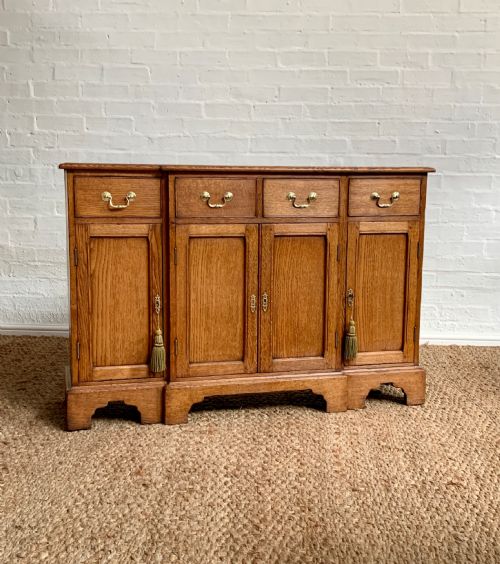
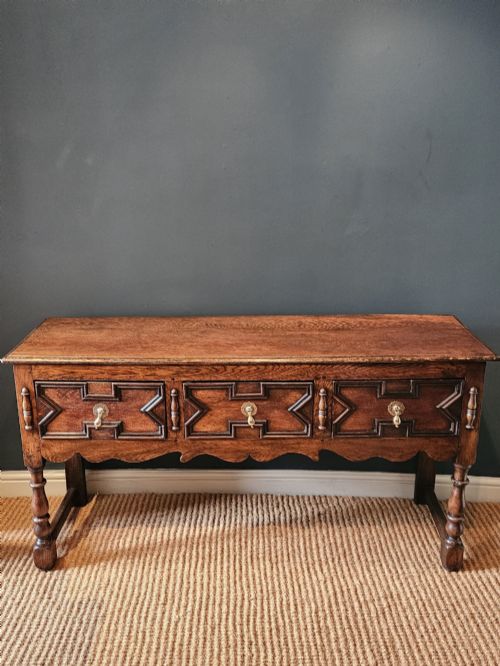
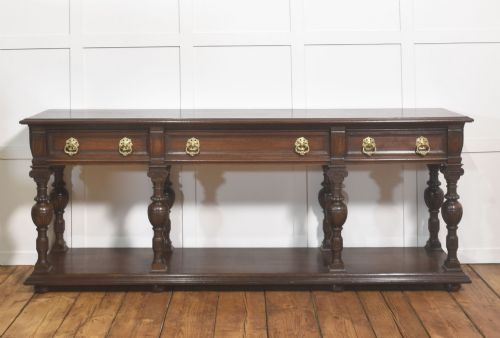
Jacobean Style Oak Dresser
When you search for a jacobean style oak dresser, you are looking at substantial timber furniture carrying centuries of revival design.
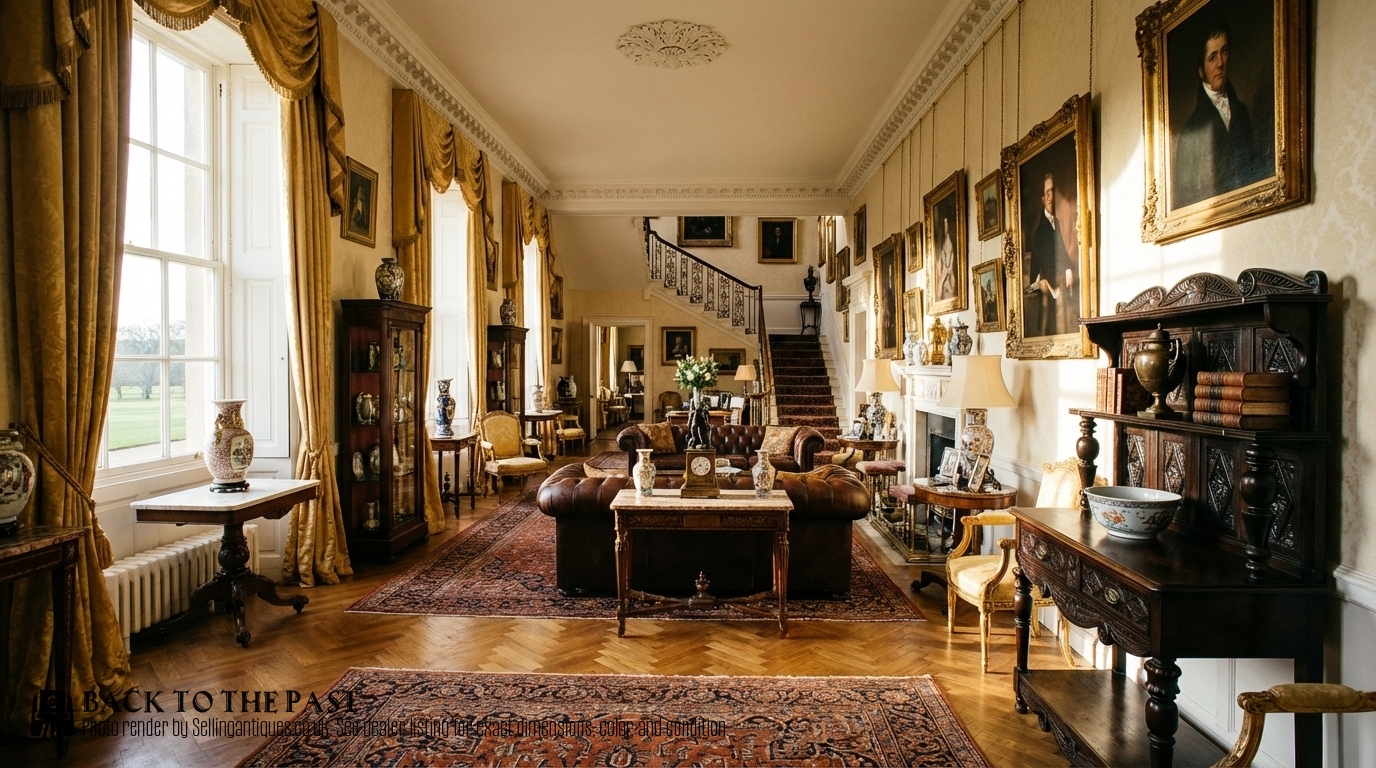
Jacobean Style Oak Dresser
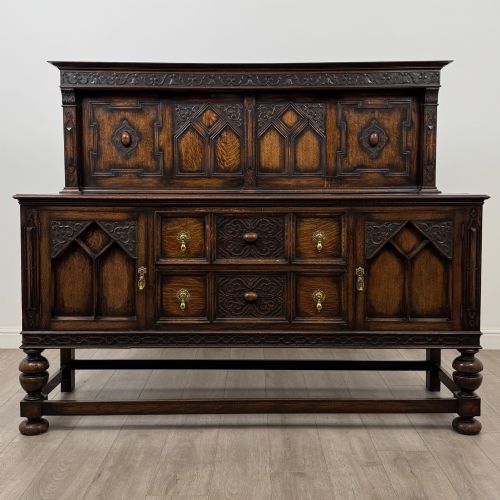
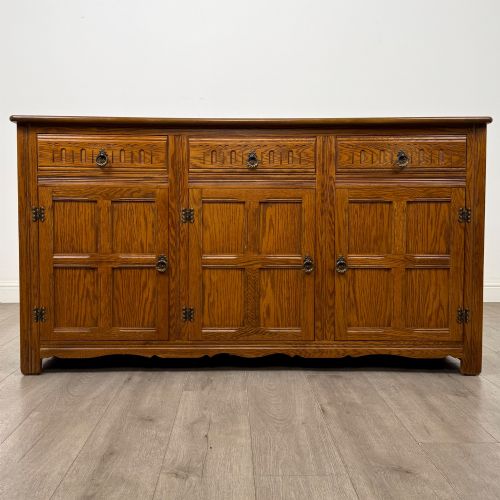
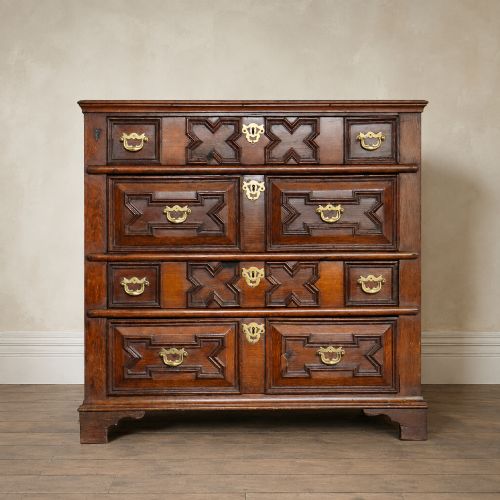
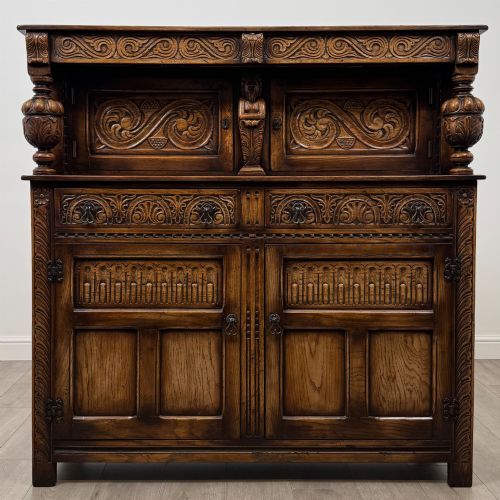
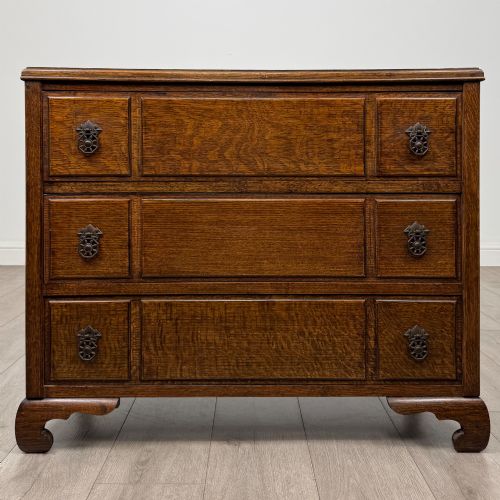
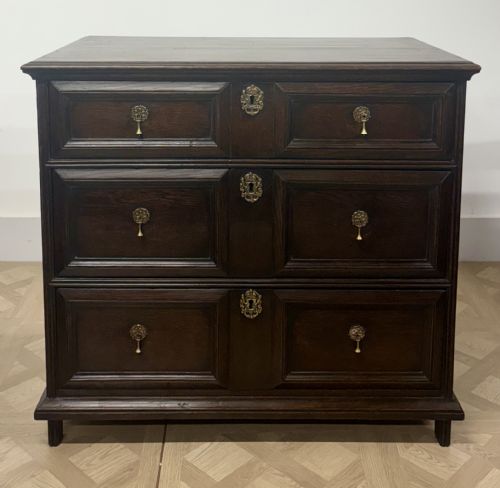
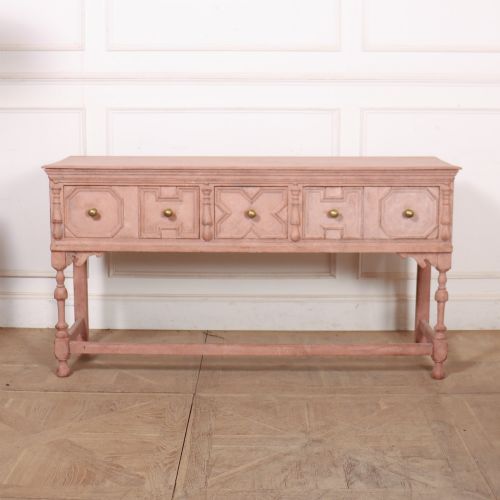
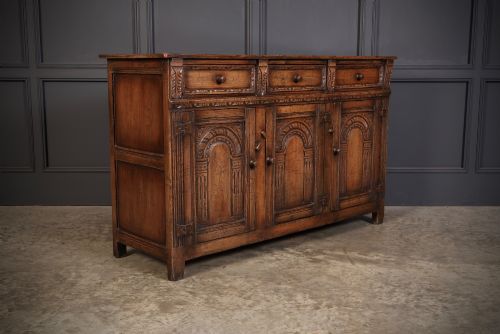
A jacobean style oak dresser brings together robust proportions and historic revival forms, often seen in dresser bases, sideboards, and two-part Welsh dressers. The pieces available here span genuine period originals from the seventeenth and eighteenth centuries alongside substantial revivals produced during the Victorian, Edwardian, and early twentieth-century eras.
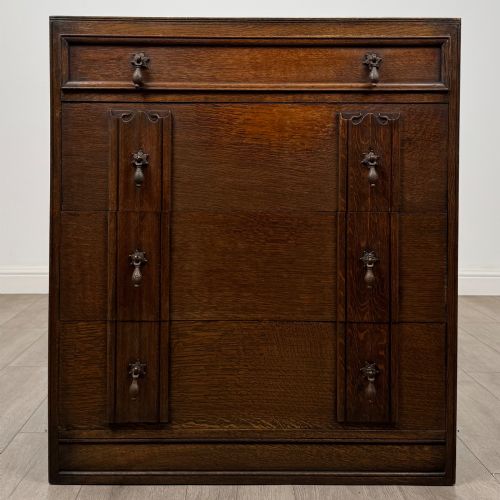
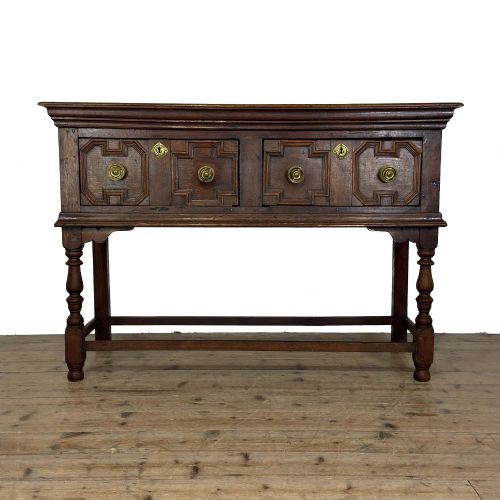
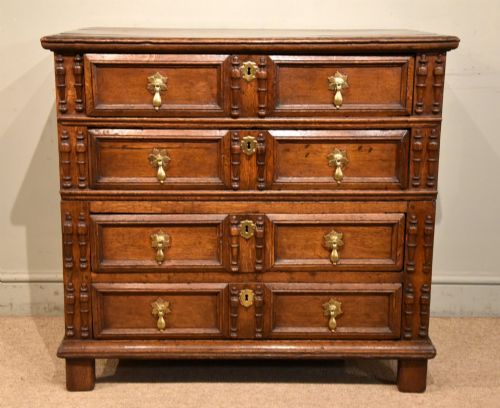
Buyers encounter forms featuring lower potboards, tier arrangements, and multi-drawer fronts that reflect centuries of domestic storage needs. The design vocabulary draws heavily on seventeenth-century motifs, including geometric mouldings, panelled doors, and heavy framing.
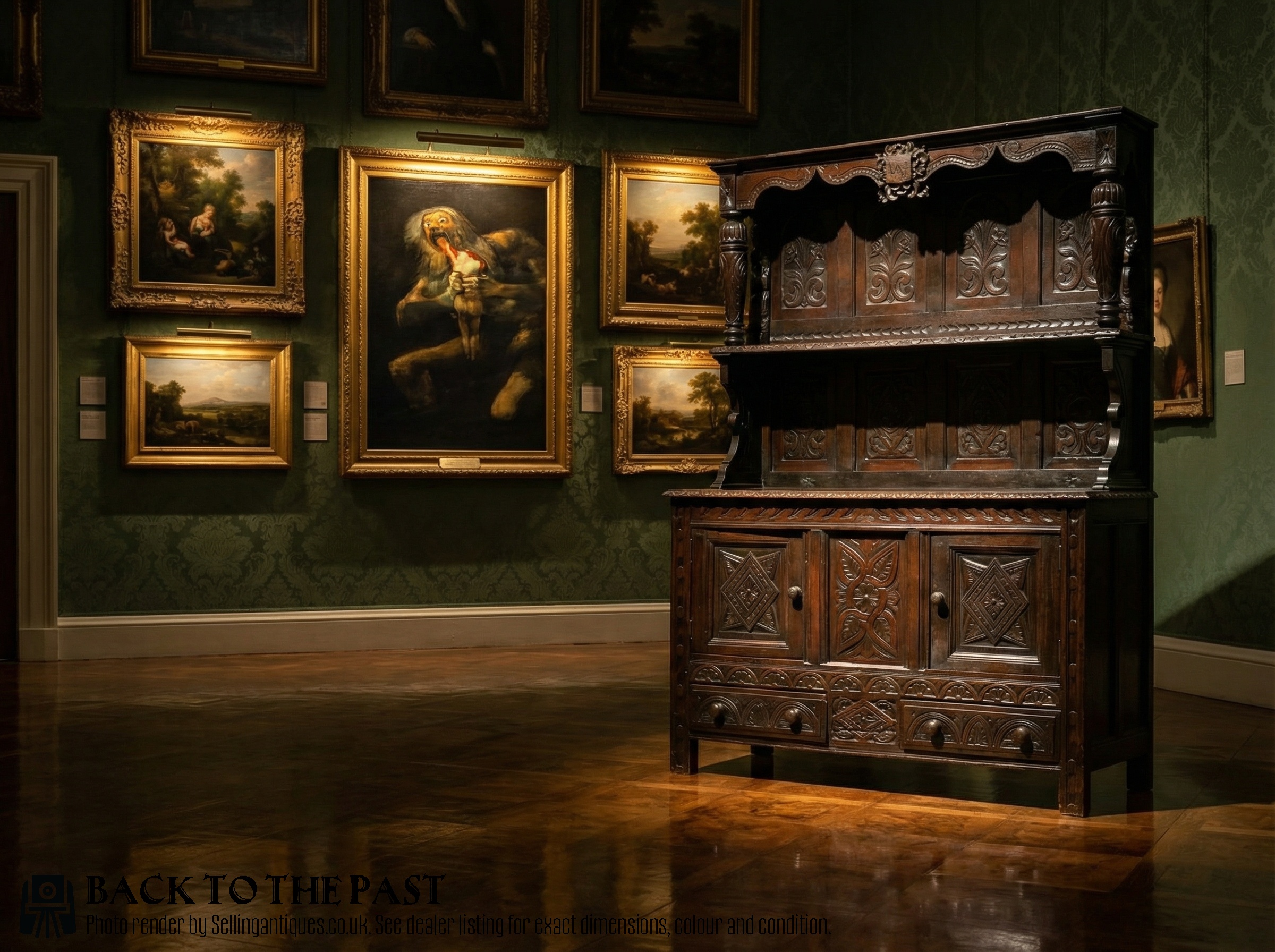
How They Were Made
Joiners relied primarily on solid oak, supplemented occasionally by walnut, fruitwood, and pine for secondary parts, constructing carcases using traditional frame-and-panel methods. Surfaces display deep carving, applied geometric mouldings, and turned elements such as barley-twist supports.
Hardware typically consists of brass drop handles, escutcheons, and iron hinges fixed to heavy timber doors and drawer fronts. Finishes range from natural waxed grain to painted treatments and darker golden tones applied during later revival periods.
Listings include solid oak, walnut, and painted finishes across periods ranging from the seventeenth century through the 1930s.
What Varies in Quality
The degree of hand-carving and the crispness of geometric mouldings set finer examples apart from simpler utility pieces. Depth of relief on panels and the structural integrity of the underlying timber framework indicate the original maker's skill.
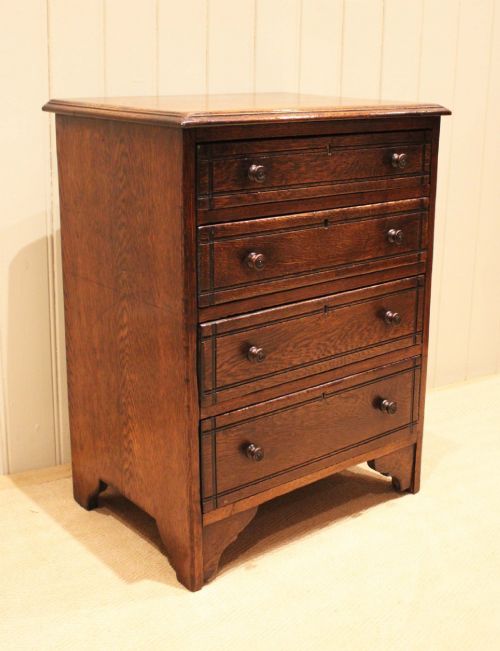
Proportion and scale also dictate distinction, with smaller, well-balanced sideboards and miniature cupboards commanding particular attention. The integrity of the timber, the retention of original brass or iron hardware, and the honesty of the surface patina complete the hierarchy.
The Jacobean Style Oak Dresser Glossary
- Dresser base
- A low sideboard or table with drawers, used originally for food preparation and serving before upper shelving was added. These pieces form the foundation of many dining room arrangements.
- Geometric moulding
- Raised wooden strips applied in symmetrical patterns, such as mitred squares and octagons, to drawer fronts and doors. This technique was popular in the seventeenth century and its later revivals.
- Potboard
- An open lower shelf fitted between the legs of a dresser or sideboard, historically intended for storing pots and pans. It provides structural stability to the base frame.
- Court cupboard
- A heavy, enclosed cupboard featuring a recessed upper section supported by pillars, designed for displaying plate and storing valuables. They are notable architectural forms in early oak furniture.
- Barley-twist
- A spiral turning technique applied to table legs, vertical supports, and gallery posts. This decorative lathe work became prominent during the seventeenth century.
Jacobean Style Oak Dresser: Frequently Asked Questions
How do I identify a revival piece?
Revival pieces are commonly dated to the nineteenth and twentieth centuries, showing standardised machine-cut timber dimensions and lighter oak tones. Makers in the Edwardian period and the 1920s frequently reproduced seventeenth-century styles using contemporary workshop tools.
Examining the interior linings, drawer construction methods, and hardware fixings helps distinguish a later interpretation from a seventeenth-century original. Tool marks and timber shrinkage patterns provide further clues to the actual age of the piece.
How were these dressers used historically?
Historically, dresser bases functioned as working surfaces for food preparation and serving in large country houses and farmhouses. The drawers held linens and cutlery, while the lower potboard or shelves accommodated heavy kitchen pottery.
Over time, these utilitarian objects transitioned into principal display and storage furniture for dining rooms and parlours. Upper shelves were added in regional variations, such as the Welsh dresser, to exhibit ceramic collections.
How should I care for solid oak furniture?
Solid oak furniture requires stable indoor humidity levels to prevent the timber from warping or splitting as seasonal temperatures shift. Regular dusting with a soft, dry cloth preserves the surface without building up excessive residue.
Applying a traditional beeswax polish occasionally maintains the natural lustre and protects the grain of older wood. Direct sunlight and proximity to heat sources should be avoided to preserve the original finish.