
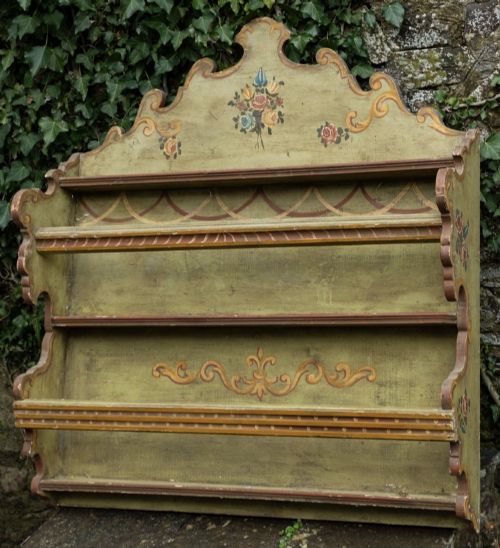
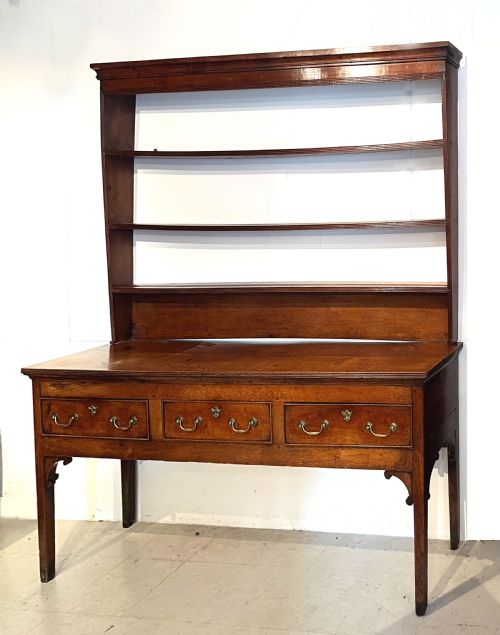
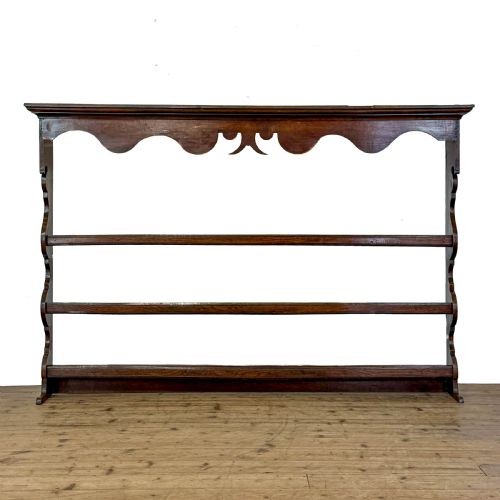
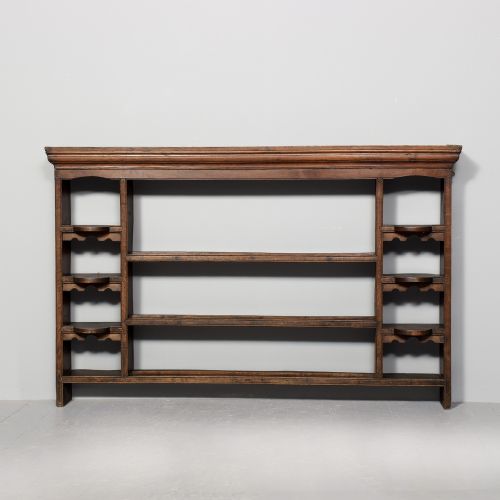


Antique Wooden Plate Shelf
An antique wooden plate shelf brings utilitarian charm to domestic walls, offering practical display for ceramics while anchoring a room with historic timber.
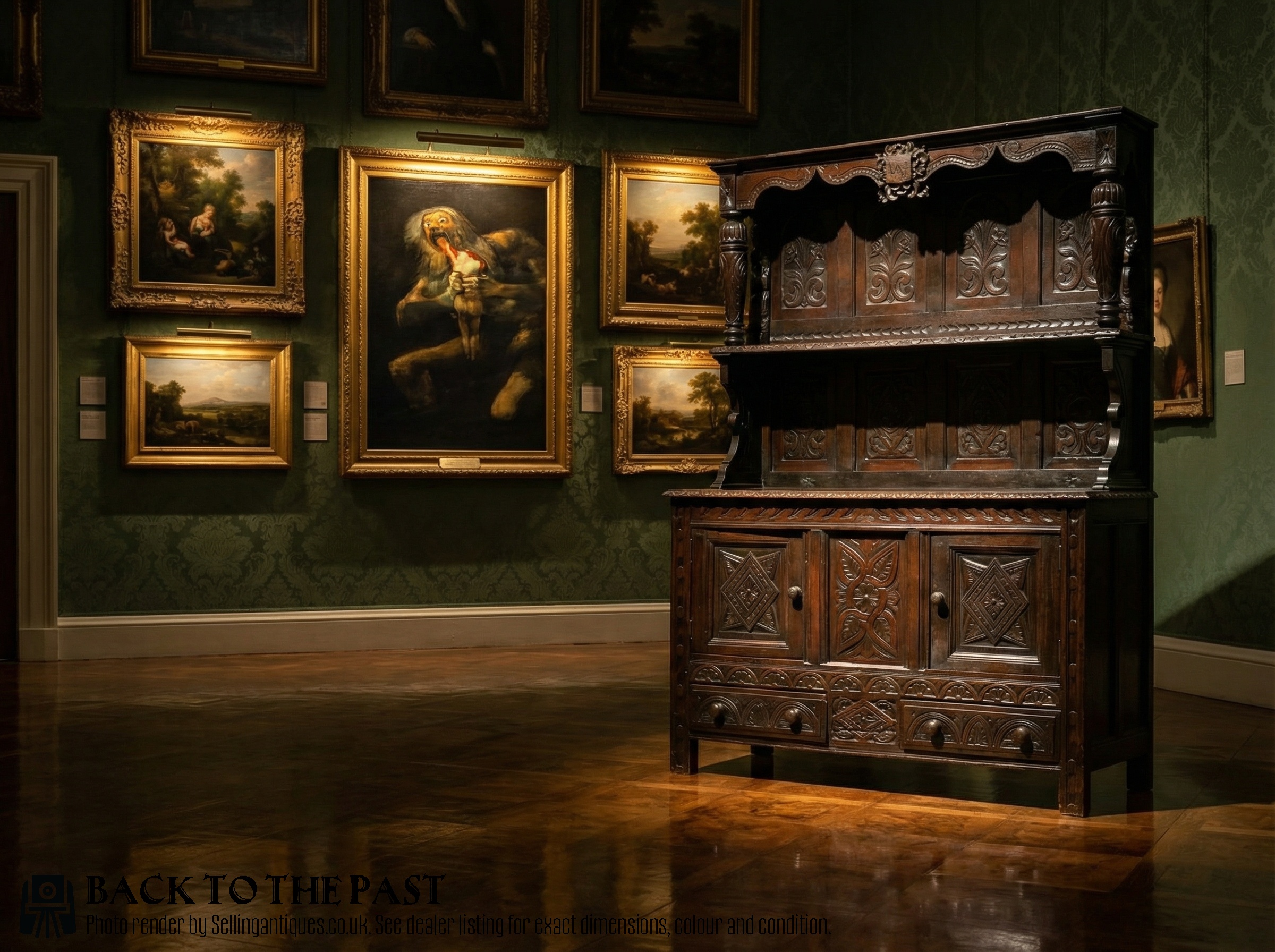
Antique Wooden Plate Shelf
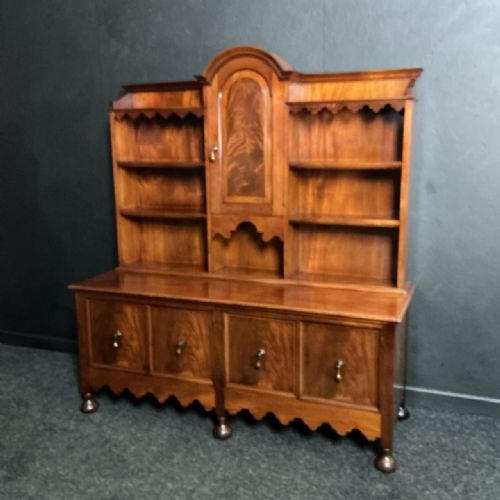
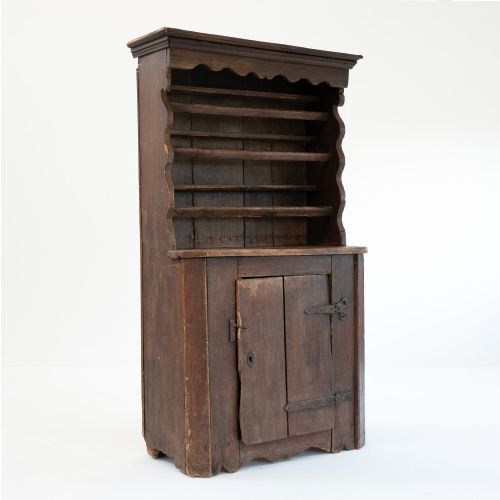
When you search for an antique wooden plate shelf, you encounter wall-mounted racks, dresser upper sections, and hanging display shelves designed to hold pottery upright. These pieces emerge predominantly from the eighteenth and nineteenth centuries, spanning Georgian, Edwardian, and Arts and Crafts aesthetics.
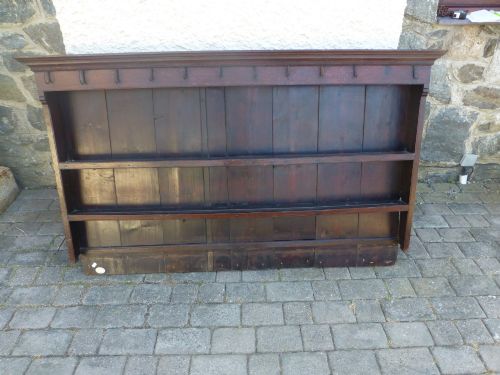
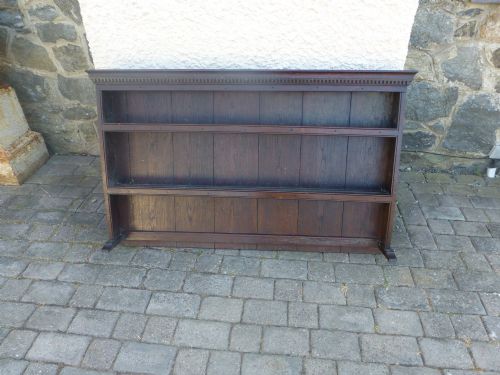
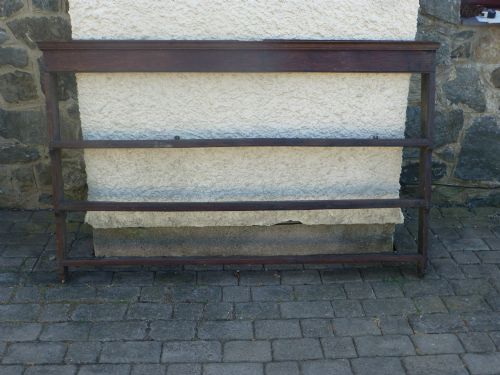
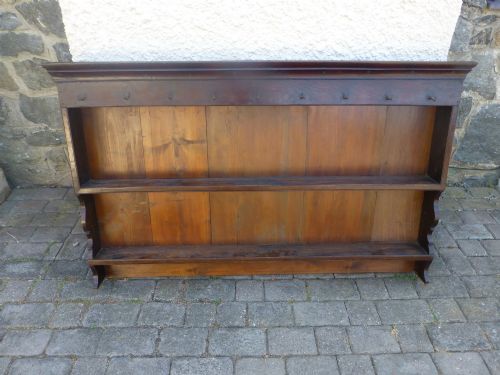
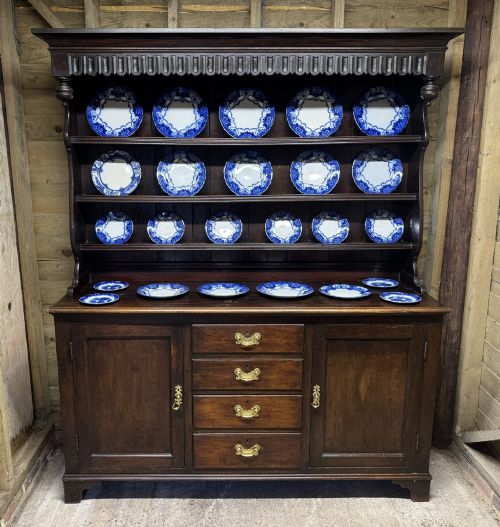
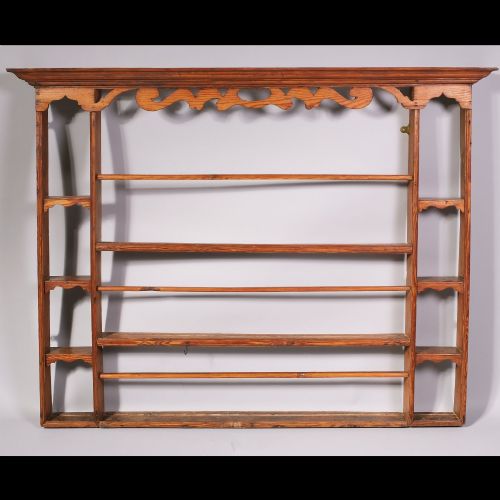
The versions most common on this page are oak and pine plate racks and wall shelves, frequently associated with country houses and farmhouse interiors. They range from simple narrow boards with retaining rails to substantial carved oak configurations featuring columns and multiple tiers.
Makers fashioned these utilitarian fixtures for British and Irish kitchens, dining rooms, and pantries to store delftware and utilitarian ceramics safely off work surfaces. Surviving examples demonstrate how domestic storage evolved from practical wall carpentry into decorative provincial furniture.
Materials and construction methods
Cabinet makers and vernacular joiners relied heavily on native timbers such as oak, pine, and mahogany, occasionally incorporating cherry or painted wood finishes. Planks were hand-planed and joined using traditional techniques to support the weight of heavy earthenware plates.
Structural details include pegged mortise and tenon joints, backboards fashioned from vertical boards, and turned wooden spindles or brass hooks. Surface treatments vary from unpolished scrubbed timber to historical painted finishes and applied marquetry.
Antique Wooden Plate Shelf Retail Price Guide 2026
Typical asking prices for wooden plate shelf among the pieces listed under this phrase on Sellingantiques today, from the lower quarter to the upper quarter. They describe what is for sale here now, not the wider market.
The inventory records vernacular styles from English, Welsh, Irish, and French country traditions, including painted finishes and Arts and Crafts interpretations.
Assessing quality in early shelving
The distinction between ordinary utility items and superior examples lies in the crispness of timber selection and the integrity of original joinery. Finer pieces display thoughtful proportions, well-figured flame mahogany or quarter-sawn oak, and minimal timber replacement over centuries of use.
Workmanship is evident in the delicacy of carved mouldings, such as Corinthian columns or shaped friezes, contrasted against purely functional pegged construction. Original surfaces, whether early paint or aged patina on bare wood, elevate the character above items stripped down or over-restored.
The Antique Wooden Plate Shelf Glossary
- Delft rack
- A wall-mounted or dresser-top wooden shelf specifically designed with narrow ledges and front guards to display tin-glazed earthenware plates safely.
- Quarter-sawn
- A method of timber cutting that produces boards with straight grain lines and prominent medullary rays, frequently seen in better quality oak furniture.
- Marquetry
- The decorative art of applying small pieces of veneered wood to a structure to form geometric or pictorial designs.
- Mortise and tenon
- A traditional woodworking joint where a projecting tongue fits snugly into a corresponding hole to lock timbers firmly together without metal fasteners.
Antique Wooden Plate Shelf: Frequently Asked Questions
How were these shelves originally used?
Households mounted these wooden racks on kitchen and dining room walls to keep everyday plates, platters, and bowls accessible yet secure from breakage. The narrow ledges and retaining rails prevented heavy ceramic dishes from sliding off during daily domestic activities.
Over time, these utilitarian fixtures also served to showcase prized collections of delftware and pottery, blending storage with interior display in farmhouse and country interiors.
How do I mount an antique wall shelf safely?
Secure installation requires locating solid wall studs or using appropriate masonry fixings matched to the weight of aged timber and heavy ceramic collections. Because historical shelves often feature fixed hanging points or original backboards, professional installation ensures the structure bears loads without twisting.
Distributing weight evenly across the tiers prevents undue stress on antique joints and historical fixings that were originally designed for lighter domestic loads.
How do I date an antique wooden plate shelf?
Dating relies on examining timber species, tool marks left by hand planes, construction joinery, and stylistic details typical of Georgian or Edwardian periods. Eighteenth-century examples frequently display pegged oak construction and hand-sawn board widths, while later nineteenth-century pieces may utilise pine or machine-finished elements.
Comparing hardware, such as brass hooks or backboard construction methods, further clarifies whether a piece belongs to the 1700s, the Victorian era, or the early 1900s.
Can these shelves support modern heavy dinnerware?
Most antique racks handle everyday crockery comfortably, provided the structural joints remain tight and the wall fixings are secure. However, extremely heavy modern stoneware should be tested cautiously against the depth and ledge clearance of older eighteenth-century designs.
Evaluating the thickness of the retaining rails and the stability of the backboard helps determine whether a delicate cottage shelf is better suited for decorative display or active service.