
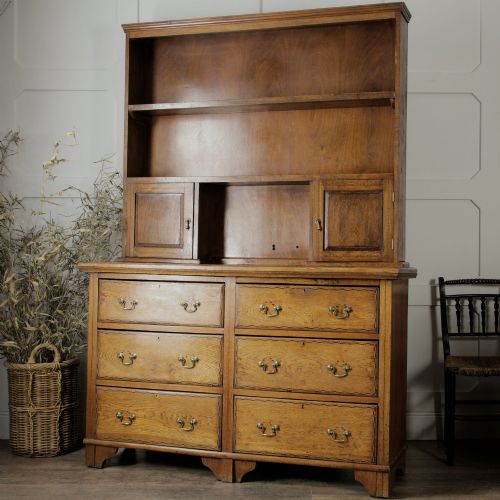

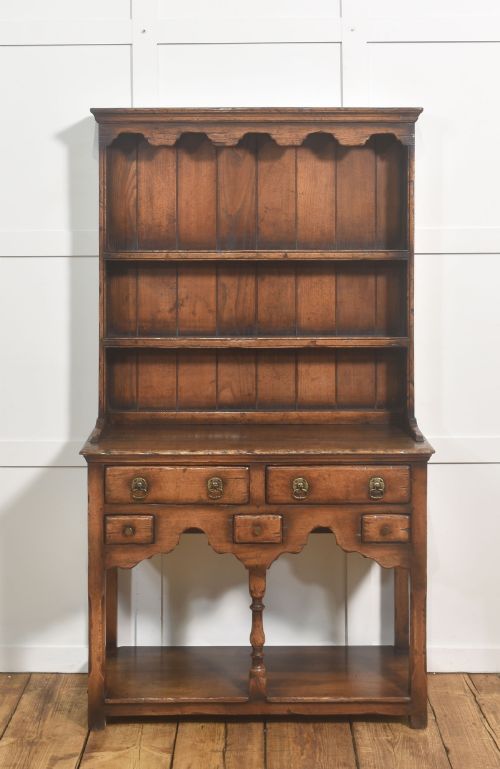
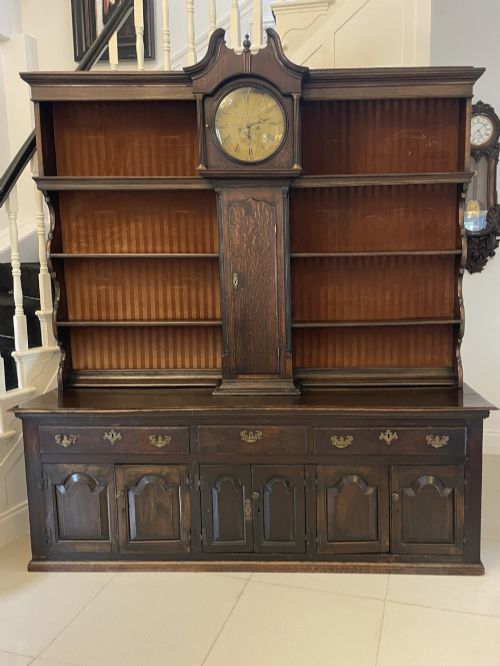
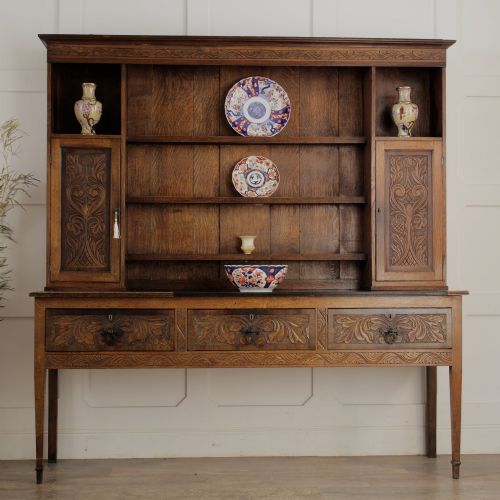
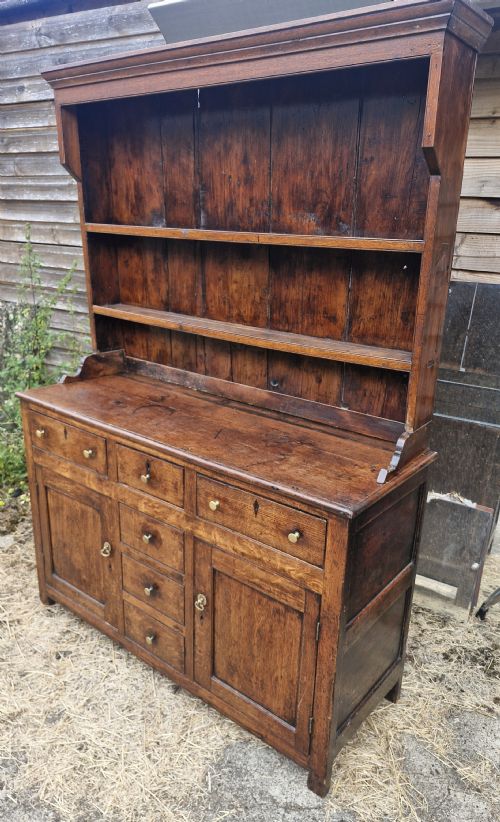
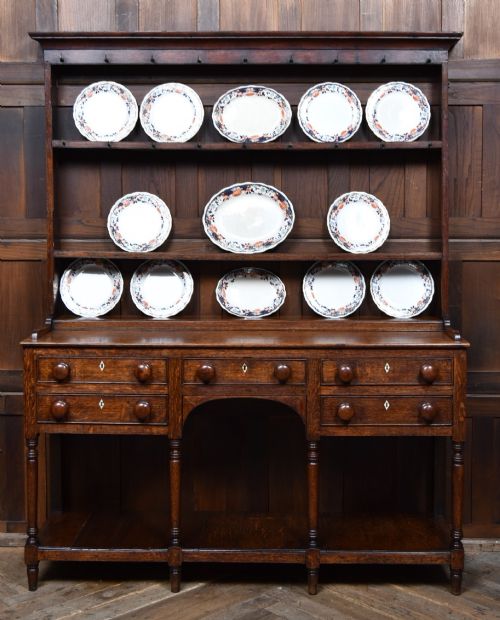
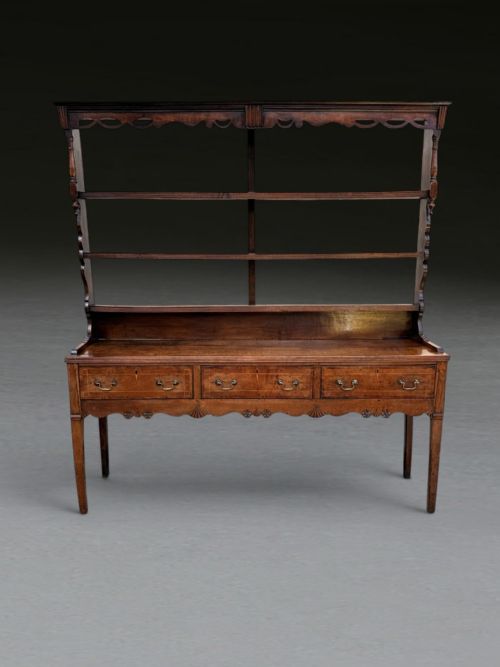
Oak Dresser Rack
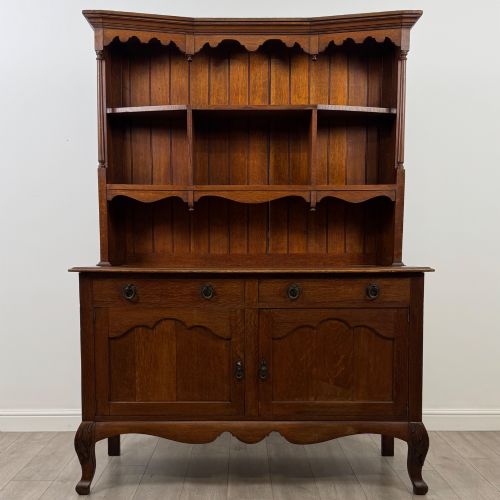
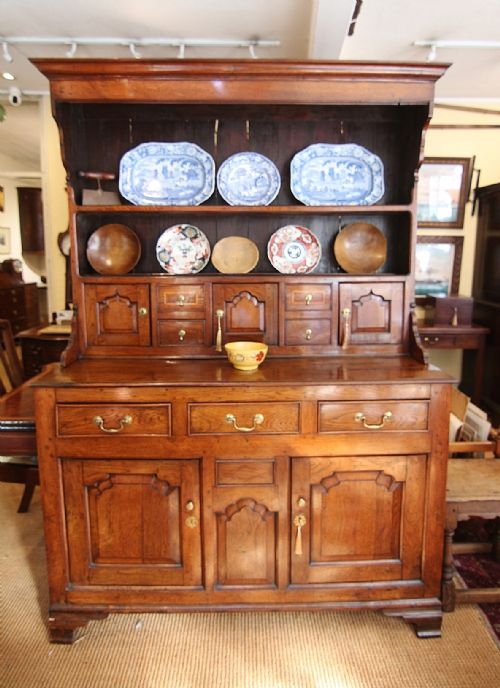
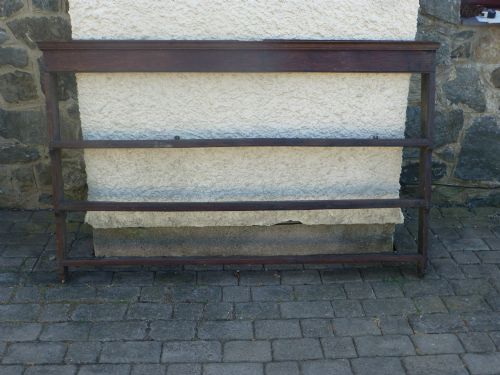
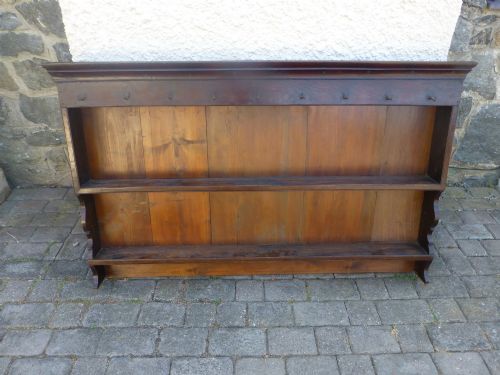
When you search for an oak dresser rack, you are looking at utilitarian wooden shelving designed to hold ceramics safely above a matching base or directly on a wall.
Oak Dresser Rack
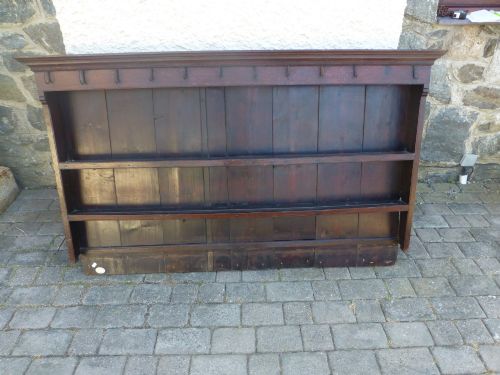
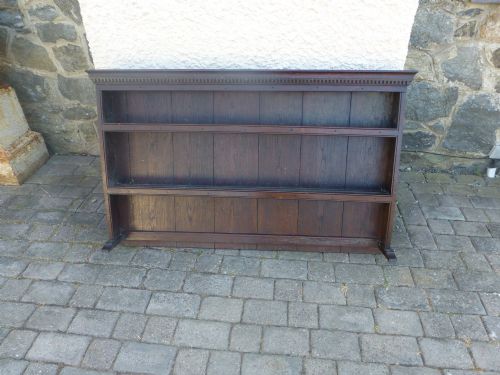
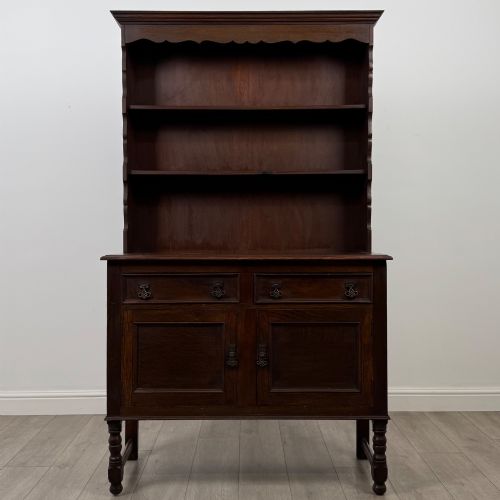
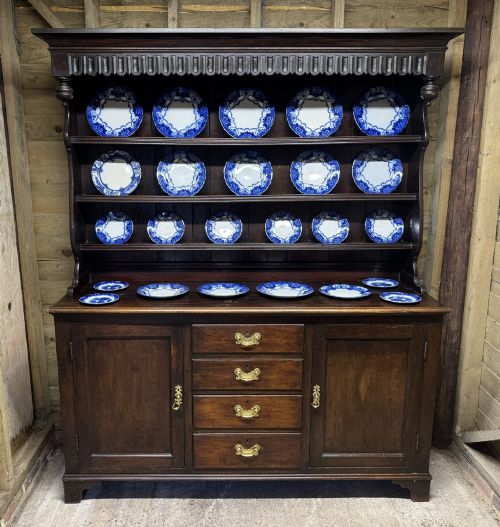
An oak dresser rack is a shelving unit designed to display and store plates, platters and kitchenware, either integrated into a full dresser or mounted separately as a wall shelf.
The pieces available here span the 18th century through to the early 20th century, encompassing Georgian, Victorian and Edwardian periods as well as regional English and Welsh vernacular traditions.
You will encounter standalone wall racks alongside complete dressers where the upper rack matches the lower base, often featuring plate grooves and shaped friezes.
Materials and construction methods
Makers built these pieces primarily from solid oak, sometimes combining it with secondary woods like pine for internal elements or backboards, and utilising brass or iron for hanging hardware and hinges.
Joinery methods rely on traditional pegged joints, panelled construction, and joined boards, reflecting the hand-tool techniques of regional vernacular cabinetmakers and country workshops.
Surfaces frequently show the natural grain of the timber, occasionally enhanced by historic inlay work in bone or lighter woods, or shaped edges along the plate rails and pelmets.
The listings span the 18th, 19th, and early 20th centuries, featuring oak alongside occasional pine, mahogany, and brass elements.
Distinctions in craftsmanship and survival
Quality rests upon the integrity of the original construction, where timber selection, sound joinery, and minimal replacement of backboards or plate rails distinguish superior examples.
Regional character and proportion dictate the desirability of a rack, with well-balanced cornices, original hooks, and untouched patination separating standard utilitarian pieces from finer regional forms.
The Oak Dresser Rack Glossary
- Plate rack
- A wall-mounted or dresser-integrated shelving unit featuring grooved plate rails designed to hold plates upright without slipping.
- Potboard
- The lower open shelf situated near the floor on traditional dresser bases, occasionally associated with the rack above.
- Vernacular
- Objects made by regional craftsmen following local traditions rather than strict academic architectural patterns.
- Frieze
- The flat or decorated horizontal band situated at the top of the rack beneath the cornice.
- Dog kennel
- The central recessed compartment located beneath the drawers on certain regional dresser bases.
Oak Dresser Rack: Frequently Asked Questions
Are dresser racks meant to hang on walls?
Many dresser racks were constructed to sit directly upon the top of a dresser base rather than hang independently, though dedicated wall racks also exist in the record.
Buyers should examine the back edges and fixing points to determine whether a specific rack was designed for wall mounting or for resting on a sideboard.
How do I secure plates safely on the shelves?
Traditional racks rely on a combination of narrow wooden grooves cut into the shelves and vertical wooden pegs or rails to keep plates tilted securely against the backboards.
Ensuring the depth of the groove matches the thickness of your tableware prevents slipping during daily use.
How can I tell an 18th-century rack from a later copy?
Examination of the timber surfaces, tool marks on the backboards, and the construction of the peg joints helps reveal the age of the piece.
Older racks exhibit hand-sawn boards and natural wear patterns around the plate rails that differ from standardised later manufacture.
Can I use these racks in a modern kitchen?
These wooden shelves integrate well into contemporary kitchens for displaying everyday ceramics or vintage collections of earthenware and china.
Their sturdy construction provides practical open storage while introducing traditional texture to domestic spaces.