





Oak Kitchen Hutch
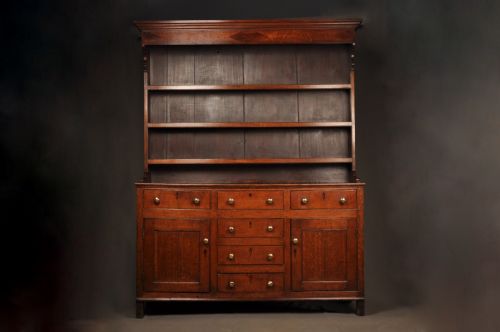
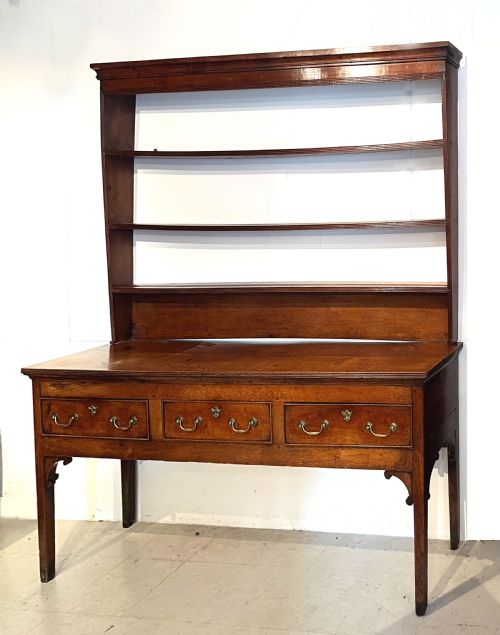
An oak kitchen hutch is a sturdy storage piece built for daily domestic life, offering open display shelves and enclosed lower cupboards that anchor a traditional room.

Identifying your oak kitchen hutch
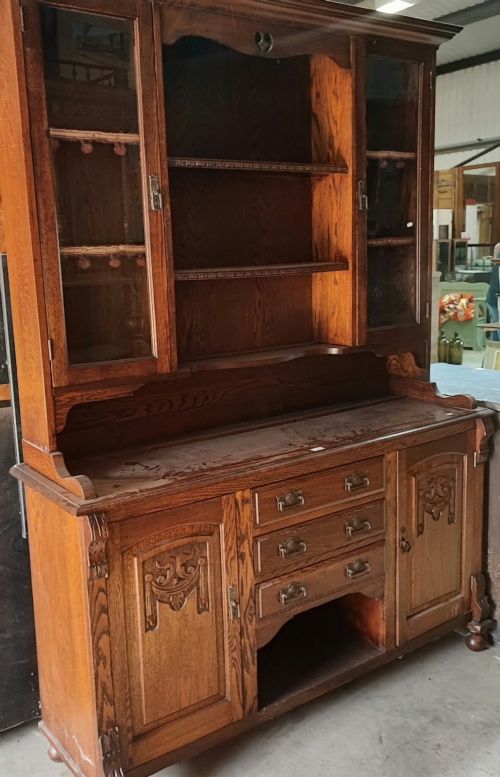
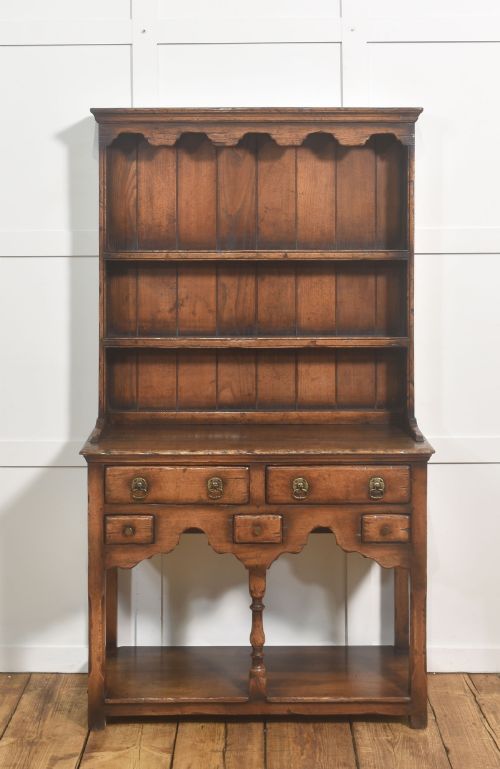
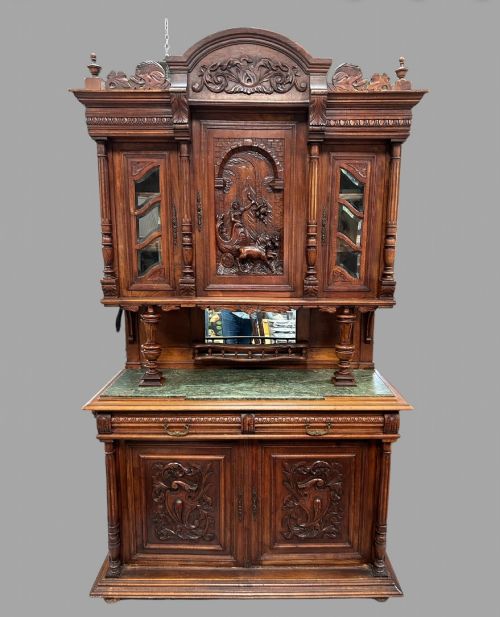
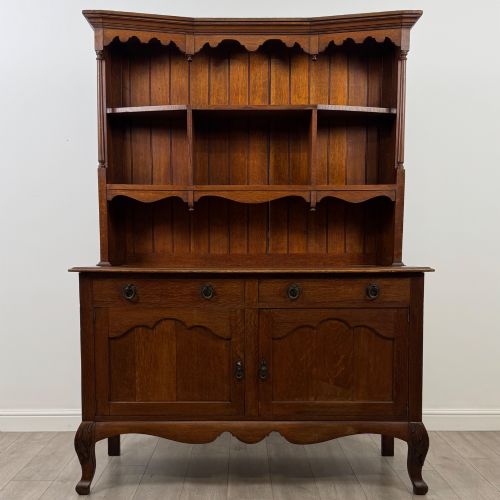
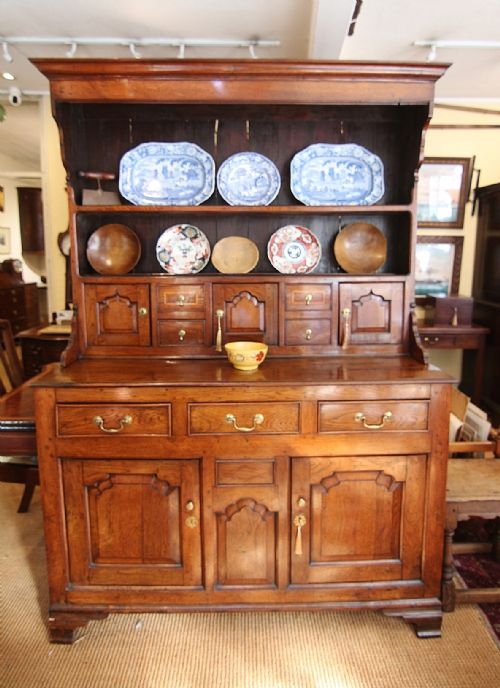
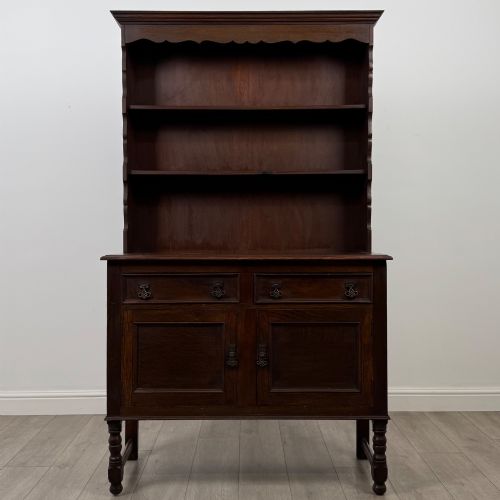
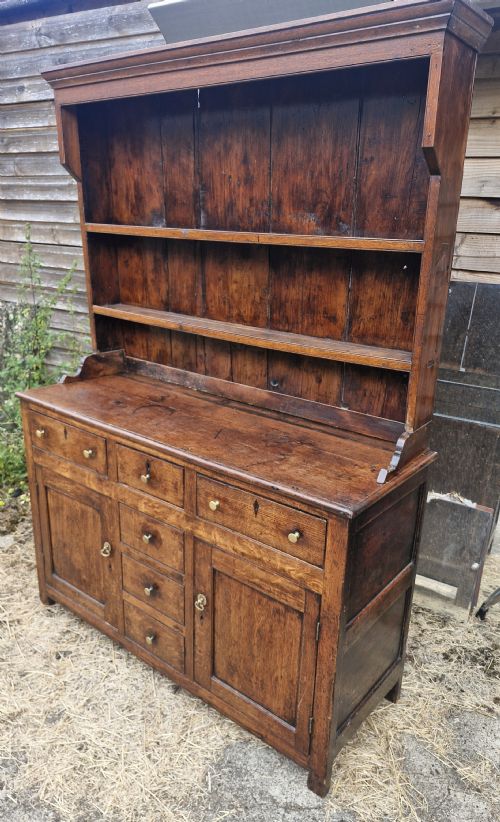
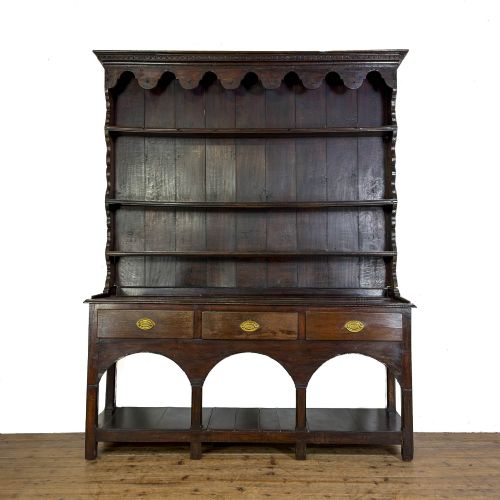
When you search for an oak kitchen hutch, you meet substantial timber furniture designed to hold tableware and provisions, appearing here primarily as dressers and Welsh dressers. These functional pieces range across multiple historic periods, taking the form of early nineteenth century Georgian examples, cottage dressers from around 1800, and later Victorian country sideboard variations. You also encounter robust revival items such as Ipswich oak pieces from nineteen thirty, alongside rustic farmhouse and Jacobean revival interpretations.
The regional variety within these listings highlights distinct British cabinetmaking traditions, particularly the Welsh cottage dresser with its characteristic display rack. English country workshops produced these items to serve as the hardworking centre of the home, combining deep base cupboards with stepped upper shelving. Whether you choose a simple eighteenth century carcass or a heavily carved revival format, each version provides practical utility rooted in historic domestic architecture.
Materials and construction
Makers built every oak kitchen hutch using solid timber boards selected for strength and durability, relying on the natural grain of oak to withstand heavy daily use. Workshops joined these heavy panels with traditional pegged mortise and tenon joints, creating rigid frameworks that survive centuries of service without losing their structural integrity.
Metalwork played a vital supporting role, with blacksmith-forged iron hinges and latches securing doors, alongside brass drop handles and drawer pulls on finer formal periods. Cabinetmakers shaped mouldings by hand using specialised planes, giving cornices and drawer fronts crisp profiles that catch the light in a farmhouse kitchen.
Retail Price Guide 2026
Typical UK retail prices for oak kitchen hutch, calculated from the Sellingantiques database of over a million retail prices indexed since 2003. This retail price guide relies exclusively on Sellingantiques data; no external sources or auction records are used, so the figures do not describe the wider market.
Some country dressers still bear the faint circular ghost marks left by generations of heavy earthenware cheese plates.
Assessing craftsmanship and character
The finest examples of an oak kitchen hutch display mature timber with deep, honeyed patination earned through generations of polishing and wear. Lesser or heavily restored pieces often show mismatched replacement boards or overworked surfaces that have lost the subtle undulating texture of genuine age.
Proportion and architectural balance divide standard utility items from superior cabinetmaking, where cornices, drawer arrangements, and base cupboard stiles maintain harmonious scale. Finer pieces retain original brass or iron hardware and uncompromised internal shelving, whereas lower grade specimens frequently suffer from unsympathetic alterations to their backboards and feet.
The Oak Kitchen Hutch Glossary
- Dresser
- A traditional kitchen storage unit featuring open shelves above a base of drawers and cupboards, historically used for displaying pewter and storing food.
- Welsh dresser
- A specific regional form characterised by a tall plate rack mounted directly onto a heavy wooden base, originating in Welsh country houses.
- Jacobean Revival
- A nineteenth or twentieth century decorative style imitating seventeenth century English woodwork, featuring heavy turned legs, geometric moulding, and strapwork carving.
- Patina
- The lustrous surface sheen and mellow colour developed by oak over centuries through exposure to light, wax, and human touch.
- Cornice
- The moulded horizontal projection that crowns the top of the upper shelving rack, providing a finished architectural edge to the piece.
Frequently Asked Questions
What is an oak kitchen hutch?
An oak kitchen hutch is a traditional storage furniture piece combining lower cupboards with upper display shelves, designed for domestic utility.
These items serve as the focal point for traditional kitchen storage, holding everyday crockery and dry goods.
How old are these dressers?
The pieces span several centuries, including eighteenth century examples, items from around eighteen hundred, and nineteenth century Victorian variations.
Later interpretations also include twentieth century revival pieces, such as nineteen thirty Ipswich oak designs.
What wood was used?
Makers constructed these hutches using solid oak timber, valued for its exceptional hardness and rich grain pattern.
Secondary woods occasionally appear in internal framing, but the primary exterior surfaces rely entirely on sturdy oak boards.
How do I style one at home?
Position your hutch against a solid wall in a kitchen or dining room where it can safely anchor the space and support everyday dishware.
Use the open upper shelving to display ceramic collections while keeping less attractive kitchen items hidden away in the base cupboards.
Are these pieces English?
The listings reflect distinct British regional traditions, encompassing English country workshops and Welsh cottage dressers.
Stylistic influences range from Georgian country aesthetics to heavy Jacobean revival forms.