


Brown Oak Plate Rack
These brown oak plate racks and dresser combinations bring honest utility and rich grain to a room.
What a brown oak plate rack is
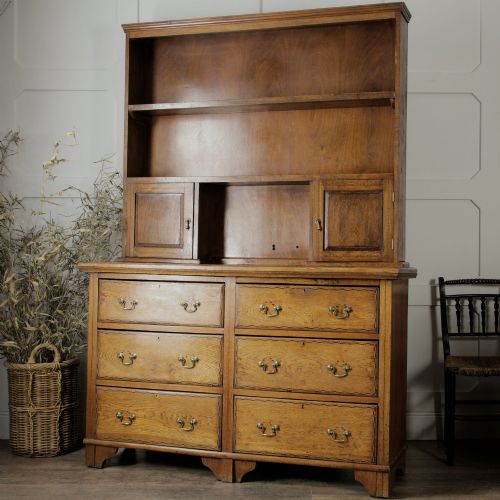
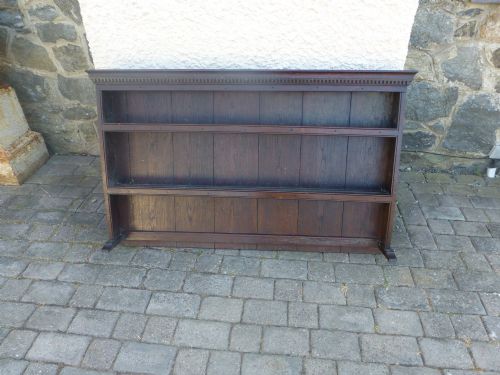
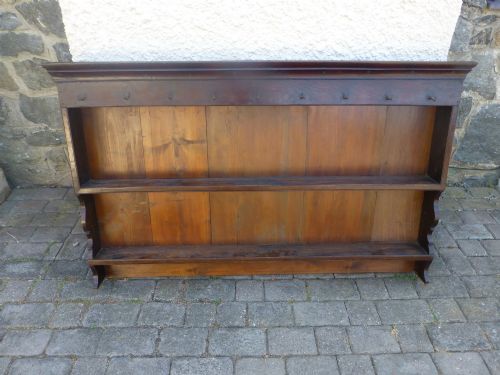
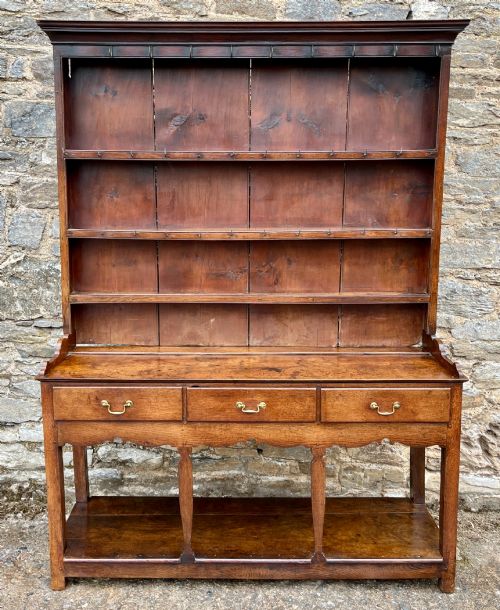
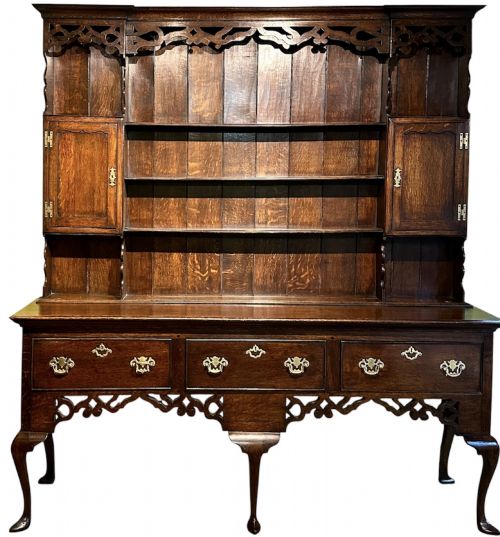
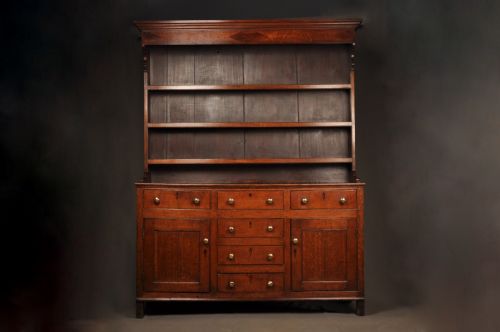
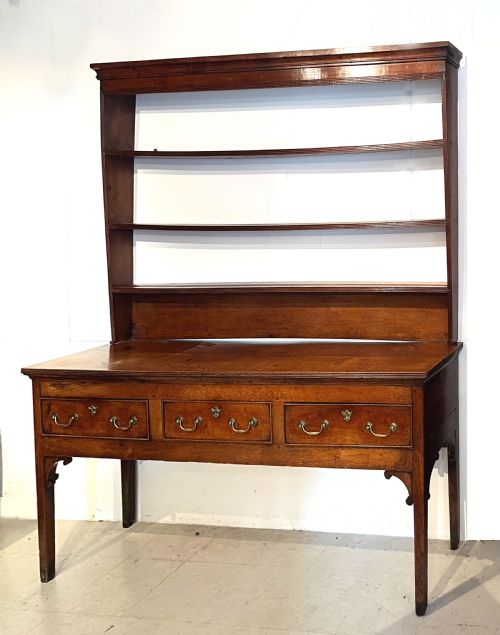
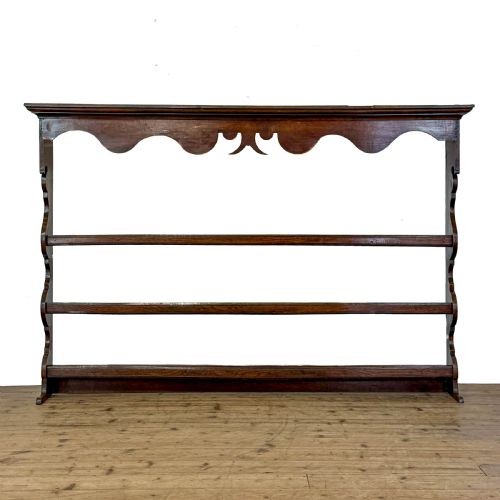
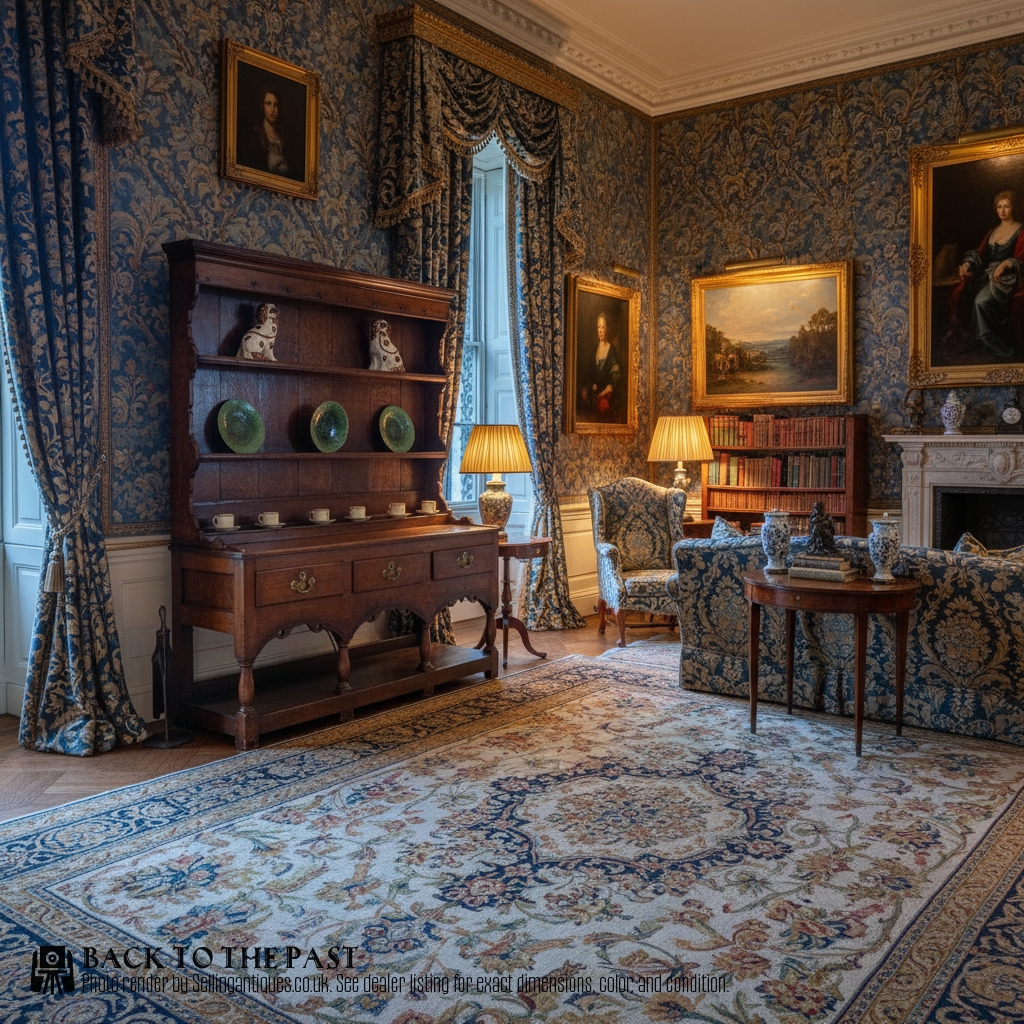
A brown oak plate rack forms the upper shelving tier integrated with or mounted upon a larger dresser base, designed specifically to display and store tableware in domestic interiors. These items emerge from Georgian, eighteenth century, nineteenth century, and Victorian periods, representing traditional cabinet-making across English and Welsh regions.
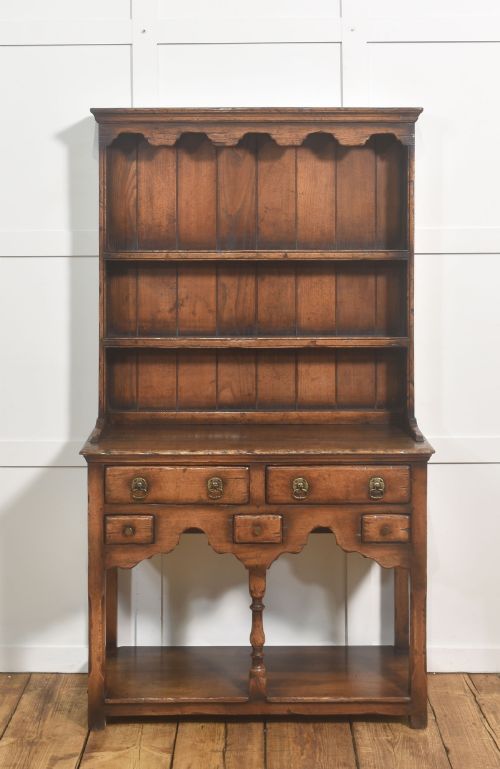
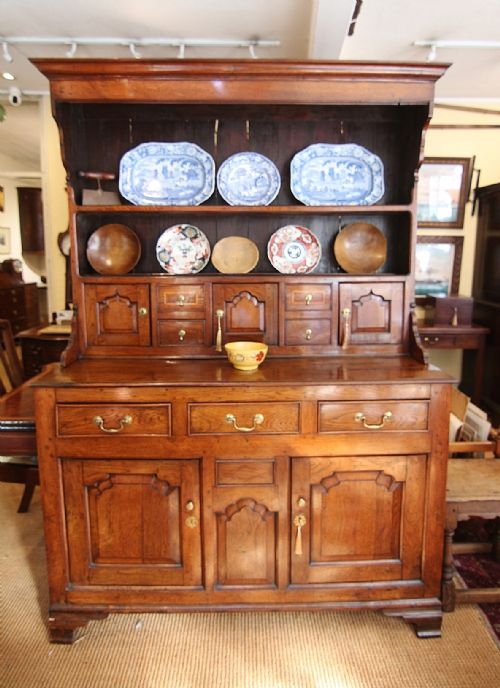
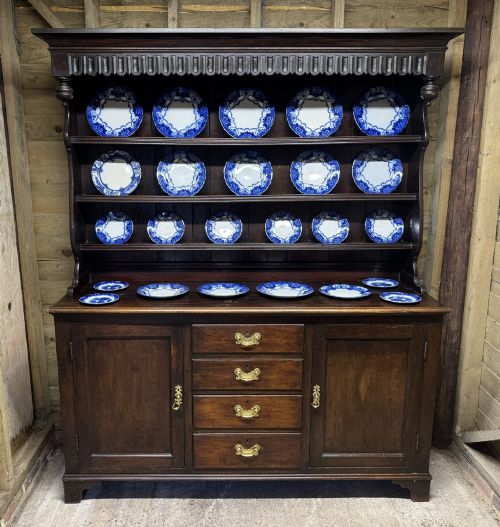
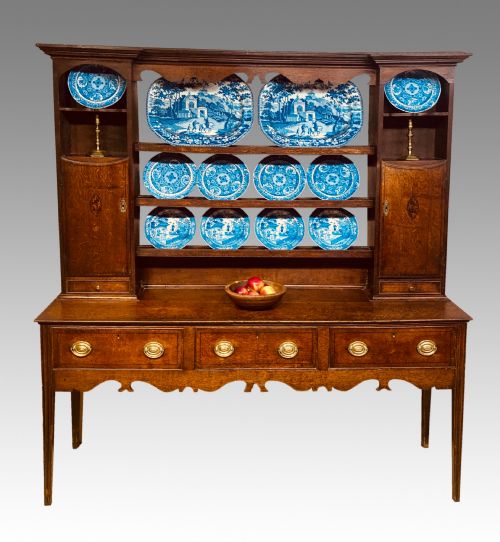
The pieces appearing on this page span several distinct forms, including small cottage dressers, large Welsh dressers with potboard bases, and regional variations like South Wales and Snowdonia examples. Buyers most commonly meet substantial oak dressers that combine lower cupboards or open potboard bases with multi-tier plate display racks fixed above.
Regional vernacular styles dominate this category, showing straightforward construction methods intended for practical household use rather than courtly display. The brown oak material displays deep, mature tones developed over centuries of exposure and polishing in domestic settings.
Materials and construction
Makers built these pieces primarily from solid oak, sometimes incorporating secondary inlay wood details and brass hardware such as drawer pulls or escutcheons. The timber was locally sourced and heavily worked by hand using traditional joinery techniques appropriate to vernacular furniture.
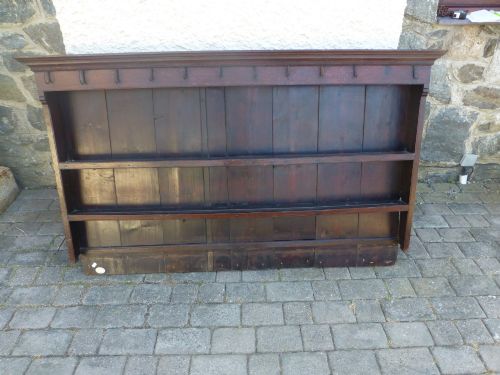
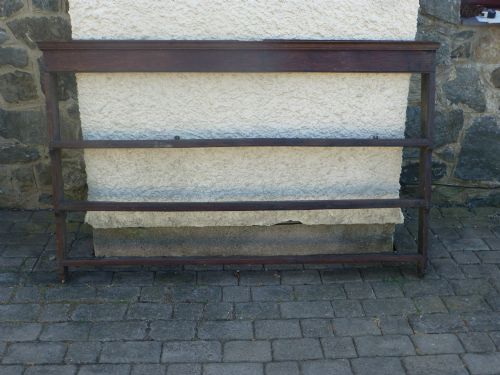
The rack components feature slotted or grooved plate rails designed to hold ceramic dishes upright, secured to heavy backboards with pegged mortise and tenon joints. Lower dresser bases utilise sturdy board construction, often incorporating potboards or planked tops to support heavy kitchen wares.
Retail Price Guide 2026
Typical UK retail prices for brown oak plate rack, calculated from the Sellingantiques database of over a million retail prices indexed since 2003. This retail price guide relies exclusively on Sellingantiques data; no external sources or auction records are used, so the figures do not describe the wider market.
Some backboards still bear the faint ghost marks where round ceramic plates rested for generations.
Assessing quality
Quality in these pieces rests upon the integrity of the timber selection and the degree of original surface patination preserved across the oak surfaces. Examples exhibiting rich, untouched colour and well-proportioned regional vernacular design sit higher in the range than heavily altered or stripped items.
The sophistication of the joinery and the presence of period brass elements or integrated potboard bases distinguish superior cabinet-making within domestic country furniture traditions. Proportion also dictates worth, as smaller cottage versions and grander eighteenth-century formats each demonstrate specific master standards of local workshop production.
The Brown Oak Plate Rack Glossary
- Potboard base
- An open lower shelf beneath a dresser used historically for storing heavy pots and pans. This structural element provides a sturdy foundation characteristic of Welsh vernacular furniture.
- Welsh dresser
- A large dining room or kitchen storage unit combining closed lower cupboards or potboards with open upper shelving racks. These pieces served as the central display and storage hub for domestic ceramics.
- Vernacular furniture
- Domestic objects made by local craftsmen using regional styles and readily available native timbers rather than following high London fashion. These pieces reflect the practical needs of rural households.
- Mortise and tenon
- A traditional woodworking joint where a projecting tongue fits snugly into a matching cavity to lock two pieces of timber together at a right angle. This technique underpins the structural strength of eighteenth-century oak frames.
Frequently Asked Questions
What is a brown oak plate rack?
A brown oak plate rack is the upper shelving section of a traditional dresser, built to hold plates upright against a timber backboard. These components are typically integrated with period oak dressers from Georgian and Victorian workshops.
They function as both storage and display units for ceramic tableware within country kitchens and dining spaces.
How do I identify a Georgian period piece?
Georgian pieces show characteristic hand-cut joinery, pegged framing, and mature timber patination developed over centuries of use. Details like early brass hardware and regional vernacular lines help indicate eighteenth-century origin.
Construction methods rely heavily on solid oak boards assembled without modern mechanical fasteners.
Where were these dressers made?
These items originate from regional English and Welsh workshops, with specific examples noted from South Wales and Snowdonia. Local cabinet-makers utilised native timber to supply rural and provincial households.
Regional variations appear in the base construction and the configuration of the upper plate racks.
How do I care for antique oak furniture?
Antique oak benefits from consistent indoor humidity levels and regular application of traditional beeswax to nourish the dry timber. Avoid placing these heavy wooden pieces near direct heat sources or strong sunlight.
Gentle dusting with a soft cloth preserves the historic surface colour and accumulated patination.