

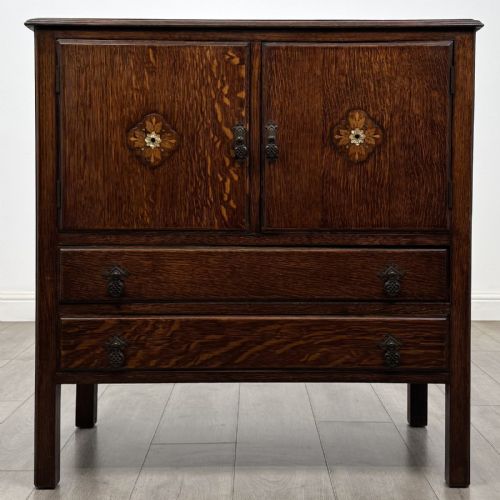
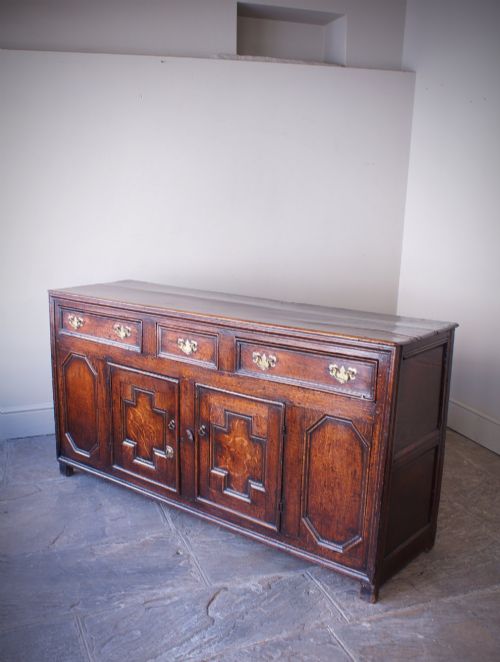
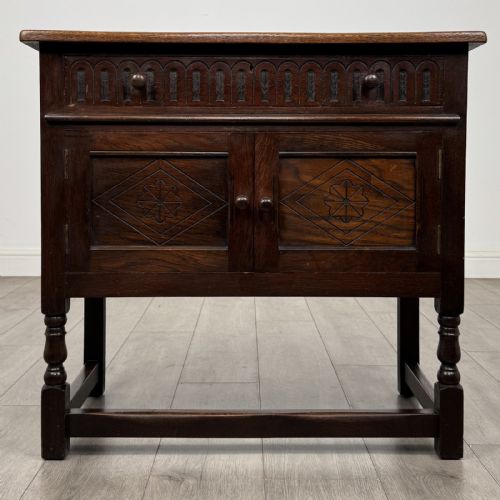
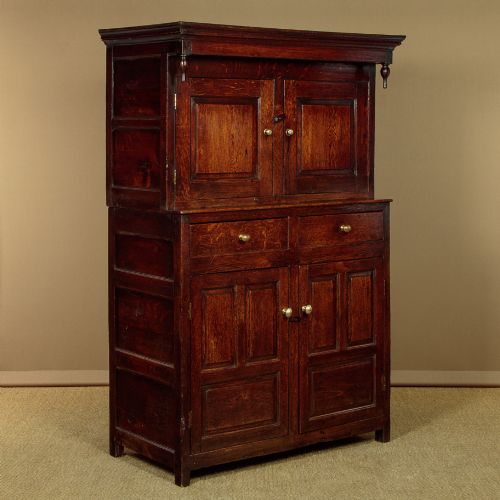
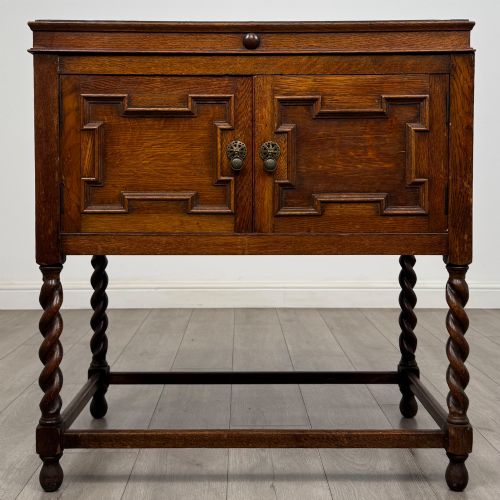
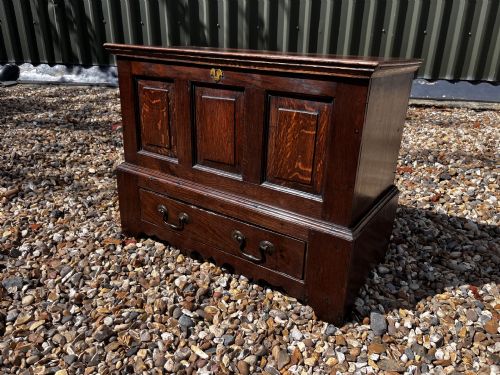
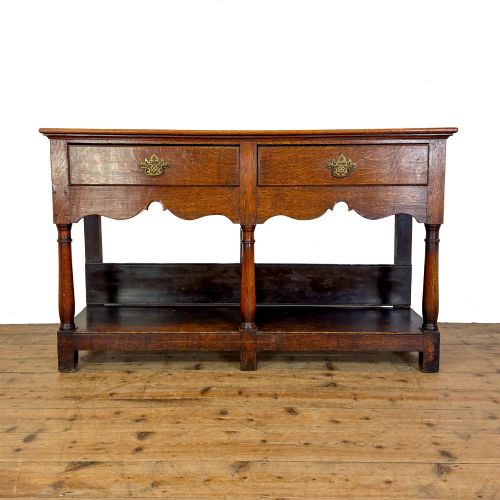
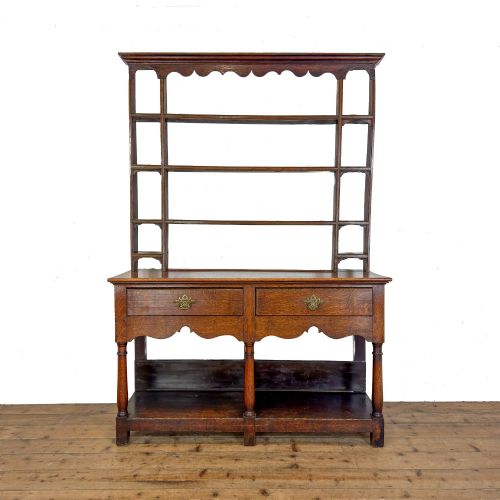
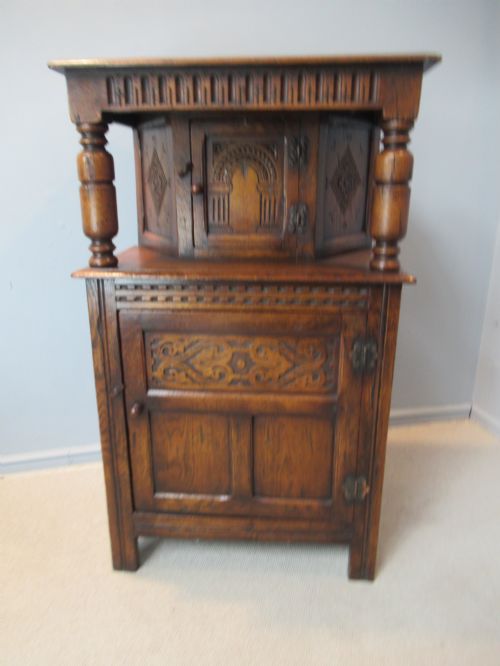


Small Oak Sideboard
A small oak sideboard brings timber warmth and compact utility to a room, offering practical storage without dominating the floor plan.
Small Oak Sideboard
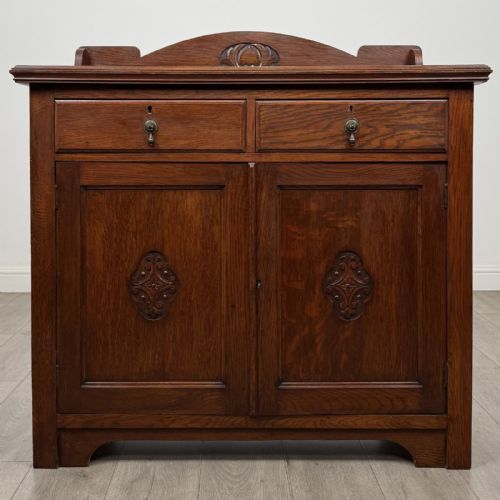
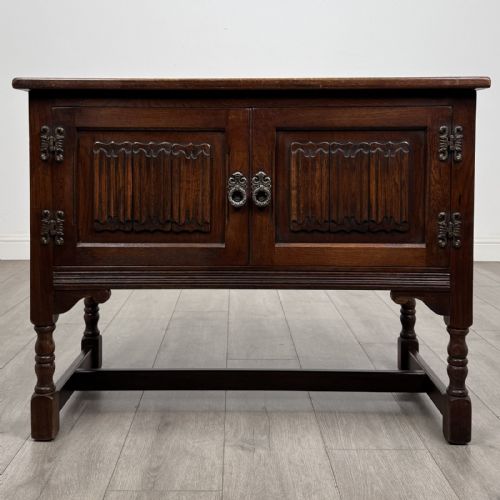
A small oak sideboard serves as a compact timber storage unit, combining flat surface display with enclosed cupboard space or drawers. When you search for a small oak sideboard, you encounter forms ranging from early country dresser bases to twentieth-century revival pieces designed for modest interiors.
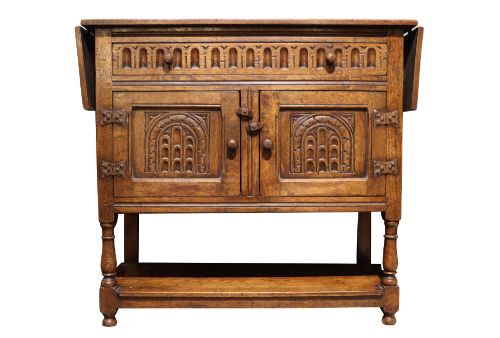
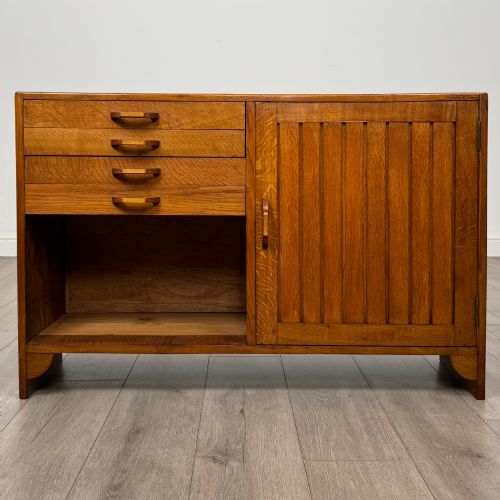
The pieces appearing here span centuries of British and continental joinery, including Edwardian low cupboards, Georgian potboard bases, and 1920s Arts and Crafts cabinets. Many adopt regional vernacular styles such as Welsh country dressers or court cupboards scaled down for domestic use.
While traditional centuries-old examples show pegged joints and hand-planed boards, twentieth-century interpretations utilise golden oak, limed finishes, and lighter framing. Each iteration provides the sturdy utility characteristic of domestic hardwood furniture.
Materials and construction methods
Makers built these pieces primarily from solid oak, sometimes combined with secondary timbers like pine or incorporating brass and iron hardware for hinges and drawer pulls. Golden oak and limed treatments appear on later twentieth-century examples, while earlier items rely on the natural grain and darker patination of aged heartwood.
Joinery methods define the structural integrity, moving from traditional pegged mortise and tenon joints in earlier periods to machine-cut elements in twentieth-century production. Surfaces often feature carved ornamentation, linenfold panels, or geometric mouldings applied to doors and drawer fronts.
Small Oak Sideboard Retail Price Guide 2026
Typical asking prices for small oak sideboard among the pieces listed under this phrase on Sellingantiques today, from the lower quarter to the upper quarter. They describe what is for sale here now, not the wider market.
One robust Victorian cabinet carries sign-writing for a German beer cellar, hinting at past hospitality duties.
Distinguishing quality across the range
The standard of timber selection and drawer construction dictates the tier of a piece, with quarter-sawn oak displaying prominent medullary rays marking superior material choice. Hand-cut dovetails on drawer boxes indicate careful workshop production compared to simpler mechanical fastening.
Proportion and untouched patination elevate certain examples, particularly where original hardware and regional characteristics remain intact. Conversely, heavy alterations or unsympathetic later additions diminish the integrity of antique pieces.
Heals of London·Peter Waals
The Small Oak Sideboard Glossary
- Dresser base
- The lower section of a kitchen or dining room dresser, featuring drawers and cupboards without the upper plate rack. These often function independently as sideboards.
- Court cupboard
- A traditional enclosed two-stage cupboard, usually featuring a recessed upper section supported by carved pillars or brackets. They provide shallow display and deeper base storage.
- Potboard
- An open slatted lower shelf incorporated into traditional country dressers and sideboard bases, historically designed for storing ceramic or metal kitchen pots.
- Linenfold
- A style of wood carving that imitates folded parchment or linen, frequently used on the panels of cupboards and cabinet doors during revival periods.
- Golden oak
- A bright, warm timber tone characteristic of Edwardian and early twentieth-century furniture production, often achieved through specific varnishing and finishing techniques.
Small Oak Sideboard: Frequently Asked Questions
Where should I place a small oak sideboard?
These compact pieces fit well in dining rooms, hallways, or living spaces where floor space is limited. Their shallow depth allows them to serve as serving surfaces or storage units without blocking walkways.
Pairing them with a mirror or artwork above creates a balanced focal point in smaller rooms while keeping everyday items out of sight.
How do I date an oak sideboard?
Dating relies on examining construction techniques, tool marks, and stylistic indicators such as hardware and carving motifs. Hand-sawn boards and pegged joinery typically point to earlier centuries, while machine-cut elements and limed finishes suggest twentieth-century production.
Secondary woods used in drawer linings and back panels also help determine the period of manufacture.
Can I use an antique sideboard for modern storage?
These cabinets suit contemporary living by offering concealed space for tableware, media equipment, or hallway clutter. The sturdy construction of solid hardwood ensures they handle daily use reliably.
Measuring the internal cabinet dimensions and drawer depths helps confirm that modern items fit comfortably inside.
What is the difference between a sideboard and a dresser base?
A sideboard traditionally functions as a serving or storage console for dining areas, while a dresser base originates from farmhouse kitchens where it stored culinary utensils and food supplies. Over time, the terms have overlapped considerably in the antiques market.
Both forms provide a combination of drawers and lower cupboards suited to modern domestic storage.