
Vintage Oak Coffer
A vintage oak coffer brings centuries of sturdy storage and plain-timber utility straight into a modern room.
Vintage Oak Coffer
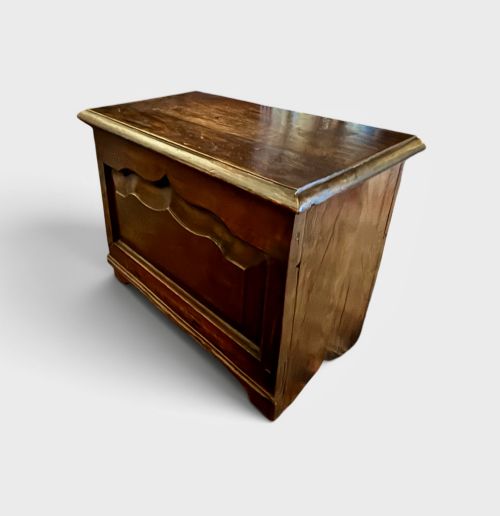
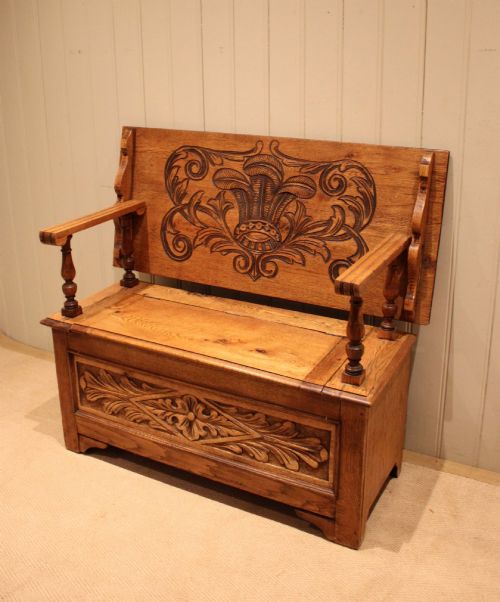
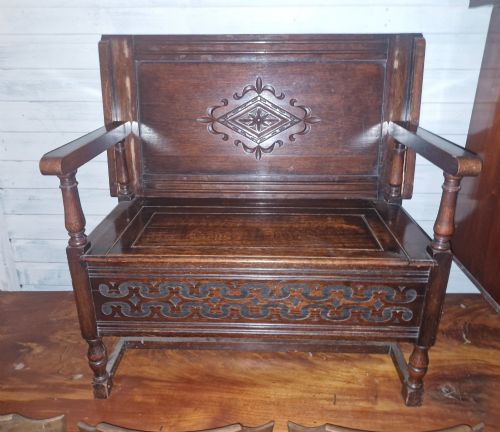
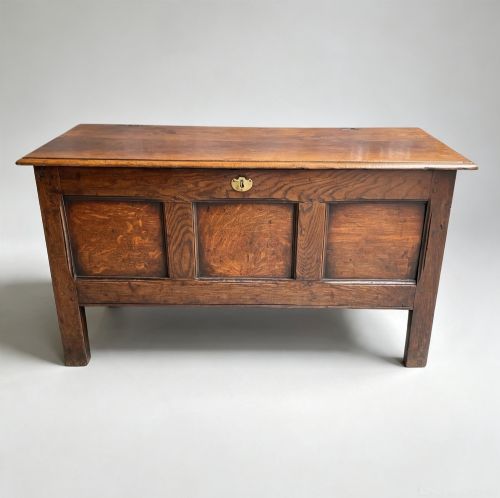
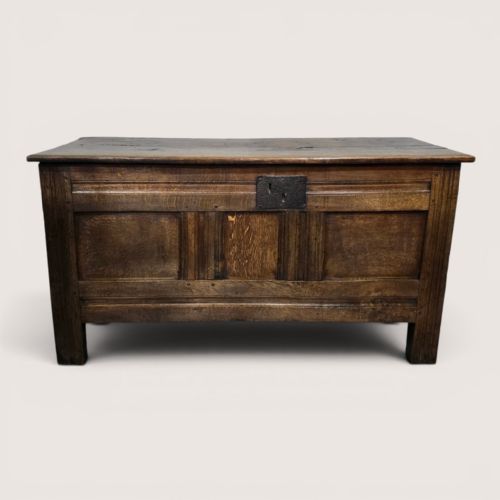
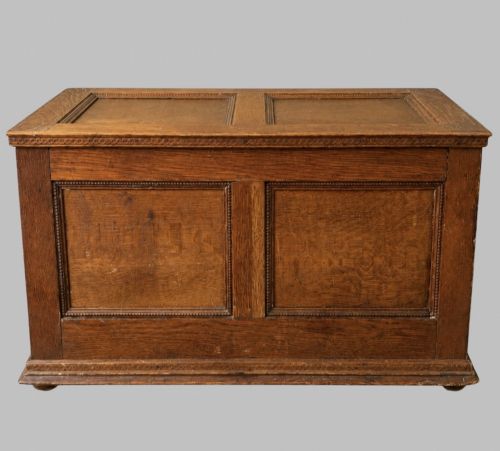
A vintage oak coffer serves as a sturdy timber storage box, often encountered as a blanket chest or a carved blanket box from the seventeenth to the twentieth century. These domestic trunks appear alongside related forms such as mule chests, bible boxes, and hall benches with lift-up seats.
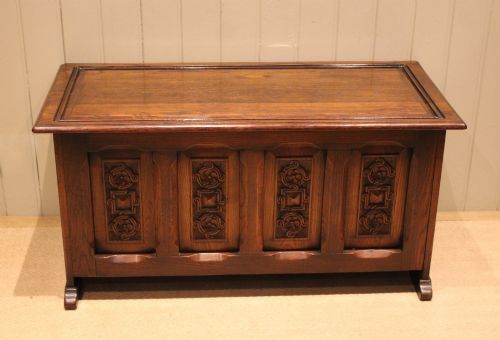
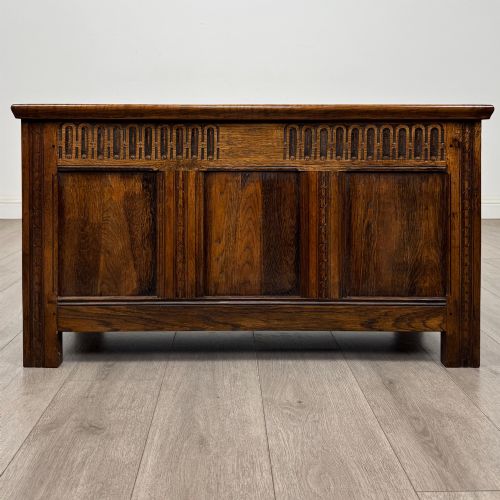
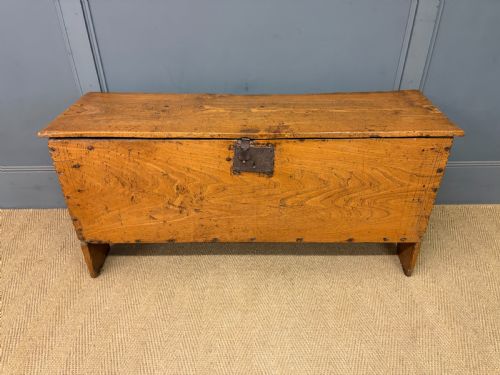
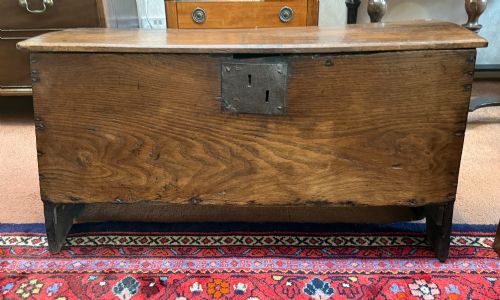
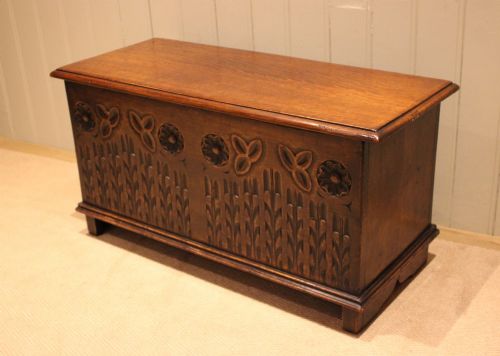
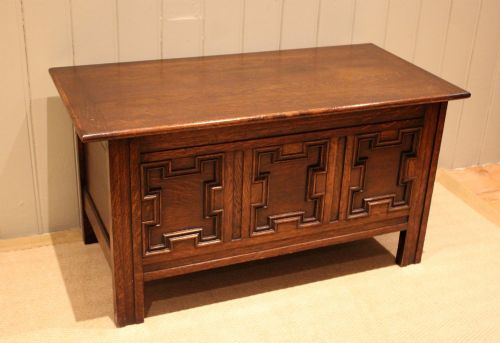
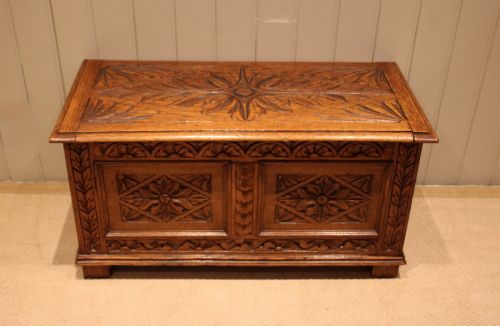
The selection ranges from sixteenth-century boarded coffers and seventeenth-century panelled examples to later revivals from the Victorian, Edwardian, and Arts and Crafts periods. Buyers frequently meet simpler turn-of-the-century interpretations alongside heavily carved revival pieces finished in dark or golden tones.
How they were made
Carpenters built these chests primarily from solid oak, sometimes combining it with walnut, elm, or painted wood to construct panelled or boarded bodies. Iron hinges, brass handles, and wrought iron straps reinforce the heavy timber lids and corners.
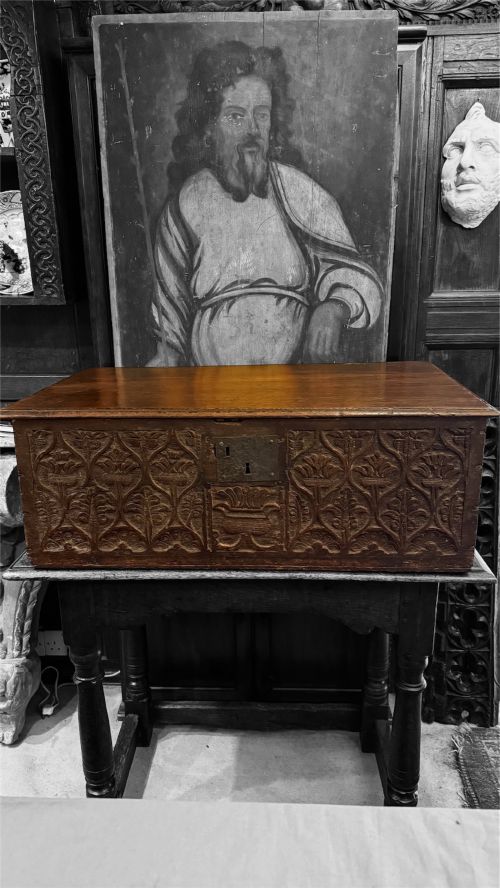
Surface decoration relies heavily on hand carving, showing figural medallions, green man motifs, or geometric panels influenced by Jacobean and Baroque styles. Certain Arts and Crafts examples display limed finishes or simpler panel construction reflecting regional vernacular traditions.
Certain country house chests feature fierce green man carvings staring out from beneath the lid to ward off troublesome spirits.
What varies in quality
The degree of hand carving and the crispness of detail separate standard production boxes from exceptional workshop pieces. Crisp panels, deep relief work, and well-executed figural carvings indicate superior cabinet-making.
Timber selection and structural integrity also dictate worth, as solid oak boards with desirable grain patterns and minimal later alterations retain greater integrity than heavily restored or purely utilitarian boxes.
The Vintage Oak Coffer Glossary
- Coffer
- A large wooden chest used for storing valuables, linens, or documents. These deep boxes frequently feature hinged lids and raised feet or floor-standing plinths.
- Mule chest
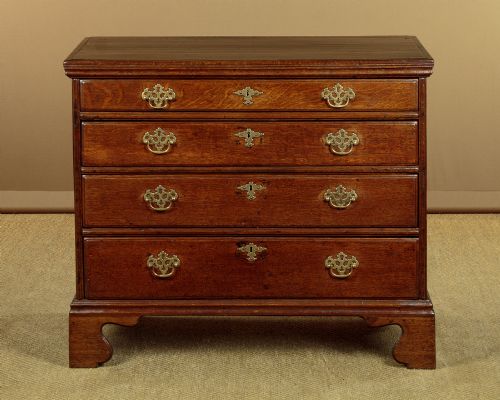
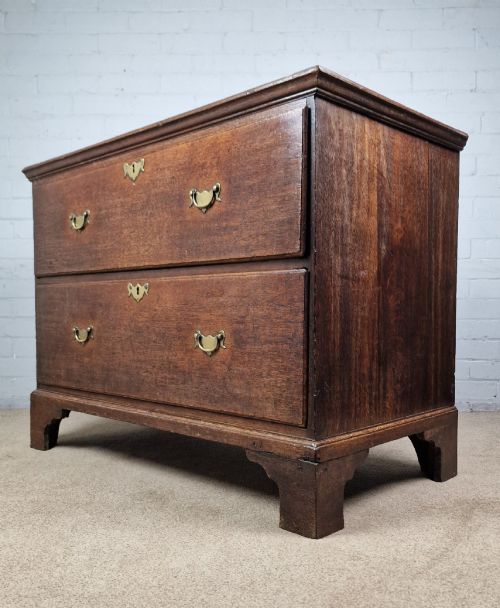
- A storage chest fitted with one or more drawers beneath the main internal compartment. This practical hybrid form emerged to combine trunk storage with drawer access.
- Bible box
- A small, portable desk or storage box designed to hold sacred texts and writing materials. These compact containers often rest on tables or dedicated stands.
- Boarded construction
- A method of joining flat planks of timber edge-to-edge using nails or pegs rather than traditional frame-and-panel techniques. This simpler method appears on early sixteenth and seventeenth-century examples.
- Jacobean Revival
- A nineteenth and twentieth-century decorative style copying the heavy geometric mouldings and dark finishes of seventeenth-century English furniture. Makers utilised this aesthetic to evoke historic domestic interiors.
Vintage Oak Coffer: Frequently Asked Questions
What is an oak coffer used for?
These robust timber chests served households for centuries as secure storage for blankets, linen, and valuables.
Today they function effectively in modern hallways, living rooms, and bedrooms as blanket boxes or coffee tables with internal storage.
How do I date an antique coffer?
Dating relies on examining construction methods, timber preparation, and decorative motifs like carving styles.
Early pieces often display hand- split boards and boarded construction, whereas twentieth-century versions show machine tooling and lighter oak finishes.
What is the difference between a coffer and a mule chest?
A standard coffer provides a single top-opening compartment for storage without lower drawers.
A mule chest incorporates one or more drawers built into the base beneath the main compartment.
Are these chests made of solid oak?
Most traditional examples utilise solid oak planks for the main panels and structural framing.
Some later or revival pieces incorporate secondary woods or regional timbers like elm alongside the primary oak construction.