

Jacobean Style Chest
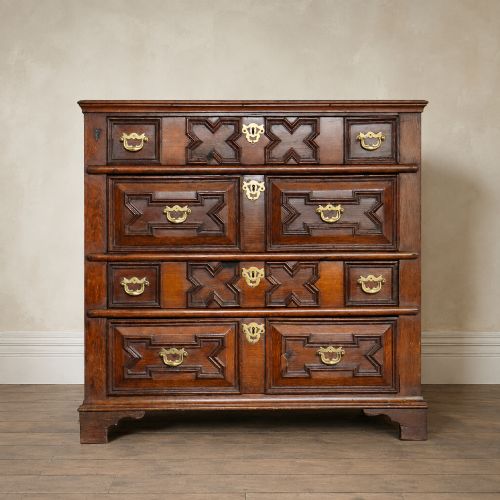
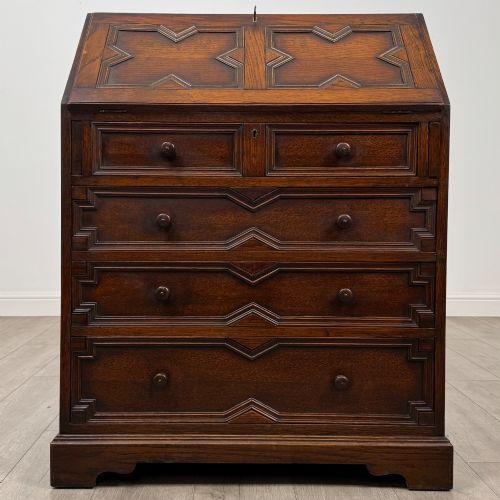
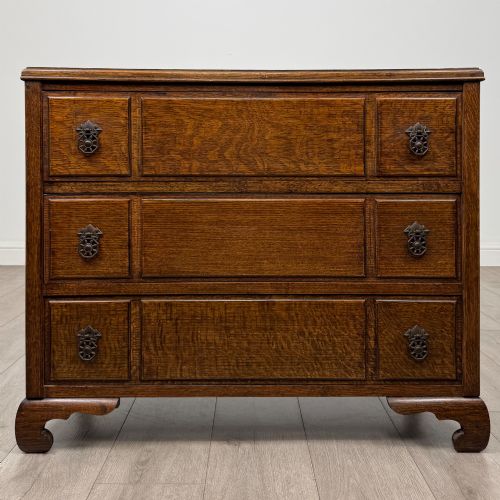
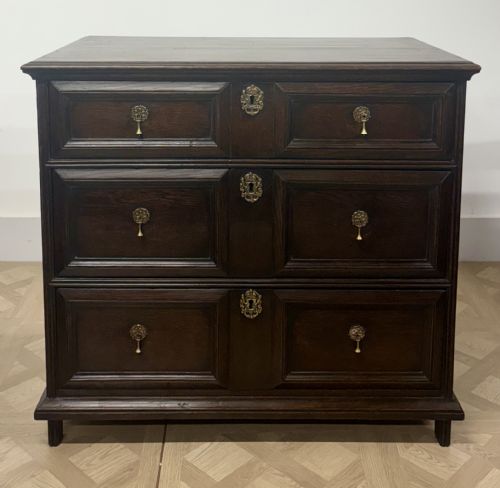
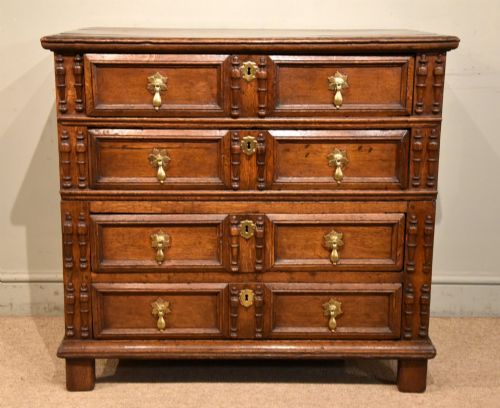
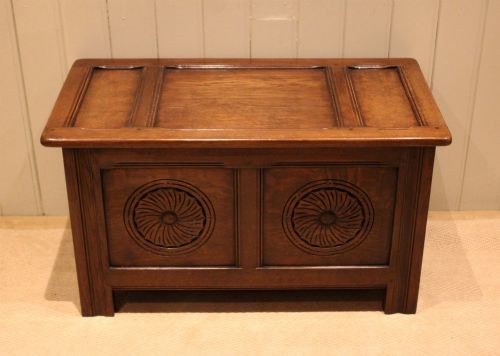
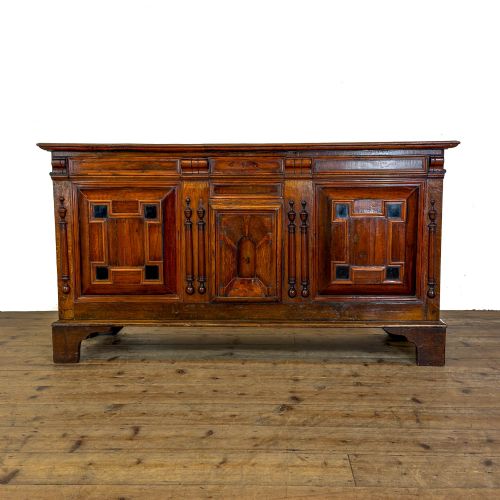
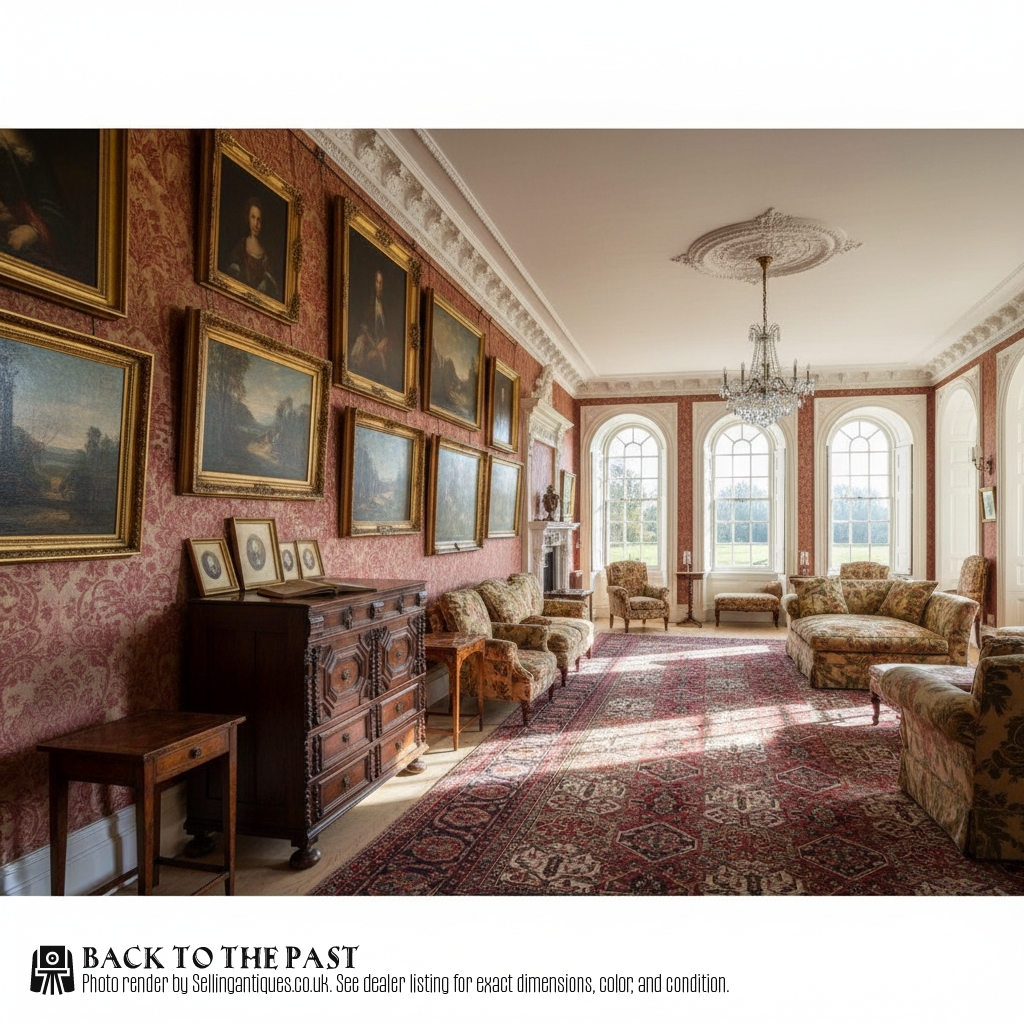
A jacobean style chest brings substantial timber character and historic presence into a room, offering both practical storage and deep carved detail.
Jacobean Style Chest
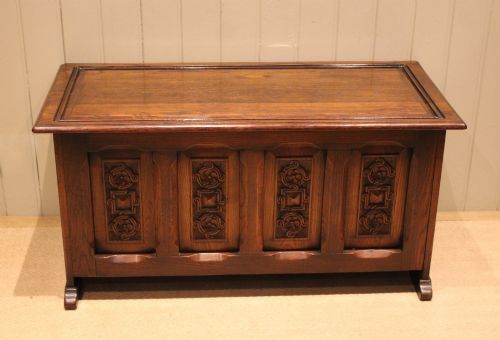
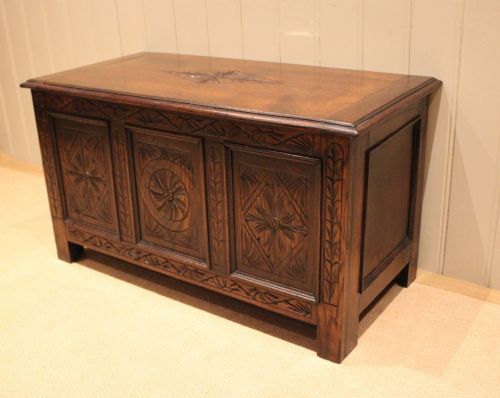
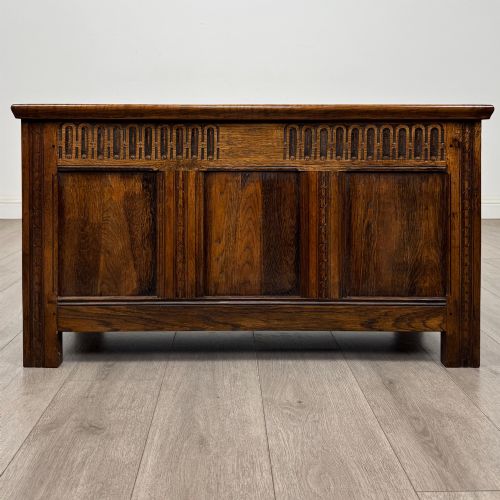
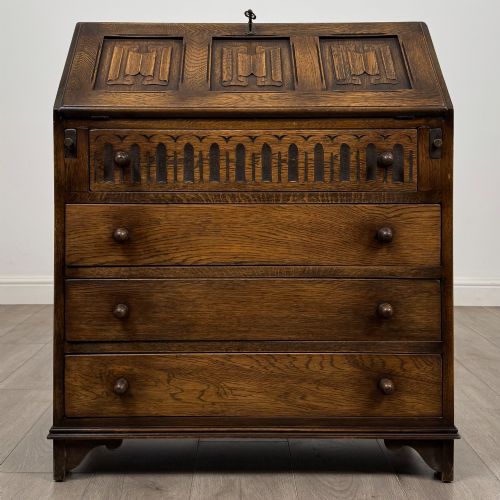
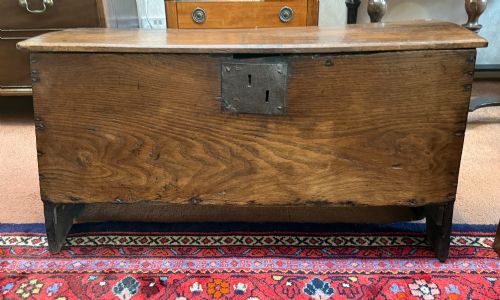
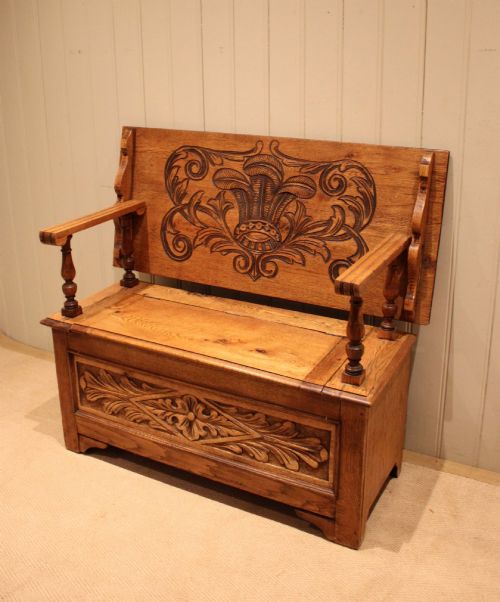
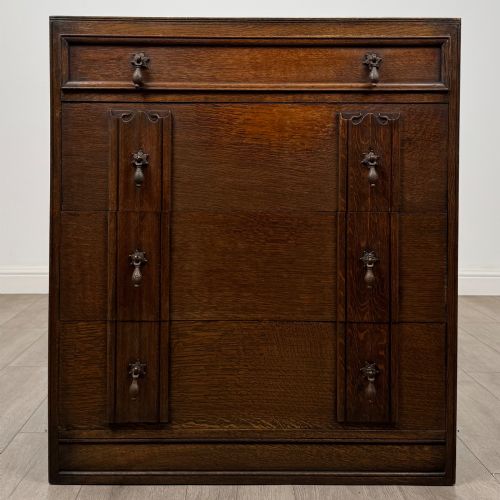
When searching for a jacobean style chest, a buyer encounters sturdy storage furniture designed to evoke seventeenth-century domestic interiors. These pieces take the form of panelled coffers, blanket boxes, two-part chests, and chests of drawers rooted in traditional British cabinet-making.
The versions most commonly met on this page span the Edwardian era and the early twentieth century, alongside survivals from the eighteenth century and occasional seventeenth-century originals. Revival pieces from the 1900s to the 1930s replicate the heavy proportions and architectural mouldings of the earlier period.
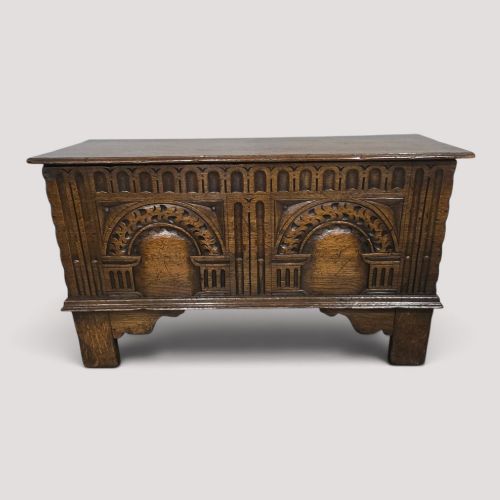
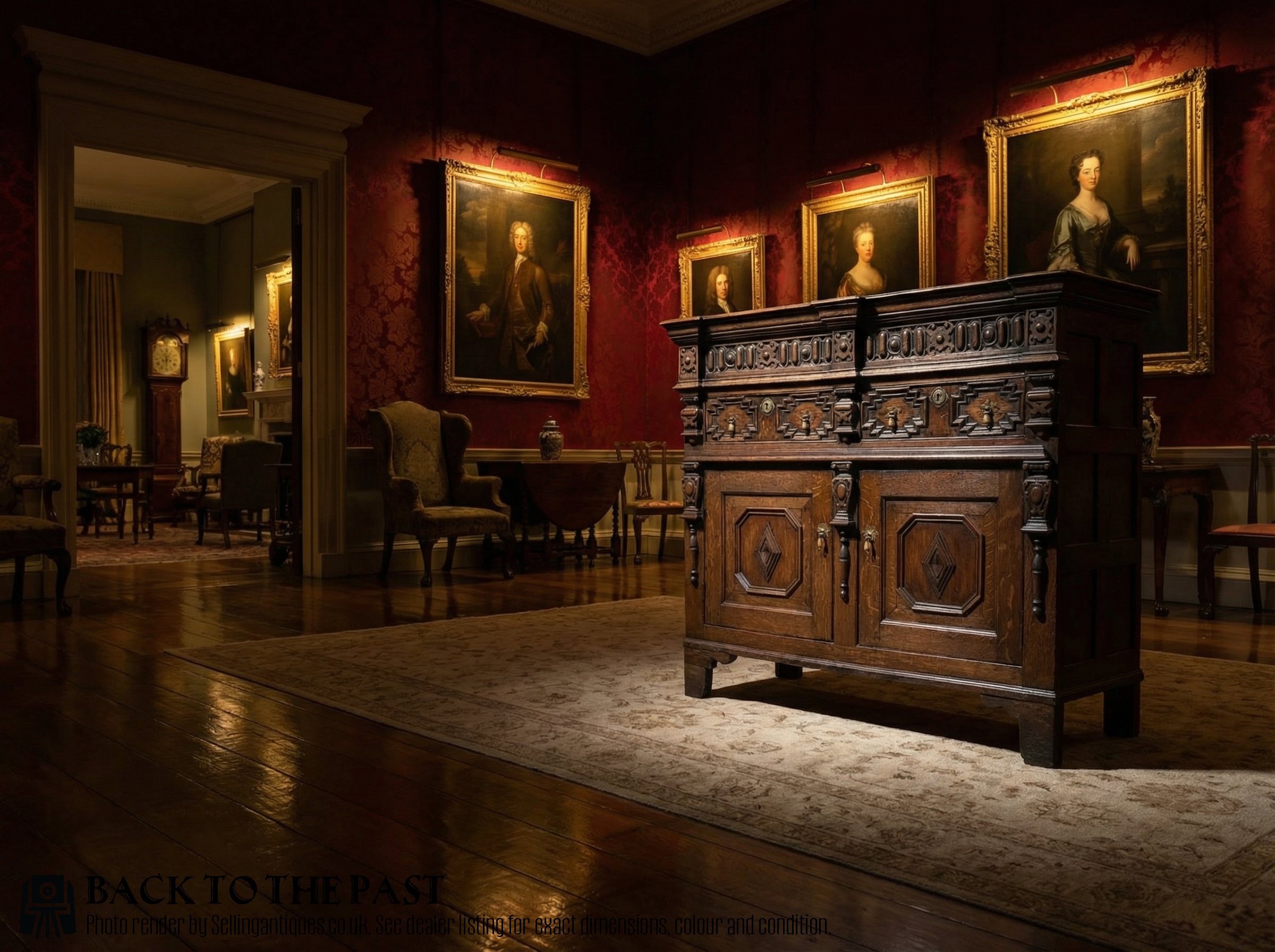
Storage forms vary from simple lidded coffers with carved fronts to multi-drawer chests featuring geometric mouldings. Walnut and fruitwood appear alongside the dominant oak, reflecting the material choices of the historic periods being imitated.
What varies in quality
Quality in these pieces rests upon the crispness of the carved ornamentation and the architectural integrity of the mouldings. Hand-carved geometric mouldings and deep relief panels executed with precision separate superior pieces from simpler, mechanically produced revival furniture.
The choice of timber grain and the honesty of the construction also dictate standard. Pieces utilising solid oak with tight medullary rays and substantial thickness command greater appreciation than those employing thinner veneers or stained alternative woods.
Jacobean Style Chest Retail Price Guide 2026
Typical asking prices for jacobean style chest among the pieces listed under this phrase on Sellingantiques today, from the lower quarter to the upper quarter. They describe what is for sale here now, not the wider market.
Listings feature items dated across the seventeenth, eighteenth, nineteenth, and twentieth centuries, demonstrating a sustained demand for Jacobean revival design.
The Jacobean Style Chest Glossary
- Geometric moulding
- Raised wooden mouldings applied to drawer fronts or panels in geometric patterns such as rectangles and octagons. This technique defined much of the decoration during the seventeenth century.
- Linenfold
- A style of carved wooden panelling that resembles folded fabric, commonly seen on Tudor and Jacobean furniture. It adds texture and vertical emphasis to flat wooden surfaces.
- Mule chest
- A storage chest fitted with one or more drawers at the base beneath the main lift-top compartment. It bridges the transition between the traditional coffer and the modern chest of drawers.
- Two-part chest
- A piece of case furniture constructed in two separate modular sections stacked vertically. This design aided transport and placement in historic homes.
Jacobean Style Chest: Frequently Asked Questions
How do I date a jacobean style chest?
Dating depends on examining the construction marks, timber characteristics, and hardware types used in the piece. Seventeenth-century originals display hand-sawn boards and irregular dovetails, whereas twentieth-century revival pieces often show machine-tool markings and standardised fixings.
Style indicators also help distinguish eras, as Edwardian and 1930s interpretations tend to feature lighter internal framing and crisper, less weathered carving than authentic seventeenth-century survivals.
What is the difference between a coffer and a chest of drawers?
A coffer is accessed from a hinged lid on top and typically provides a single deep cavity for bulky items like blankets or linens. A chest of drawers stores items in horizontal sliding compartments accessed from the front.
Mule chests combine both forms by placing drawers beneath the lidded upper section, offering dual storage options.
How should I care for solid oak furniture?
Solid oak benefits from being placed away from direct heat sources and sudden temperature fluctuations that can cause timber to split. Regular dusting with a dry, soft cloth maintains the finish without needing heavy chemical polishes.
Applying a traditional beeswax occasionally helps nourish the grain and protects the surface from drying out.
Did cabinet makers use woods other than oak?
While oak remains the primary material for this style, makers also utilised walnut, fruitwood, and pine. Ebonised wood was frequently employed to create sharp, dark contrasts against lighter panels.
Revival pieces from the twentieth century sometimes incorporated stained pine or mixed hardwoods while maintaining an overall oak appearance.