
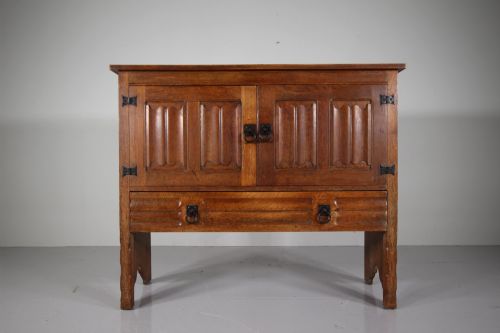
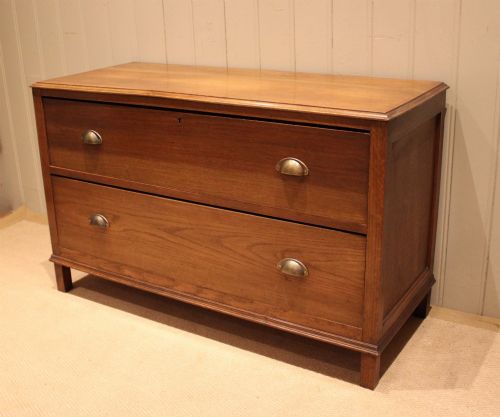
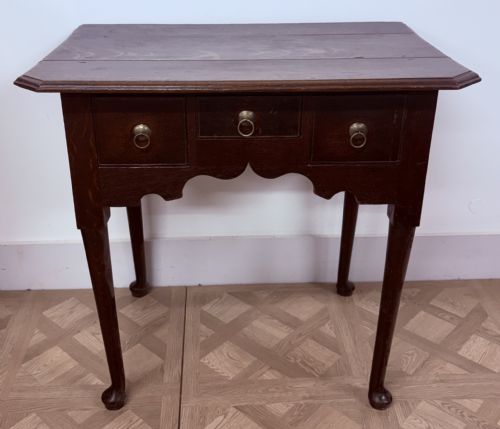
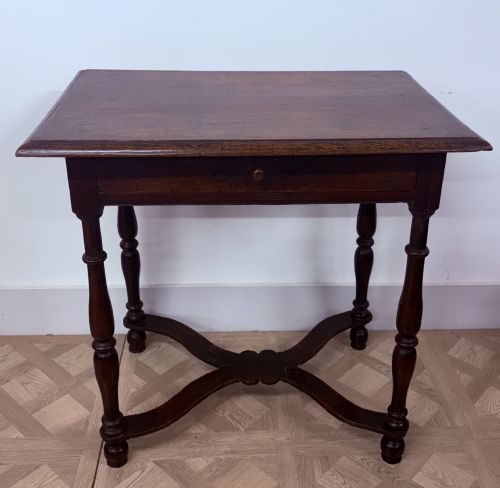


English Oak Lowboy
An english oak lowboy serves as a compact table with drawers, offering practical surface space and period character for a hallway or bedroom.
English Oak Lowboy
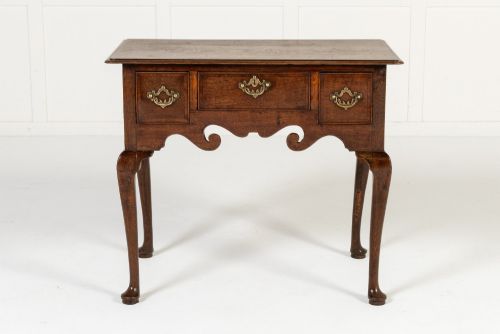
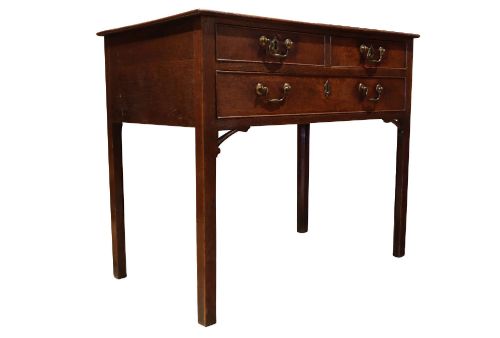
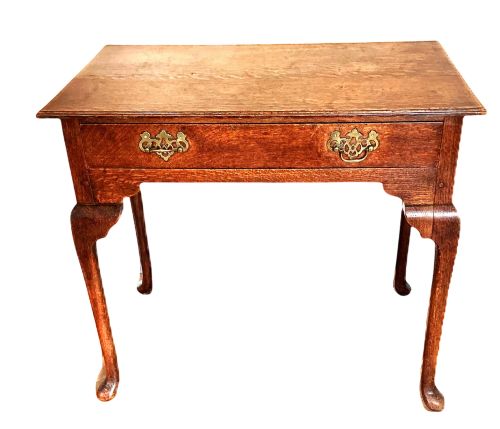
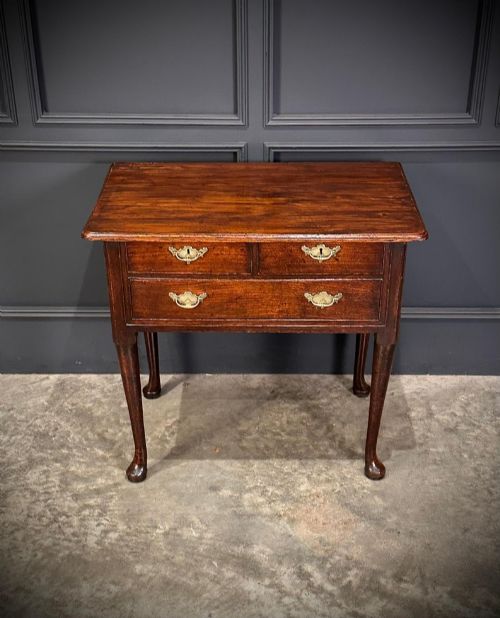
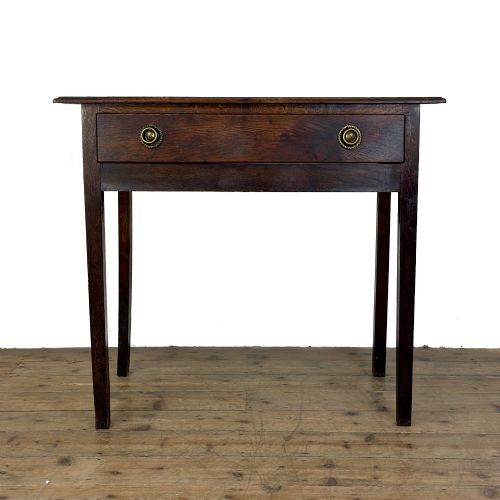
An english oak lowboy is a small side table featuring one, two, or three drawers beneath the top surface, traditionally utilised as a dressing or writing table. These pieces date principally from the 17th and 18th centuries, spanning the Georgian, Queen Anne, and William and Mary periods, though later 19th-century examples also appear.
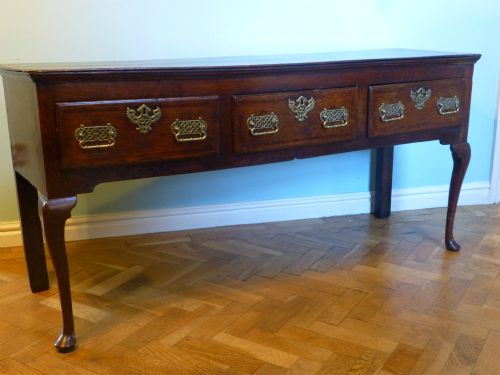
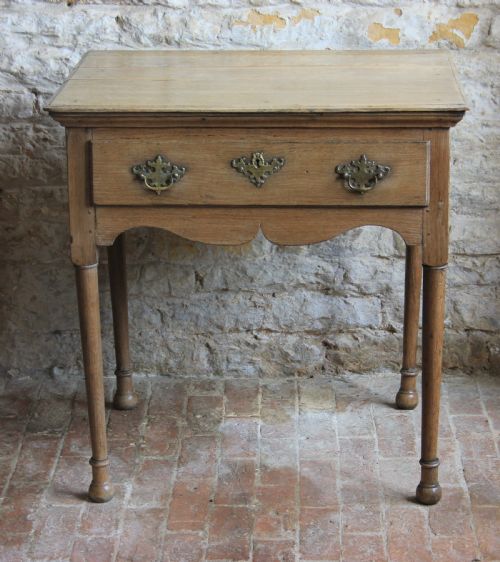
The form typically stands on four legs, which can be straight, tapered, or shaped in a cabriole design, sometimes terminating in pad feet. Drawers are arranged in a single row beneath the apron, occasionally featuring brass handles or drop pulls that correspond to the period of manufacture.
Materials and construction methods
Makers built these tables primarily from solid oak, frequently incorporating secondary timbers such as ash, elm, or mahogany within drawer linings and internal framing. Cross-banding in walnut or burr walnut appears on select examples to provide visual contrast around the drawer fronts and top edges.
Joinery relied upon traditional hand-cut methods, including mortise and tenon joints for the frame and dovetails for assembling the drawer boxes. Brass hardware and iron fixings secured the working parts, reflecting the hardware fashions of the 17th, 18th, and 19th centuries.
Some lowboys double quietly as correspondence desks, built with secret character by provincial joiners who hid extra compartments behind the primary drawers.
Factors determining quality
The refinement of the leg turning or carving separates provincial workshop pieces from metropolitan furniture, with cabriole legs and shaped aprons requiring greater skill from the joiner. Timber selection also dictates grade, where dense grain patterns and quarter-sawn oak figure prominently in superior examples.
Originality of surface finish and hardware preserves the integrity of the piece over centuries of use. Tables retaining their early brass drop handles and a warm, patinated wax finish command more interest than those altered by later replacements or heavy sanding.
The English Oak Lowboy Glossary
- Lowboy
- A small table with drawers, standing on relatively tall legs, commonly used as a dressing table or side table in the 17th and 18th centuries.
- Cabriole leg
- A furniture leg that curves outward and then tapers inward, frequently ending in a pad or hoof foot.
- Dresser base
- A heavy wooden framework fitted with drawers, serving a similar domestic function to a lowboy but generally longer and deeper in proportion.
- Cross-banding
- A decorative border technique where thin strips of veneer are laid so their grain runs at right angles to the surrounding wood.
- Apron
- The flat or shaped wooden board connecting the legs of a table immediately beneath the top surface or drawers.
English Oak Lowboy: Frequently Asked Questions
What is the difference between a lowboy and a side table?
A lowboy specifically incorporates one or more drawers beneath the main surface, whereas a standard side table may consist simply of a top and supporting legs.
Historically, the lowboy functioned as a small personal writing desk or dressing table in domestic chambers.
How can I tell an 18th-century lowboy from a later copy?
Examining the drawer construction reveals hand-cut dovetails and timber shrinkage consistent with age rather than machine production.
Furthermore, the interior boards and secondary woods underneath provide clues regarding the authentic period of manufacture.
Where should I place a lowboy in a modern home?
These compact tables fit well in narrow hallways as console surfaces or function effectively as writing desks in small study spaces.
Their shallow depth allows them to sit against walls without obstructing walkways while offering discreet storage in the drawers.
Did lowboys always have oak as the main timber?
While oak is predominant among provincial English examples, makers also utilised walnut, mahogany, and ash depending on regional availability and prevailing fashions.
Cross-banding and veneers added decorative contrast using alternative timbers on the principal facade.