



Ebonised Low Bookcase
These ebonised low bookcase examples combine dark timber finishes with practical shelving, offering a refined way to display books and objects.
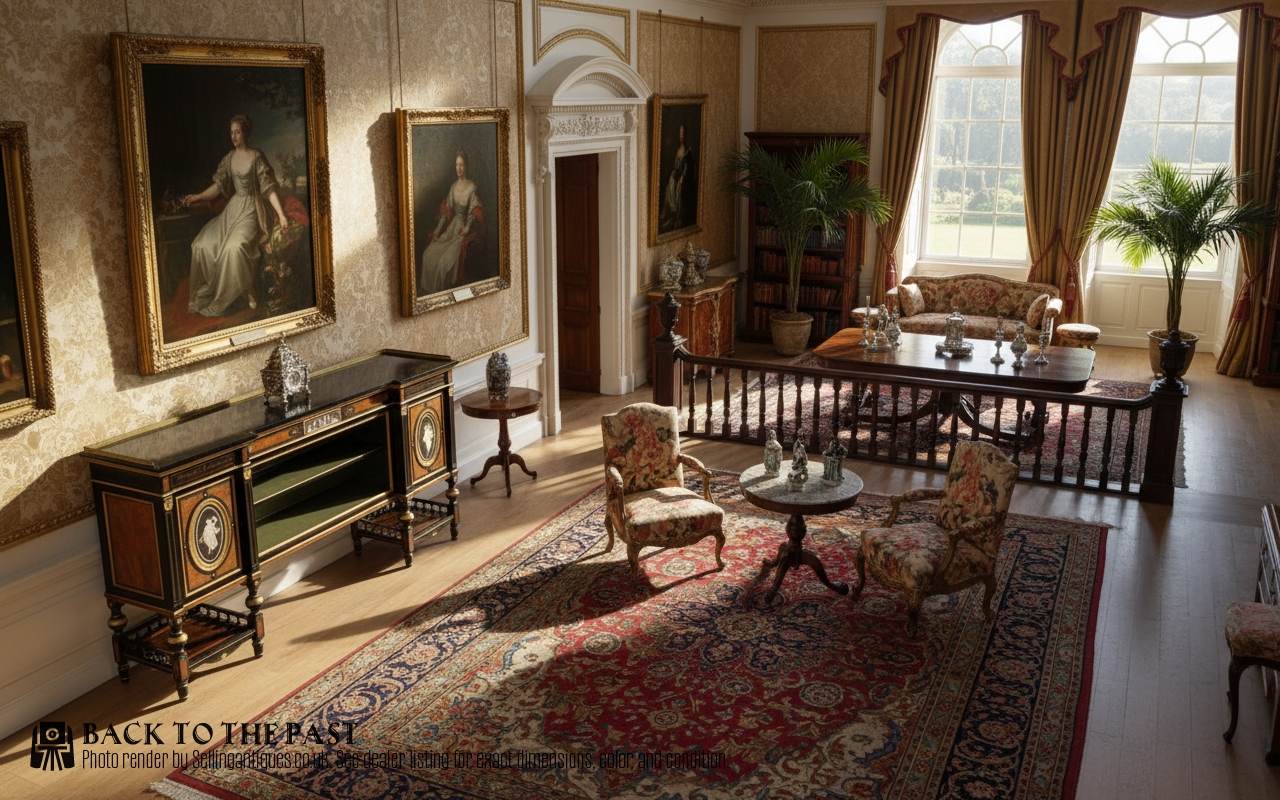
Ebonised Low Bookcase
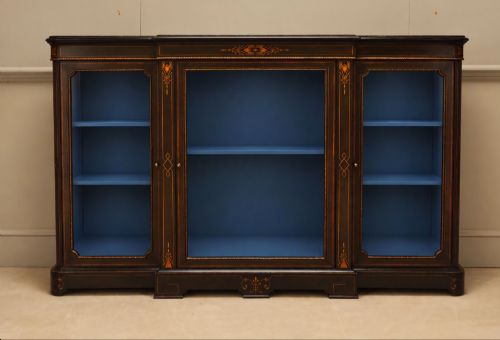
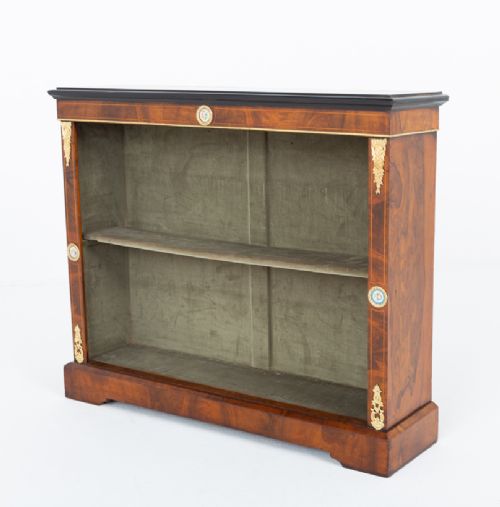
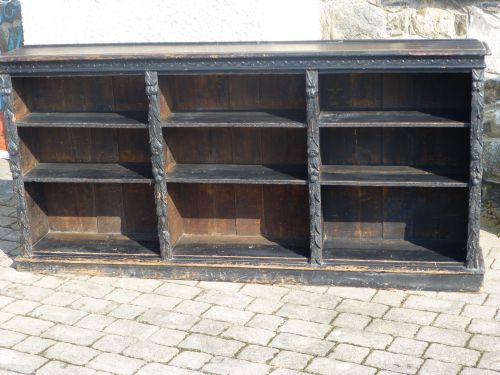
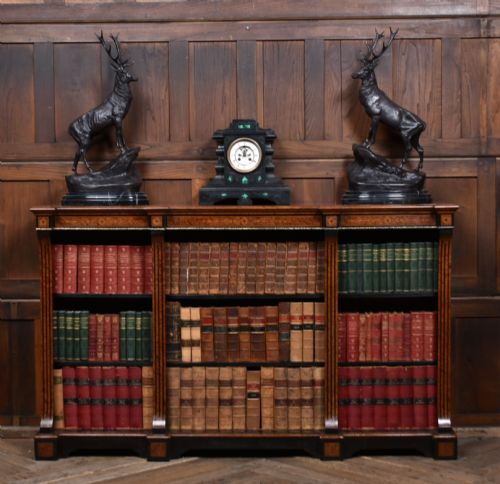
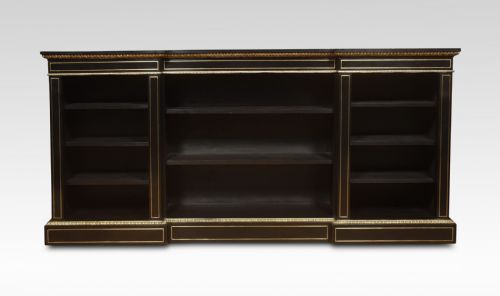
An ebonised low bookcase is a compact storage piece finished in darkened wood to imitate ebony, appearing frequently across the nineteenth century and into the twentieth century. These low bookcases span open dwarf formats, breakfront designs, and glazed display cabinets suited for domestic interiors.
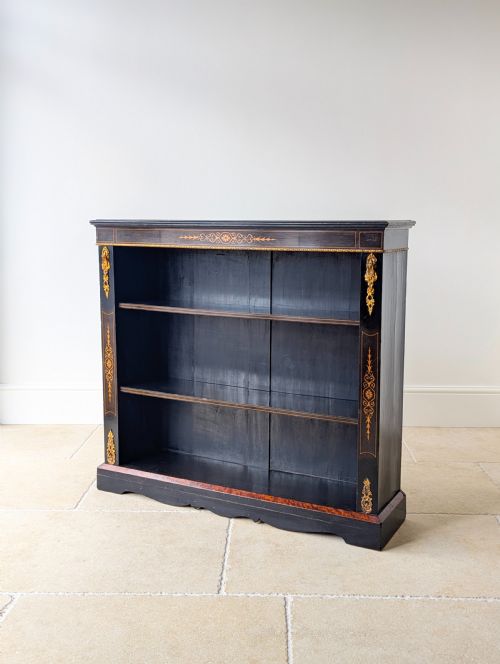
Most pieces date from the Victorian era and the Napoleon III period, incorporating styles such as the Aesthetic Movement and Gothic revivals. Makers utilised timber frames enhanced by fruitwood inlay, brass mounts, and occasional amboyna or walnut veneers.
How they were made
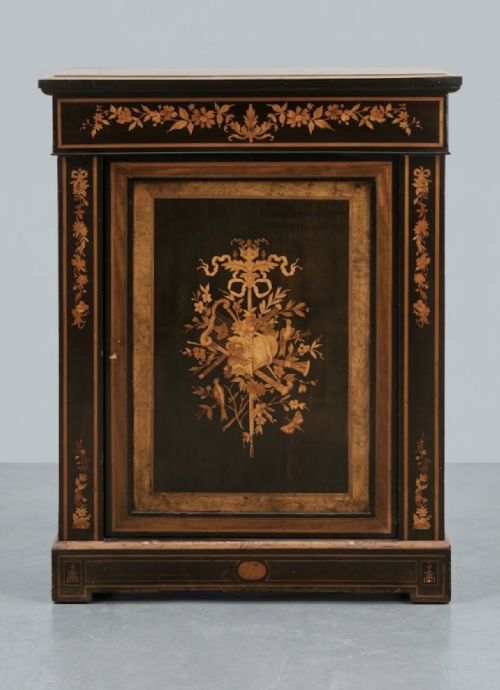
Cabinet makers constructed these pieces using timber carcasses treated with a dark ebonising finish, frequently pairing the black surfaces with contrasting veneers like walnut and amboyna. Fine fruitwood inlay added geometric or floral patterns across doors and friezes.
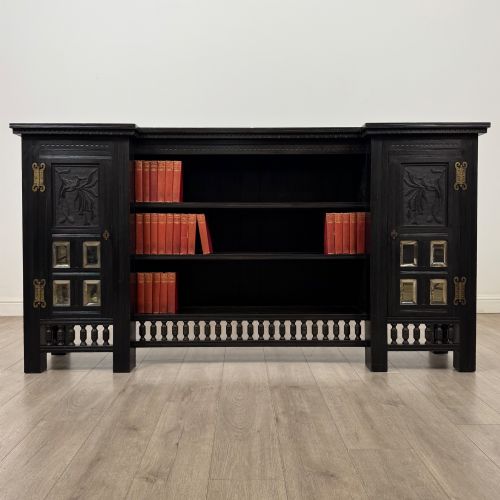
Metal ornamentation played a distinct role, with brass mounts, ormolu details, and glazed doors fitted to enclose the shelving. Adjustable shelves appeared in open formats, while carved elements such as green man motifs added textural relief.
Keep an eye out for hidden green man carvings glaring quietly from the shelves.
What varies in quality
The sophistication of the timber preparation and secondary woods dictates the distinction between standard and finer examples. Superior pieces display crisp fruitwood inlay, substantial brass mountings, and unblemished ebonised finishes.
Structural complexity also separates the tiers, moving from simple open dwarf shelves to large breakfront configurations with multiple doors and detailed carving. The integration of contrasting exotic veneers like amboyna elevates the decorative ambition of the cabinet.
Lamb of Manchester
The Ebonised Low Bookcase Glossary
- Ebonised wood
- Timber treated with stain or paint to achieve the dense black appearance of ebony. This finish became especially popular during the nineteenth century for furniture mimicking more costly exotic materials.
- Amboyna
- A highly prized, dense burl wood with a speckled, golden-brown grain. It was frequently used as a contrasting veneer on Victorian and Napoleon III cabinets.
- Breakfront
- A piece of furniture where the central section projects forward from the flanking wings. This architectural arrangement creates depth and visual variety on larger cabinets.
- Ormolu
- Gilded bronze mounts applied to furniture for decorative effect. The technique involves treating bronze with a mercury and gold amalgam.
- Pier cabinet
- A low cabinet designed specifically to fit against the wall space between windows. These pieces often feature glazed doors for displaying porcelain and small objects.
Ebonised Low Bookcase: Frequently Asked Questions
What is an ebonised low bookcase?
An ebonised low bookcase is a compact piece of nineteenth or early twentieth-century furniture finished with a dark, black stain to resemble ebony. These low formats were designed to keep books and decorative objects at a convenient height.
They appear in open shelf designs as well as enclosed cabinets with glass doors, brass mounts, and inlaid fruitwood details.
How do I date an ebonised low bookcase?
Dating relies on observing construction methods, timber choices, and stylistic markers such as Victorian Gothic elements or Aesthetic Movement designs. Pieces often feature specific period characteristics like amboyna veneers or ormolu mounts.
Examining the interior shelving supports and the execution of the ebonised finish helps distinguish nineteenth-century examples from later twentieth-century iterations.
Where were low bookcases placed in a Victorian home?
Victorian interiors utilised low bookcases in libraries, drawing rooms, and studies where tall shelving would obstruct wall space or pictures. Their low profile allowed the top surface to function as a display area for ornaments and clocks.
Certain narrower variants, known as pier cabinets, stood specifically in the wall spaces between large windows.
How do I care for ebonised wood furniture?
Ebonised surfaces require gentle dusting with a soft, dry cloth to prevent the accumulation of abrasive particles. Avoid commercial polishes containing silicone, which can build up and dull the dark finish over time.
Keep the cabinet away from direct sunlight and strong heat sources to protect the underlying timber and any delicate fruitwood inlay or veneers.