


Black Ebonised Bookcase
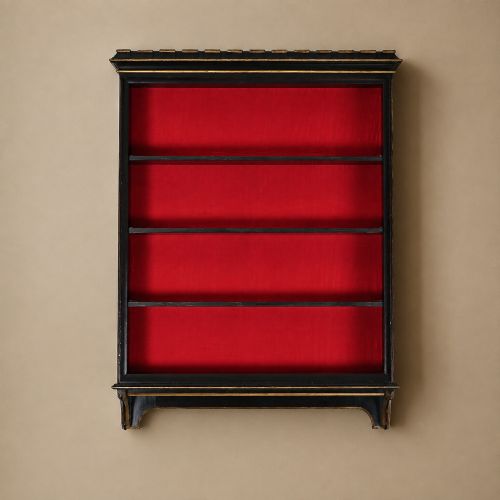
A black ebonised bookcase offers a dark, dramatic silhouette designed to display books and treasured objects against a rich, polished surface.
Black Ebonised Bookcase
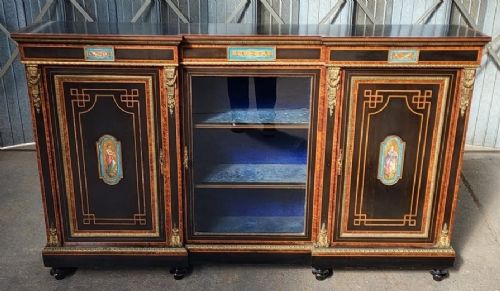
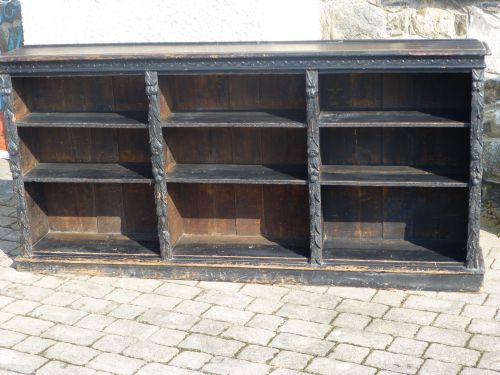
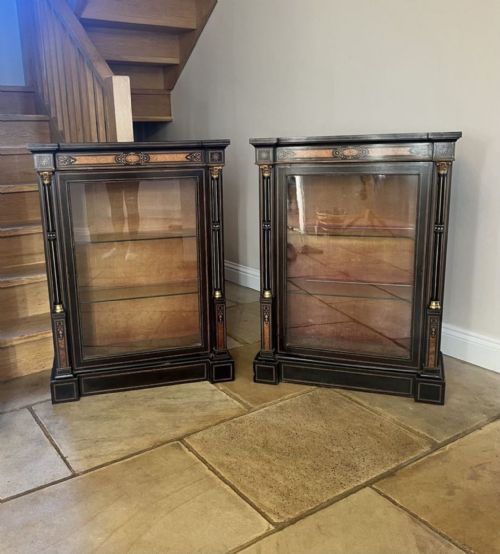
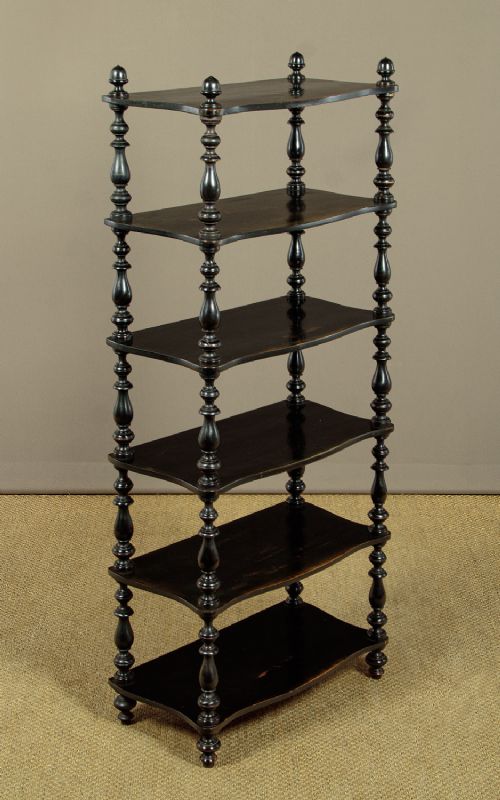
A black ebonised bookcase is a piece of furniture designed for shelving and displaying volumes, frequently seen from the nineteenth century and the Victorian period. These items appear in various forms, including open bookshelves, glazed display cabinets, and fitted pier cabinets.
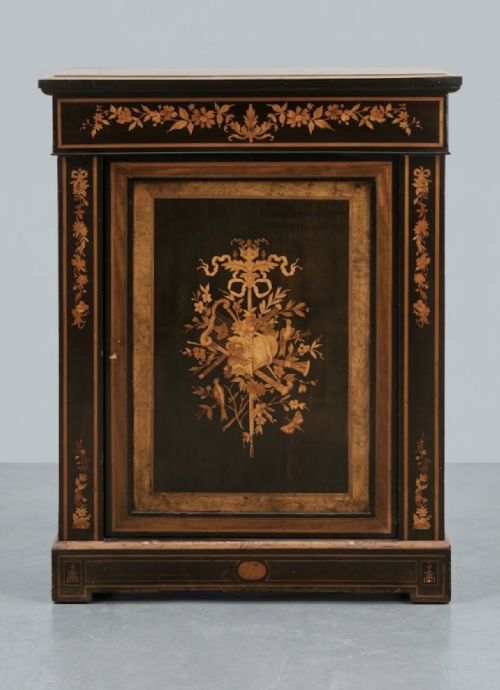
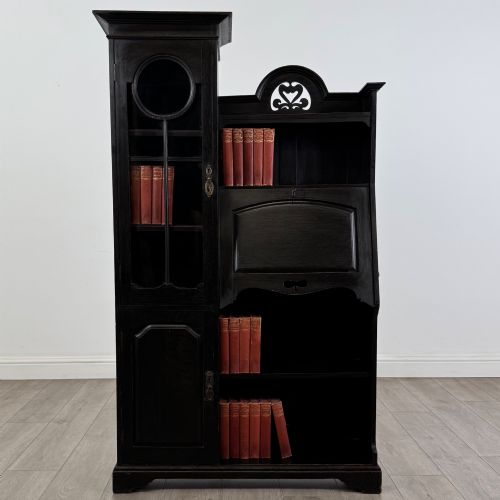
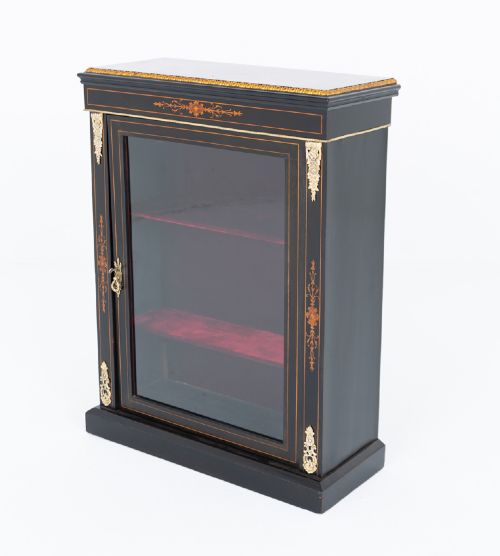
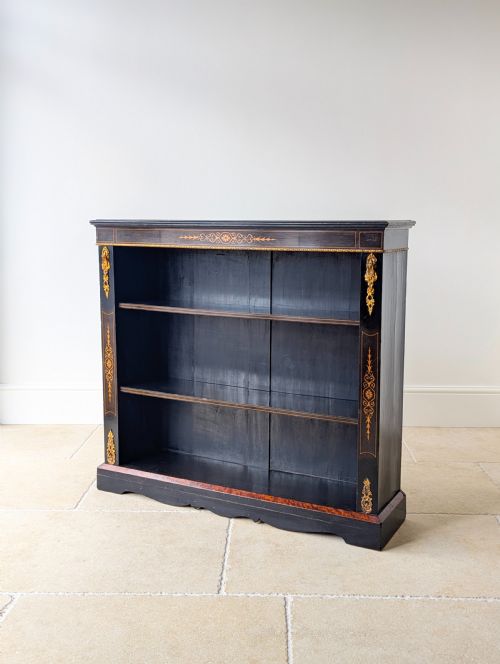
The version most commonly encountered on this page is the Victorian or nineteenth-century ebonised piece, often featuring inlaid wood, glass doors, and brass mounts. Many examples incorporate decorative elements from the Aesthetic Movement, French Napoleon III style, or Gothic Revival.
Buyers look for these items to anchor a room with a dark finish that contrasts sharply against brightly coloured bindings and porcelain plaques. The category spans dwarf bookcases, breakfront libraries, and tall corner units adapted for domestic studies and reception rooms.
How they were made
Makers produced these pieces by taking a foundational timber, such as oak, walnut, or amboyna, and applying a dark stain or paint finish to simulate costly ebony. This ebonised surface frequently receives a high polish to create a deep, light-reflecting sheen.
Craftsmen enriched the dark frames with contrasting materials, embedding brass stringing, gilt highlights, porcelain plaques, and delicate marquetry into the wood. Ormolu mounts and tortoiseshell panels further embellished French and English pieces from the mid to late nineteenth century.
Listed forms range from open bookshelves and display cabinets to music cabinets, bureaux, and tiered dumb waiters.
What varies in quality
The standard of a black ebonised bookcase rests upon the crispness of its carving and the precision of its inlaid details. Pieces featuring hand-chased ormolu mounts, genuine tortoiseshell, and intact Wedgwood or Sevres ceramic inserts sit at a higher tier than plain timber carcasses.
Structural integrity also dictates value, with superior examples exhibiting tightly fitted glazed doors, stable adjustable shelving, and well-preserved surface finishes that retain their original depth without excessive modern refinishing.
George Edmund Street
The Black Ebonised Bookcase Glossary
- Ebonisation
- The process of staining or treating timber to imitate true ebony wood. This technique gained widespread popularity during the nineteenth century for furniture requiring a uniform black finish.
- Ormolu
- Gilt bronze mounts applied to furniture for decorative effect. These metallic embellishments are typical of high-status nineteenth-century French and Victorian cabinets.
- Pier cabinet
- A low cabinet designed specifically to fit into the wall space between windows. These pieces often feature glass doors to display collections of porcelain and small books.
- Boulle
- A style of marquetry using brass and tortoiseshell inlaid in intricate patterns. It is named after the master cabinetmaker André-Charles Boulle and appears frequently on Napoleon III furniture.
- Aesthetic Movement
- A late nineteenth-century design style emphasising visual beauty over narrative content. Pieces from this movement often combine ebonised surfaces with gilt decoration and Japanese-inspired motifs.
Black Ebonised Bookcase: Frequently Asked Questions
What periods do these bookcases come from?
The pieces listed span the nineteenth and early twentieth centuries, with a heavy concentration of Victorian and Napoleon III examples from the 1860s to the 1880s. Edwardian and later twentieth-century iterations also appear occasionally.
Manufacturing dates stretch from around 1850 through to the 1930s, reflecting changing tastes in revivalist and modernist design.
How do I style a black ebonised bookcase at home?
A dark ebonised finish provides a striking backdrop for brightly coloured book spines, white ceramics, and gilt-framed objects. Pairing the dark wood with pale walls allows the architectural silhouette to stand out clearly in a room.
These pieces work well in studies, drawing rooms, and hallways where a formal, grounded focal point is desired. Adjustable shelving allows for the arrangement of varied volumes and decorative items.
How do I identify an Aesthetic Movement bookcase?
Aesthetic Movement pieces generally display clean ebonised lines with subtle gilt incisions, sometimes borrowing decorative motifs from Japanese art. They often avoid the heavy ornamentation of earlier Victorian Gothic styles in favour of refined simplicity.
These cabinets frequently incorporate brass fittings and contrasting light wood inlays to break up the dark surface.