


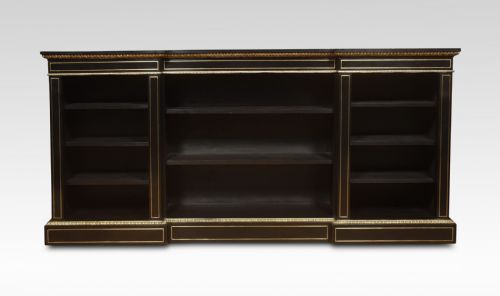

Ebonised Open Bookcase
An ebonised open bookcase brings dark, striking timberwork and accessible display space to a room, perfect for housing a collection of volumes.
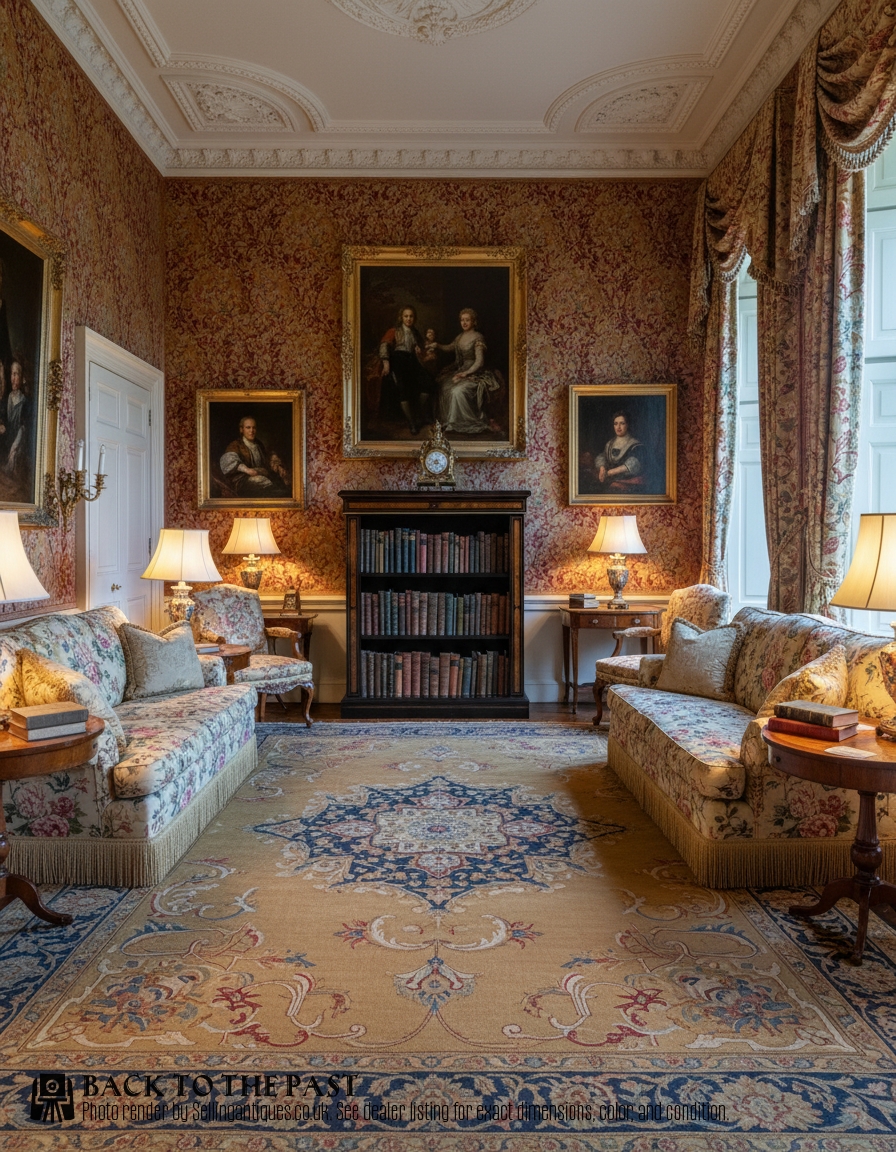
Ebonised Open Bookcase
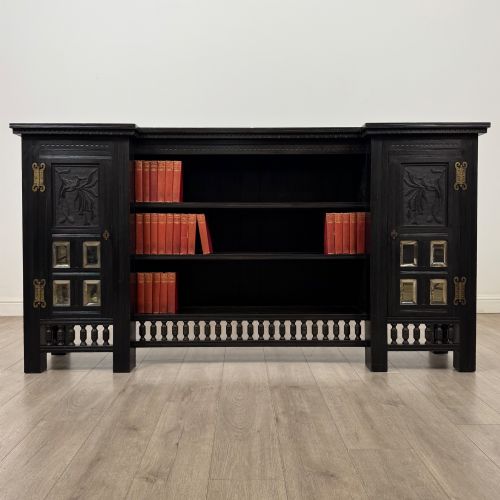
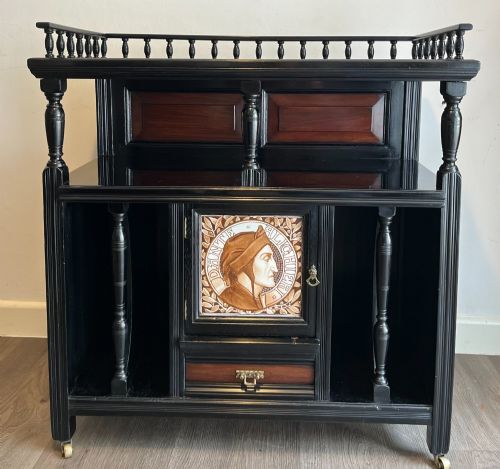
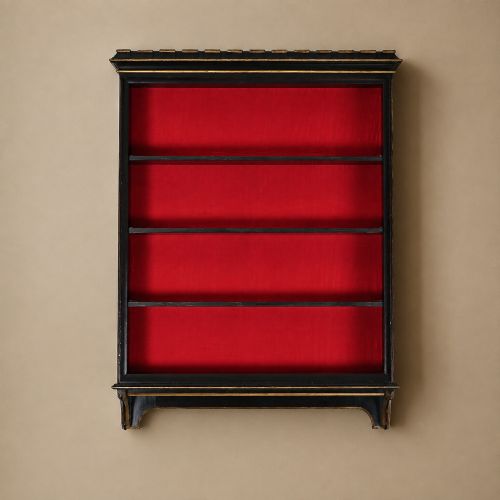
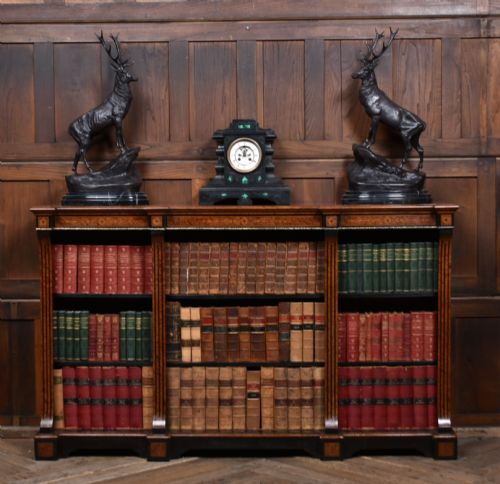
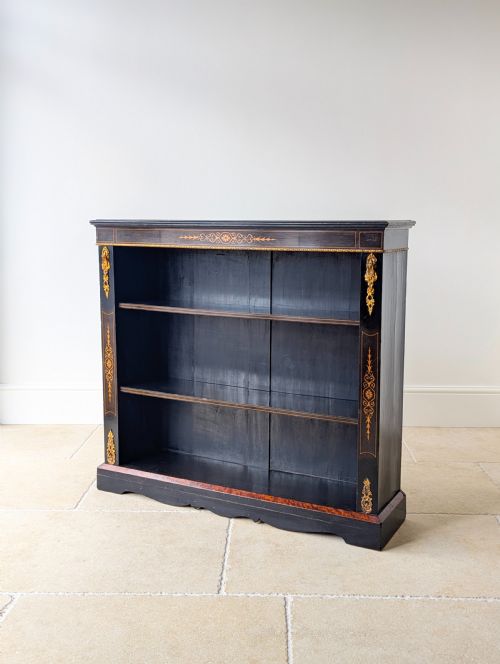
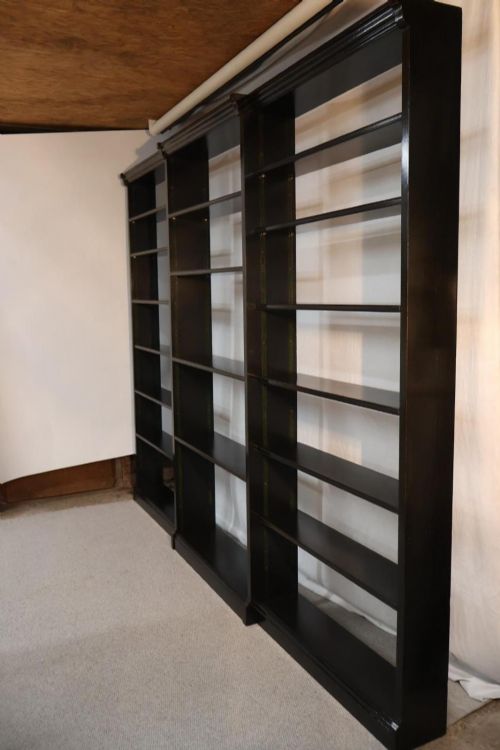
An ebonised open bookcase provides accessible shelving housed within a dark, darkened timber frame, most commonly encountered from the Victorian period through to the early twentieth century. These pieces range from small dwarf units and wall-hung shelves to large breakfront configurations designed to command a substantial wall. Buyers frequently encounter examples finished with subtle brass mounts, ceramic plaques, or intricate inlaid details that reflect the aesthetic tastes of the nineteenth century.
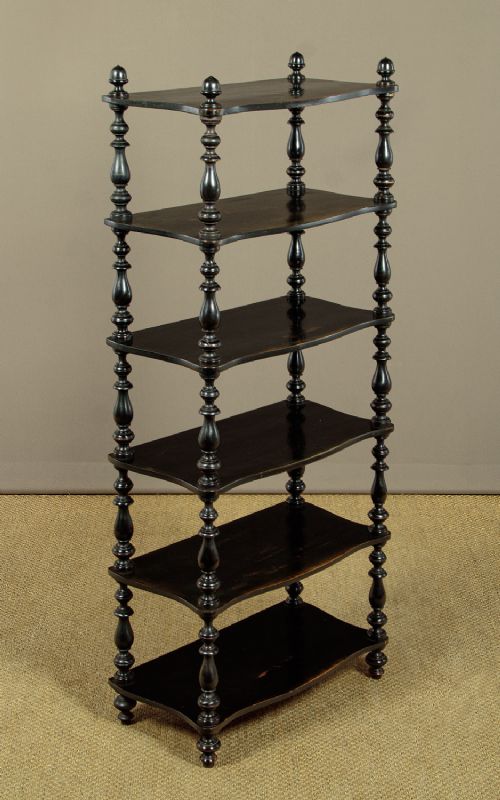
The styles span from Gothic Revival and Aesthetic Movement designs to Napoleon III interpretations, showing how diverse the application of ebonised wood was across different workshops. Many of these bookcases incorporate adjustable shelves, making them practical for holding varying heights of books while maintaining a uniform dark finish. Whether dealing with a compact six-tier tiered stand or a wide breakfront bookshelf, the core function remains straightforward storage paired with distinct decorative presence.
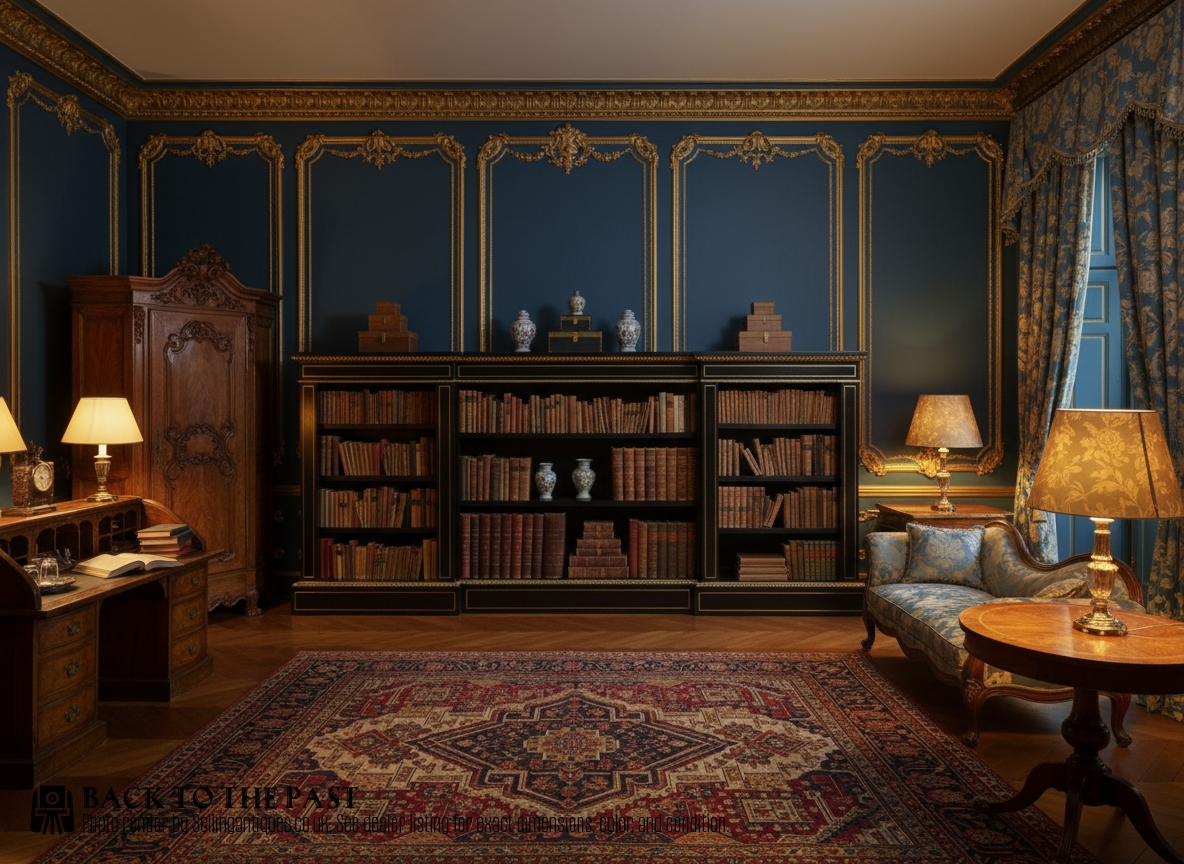
How they were made
The construction typically relies on timber such as oak, mahogany, or walnut, which is then stained or painted to achieve a deep, polished black surface mimicking ebony. Artisans often enhanced these dark surfaces with contrasting brass mounts, gilt metal details, or Wedgwood ceramic inserts to break up the monochrome expanse.
Inlaid decoration in satinwood or amboyna frequently appears on panel work or friezes, contrasting sharply against the ebonised background. Workshops also employed gilded highlights and faux boulle work to add texture and catch the light on more elaborate architectural forms.
Ebonised Open Bookcase Retail Price Guide 2026
Typical asking prices for ebonised open bookcase among the pieces listed under this phrase on Sellingantiques today, from the lower quarter to the upper quarter. They describe what is for sale here now, not the wider market.
Listings feature woods including oak, mahogany, walnut, and amboyna, alongside decorative mounts in brass and ormolu.
What varies in quality
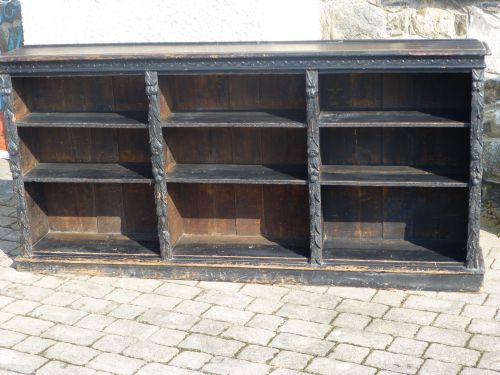
The refinement of the timber preparation and the depth of the ebonised finish set the better examples apart from simpler utility pieces. High-end pieces display crisp carving, such as green man motifs, alongside precise brass mounts and well-fitted adjustable shelf mechanisms.
The integration of decorative elements like ceramic plaques or intricate marquetry inlay indicates a higher tier of craftsmanship. Superior construction is further evident in the choice of underlying woods, such as solid walnut or mahogany beneath the ebonised surface, rather than plain softwood.
George Edmund Street·Story and Triggs·Edwards and Roberts
The Ebonised Open Bookcase Glossary
- Ebonisation
- The process of staining or treating timber to imitate true ebony, producing a dense black finish popular in nineteenth-century cabinet making. This technique allowed makers to utilise more accessible woods while achieving a fashionable dark aesthetic.
- Breakfront
- A cabinet or bookcase whose central section projects forward from the flanking wings. This architectural arrangement adds depth and visual rhythm to larger shelving units.
- Aesthetic Movement
- A late nineteenth-century design style emphasising art for art's sake, often featuring ebonised surfaces with Japanese-inspired motifs, gilt highlights, and contrasting inlays. Pieces from this movement prioritize visual harmony and refined decorative details.
- Ormolu
- Gilded bronze or brass mounts applied to furniture for decorative effect. They catch the light against dark ebonised wood and indicate a higher grade of production.
- Dwarf bookcase
- A low shelving unit designed to sit below window height, allowing light to pass over the top. These pieces provide accessible open storage without dominating the room's wall space.
Ebonised Open Bookcase: Frequently Asked Questions
What periods do these bookcases come from?
The pieces span the nineteenth and early twentieth centuries, with a heavy concentration of Victorian examples. You will also find items originating from the Edwardian era and the 1930s.
Craftsmanship shifted over these decades from ornate Gothic and Aesthetic styles toward simpler, cleaner lines by the early twentieth century.
How do I style an ebonised bookcase at home?
The dark finish provides a strong backdrop that makes brightly coloured book spines and decorative objects stand out clearly. Place them against lighter walls to let the dark timber frame define the silhouette of the furniture.
Because many include adjustable shelves, you can easily alter the interior layout to accommodate oversized volumes or display ceramics alongside your books.
Were these bookcases used only for books?
While primarily designed for libraries and studies, open shelving units also functioned as display spaces for ceramics, small sculptures, and decorative ornaments. Taller variations and tiered stands were often placed in drawing rooms to exhibit prized possessions.
Some smaller configurations, such as wall-hung shelves or low dwarf units, were tailored specifically for casual parlour use.
How do I tell an Aesthetic Movement piece apart?
Aesthetic Movement pieces frequently combine ebonised wood with gilt incising, faux boulle decoration, or contrasting ceramic plaques. They often show design influences from Japanese art and prioritize flat, dark surfaces accented by fine metallic details.
Look for refined proportions and crisp linear decoration rather than heavy Victorian architectural carving.