


Demi Lune Console Cabinet
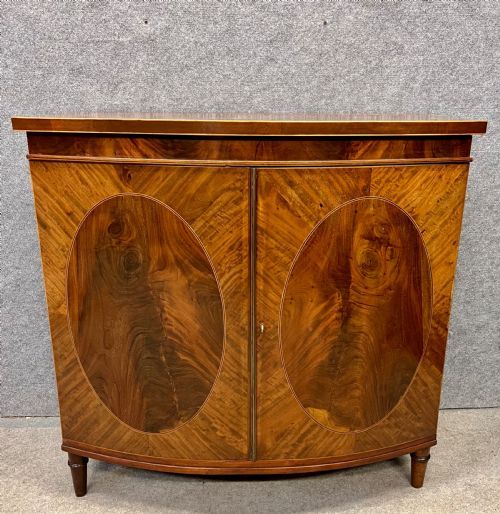
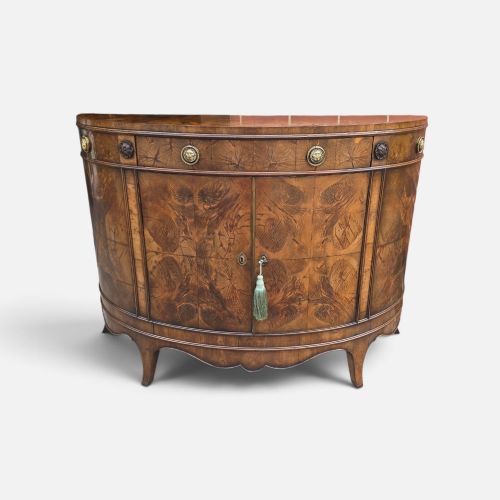
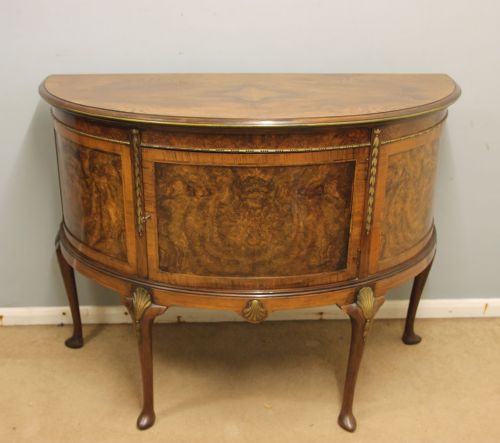
These demi lune console cabinet pieces bring curved elegance to tight spaces, offering flat-backed utility against a wall with a graceful half-circle footprint.
Demi Lune Console Cabinet
A demi lune console cabinet sits flush against the wall while projecting a semicircular profile into the room, combining the surface utility of a console table with enclosed storage. These items appear across periods spanning the late eighteenth century through the Edwardian era and the nineteen-twenties, incorporating styles from Sheraton Revival and Neoclassical to Louis XVI and Georgian.
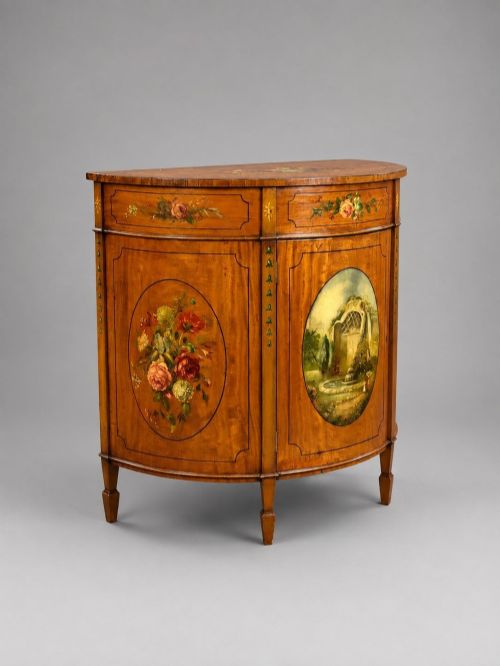
The dominant variations on this page include satinwood commodes and side cabinets featuring painted panels, alongside mahogany, walnut, and burr walnut sideboards and display cabinets. Pieces range from marble-topped French consoles to English satinwood items and pairs of early twentieth-century Italian exhibition pieces, alongside tambour front cupboards on brass feet.
Buyers select these semicircular forms to anchor hallway entries, drawing rooms, and reception spaces where rectangular furniture protrudes awkwardly. Their half-moon footprint softens rigid architectural lines while providing functional surface area and discreet interior storage.
Factors influencing quality and craftsmanship
Quality in a demi lune console cabinet rests on the precision of the curved timber construction and the crispness of the inlay or painted panels. Superior examples display seamless veneer matching across the semicircular top and finely detailed classical hand painting rather than mechanical reproduction.
The choice of primary materials separates standard production from exhibition pieces, with figured satinwood, burr walnut, and heavy marble tops marking out the upper tier. Integrated brass hardware, sound door alignment on curved hinges, and intact crystal glass further elevate the standing of individual items.
The listings here span the Victorian, Edwardian, and Neoclassical styles, utilising satinwood, mahogany, walnut, and marble.
Pietro Ferrario
The Demi Lune Console Cabinet Glossary
- Demi-lune
- French for half-moon, describing any piece of furniture with a semicircular shape and a flat back for wall placement. This profile characterises consoles, commodes, and side cabinets designed for compact spaces.
- Commode
- A low decorative chest of drawers or cabinet with doors, originating in France and frequently adopting the semicircular demi-lune format. These pieces served both decorative and storage functions in formal rooms.
- Marquetry
- The art of applying pieces of veneer to a structure to form decorative patterns and pictures. Craftsmen utilised various tinted woods to create neoclassical motifs on curved cabinet fronts.
- Satinwood
- A durable timber with a natural golden sheen, highly favoured in the eighteenth century and during the Sheraton Revival. It provides a pale, reflective ground for painted panels and contrasting stringing.
- Tambour
- Flexible strips of wood glued to canvas or leather backing to form a sliding door that glides around curved tracks. This mechanism allows access to enclosed storage within semicircular cabinetry.
Demi Lune Console Cabinet: Frequently Asked Questions
Where should I place a demi lune console cabinet?
These cabinets suit narrow entrance hallways, landings, and reception rooms where a standard rectangular table would obstruct foot traffic. Their flat back allows them to anchor securely against the wall while the curved front softens the room's geometry.
They also function effectively beneath mirrors or artwork in living spaces, offering a compact surface for lamps and decorative objects without dominating the floor plan.
How do I identify a Sheraton Revival piece?
Sheraton Revival furniture draws inspiration from late eighteenth-century neoclassical designs, typically featuring light timbers like satinwood, delicate painted classical panels, and symmetrical inlay work. Look for tapered legs, fine stringing, and restrained classical motifs rather than heavy carving.
Items from this revival period often date from the Edwardian era up to the nineteen-twenties, reproducing the elegance of the earlier Georgian age with refined cabinetmaking techniques.
What is the difference between a console and a commode?
A console traditionally refers to a table designed to stand against a wall, sometimes supported by brackets or legs, whereas a commode is a low cabinet with enclosed storage or drawers. In the context of semicircular furniture, the terms often overlap when a console gains cabinet doors beneath its surface.
Examining the interior reveals whether the piece functions primarily as an open-base console table or an enclosed side cabinet intended for storage.
How do I care for antique satinwood furniture?
Maintain satinwood surfaces by dusting gently with a dry, soft cloth and avoiding silicone-based polishes that can degrade the historic finish. Keep the timber away from direct sunlight and heat sources to prevent the veneers from drying out or splitting.
Apply a microcrystalline wax occasionally to nourish the wood and protect the delicate painted panels and inlay work from atmospheric moisture.