
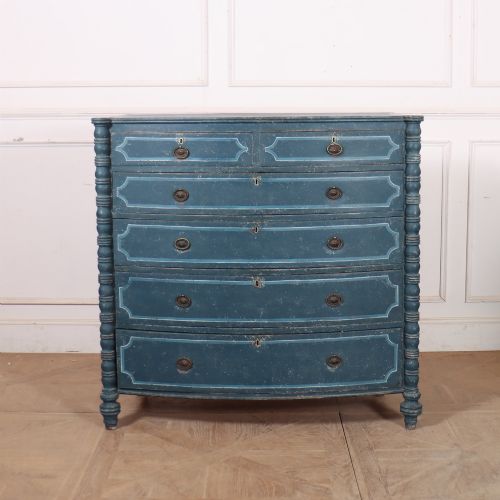
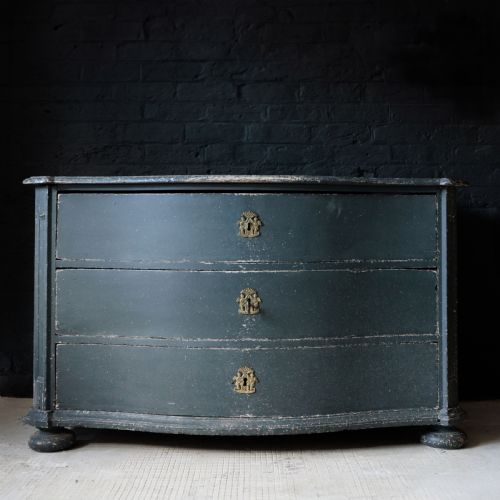
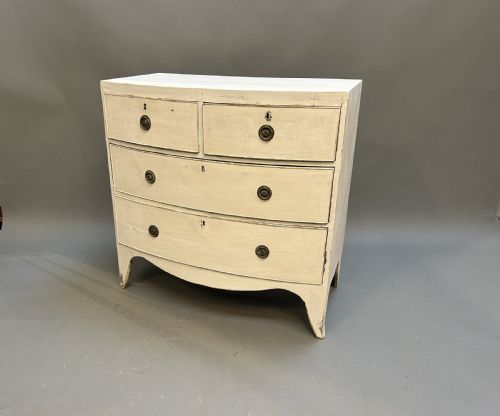
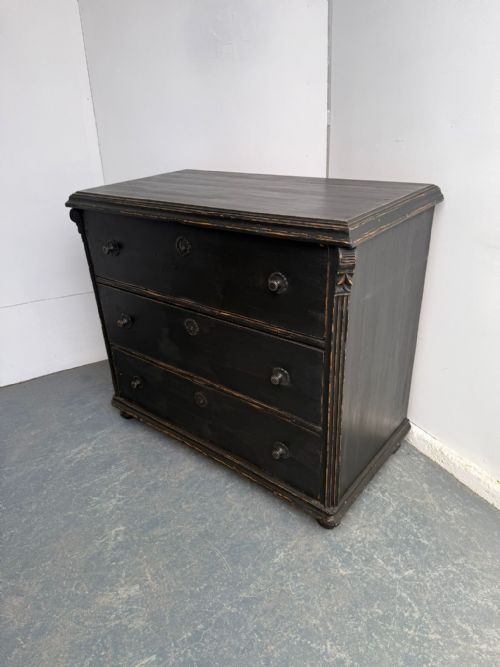
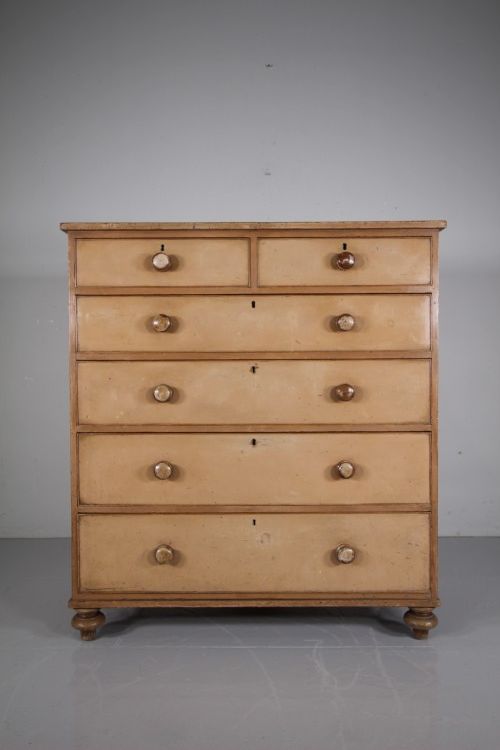


Georgian Painted Commode
A georgian painted commode brings architectural presence and hand-applied colour into a room, offering both practical storage and decorative depth.
Georgian Painted Commode
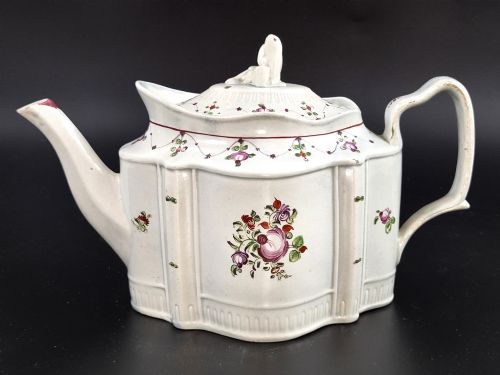
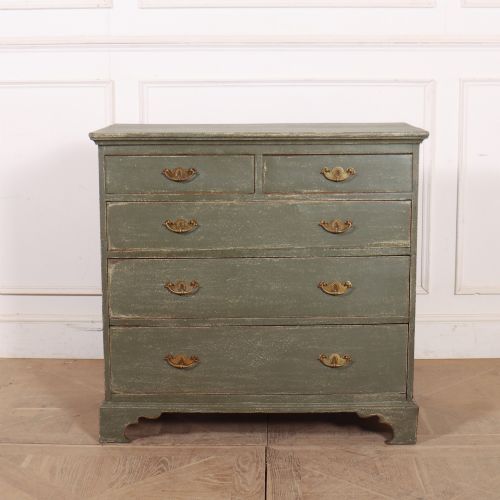
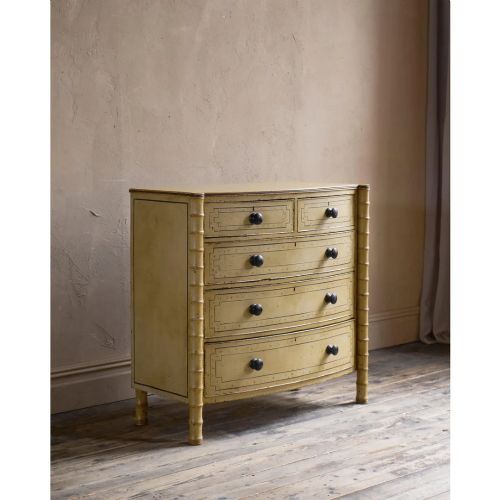
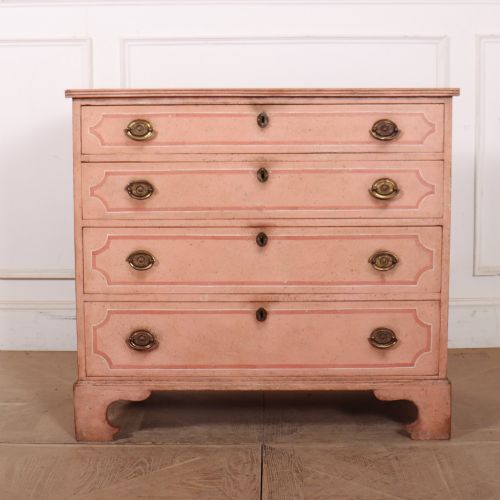
When you search for a georgian painted commode, you encounter a selection of case furniture spanning the eighteenth and nineteenth centuries, alongside later revival pieces. The most common forms on this page are chests of drawers and demi-lune cabinets finished with decorative paintwork.
Makers and workshops constructed these pieces in serpentine, bowfront, and straight-front configurations using pine, satinwood, and other timbers as a base for painted surfaces. English and continental examples sit side by side, showing variations from country house styles to neoclassical designs.
How they were made
Carpenters built the carcases using solid woods like pine and satinwood, shaping fronts into serpentine or bowfront profiles, and fitted brass hardware to drawers and cabinet doors. Surfaces then received layers of paint, often incorporating simulated wood graining, ebonising, or detailed classical panels.
Later revival pieces from the nineteenth and twentieth centuries adapted these traditional joinery and painting techniques, occasionally combining painted finishes with burr walnut or inlay to achieve specific decorative effects.
Listings feature painted wood, satinwood, pine, and earthenware across eighteenth-century, nineteenth-century, and twentieth-century periods.
What varies in quality
The sophistication of the painted surface dictates much of the distinction between pieces, ranging from simple monochrome or simulated wood finishes to intricate neoclassical panels and classical motifs. The survival of original paint surfaces heavily influences the character and integrity of each piece.
Structural execution, such as the neatness of dovetail joints on drawers and the precise curvature of serpentine and demi-lune fronts, separates standard cabinet work from finer workshop production.
The Georgian Painted Commode Glossary
- Commode
- A low cabinet or chest of drawers, often standing on short legs. Originating in France, the term applies broadly to decorative case furniture of this form.
- Demi-lune
- Half-moon shaped in plan, featuring a curved front and a flat back designed to stand flush against a wall. This profile frequently appears on satinwood and painted cabinets.
- Serpentine
- Having a front edge that curves outward in the centre and inward at the sides in a continuous wave. This shape requires skilled carpentry to execute on drawer fronts.
- Bowfront
- A convex, outward-curving front profile popular in Georgian case furniture. It softens the corners of a chest of drawers or commode.
- Satinwood
- A hard, durable timber with a natural golden sheen, frequently used as a fine veneer or solid wood surface for painted and inlaid neoclassical furniture.
- Ebonised
- Wood treated with a finish to imitate ebony, creating a dark, uniform black appearance. This treatment appears on Regency and later revival pieces.
Georgian Painted Commode: Frequently Asked Questions
Where should I place a commode?
These cabinets suit hallways, living rooms, and bedrooms where surface space and storage are both required. Demi-lune versions fit well against flat walls in tighter circulation areas.
Ensure the piece has adequate clearance from direct heat sources and sunlight to protect the painted timber surfaces over time.
How do I care for painted wood?
Dust surfaces regularly with a soft, dry cloth and avoid harsh chemical cleaners that can strip or soften historic paint layers. Maintaining stable room humidity prevents the timber beneath from expanding.
Keep items with rubber or plastic feet off the top surface to avoid marking the paint or varnish.
Are these pieces original Georgian?
The selection includes genuine eighteenth and early nineteenth-century items alongside later nineteenth-century revival pieces and early twentieth-century interpretations. Examining the secondary woods, fixings, and wear patterns helps indicate the manufacturing period.
Revival pieces often adopt earlier neoclassical or Adam styles while utilising the materials and methods of their own era.
What is a demi-lune cabinet?
A demi-lune cabinet is a half-circle piece of furniture designed to sit flat against a wall, saving floor space while providing a display top. They frequently feature painted neoclassical decoration or satinwood veneers.
Cabinetmakers often fitted these with single doors or small drawers beneath the main surface.