9,041  PAGES BROWSED TODAY PAGES TODAY 0 ANTIQUES UPLOADED TODAYNEW ARRIVALS
LATEST STOCK
Sort Order
Items Per Page
Browse Categories
Sort order
Relevant Links
Items per page
ID #SA1232653
FOR SALE
£300
Email
Save
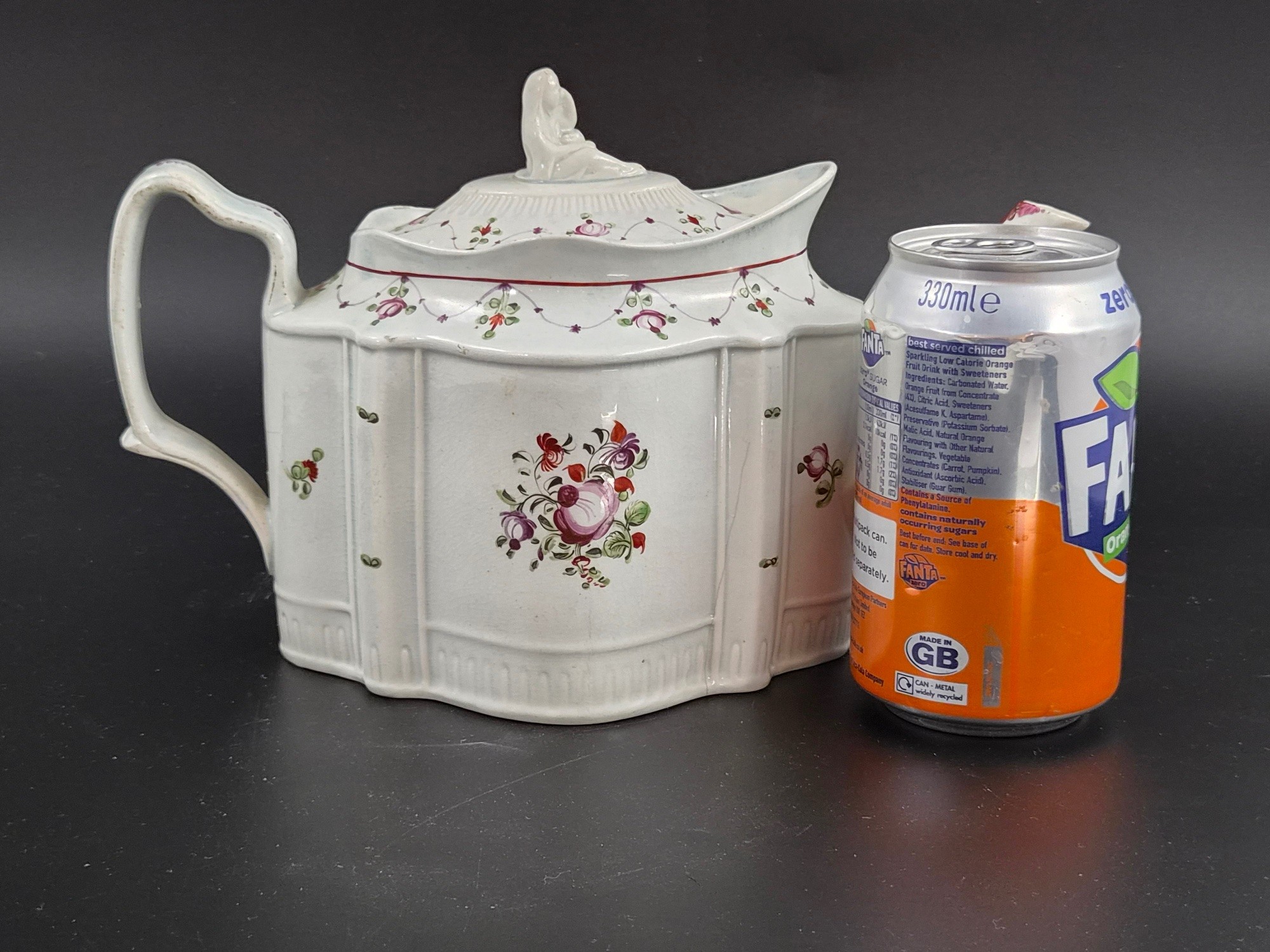
English Earthenware Commode-shaped Teapot with Widow Finial, C.1810
Ritas Bazaar
for sale €351     $381
£300

Ritas Bazaar

Sellingantiques Verified Since Nov 2025
View Dealers Stock Page
Id #SA1232653
PDF SHARE
SAVE

English Earthenware Commode-shaped Teapot with Widow Finial, C.1810

19th century
For Sale by Ritas Bazaar
Description

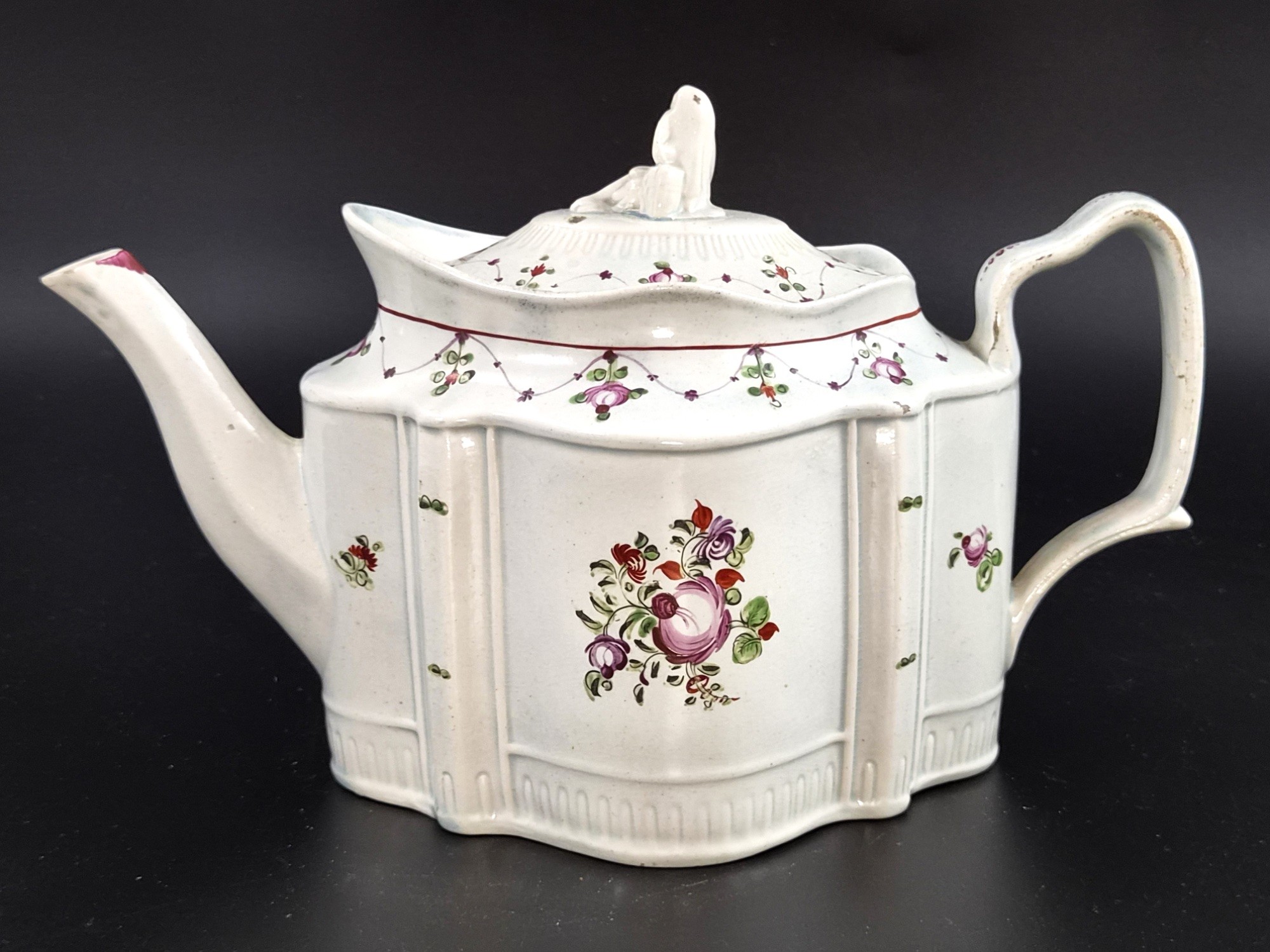
An unusual early 19th-century English earthenware teapot, dating from circa 1810 and made in the distinctive form known as the Commode Shape.

This exact form is documented in Philip Miller and Michael Berthoud, An Anthology of British Teapots, plate 905, p. 151, where it is described as Commode Shape, of unidentified earthenware manufacture, circa 1810, and decorated in pink, iron green and red.
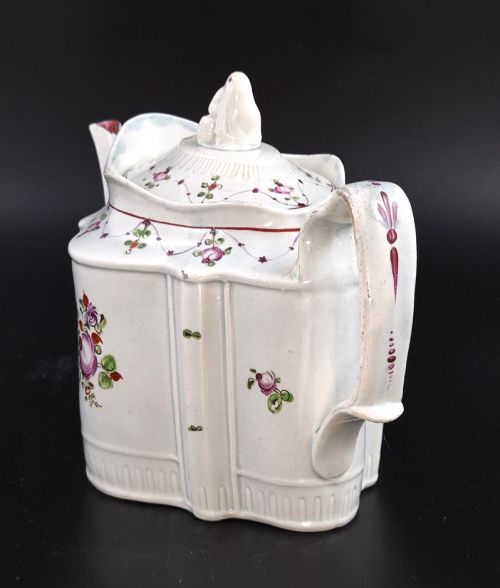
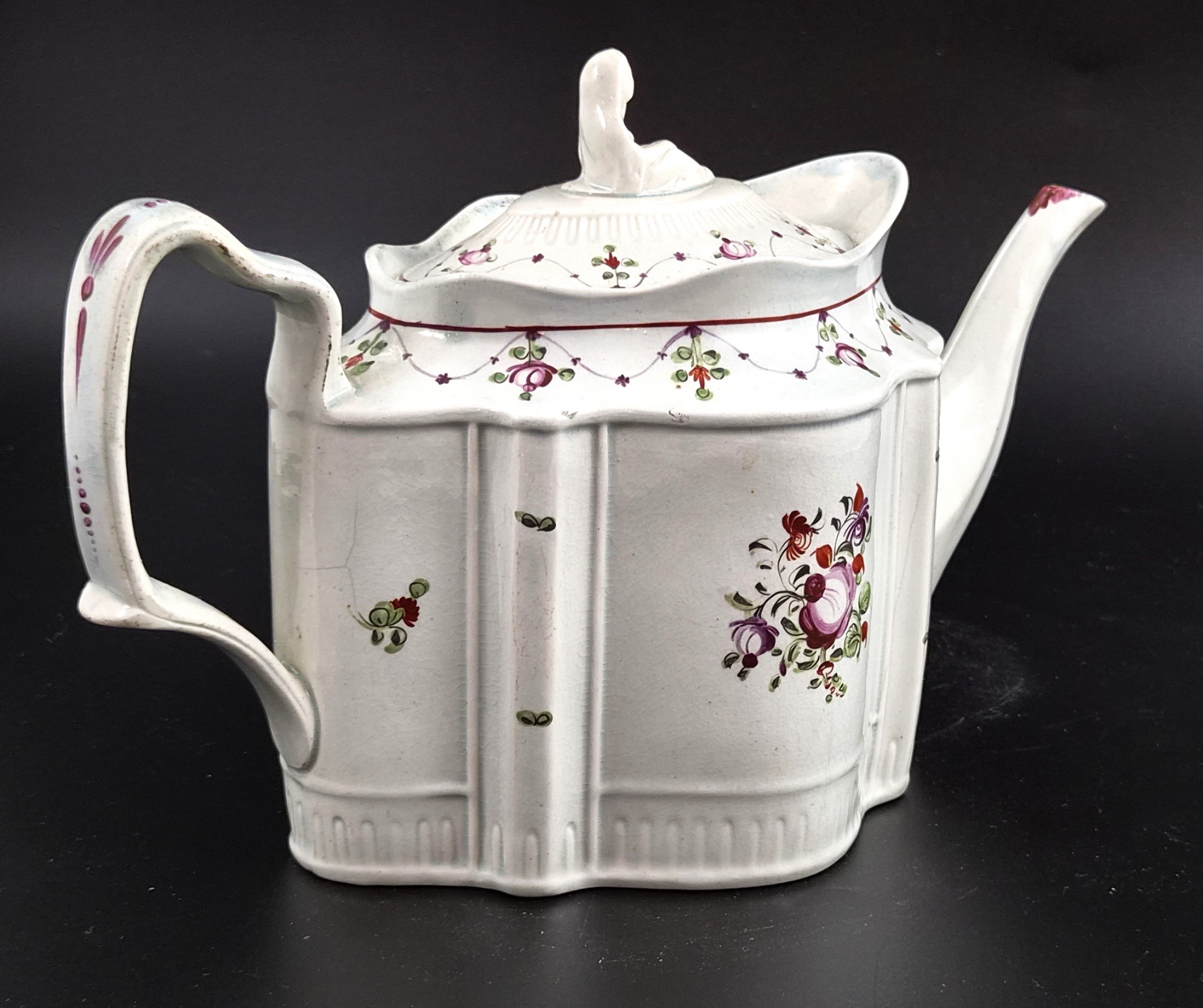
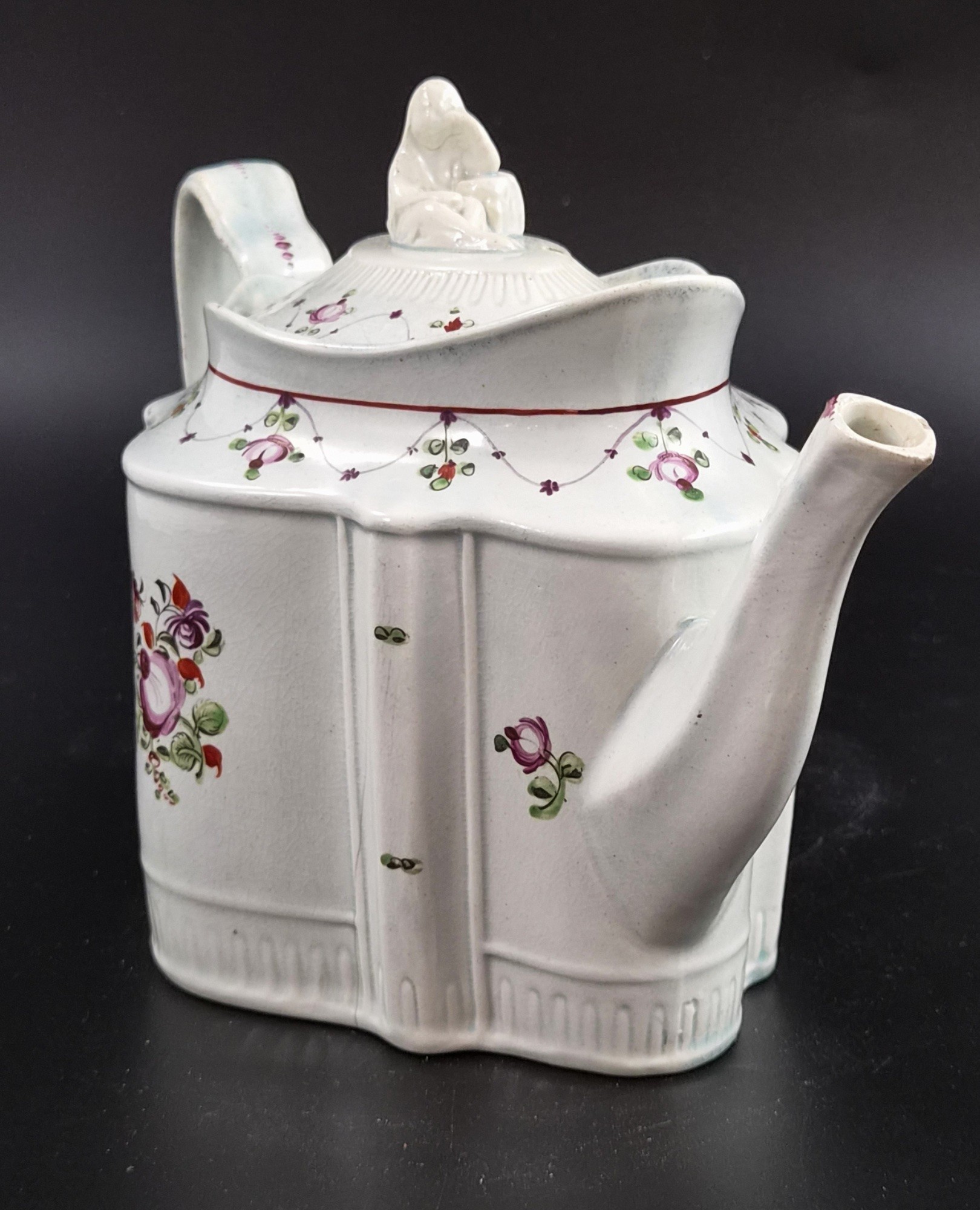
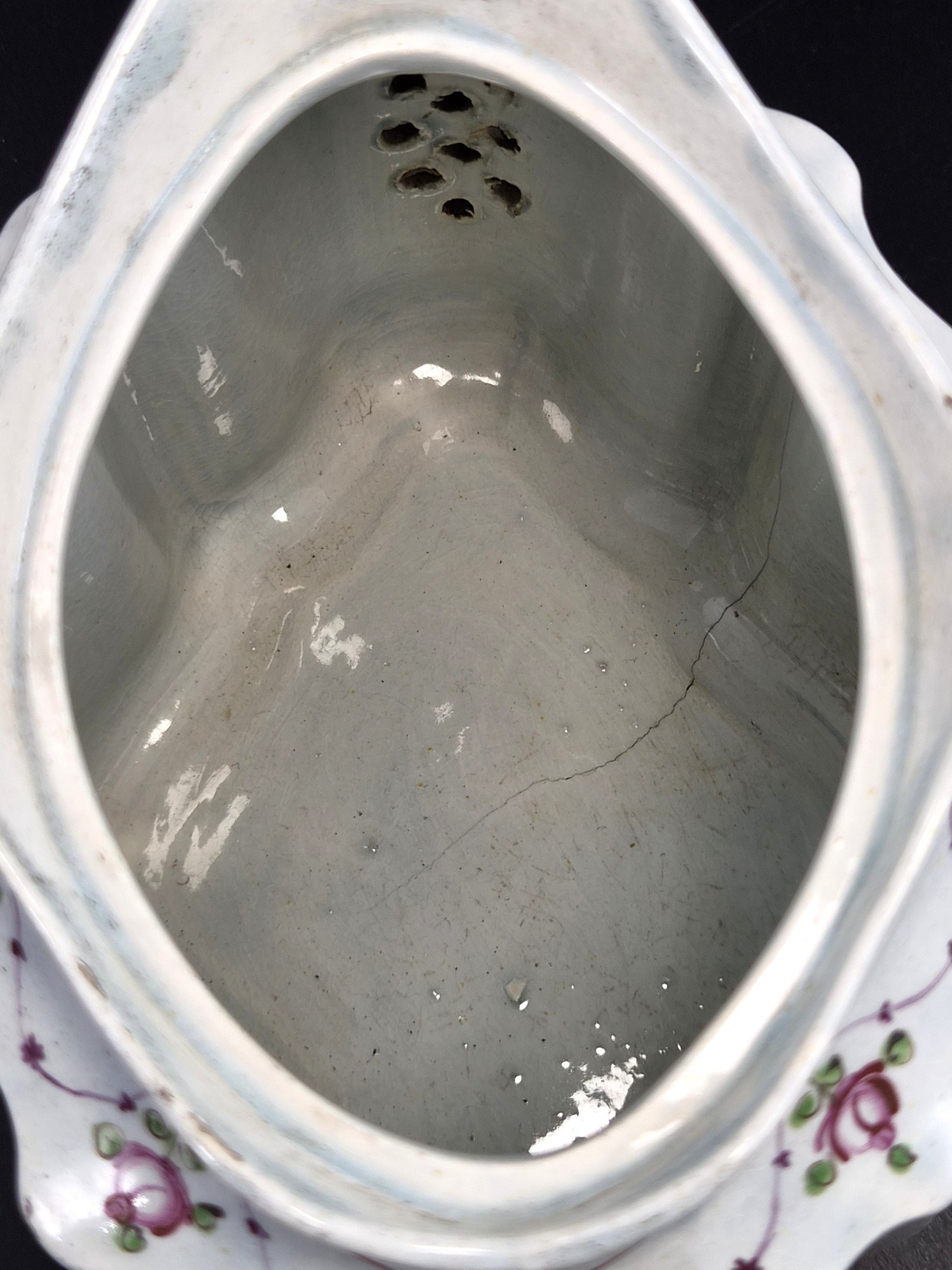
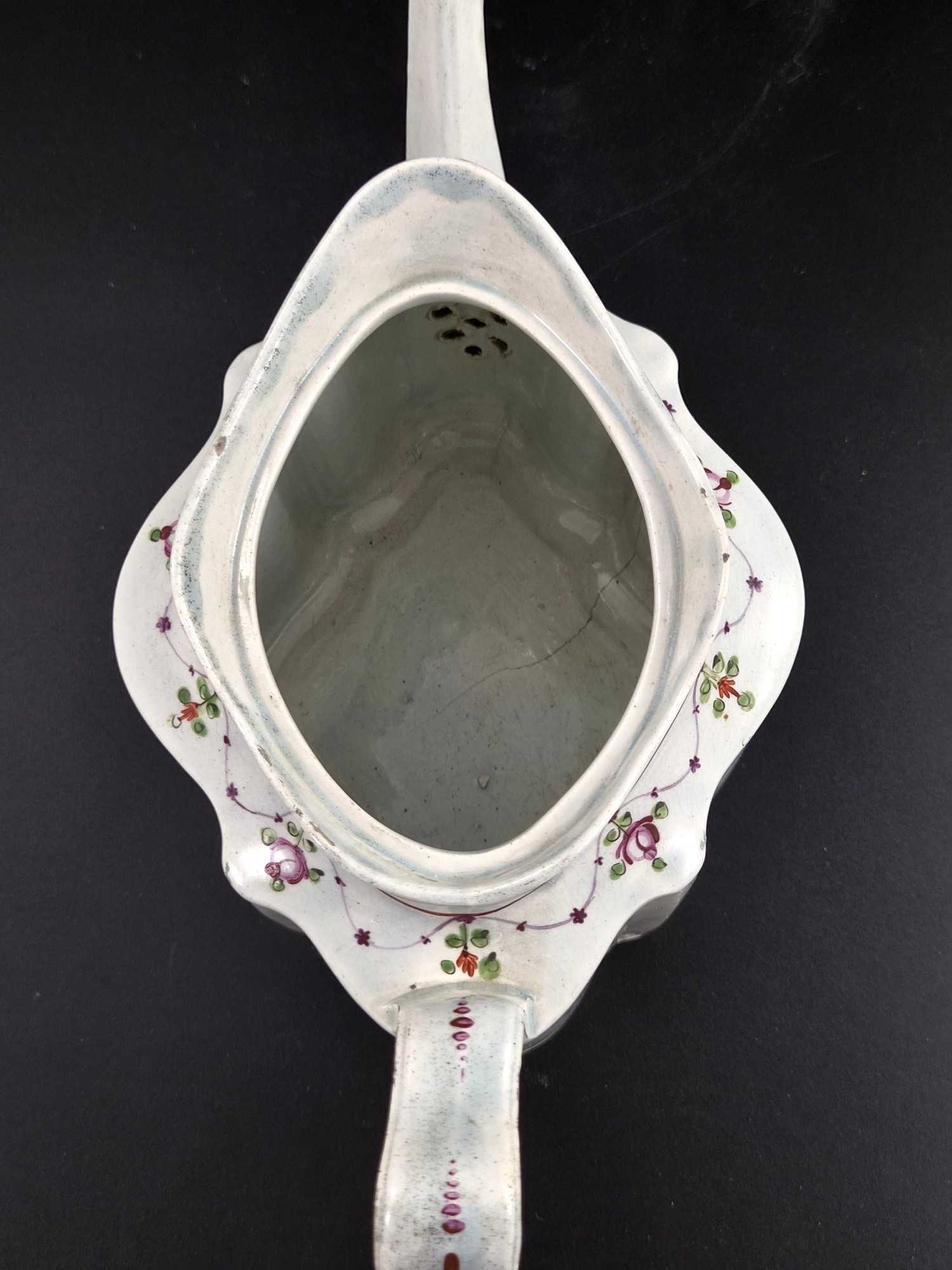
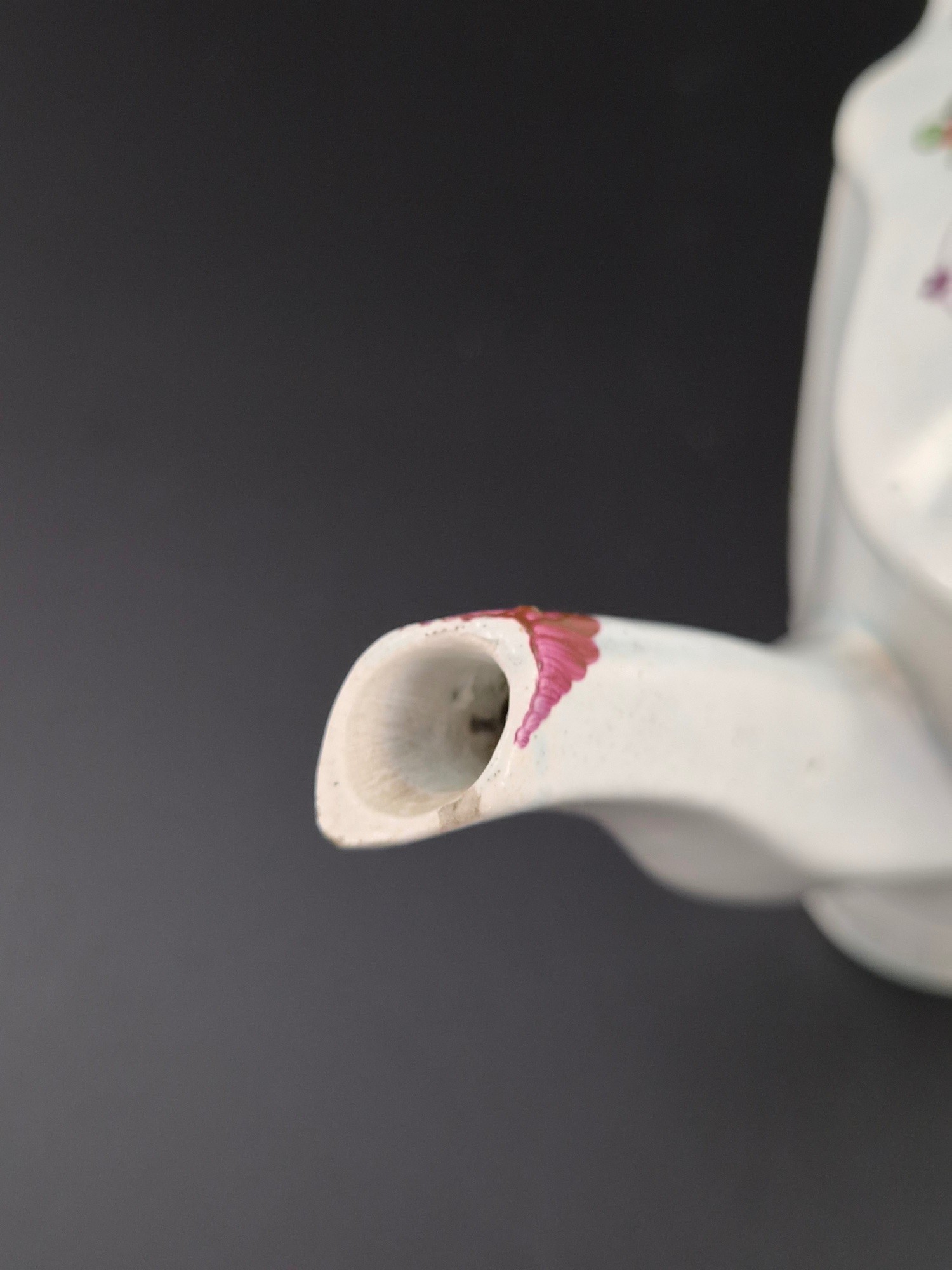
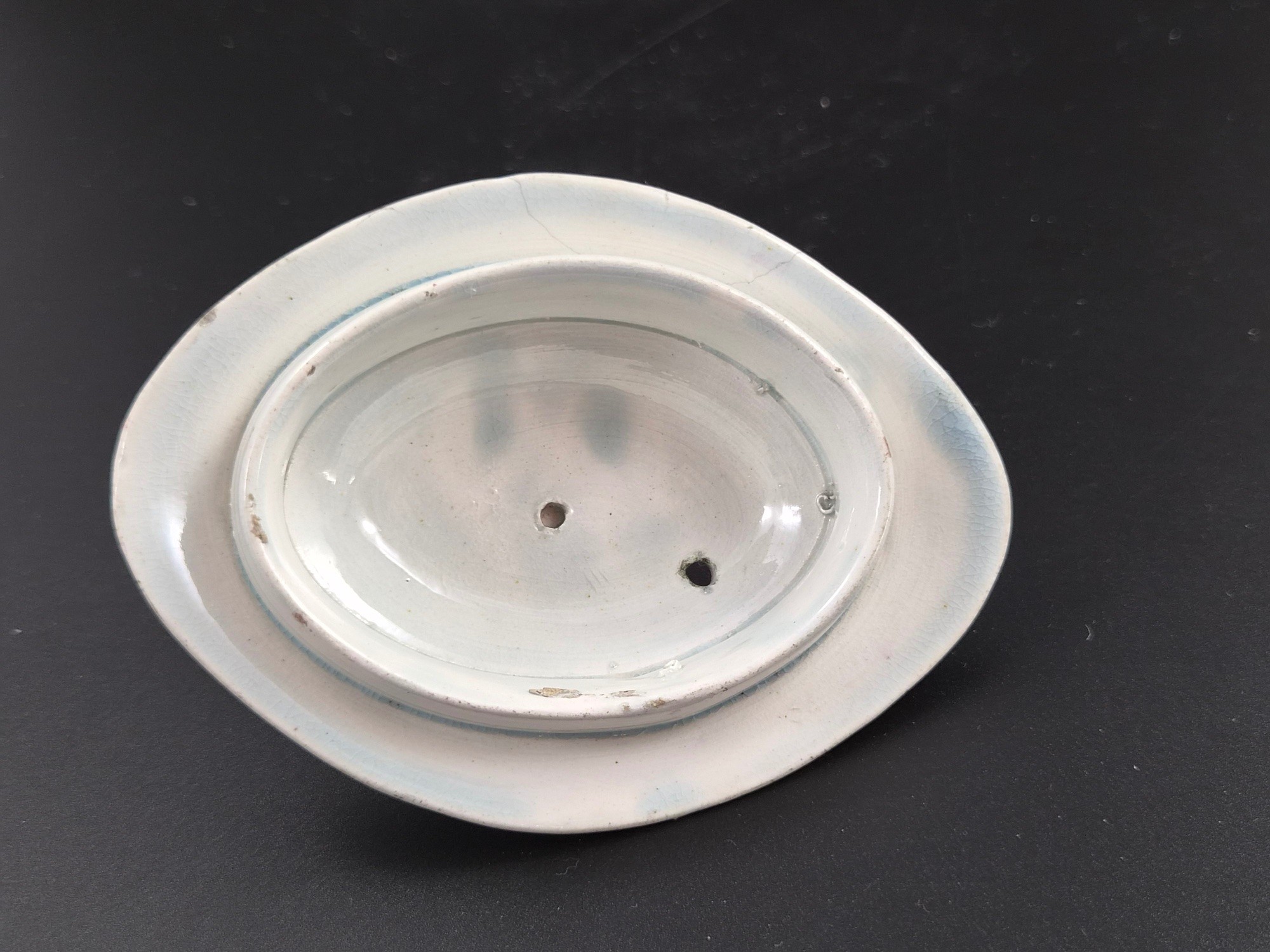
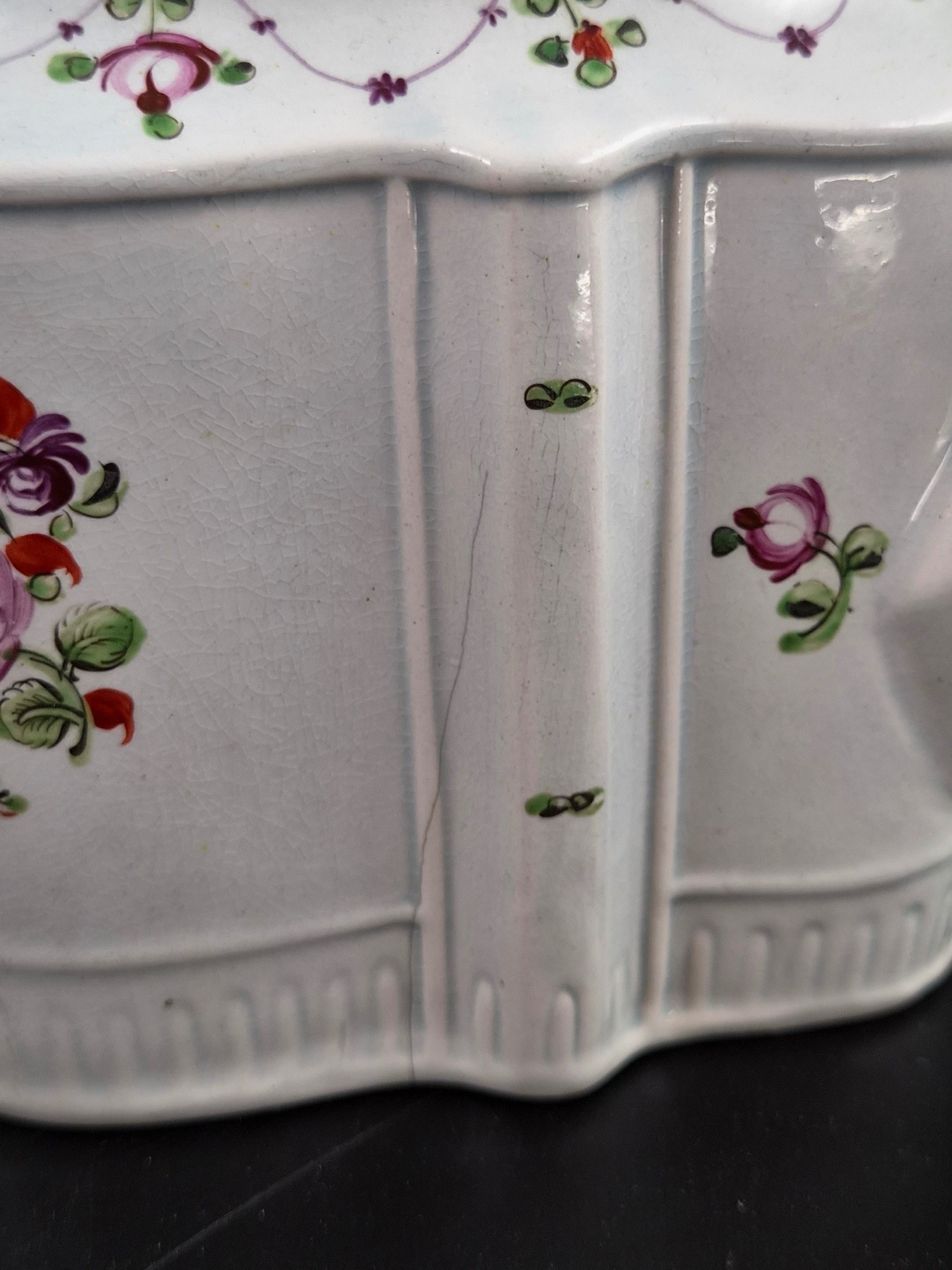
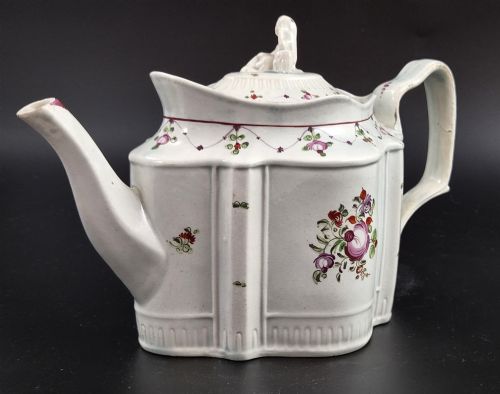
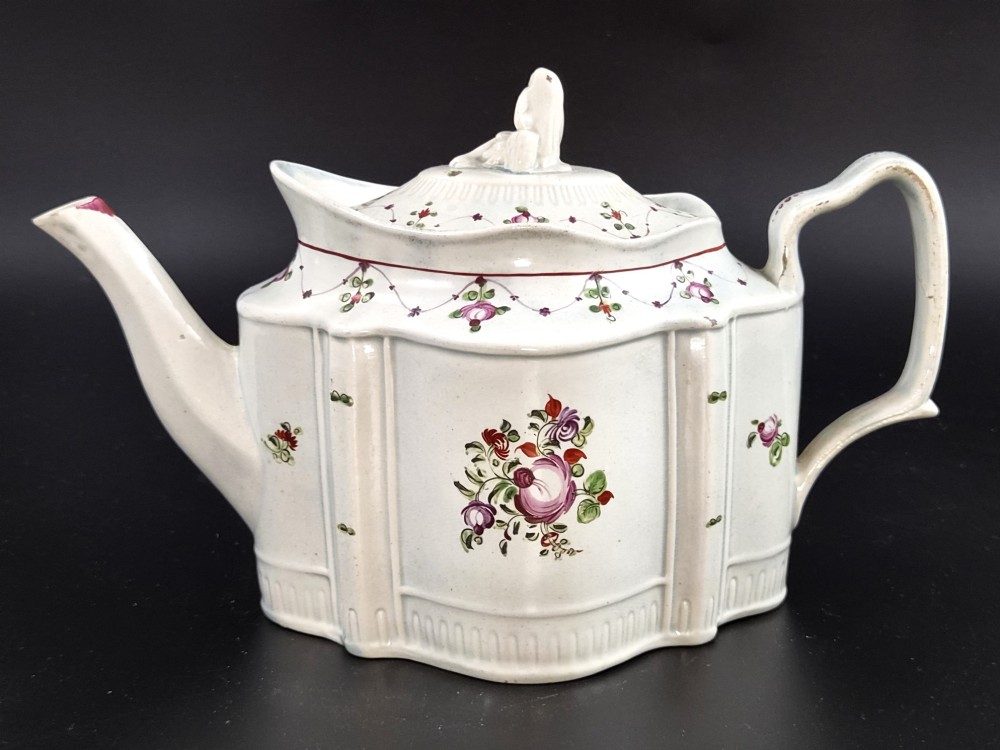
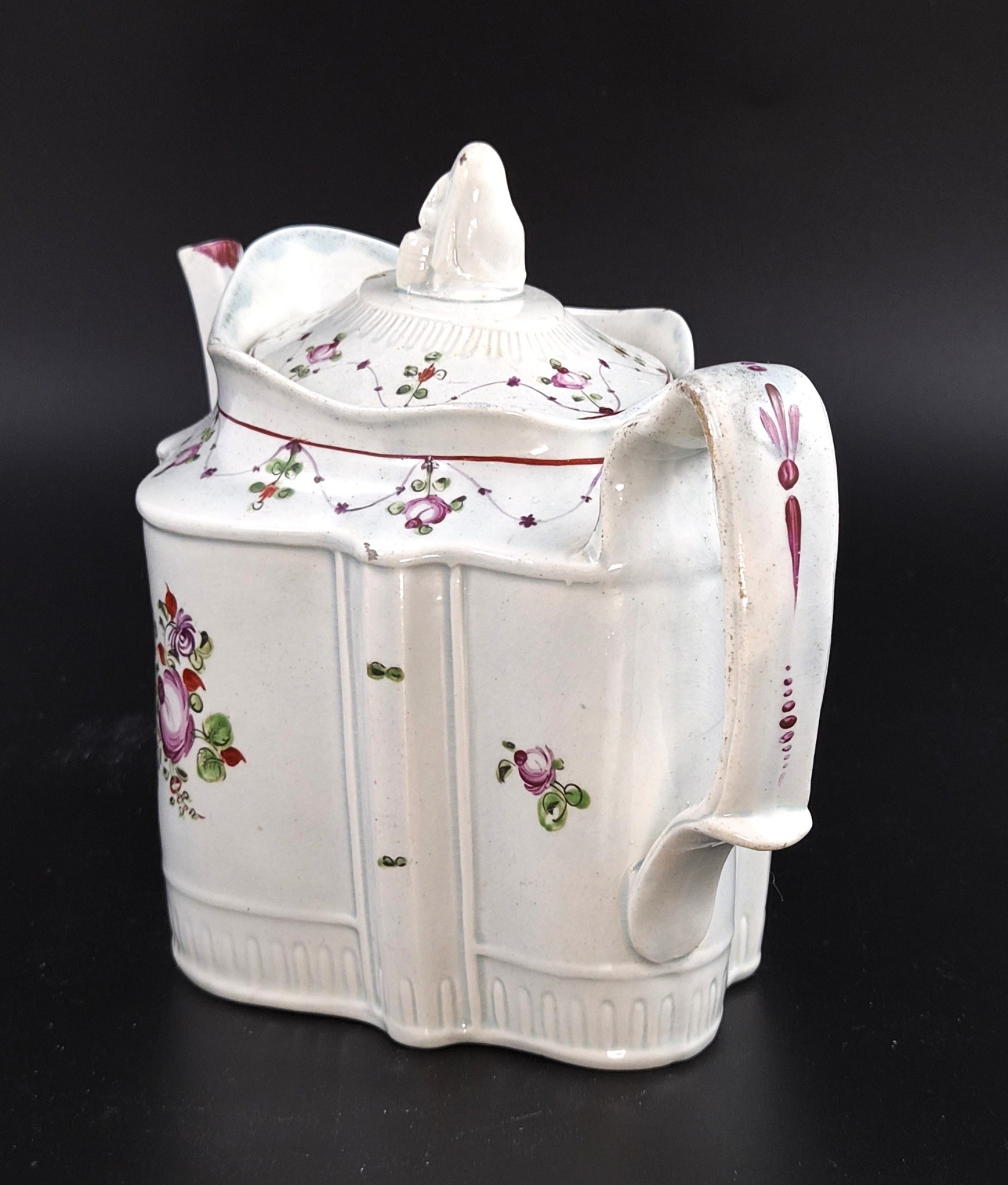
The teapot has a distinctive panelled body with broad flat sides and prominent vertical corner ribs, picked out with paired iron-green enamel marks resembling rivet heads. A moulded band of vertical tongues runs around the lower edge, while a high undulating collar surrounds the deeply recessed cover. The form reflects the influence of contemporary Georgian metal teaware. The angular D-shaped handle is paired with a long faceted S-curved spout, finished at the tip with a hand-painted puce shell motif. Inside is an original seven-hole strainer, pierced before firing.
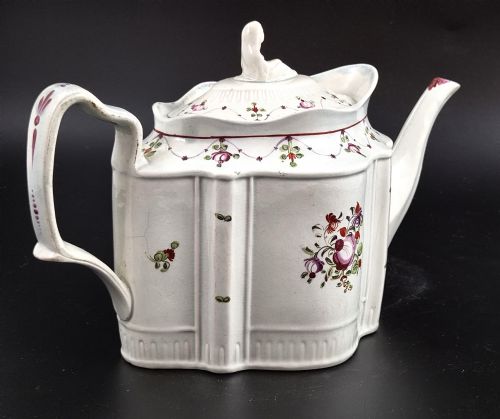
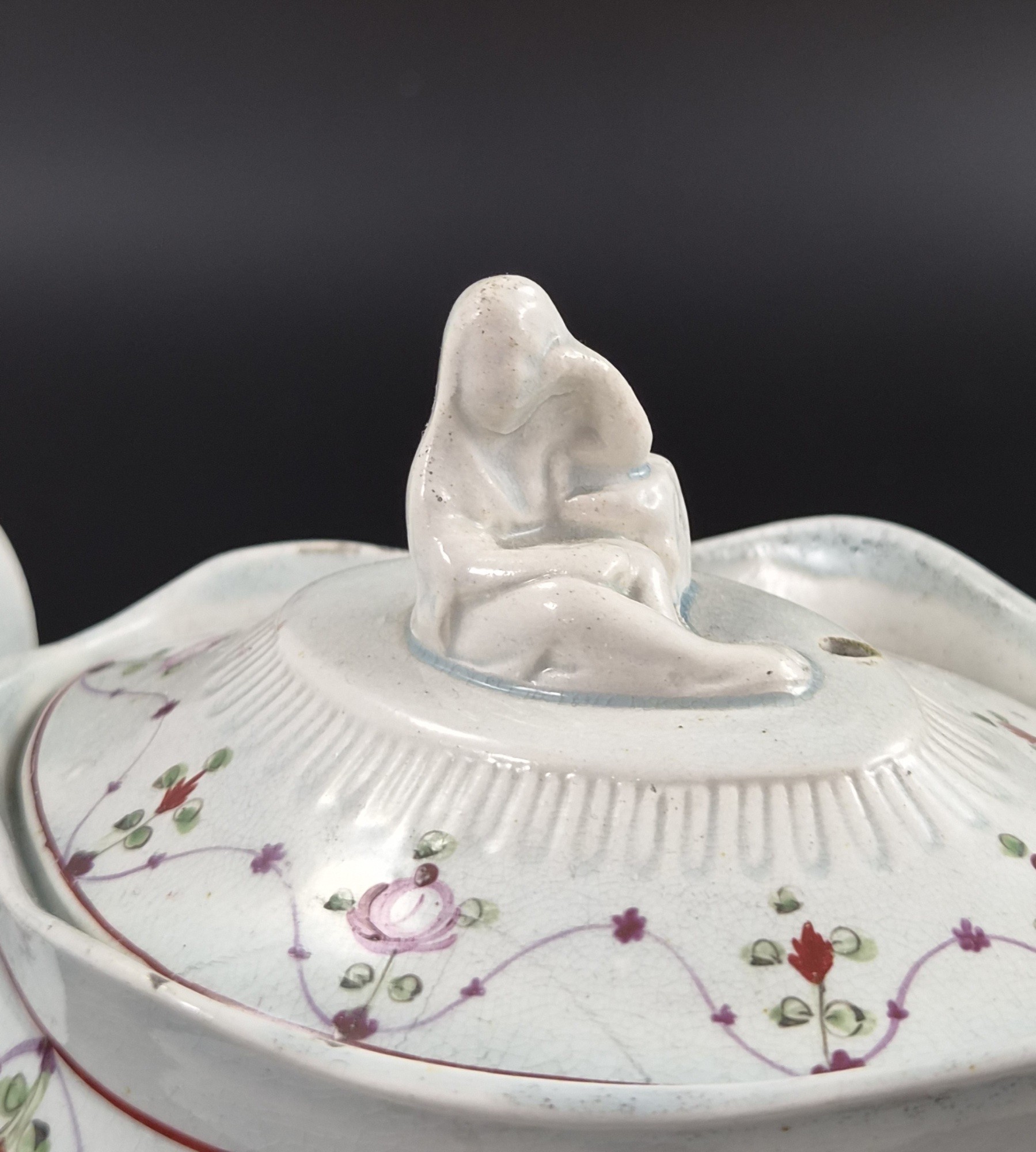
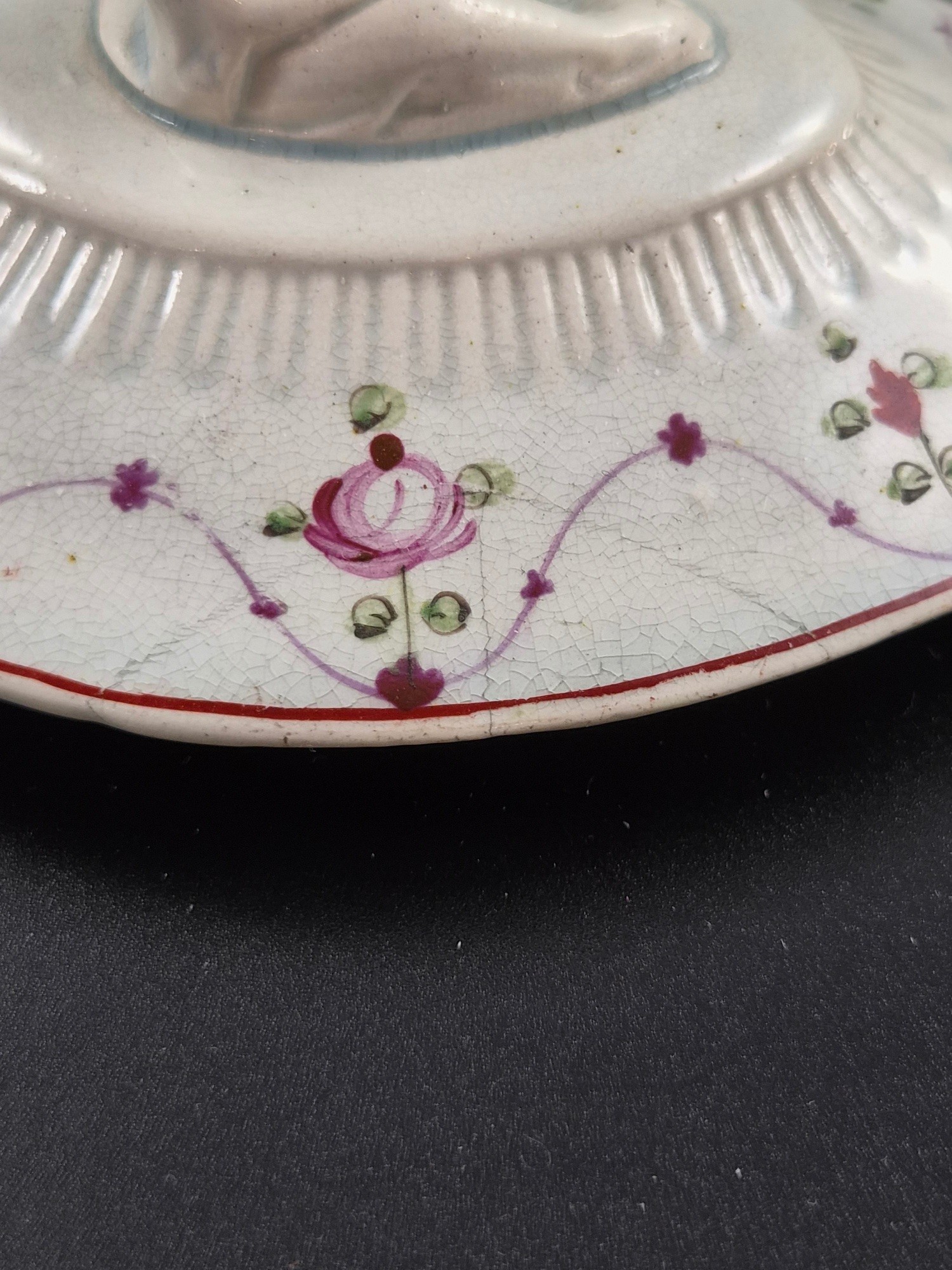
One of the most distinctive features is the sculptural cover finial, modelled as the Mourning Widow or Sibyl, a seated grieving female figure. The figure was separately moulded and attached to the cover with slip, a more elaborate form of construction used on higher-grade English teawares of the period. This type of Widow finial was used by Wedgwood in the late 18th century, where it was also known as a Sibyl finial, and was subsequently adopted by other English ceramic manufacturers. A separate steam vent is pierced through the cover beside the figure.
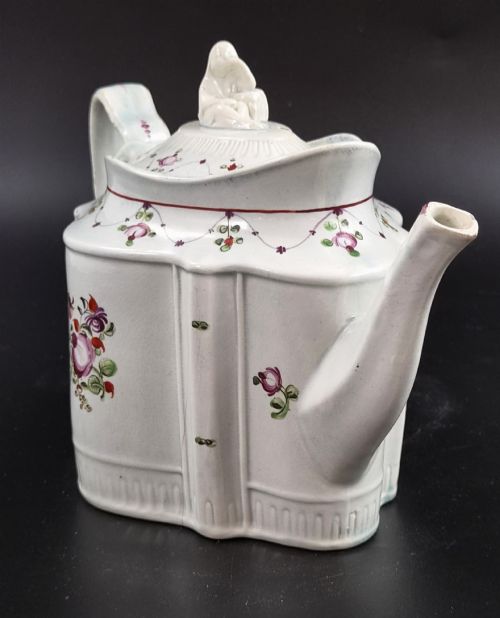
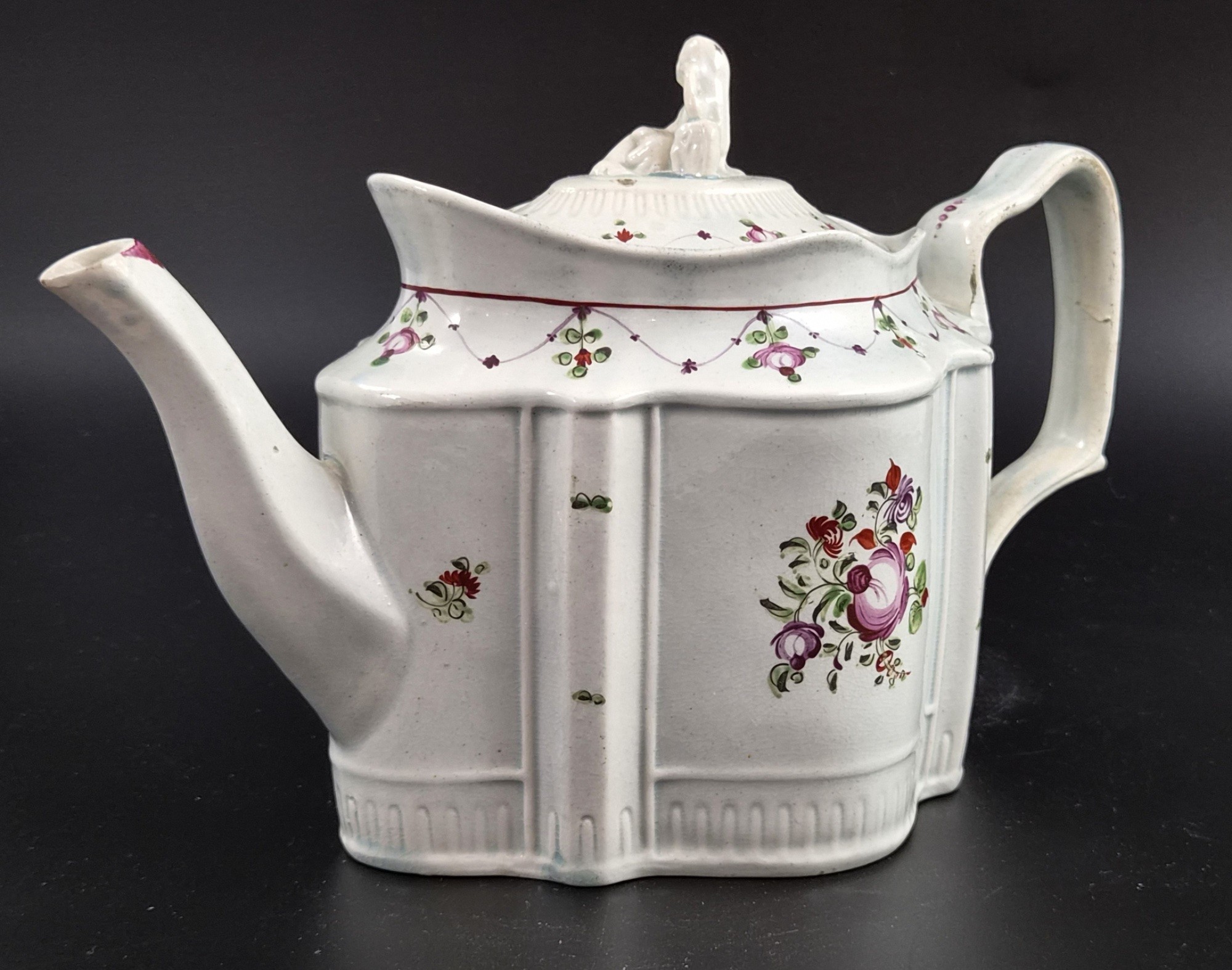
The body and cover are hand-painted in overglaze enamels with bouquets of pink roses, smaller floral sprigs and suspended floral garlands. Iron green, red and puce details are used throughout the decoration, closely corresponding to the palette recorded for this form by Miller and Berthoud. Pale blue edging follows parts of the moulded contours.
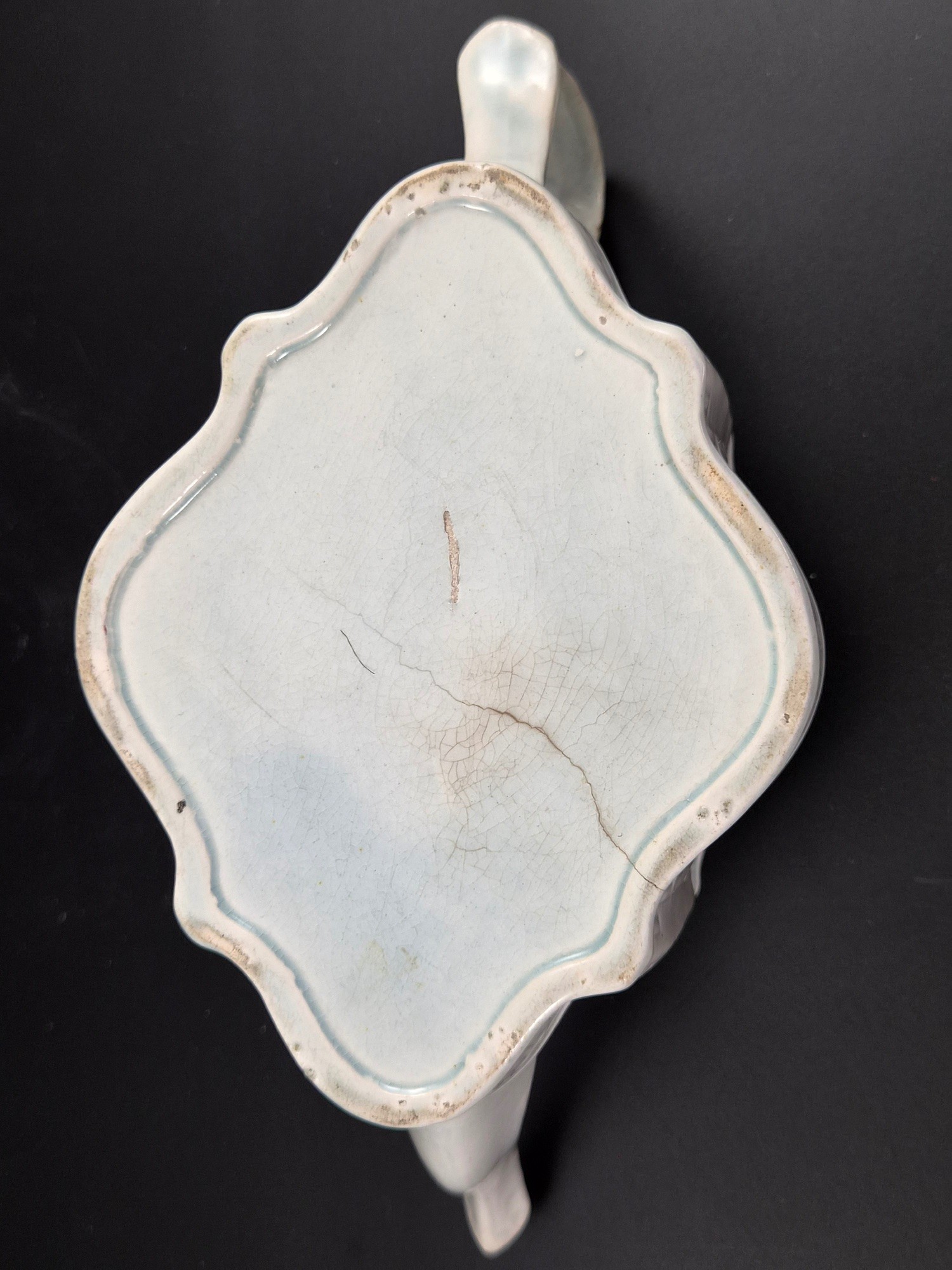
Dimensions: height 16 cm; length from spout to handle 25 cm; width 13 cm; weight 493 g. Condition: a crack is present across the base, together with one star-shaped and one vertical surface hairline; these hairlines do not extend through to the interior. There is a small chip to the tip of the spout and a short hairline at the edge of the cover. Some overpainting is present to the inner side of the handle. Age-related crazing and minor wear throughout. Otherwise in good antique condition. Please study the accompanying photographs carefully as they form an integral part of this description. If you have any questions, we will be happy to answer them. The item will be shipped with full tracking and insurance. Shipping costs include handling, packaging and postage.

Declaration

Ritas Bazaar has dated this Antique Earthenware Commode Teapot to the 19th Century.

Reference Numbers
Sellingantiques Reference
SA1232653
Description
An unusual early 19th-century English earthenware teapot, dating from circa 1810 and made in the distinctive form known as the Commode Shape.
This exact form is documented in Philip Miller and Michael Berthoud, An Anthology of British Teapots, plate 905, p.
Ritas Bazaar

151, where it is described as Commode Shape, of unidentified earthenware manufacture, circa 1810, and decorated in pink, iron green and red.

fig 1. An off-white earthenware commode-shaped teapot decorated with hand-painted floral sprays, red borders, and a seated widow finial on the lid.
fig 1. English Earthenware Commode-shaped Teapot with Widow Finial, C.1810

The teapot has a distinctive panelled body with broad flat sides and prominent vertical corner ribs, picked out with paired iron-green enamel marks resembling rivet heads. A moulded band of vertical tongues runs around the lower edge, while a high undulating collar surrounds the deeply recessed cover. The form reflects the influence of contemporary Georgian metal teaware. The angular D-shaped handle is paired with a long faceted S-curved spout, finished at the tip with a hand-painted puce shell motif. Inside is an original seven-hole strainer, pierced before firing.

fig 2. An off-white earthenware commode-shaped teapot decorated with hand-painted floral sprays, red borders, and a seated widow finial on the lid.
fig 2. English Earthenware Commode-shaped Teapot with Widow Finial, C.1810

One of the most distinctive features is the sculptural cover finial, modelled as the Mourning Widow or Sibyl, a seated grieving female figure. The figure was separately moulded and attached to the cover with slip, a more elaborate form of construction used on higher-grade English teawares of the period. This type of Widow finial was used by Wedgwood in the late 18th century, where it was also known as a Sibyl finial, and was subsequently adopted by other English ceramic manufacturers. A separate steam vent is pierced through the cover beside the figure.

fig 3. An off-white earthenware commode-shaped teapot decorated with hand-painted floral sprays, red borders, and a seated widow finial on the lid.
fig 3. English Earthenware Commode-shaped Teapot with Widow Finial, C.1810

The body and cover are hand-painted in overglaze enamels with bouquets of pink roses, smaller floral sprigs and suspended floral garlands. Iron green, red and puce details are used throughout the decoration, closely corresponding to the palette recorded for this form by Miller and Berthoud. Pale blue edging follows parts of the moulded contours.

fig 4. An off-white earthenware commode-shaped teapot decorated with hand-painted floral sprays, red borders, and a seated widow finial on the lid.
fig 4. English Earthenware Commode-shaped Teapot with Widow Finial, C.1810

Dimensions: height 16 cm; length from spout to handle 25 cm; width 13 cm; weight 493 g. Condition: a crack is present across the base, together with one star-shaped and one vertical surface hairline; these hairlines do not extend through to the interior. There is a small chip to the tip of the spout and a short hairline at the edge of the cover. Some overpainting is present to the inner side of the handle. Age-related crazing and minor wear throughout. Otherwise in good antique condition. Please study the accompanying photographs carefully as they form an integral part of this description. If you have any questions, we will be happy to answer them. The item will be shipped with full tracking and insurance. Shipping costs include handling, packaging and postage.

Date of Manufacture

Ritas Bazaar has dated this Antique Earthenware Commode Teapot to the 19th Century.

Reference Numbers
Sellingantiques Ref
SA1232653
Ritas Bazaar
Sellingantiques verified Since Nov 2025
Dealer Profile

You can view the stock and full dealer information on the Ritas Bazaar Profile Page
PDF SHARE
SAVE
An off-white earthenware commode-shaped teapot decorated with hand-painted floral sprays, red borders, and a seated widow finial on the lid.
1 / 14
Archive I An off-white earthenware commode-shaped teapot decorated with hand-painted floral sprays, red borders, and a seated widow finial on the lid.

English Earthenware Commode-shaped Teapot with Widow Finial, C.1810
Archive II An off-white earthenware commode-shaped teapot decorated with hand-painted floral sprays, red borders, and a seated widow finial on the lid. View II
Archive III An off-white earthenware commode-shaped teapot decorated with hand-painted floral sprays, red borders, and a seated widow finial on the lid. View III
Archive IV An off-white earthenware commode-shaped teapot decorated with hand-painted floral sprays, red borders, and a seated widow finial on the lid. View IV
Archive V An off-white earthenware commode-shaped teapot decorated with hand-painted floral sprays, red borders, and a seated widow finial on the lid. View V
Archive VI An off-white earthenware commode-shaped teapot decorated with hand-painted floral sprays, red borders, and a seated widow finial on the lid. View VI
Archive VII An off-white earthenware commode-shaped teapot decorated with hand-painted floral sprays, red borders, and a seated widow finial on the lid. View VII
Archive VIII An off-white earthenware commode-shaped teapot decorated with hand-painted floral sprays, red borders, and a seated widow finial on the lid. View VIII
Archive IX An off-white earthenware commode-shaped teapot decorated with hand-painted floral sprays, red borders, and a seated widow finial on the lid. View IX
Archive X An off-white earthenware commode-shaped teapot decorated with hand-painted floral sprays, red borders, and a seated widow finial on the lid. View X
Archive XI An off-white earthenware commode-shaped teapot decorated with hand-painted floral sprays, red borders, and a seated widow finial on the lid. View XI
Archive XII An off-white earthenware commode-shaped teapot decorated with hand-painted floral sprays, red borders, and a seated widow finial on the lid. View XII
Archive XIII An off-white earthenware commode-shaped teapot decorated with hand-painted floral sprays, red borders, and a seated widow finial on the lid. View XIII
Archive XIV An off-white earthenware commode-shaped teapot decorated with hand-painted floral sprays, red borders, and a seated widow finial on the lid. View XIV
Enlarged Archival View
Telephone 07434 626011
Location
Hertfordshire
United Kingdom
Verified Since Nov 2025
Items For Sale 234
Items Sold 44
Ritas Bazaar
Verified Since Nov 2025
View Dealer Info
Location: Hertfordshire, United Kingdom
Verified
Nov 2025
For Sale
234
Sold
44
An off-white earthenware commode-shaped teapot decorated with hand-painted floral sprays, red borders, and a seated widow finial on the lid.
English Earthenware Commode-Shaped Teapot with Widow Finial, c.1810
Ref: SA1232653
An off-white earthenware commode-shaped teapot decorated with hand-painted floral sprays, red borders, and a seated widow finial on the lid.
Detail View 1
Detail View 2
Detail View 3
Detail View 4
Detail View 5
Detail View 6
Detail View 7
Detail View 8
Detail View 9
Detail View 10
Detail View 11
Detail View 12
Detail View 13
Archival Detail
Every single antique dealer on our platform is individually approved by our internal team. We verify their professional trade history, ethical standards, and photographic quality to ensure a secure, high-standard buying environment. Upon joining, every dealer agrees to a strict 9-point code of conduct. While issues can occasionally arise, our dealers typically resolve them swiftly and directly with the buyer. In fact, since our founding in 2002, Sellingantiques has only had to step in to help resolve an issue on roughly five occasions—a true testament to the quality of our dealers and their dedication to your happiness.
Our dealers are highly experienced in packing and shipping fragile, high-value antiques. Because you are in direct contact with the dealer, you will be able to easily go through all available shipping and insurance options together to ensure your item arrives safely.
Antiques are the ultimate green purchase. By choosing historical pieces over newly manufactured goods, you completely eliminate the carbon footprint of modern mass production while preserving exceptional, timeless craftsmanship.

A commode-shaped teapot features a serpentine or lobed rectangular profile modelled after French 18th-century commode chests. Popular in Britain between 1790 and 1820, these pieces often incorporate press-moulded fluting and flat sides to showcase hand-painted enamels.

Teapots from this era were primarily crafted from creamware, pearlware, or red stoneware. They were shaped using press-moulds or slip-casting, covered in a lead glaze, and decorated with polychrome enamel overglaze painting.

Authentic pieces display characteristic lead glaze pooling in crevices, minor moulding irregularities, and light wear to the foot rim. Features like the widow or Sybil finial, combined with specific overglaze floral sprig patterns, correspond to English production around 18001820.

These ceramic pieces function well as accent objects on a sideboard top, curated shelf, or within a glass display cabinet. Grouping teapots with complementary period porcelain creates a focused historical display.

Clean gently using lukewarm water and a mild detergent, applying with a soft cloth. Avoid soaking or using abrasive scrubbers, as overglaze enamels and gilding can wear away easily.
items
Add keywords to the filter
Price
£100
£250000
Era
Movements
Material
Origin
Stock Location
Freshness
Online Payments
Categories