
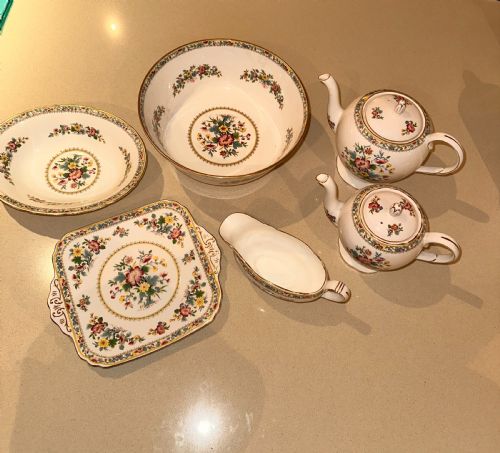


Antique Floral Teapot
An antique floral teapot brings hand-painted botanicals to the table, offering a tangible link to eighteenth and nineteenth-century ceramic traditions.
Antique Floral Teapot
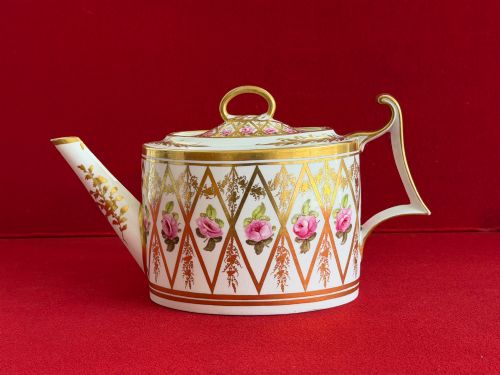
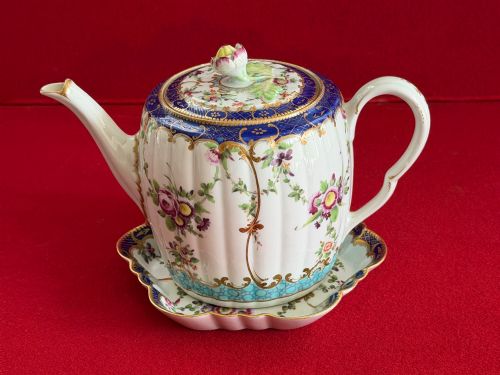
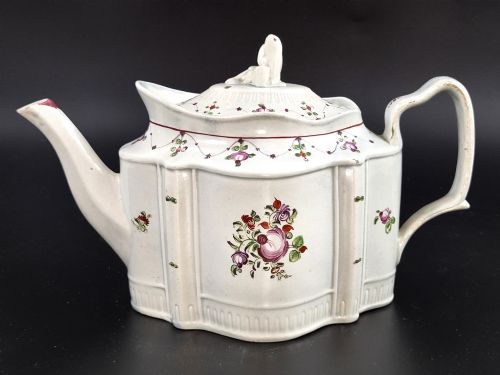
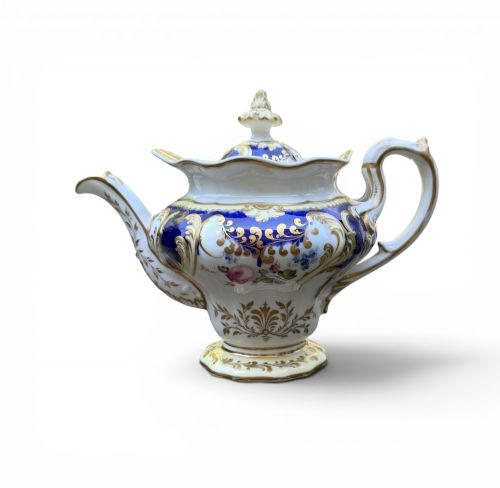
When searching for an antique floral teapot, collectors encounter vessels formed from porcelain, earthenware, and ceramic, decorated with botanical motifs across several centuries. The selection spans Georgian porcelain vessels from Worcester and Derby, through Victorian Staffordshire earthenware, to later twentieth-century Art Deco tea sets.
Most examples originate from English potteries, alongside Chinese Export pieces and continental porcelain from Paris. Forms vary from barrel-shaped and commode-shaped pots to smaller toy teapots and full tea services.
How they were made
Potters shaped these vessels using porcelain or earthenware bodies, often applying hand-painted enamel colours and glaze. Artisans utilised gold leaf and gilt highlights to accentuate handles, spouts, and floral decoration.
Finials were modelled separately as flower heads or widow forms before being attached to the lids. Kiln firing fixed the underglaze patterns and overglaze enamel painting onto the ceramic substrate.
Some nineteenth-century workers recorded personal milestones by crafting elaborate Bargeware teapots, built large enough to serve a thirsty crew.
What varies in quality
Quality rests upon the crispness of the porcelain or earthenware potting and the precision of the hand-painted floral enamels. Finer examples display delicate brushwork and well-preserved gilding without excessive rubbing from past use.
The sophistication of the form, such as barrel shapes or moulded rococo scrollwork, distinguishes standard utility pieces from workshop output attributed to notable makers.
Derby Porcelain·Royal Worcester·Clarice Cliff·Thomas Wolfe Staffordshire·Thomas Harley Staffordshire
The Antique Floral Teapot Glossary
- Enamel
- A glass-like substance fused to porcelain or ceramic through firing to create coloured surface decoration. This technique allowed makers to achieve vibrant floral palettes on eighteenth and nineteenth-century teapots.
- Gilding
- The application of gold leaf or gold paint to ceramic surfaces for decorative emphasis. It frequently highlights the rims, handles, and spouts of antique tea wares.
- Finial
- The small knob or decorative handle positioned on top of a teapot lid. They take various forms, including flower heads and traditional shapes.
- Soft-paste porcelain
- An artificial porcelain compound fired at lower temperatures than hard-paste porcelain. Eighteenth-century English factories utilised this material before developing more durable ceramic bodies.
Antique Floral Teapot: Frequently Asked Questions
How do I date an antique floral teapot?
Dating relies on identifying the ceramic body, glaze characteristics, and factory marks stamped or painted on the base. Stylistic details like rococo moulding or enamel palettes also help assign pieces to specific periods.
Comparing the potting style and floral motifs to documented examples from factories helps narrow the decade of manufacture.
Were these teapots used daily?
Many pots served practical functions in households across the Georgian and Victorian eras for daily tea preparation. Surviving pieces show varying degrees of wear on interior bases and spouts from regular pouring.
Finely painted porcelain examples with heavy gilding likely saw more restricted use during formal entertaining.
Can I still use my antique teapot?
Using antique ceramic teapots requires caution due to hairline cracks, historic repairs, and delicate enamel decoration that degrades with thermal shock. Hot water can stress centuries-old porcelain or earthenware bodies.
Most collectors prefer to display these vessels rather than risk damaging fragile handles and spouts during use.
What is Chinese Export porcelain?
Chinese Export porcelain refers to ceramics manufactured in China specifically for Western markets during the Qing dynasty. These items combined traditional Chinese potting techniques with floral designs tailored to European tastes.
Examples like Famille Rose teapots arrived via international trade companies during the eighteenth century.