


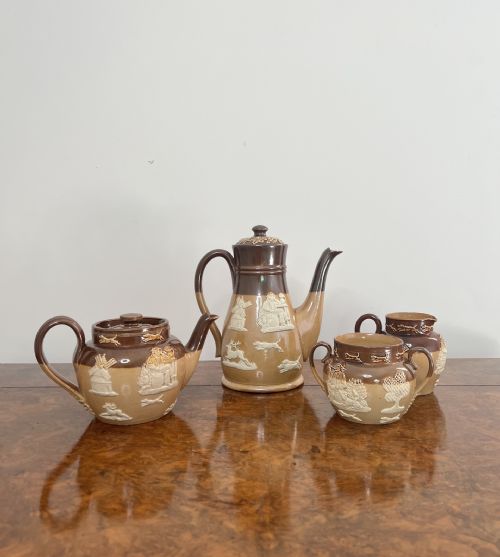
English Pottery Teapot
An English pottery teapot is a practical piece of domestic history, bringing warmth to a table through earthenware, stoneware, and creamware.
English Pottery Teapot
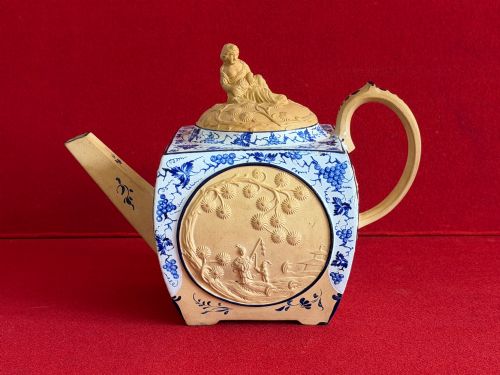
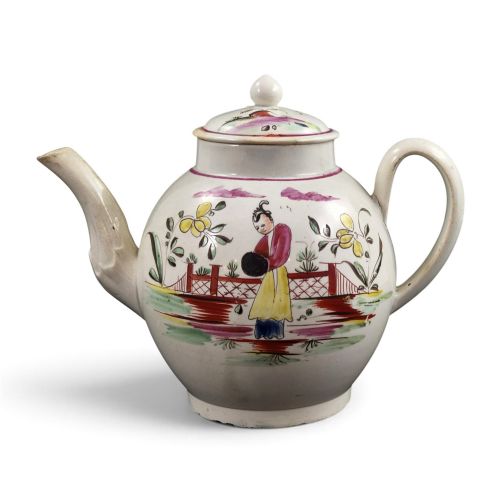
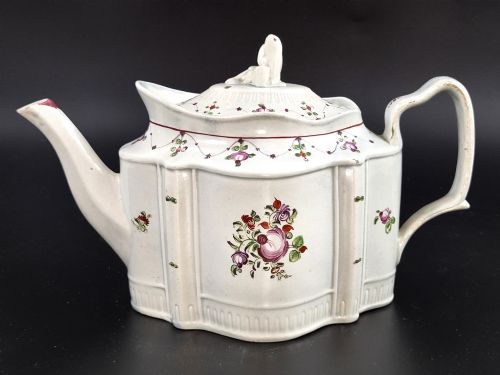
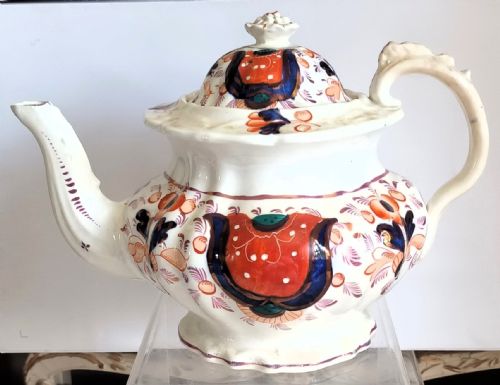
An English pottery teapot covers forms made across the eighteenth, nineteenth, and early twentieth centuries, spanning periods from the Georgian era to the Art Deco movement. Buyers seeking an English pottery teapot encounter various styles, including Victorian, Regency, Edwardian folk pottery, and vibrant Gaudy Welsh patterns.
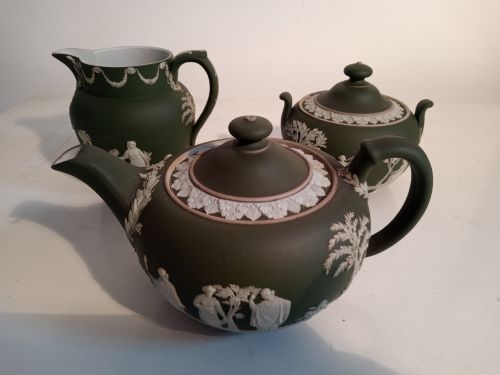
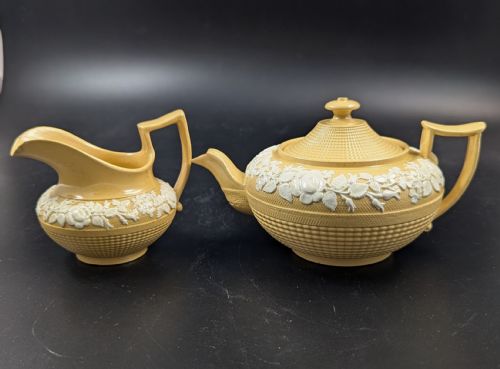
The selection ranges from single teapots to larger tea sets, including bachelor teasets and solitaire pieces designed for smaller gatherings. Materials such as creamware, stoneware, earthenware, and jasperware appear frequently alongside enamelled finishes and transfer-printed designs.
Functional vessels dominate the form, occasionally accompanied by matching creamers, jugs, or commemorative elements like the Scottish act of union teapot. Collectors find both refined neoclassical shapes and robust folk art expressions, such as bargeware teapots adorned with applied motifs.
How they were made
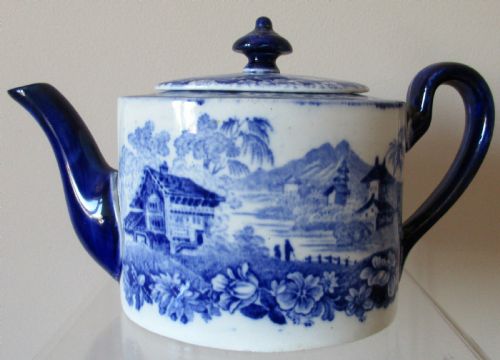
Makers utilised earthenware, creamware, and stoneware as primary bodies, shaping vessels on the wheel or in moulds before applying lead glaze, enamel, or blue and white transfer printing. Wedgwood and other potteries employed specialised bodies like black basalt and white stoneware, achieving sharp relief details through meticulous moulding.
Folk traditions relied on hand-applied decoration, seen in bargeware pieces adorned with colourful motifs and metallic lustre, while factories such as Mintons and Copeland Spode utilised refined ceramic techniques for precise transfer-printed patterns like Genevese.
Materials include lead glaze, enamel, and ceramic, taking forms from single teapots to four-piece tea sets.
What varies in quality
Quality reveals itself in the crispness of moulded details, such as the definition on a widow finial or lion finial, and the evenness of the glaze across complex forms like double spouted teapots. Hand-painted patterns and transfer prints show differing levels of alignment and depth of colour, distinguishing standard domestic wares from exceptional studio and factory output.
The sophistication of the clay body, from basic earthenware to finely potted creamware and basalt, dictates the overall refinement of the vessel. Potteries with skilled artisans achieved thinner walls, balanced spouts, and secure handles that elevated utilitarian pots into decorative works.
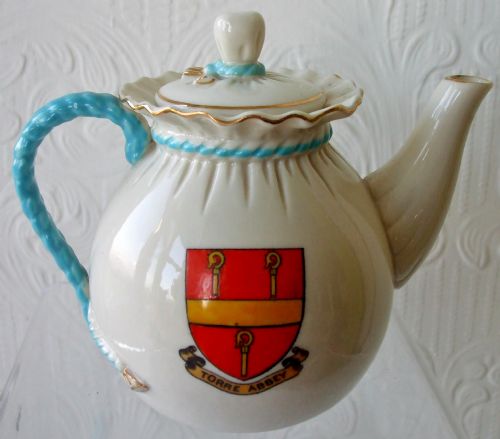
Wedgwood·W.H. Goss·Mintons·Copeland Spode·Clarice Cliff·Doulton·Leeds
The English Pottery Teapot Glossary
- Creamware
- A refined earthenware with a pale yellowish lead glaze, developed in Yorkshire and Staffordshire during the eighteenth century.
- Jasperware
- A fine-grained, unglazed stoneware developed by Wedgwood, typically featuring white relief ornaments against a coloured background.
- Bargeware
- A type of folk pottery traditionally made for narrowboat communities, heavily decorated with applied coloured clay flowers and leaves.
- Basalt
- A dense, hard, black stoneware introduced in the eighteenth century, capable of taking a high polish and sharp relief moulding.
- Transfer printing
- A technique where an engraved copper plate transfers a design onto paper and then onto the ceramic surface before glazing.
English Pottery Teapot: Frequently Asked Questions
How do I date an antique teapot?
Dating relies on stylistic clues, ceramic bodies, and any factory marks stamped on the base. Creamware and black basalt typically point to the Georgian period, while transfer prints and bright enamels often suggest Victorian or Edwardian eras.
Changes in handle shapes, finials, and manufacturing techniques also help narrow down the decade of production. Comparing known pieces from potteries like Wedgwood or Leeds provides a reliable benchmark.
Are these teapots safe to use for tea?
Most antique earthenware and creamware vessels are better treated as display pieces rather than daily teapots. Hairline cracks or historical repairs can be vulnerable to boiling water.
Enamels and glazes from earlier centuries may also contain components not suited for modern food safety standards. Enjoy them as decorative focal points rather than working kitchenware.
What is a bachelor teaset?
A bachelor teaset is a compact tea service designed for a single person, typically combining a teapot, creamer, and sugar bowl into a stackable unit. These charming sets were popular for private morning tea in the bedroom or study.
They offer collectors a complete miniature service that displays the same decorative qualities as full-sized tea sets.
How should I clean my antique teapot?
Gentle dusting with a soft cloth is usually sufficient for maintaining the exterior of glazed and unglazed ceramics. Avoid submerging antique pots with delicate painted enamels or porous bodies in water.
Harsh detergents and scrubbing can damage fragile historic glazes and applied decorations. Professional conservation advice is best for pieces with heavy staining or old repairs.