

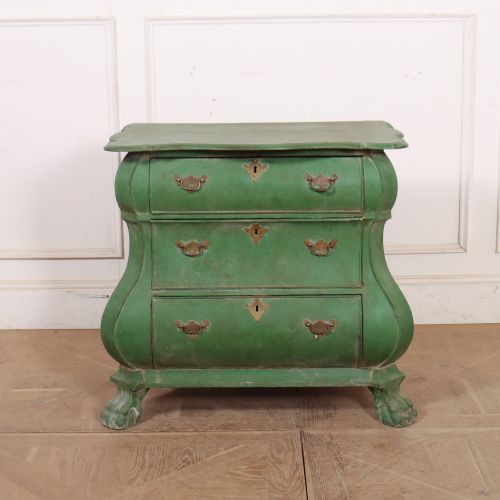
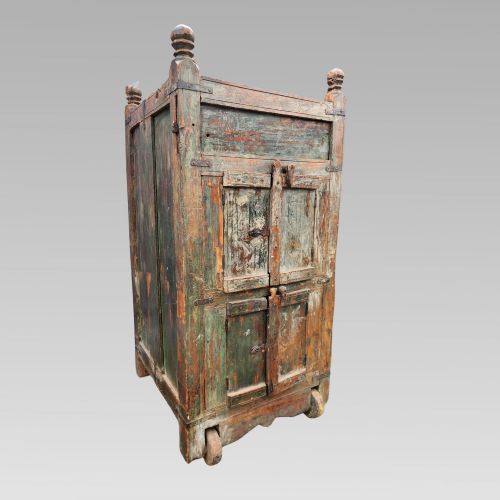

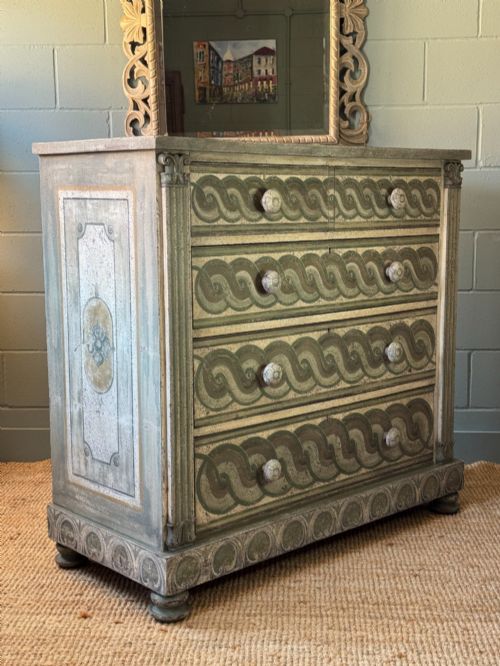
Green Painted Chest
A green painted chest brings colour and utility to a room, offering practical storage through drawers, lids and drop fronts across centuries of provincial and formal design.
Green Painted Chest
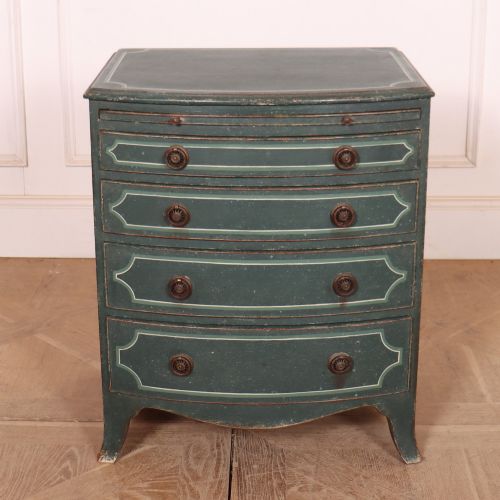
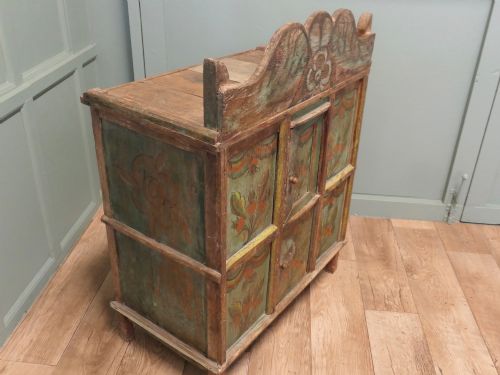
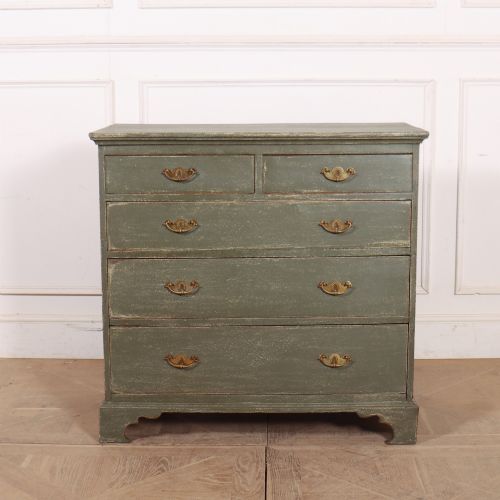
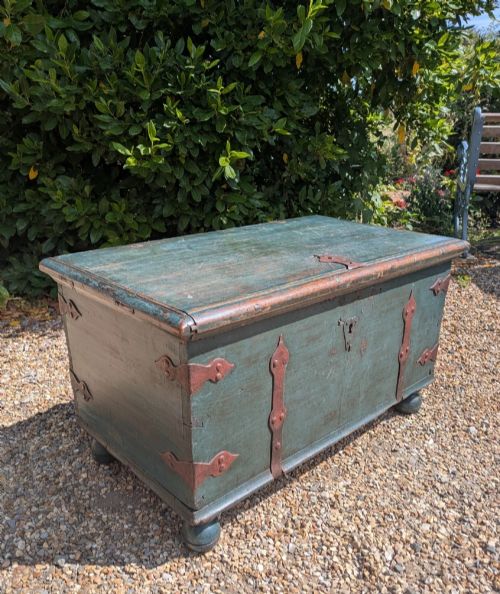
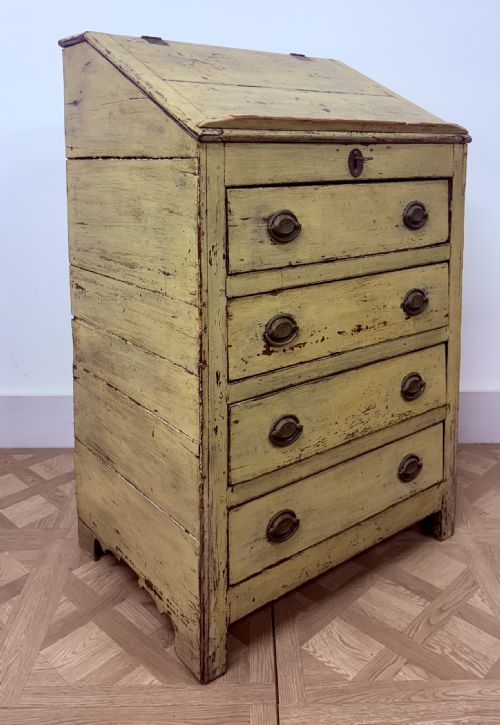
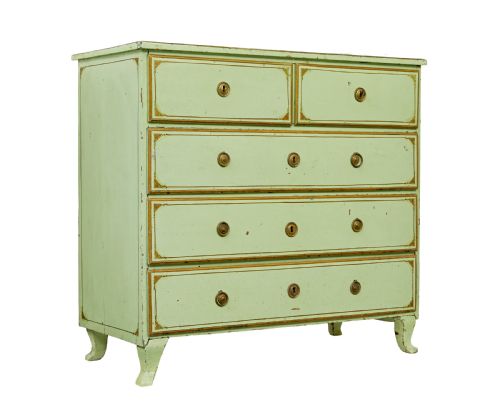
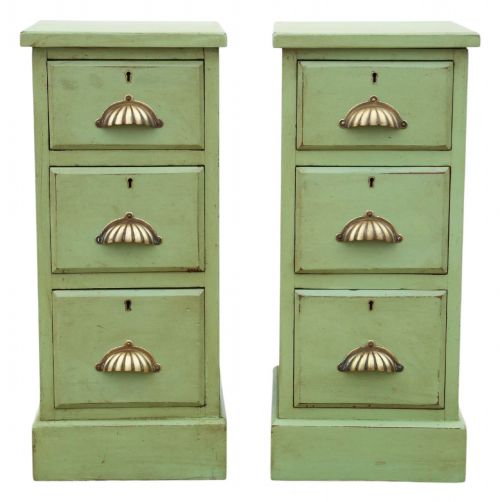
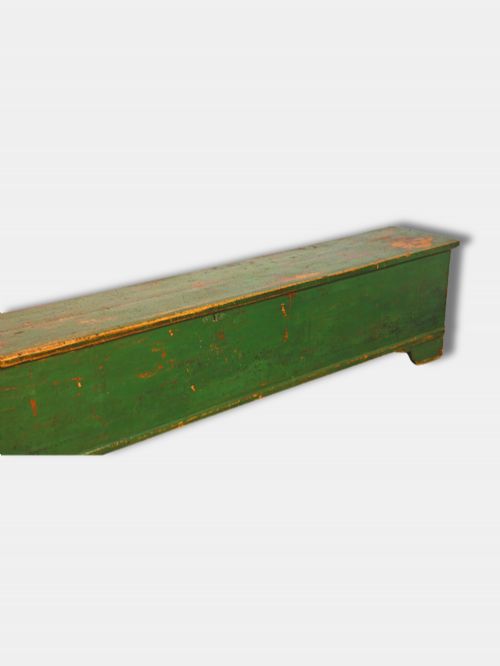
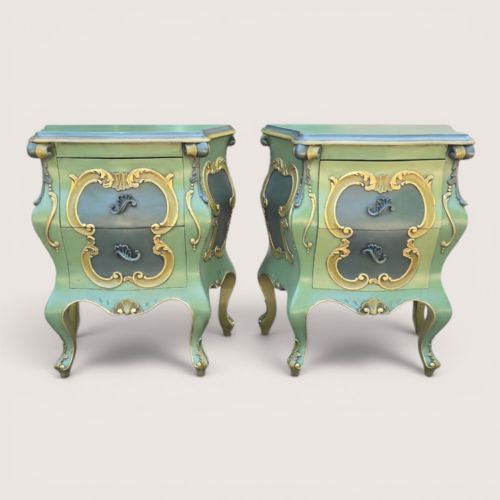
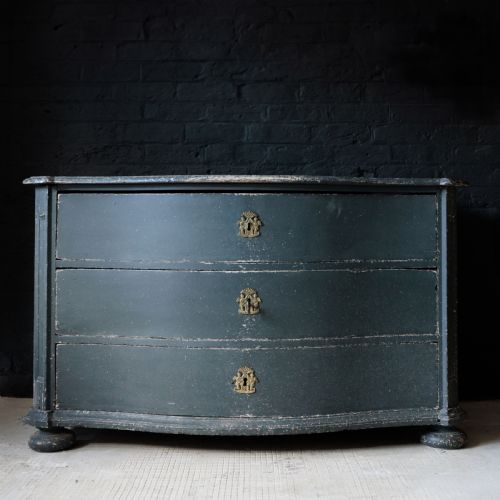
When you search for a green painted chest, you encounter a broad assortment of domestic storage spanning the eighteenth, nineteenth and early twentieth centuries. These pieces range from simple pine blanket boxes and campaign chests to serpentine commodes, bedside tables and elaborately decorated cabinets originating from English, Swedish, French, Dutch and Italian workshops.
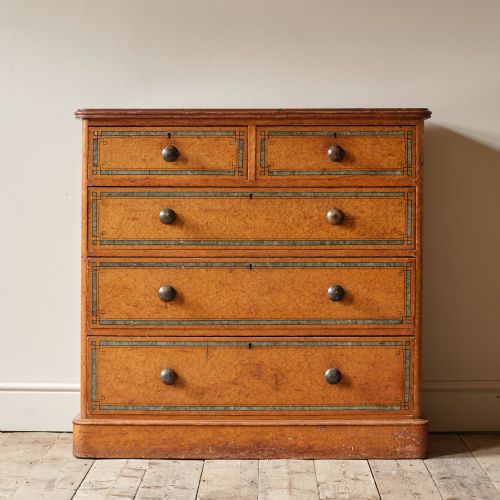
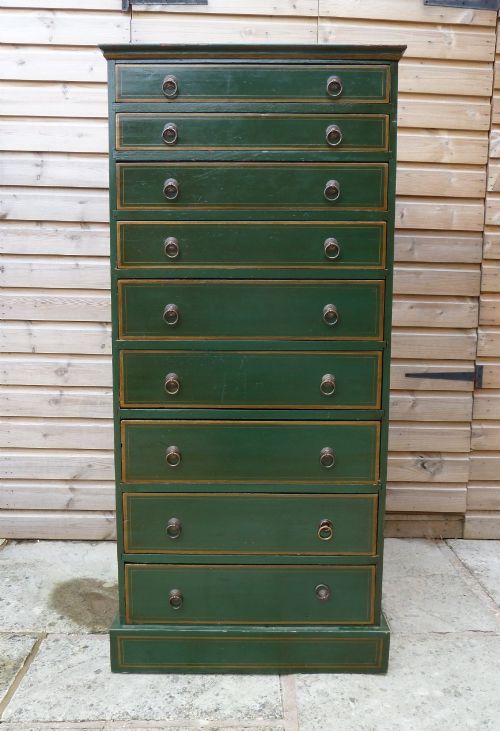
The version you are most likely to meet on this page is the nineteenth-century pine chest of drawers or storage box, often finished in scumble paint, sage green or muted country tones. Alongside these domestic drawers, the selection includes regional coffers, dowry chests, strong boxes and tallboys displaying folk art traditions or formal provincial styling.

How they were made
The primary structural material across these pieces is solid pine or oak, frequently assembled with hand-forged iron strapwork, brass handles or wooden dowels depending on the origin and period. Artisans applied successive coats of paint directly to the timber, utilising techniques such as scumble glazing, distemper or lacquer to achieve pigmented surfaces.
Decorative detailing relies on carved fluting, serpentine drawer fronts, applied giltwood mouldings or hand-painted Venetian scenes and Chinoiserie motifs. Structural integrity is maintained through traditional joinery like dovetailing on drawers and pegged framing on larger coffers and commodes.
Green Painted Chest Retail Price Guide 2026
Typical asking prices for green painted chest among the pieces listed under this phrase on Sellingantiques today, from the lower quarter to the upper quarter. They describe what is for sale here now, not the wider market.
Listings feature pieces spanning from the 18th century through to 1930, encompassing pine, oak, teak, iron and brass materials.
What varies in quality
The distinction between ordinary and exceptional pieces rests upon the survival of original surface finishes and the sophistication of the cabinetmaking. Examples retaining untouched historic paint or folk art decoration command greater interest than those stripped or later repainted in modern emulsions.
Construction methods also dictate grade, where finely shaped serpentine fronts, robust dovetailing and original brass or hand-forged iron hardware elevate a piece far above utilitarian workshop output. Regional provenance further influences standing, with documented Swedish, Dutch or Italian commodes showing distinct regional carving and form.
The Green Painted Chest Glossary
- Commode
- A low chest of drawers or cabinet, often featuring decorative serpentine or bombe fronts originating from continental workshops. These pieces frequently display sophisticated painted or gilt surfaces.
- Scumble paint
- A translucent decorative paint technique involving dragged or layered glazes over a lighter ground to simulate grain or create mottled texture. It appears widely on nineteenth-century pine furniture.
- Cooffer
- A large wooden chest with a hinged lid, used historically for storing valuables or textiles. They often feature robust framing and wrought iron strapwork.
- Serpentine
- A furniture front characterised by a wavy contour with a convex centre flanked by concave curves. This shape requires skilled carpentry and frequently appears on eighteenth and nineteenth-century commodes.
- Chinoiserie
- European decorative style imitating Chinese artistic traditions, typically executed in painted or lacquered motifs on furniture surfaces. This finish is found on select Georgian pieces.
Green Painted Chest: Frequently Asked Questions
How do I clean a painted chest?
Dust gently with a dry, soft microfibre cloth to remove surface particles without disturbing the historic finish. Avoid commercial solvents, abrasive pads or excess water, which can soften aged paint layers.
For stubborn marks, use a slightly damp cloth with mild soap, drying the area immediately afterwards. Test any cleaning method on a hidden spot first.
Are these chests made of solid wood?
The vast majority of these pieces utilise solid native timbers like pine and oak for their primary construction, carcase and drawer linings. Master cabinetmakers selected these woods for their stability and availability.
Secondary woods might appear in internal framing or drawer bases, but veneering is generally reserved for formal continental commodes and cabinets rather than country pieces.
How can I tell original paint from later decoration?
Original paint displays natural craquelure, consistent wear patterns around handles and edges, and harmonious fading accumulated over decades or centuries. Beneath the top layer, residual older priming coats often emerge where friction occurs.
Later repainting frequently feels uniform, lacks authentic subsurface oxidation, and may obscure timber movement or hardware edges. Examining the piece under magnification helps reveal underlying layers.
Where should I place a painted chest at home?
Position your chest away from direct sunlight, radiators and damp walls to protect the timber substrate and fragile painted finishes from cracking or fading. Stable indoor humidity preserves both the paint and the underlying joinery.
Bedrooms, hallways and living rooms suit these storage pieces well, provided they sit clear of heavy foot traffic that might knock projecting corners or hardware.