
Painted Bedroom Chest
A painted bedroom chest brings colour and utility to a room, offering practical storage finished in surface decoration from pine to satinwood.
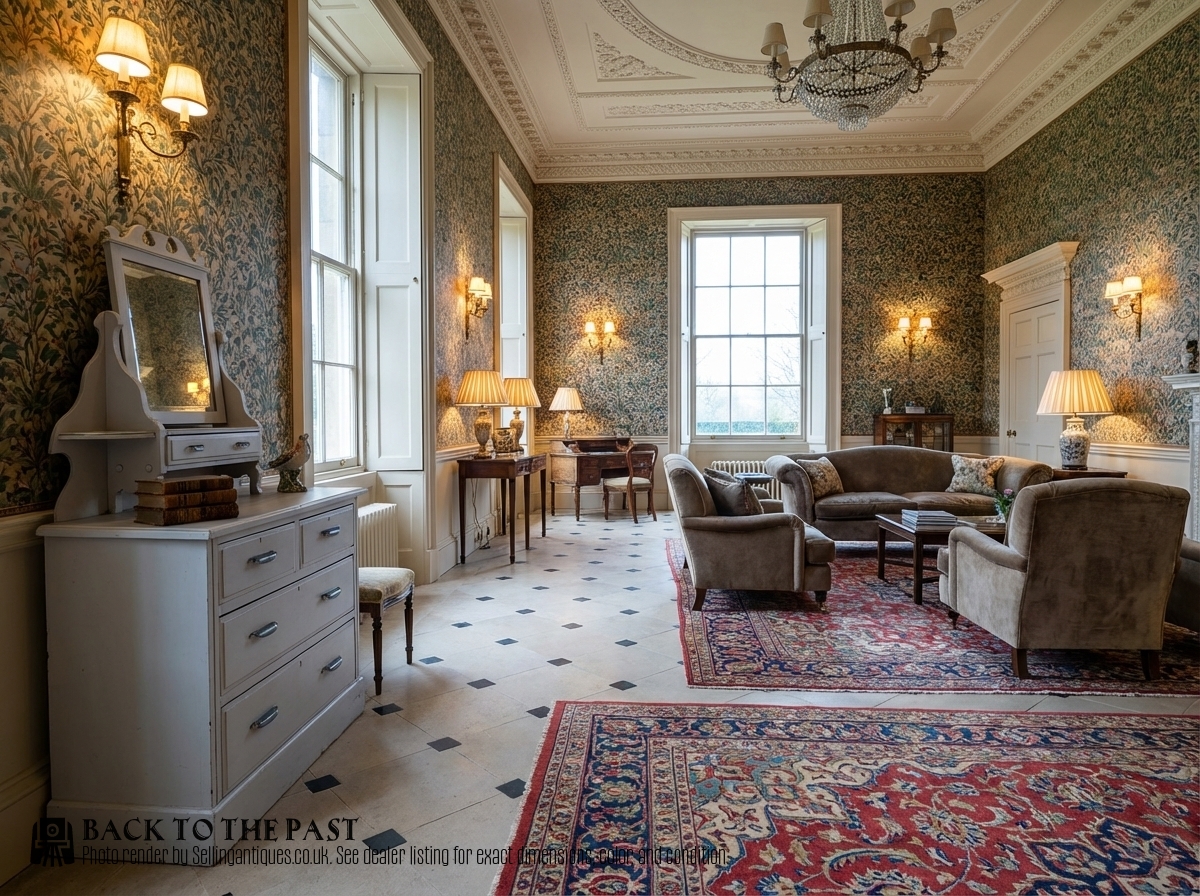
Painted Bedroom Chest
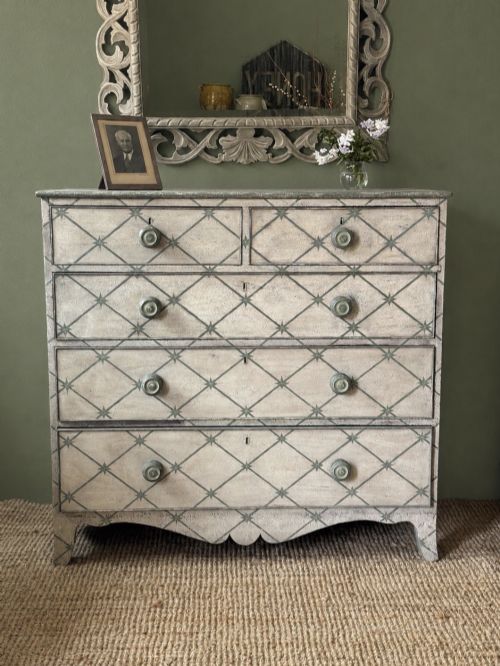
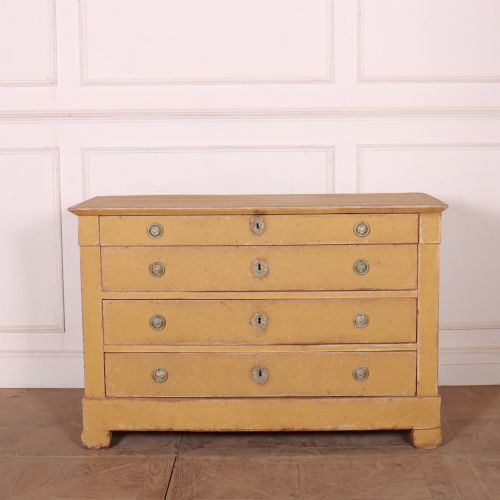
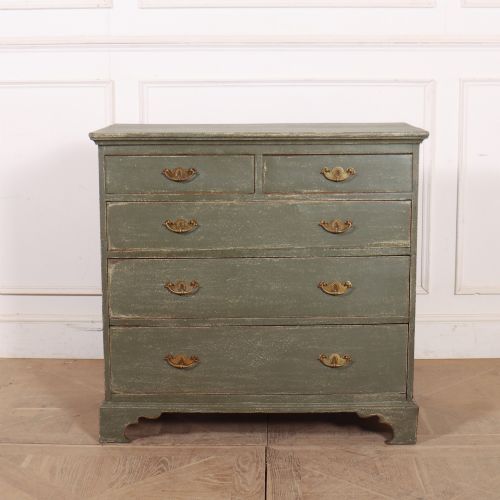
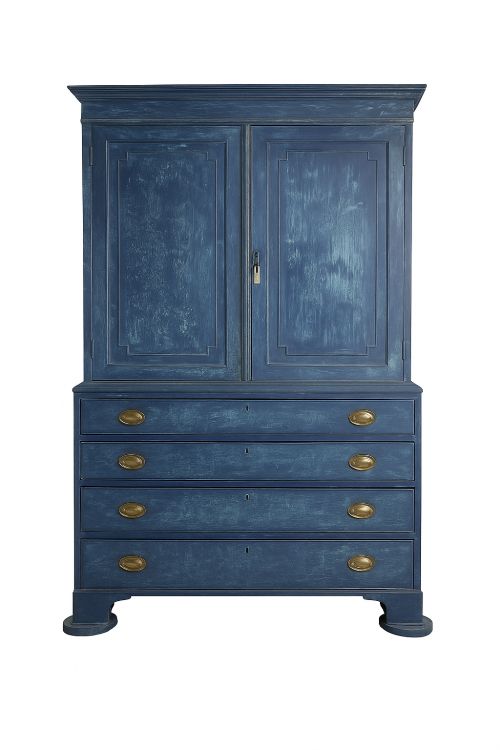
A painted bedroom chest serves as a practical storage unit, encompassing forms such as chests of drawers, commodes, linen presses, and tallboys. These pieces emerge from periods spanning the eighteenth century through to the early twentieth century, reflecting diverse regional origins including English, French, Swedish, and Hungarian workshops.
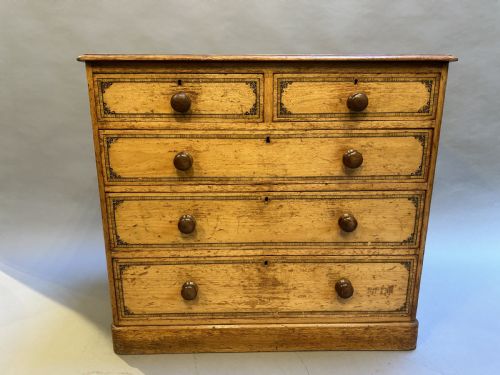
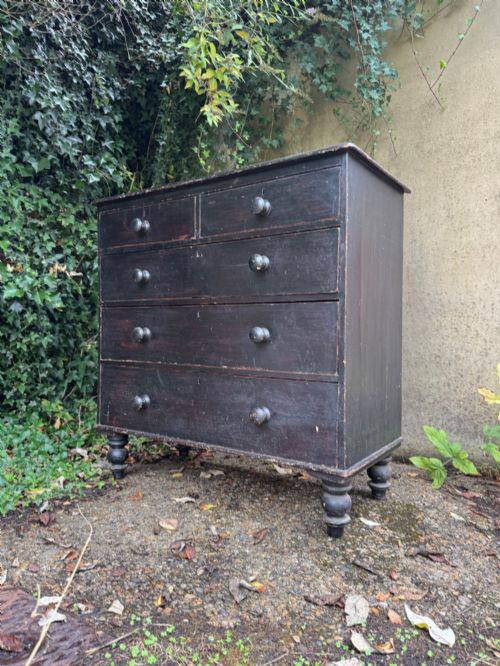
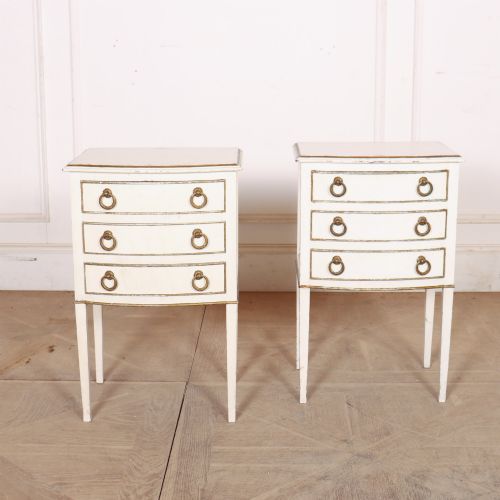
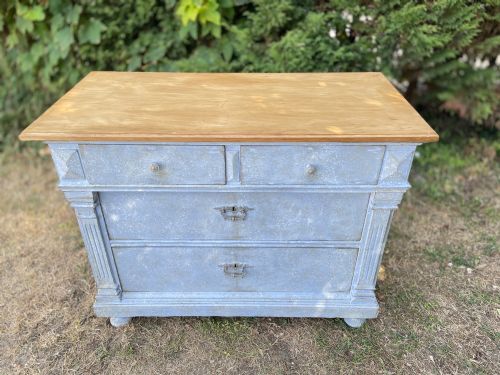
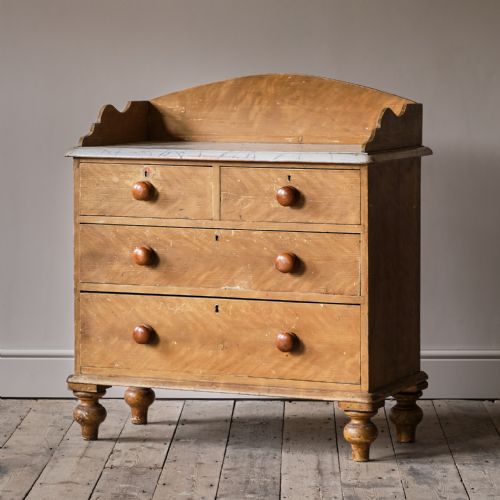
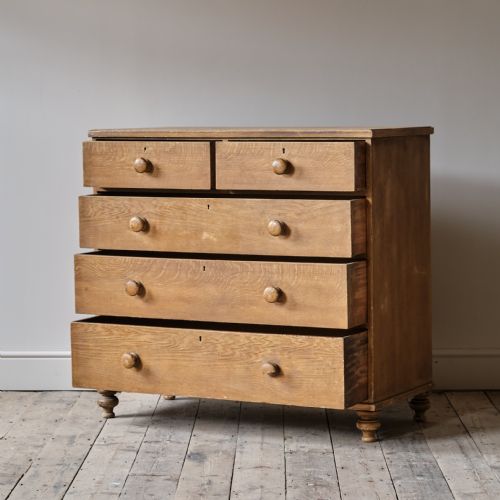
The most common examples encountered on this page are nineteenth-century and Victorian pine chests coated in original or later paint finishes. Alongside standard drawer configurations, buyers find specialised forms like washstand chests, dressing tables, and compact bedside chests designed for sleeping quarters.
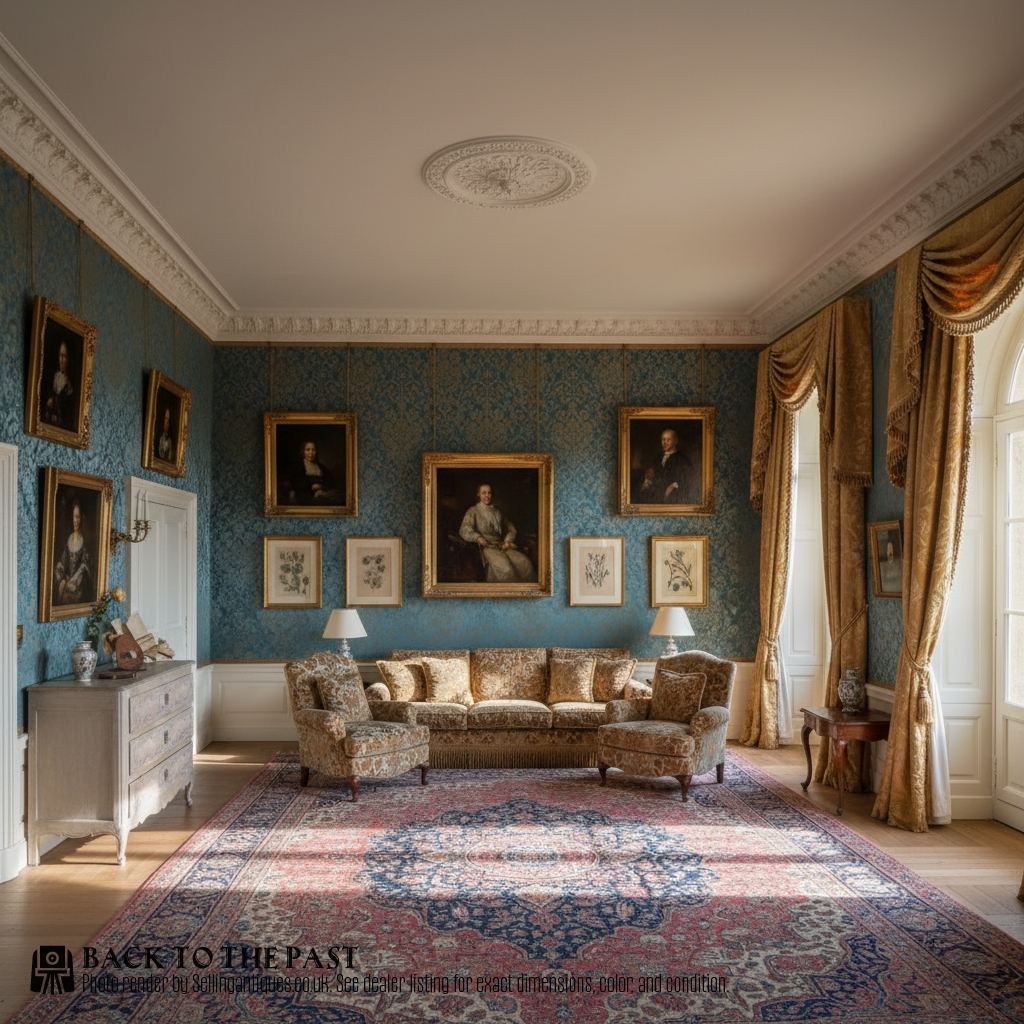
How they were made
Cabinetmakers constructed the carcases of these pieces primarily from solid timber such as pine and mahogany, utilising traditional joinery methods to ensure stability. Larger forms like tallboys and linen presses were frequently built in separate sections to ease transport up stairways and into bedrooms.
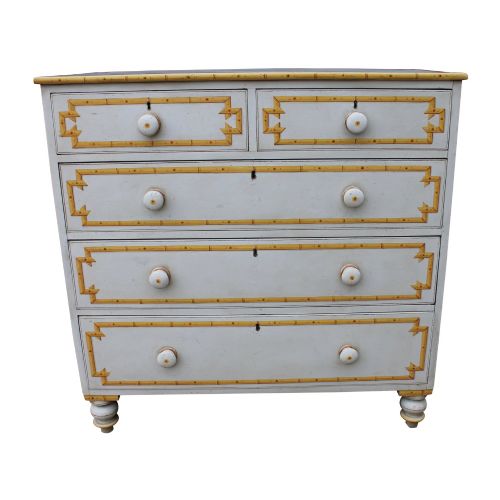
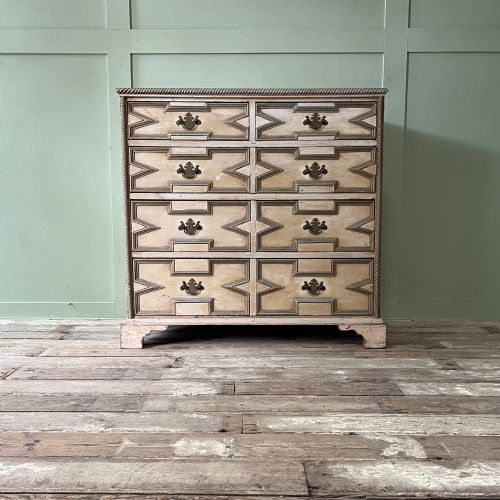
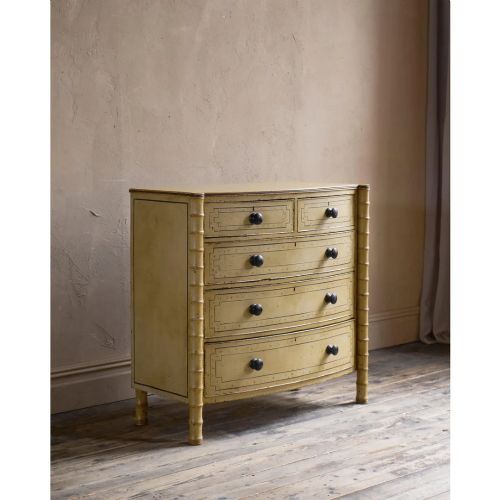
Surface decoration involved the application of paint directly onto wood or over scumble grounds, sometimes incorporating stencilled motifs, faux bamboo turning, or specialised styles like diamond-point carving. Metal hardware including brass handles and iron fittings completed the functional assembly of each drawer.
Painted Bedroom Chest Retail Price Guide 2026
Typical asking prices for painted bedroom chest among the pieces listed under this phrase on Sellingantiques today, from the lower quarter to the upper quarter. They describe what is for sale here now, not the wider market.
Listings feature eighteenth to early twentieth-century periods, utilising materials such as pine, satinwood, brass, and iron across various European styles.
What varies in quality
Quality in a painted bedroom chest rests heavily on the integrity and survival of its original surface finish, distinguishing pieces retaining untouched historic paint from those stripped or heavily repainted later. The handling of decorative details, from delicate satinwood painting to crisp faux bamboo moulding, sets finer cabinet work apart from plain utility items.
Structural execution also dictates worth, visible in the precision of the drawer dovetails, the weight of the timber, and the use of secondary woods. Pieces carrying documented provenance or attribution to known makers command greater attention than anonymous provincial items.
Sir Clough Williams-Ellis·Edwards and Roberts
The Painted Bedroom Chest Glossary
- Commode
- A low chest of drawers or cabinet, often originating from French or continental traditions. These pieces frequently feature decorative painted surfaces or marble tops.
- Scumble paint
- A translucent glaze applied over a base coat and manipulated with combs or rags to imitate the grain of richer woods. It appears frequently on nineteenth-century pine furniture.
- Linen press
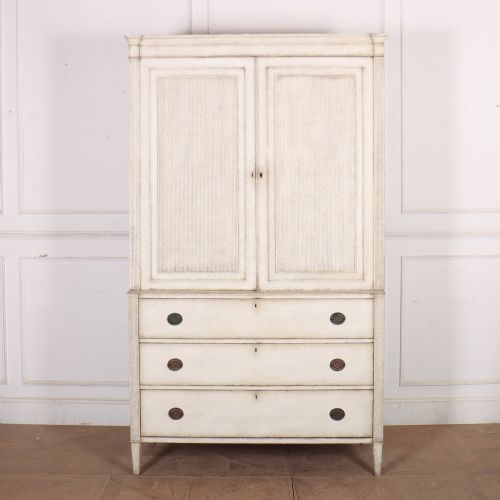
- A tall storage piece featuring upper cabinet doors enclosing sliding trays or shelves, positioned above a base of lower drawers. They provided dedicated storage for household linens.
- Tallboy
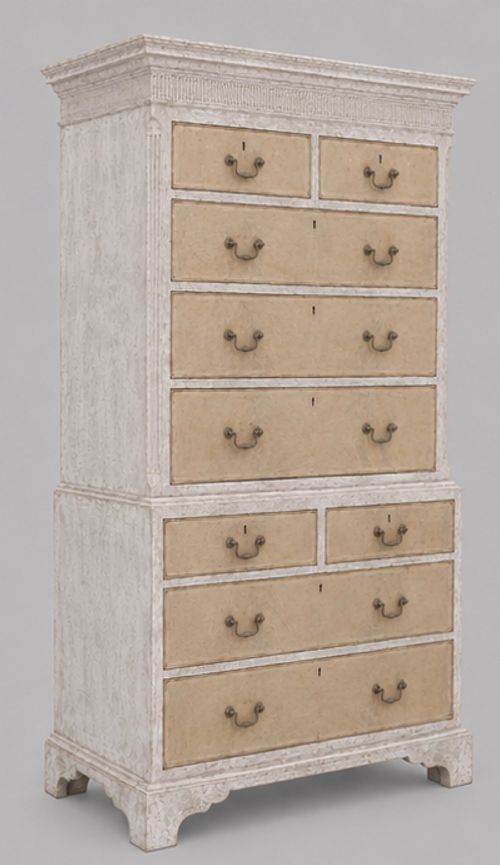
- A tall chest of drawers consisting of one chest stacked directly upon another, sometimes referred to as a chest on chest. This form maximises vertical storage space.
- Bureaux
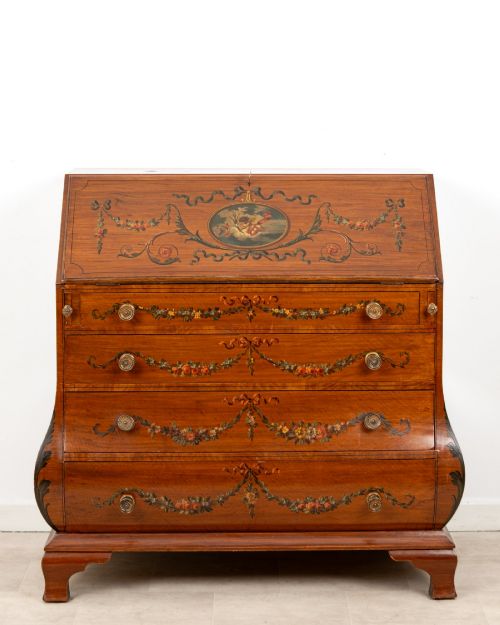
- A writing desk featuring a sloping flap that opens to reveal internal pigeonholes and small drawers, often combined with a chest of drawers beneath.
Painted Bedroom Chest: Frequently Asked Questions
How do I care for original painted surfaces?
Historic painted finishes require gentle treatment using a dry microfiber cloth to remove dust. Avoid harsh chemical cleaners, modern furniture polishes, and excessive moisture which can lift or soften old paint layers.
Keep these chests away from direct sunlight and strong heat sources to prevent the wood beneath from expanding and causing the paint layer to crack or flake over time.
Were these chests always painted?
Many pine and regional pieces were painted from the outset to decorate cheaper timbers or to match specific domestic interiors. Other pieces received paint coats decades after their original manufacture.
Distinguishing original paint from later decoration involves examining wear patterns, edges, and underlying layers for consistency with the stated period of the piece.
How do I distinguish regional styles?
English country pieces often favour straightforward pine construction with simple scumble or plain paint finishes. Continental examples, such as Swedish Gustavian or Hungarian chests, typically display distinct colour palettes, specific hardware, and characteristic moulding details.
French commodes frequently incorporate curved bombe shapes or refined decorative motifs that contrast with the straighter lines common in standard British bedroom furniture.
Can I use a commode as a bedside table?
Smaller commodes and bedside chests fit comfortably beside standard bed heights, providing enclosed drawer storage for nighttime essentials. Measuring the available floor space and bed frame height ensures the proportions remain balanced within the room.
Consider the operational clearance of the drawers and any protruding handles to ensure easy access in tighter bedroom layouts.