


Small French Commode
A small french commode brings continental elegance to a compact space, offering useful drawer storage beneath a decorative surface.
Small French Commode
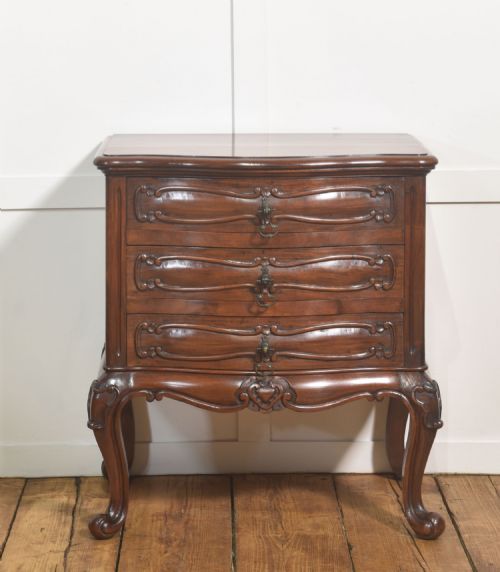
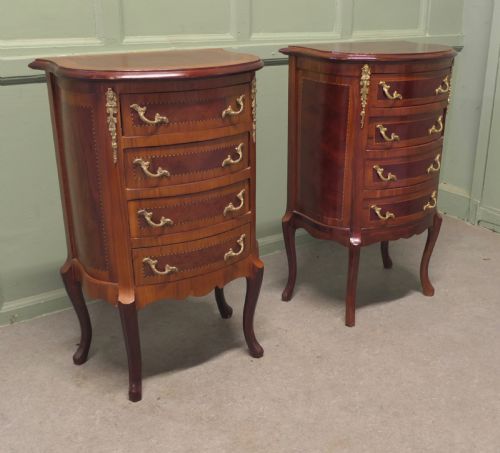
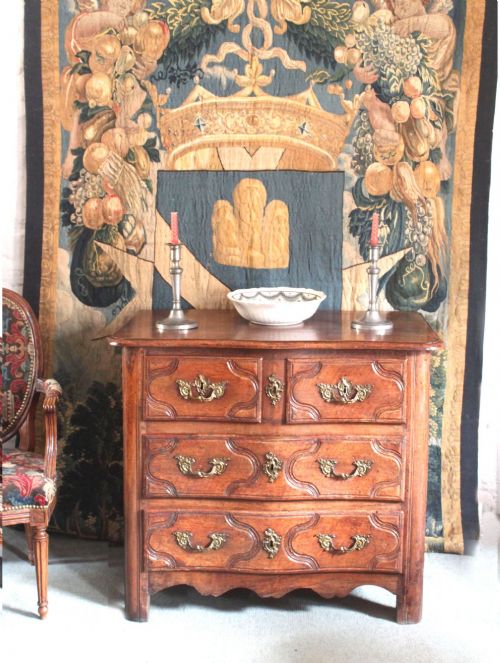
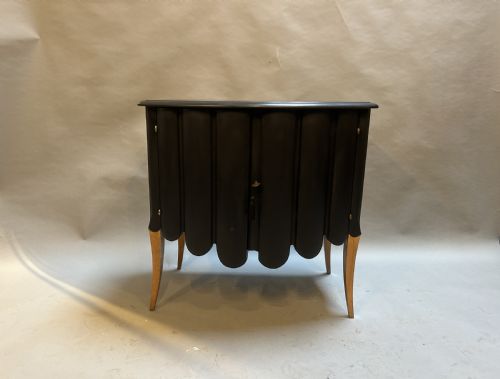
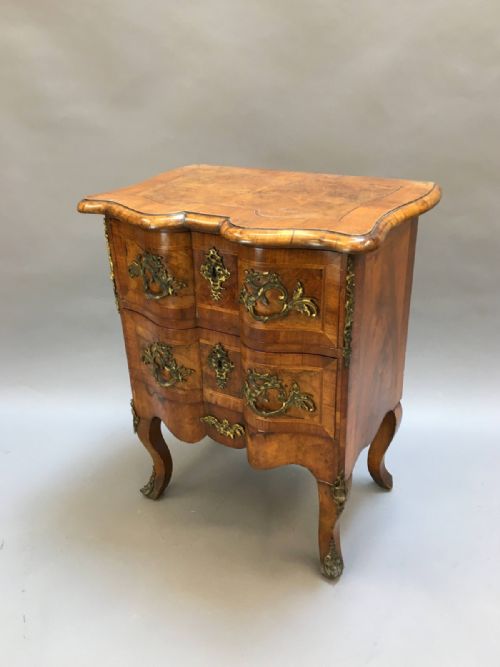
A small french commode is a low chest of drawers designed for domestic rooms, spanning provincial oak and walnut pieces from the eighteenth century alongside revival styles from the nineteenth and early twentieth centuries. These pieces appear as serpentine chests, bombe forms, and straight-front bedside cabinets.
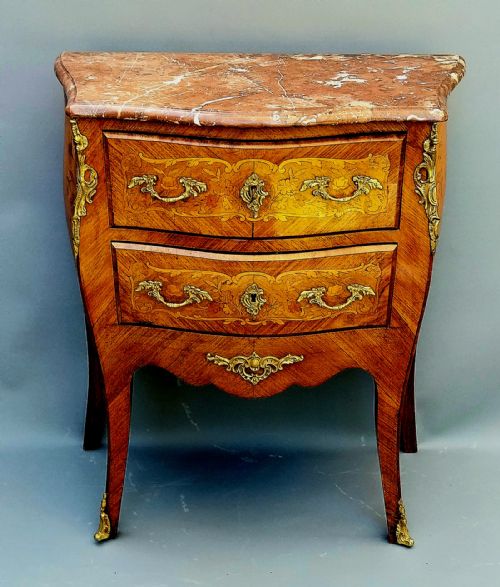
The selection ranges from simple fruitwood and cherry provincial examples to intricate kingwood and marquetry designs with shaped marble tops. Buyers encounter full-size miniature versions and bedside tables alongside traditional chests of drawers.
How they were made
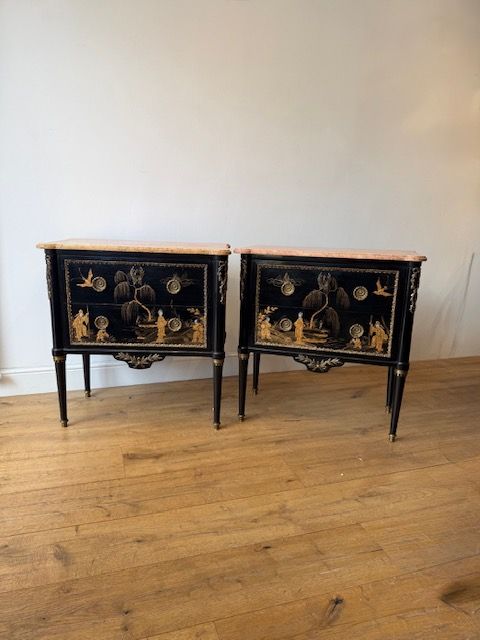
Cabinet makers utilised native woods such as walnut, oak, cherry, and fruitwood for provincial pieces, while metropolitan workshops applied exotic veneers like kingwood and tulipwood over carcase timbers. Surfaces often received hand-painted decoration, lacquer, or elaborate marquetry and parquetry geometric patterns.
Heavy slabs of marble, cut and polished to follow the serpentine or bombe contours of the carcase, were fitted to the tops of finer examples. Cast brass and ormolu mounts, handles, and escutcheons finished the drawer fronts and corners.
Listings feature walnut, kingwood, and marble across periods spanning the eighteenth century to the 1930s.
What varies in quality
The refinement of the timber selection and the precision of the veneer work separate standard cabinet making from exceptional pieces. Finely cut marquetry, balanced grain patterns, and well-matched geometric parquetry indicate superior workshop standards.
The integration of the marble top and the crispness of the cast bronze or ormolu mounts dictate the overall success of the design. Provincial pieces rely on the warmth of the solid fruitwood and the harmonious proportions of the drawer arrangement.
The Small French Commode Glossary
- Bombe
- A bulging, outward-curving chest shape swelling on the front and sides. This silhouette requires complex curved woodwork.
- Serpentine
- A front edge curving inward centrally and outward at the ends in an 'S' shape. It demands skilled hand-shaping of timber and marble.
- Marquetry
- Decorative veneer patterns formed from pieces of different coloured wood arranged in pictorial or floral designs. Craftsmen glue these thin layers onto the main carcase.
- Parquetry
- Geometric wood inlay forming repeating patterns such as cubes or triangles. This technique showcases precise woodworking skill.
- Ormolu
- Gilt bronze mounts applied to furniture for decoration and edge protection. The metal is cast and then treated to achieve a golden finish.
- Vernis Martin
- A type of simulated Japanese lacquer developed in France during the eighteenth century. It uses multiple layers of varnish to create a glossy painted surface.
Small French Commode: Frequently Asked Questions
Where did they put small french commodes?
These pieces served as bedside cabinets, dressing room storage, or decorative drawer units in drawing rooms and reception spaces.
Their compact proportions allowed them to fit into smaller corners where standard chests proved too bulky.
How do I spot an 18th century commode?
Eighteenth century examples typically show solid construction in oak, walnut, or cherry with hand-cut dovetails and forged iron or brass hardware.
Revival pieces from later periods often mimic these forms but use machine-sawn timbers and different secondary woods inside the drawers.
What is a marble top commode used for?
The stone surface provided a durable, heat-resistant table area for washing jugs, lamps, or decorative objects.
It also added weight and stability to the low wooden carcase underneath.
Are miniature commodes dollhouse furniture?
Miniature chests and apprentice pieces served as scale models created by makers to demonstrate their skill to a guild or as salesman samples.
Collectors prize them as fully functioning small-scale versions of standard furniture.