
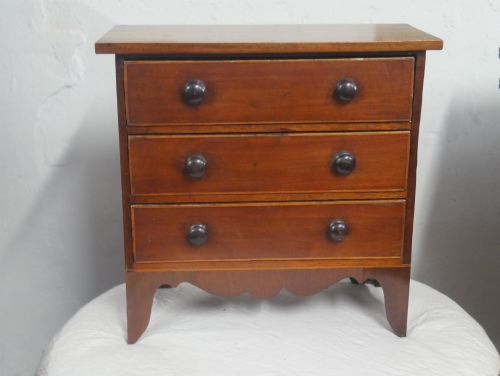
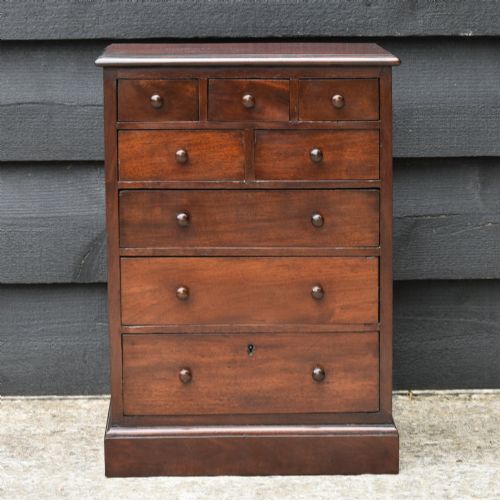
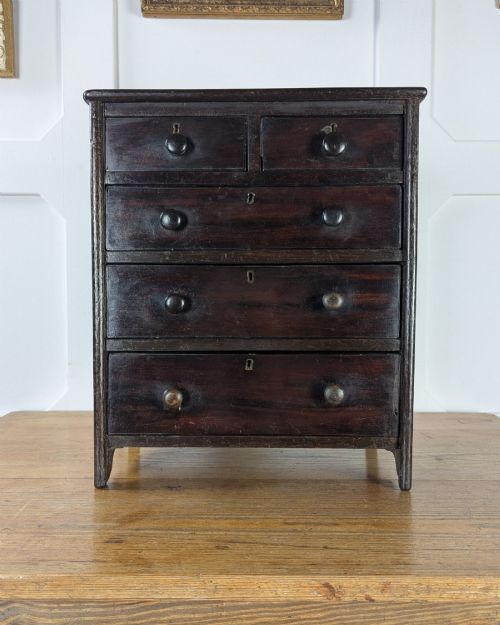
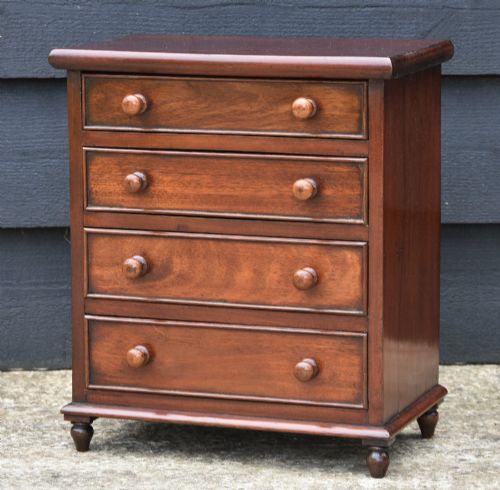

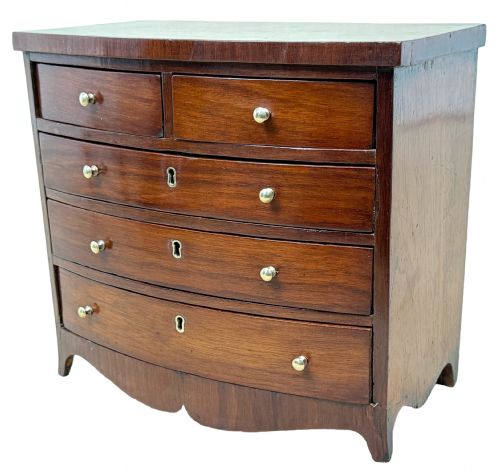


19th Century Miniature Drawers
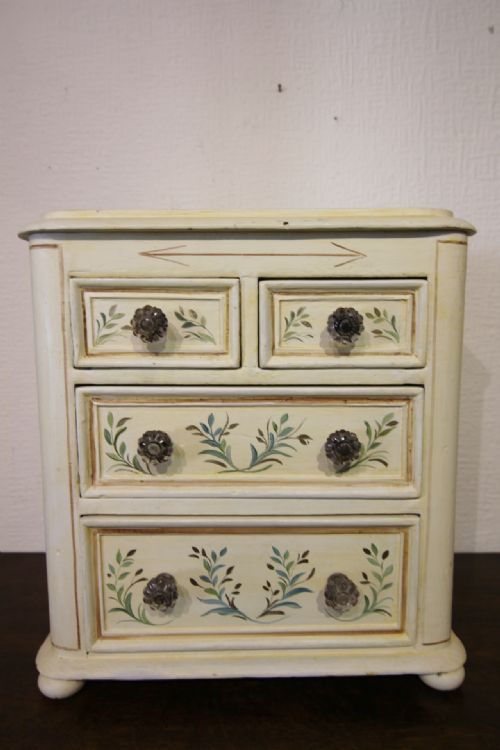
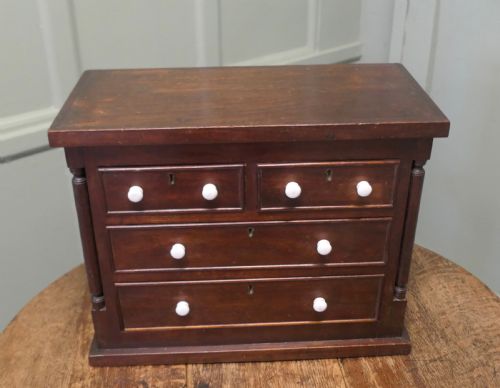
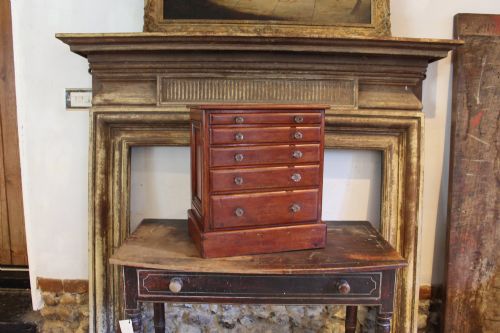
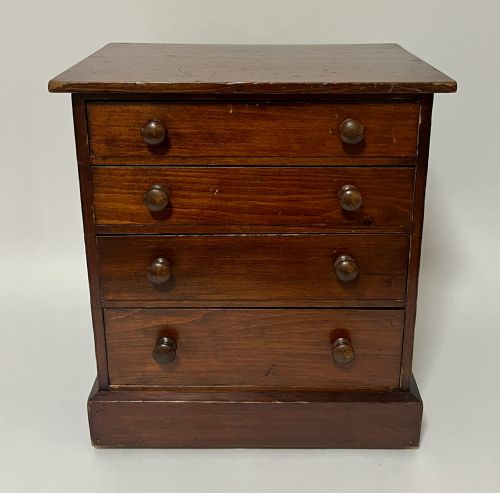
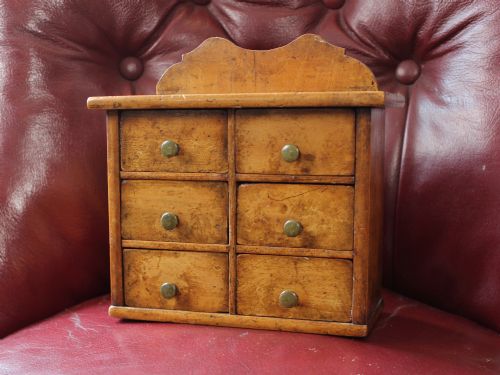
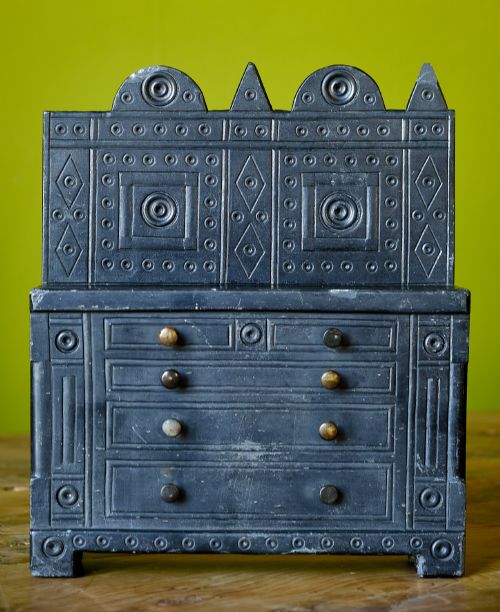
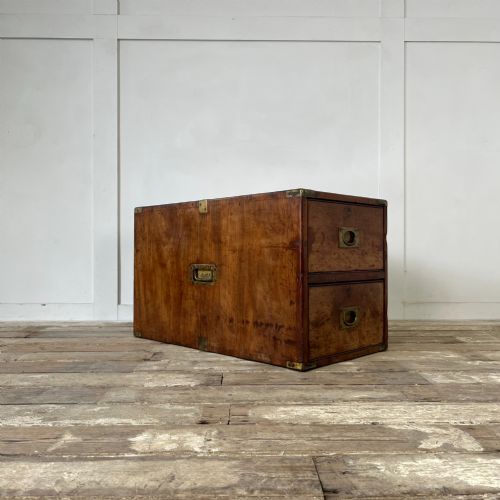
These 19th century miniature drawers are small-scale chests created in the nineteenth century, sought after by collectors for their intricate carpentry and compact utility.
What 19th century miniature drawers are
When you search for 19th century miniature drawers, you encounter small-scale chests designed to mirror full-size domestic furniture. These items appear in formats such as standard miniature chests of drawers, Scotch chests, Wellington chests, and serpentine or bow front examples.
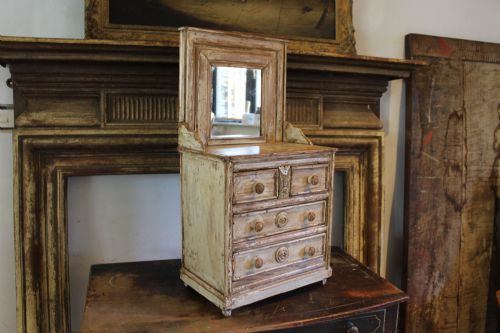
The pieces you find most frequently on this page originate from the Victorian and Regency periods, alongside specific regional types like Welsh country pieces and French styles. Makers constructed them as salesman samples, apprentice pieces, or domestic trinket cabinets for jewellery.
Forms vary from simple upright drawer stacks to more elaborate designs incorporating swing mirrors or split bolsters. The origins span British workshops as well as continental European makers utilising native and exotic woods.
How they were made
Carpenters constructed these miniature chests using solid timbers such as mahogany, oak, walnut, fruitwood, and pine, frequently applying mahogany veneer or kingwood to principal surfaces. Workshops integrated secondary materials like bone for escutcheons or drawer pulls, alongside brass handles and glass components.
Joinery methods mirrored those of domestic furniture of the era, scaled down to diminutive dimensions. Craftsmen shaped serpentine and bow fronts, applied split bolsters, and occasionally added fine inlay work to the exterior carcases.
Retail Price Guide 2026
Typical UK retail prices for 19th century miniature drawers, calculated from the Sellingantiques database of over a million retail prices indexed since 2003. This retail price guide relies exclusively on Sellingantiques data; no external sources or auction records are used, so the figures do not describe the wider market.
Listings feature mahogany, walnut, kingwood, oak, fruitwood, and pine, alongside brass, bone, and glass.
What varies in quality
The standard of timber selection and veneer application sets apart the more ambitious pieces from utilitarian provincial items. Selecting finely figured mahogany, walnut, or kingwood indicates workshop ambition and higher cost of production.
The refinement of the small-scale joinery, such as the precision of drawer linings and the subtlety of mouldings, dictates the distinction between standard apprentice pieces and sophisticated cabinet work.
The 19th Century Miniature Drawers Glossary
- Apprentice piece
- A small item of furniture created by a trainee craftsman to demonstrate mastery of joinery techniques before admission to a guild or trade. These objects frequently duplicate the forms of full-size household pieces.
- Wellington chest
- A tall, narrow chest of drawers secured by a locking hinged stile on one side that fastens over the drawer edges. This specific form appears in nineteenth-century miniature scaling.
- Scotch chest
- A regional furniture form typically featuring a deep top drawer over multiple smaller drawers, translated here into miniature dimensions. The style reflects nineteenth-century Scottish cabinet-making traditions.
- Split bolster
- A decorative half-turned wooden pillar applied to the vertical corners of a chest carcase. This detail adds architectural relief to nineteenth-century case furniture.
- Serpentine front
- A furniture front curving outward in the centre and inward at the sides in a continuous wave line. Cabinet makers required advanced skill to apply this profile to miniature drawer fronts.
Frequently Asked Questions
What were miniature drawers used for?
Cabinet makers originally produced these small chests as apprentice pieces to demonstrate woodworking skills or as trade samples for travelling salesmen. Owners later utilised them in domestic settings as jewellery boxes or trinket cabinets.
Their compact proportions allowed them to sit upon larger dressing tables or desks. They provided secure storage for small valuable items while mirroring the fashionable furniture styles of the nineteenth century.
How do I date a miniature chest?
Dating relies on identifying stylistic markers, timber choices, and construction methods characteristic of the nineteenth century. Regency pieces often display clean classical lines, while Victorian examples might incorporate split bolsters or heavier proportions.
Examining internal secondary timbers, such as pine or oak drawer linings, further clarifies the period of manufacture. Surviving pieces frequently carry dates or stylistic attributes tied to the eras of 1824, 1840, 1850, 1880, or 1890.
Are these pieces made of solid wood?
Workshops constructed these chests using both solid woods and veneered surfaces over secondary carcase timbers. Mahogany and oak frequently appear as solid woods, while mahogany veneer and kingwood were laid over pine carcases.
Secondary materials like bone and brass were incorporated for decorative pulls, escutcheons, and handles. The choice of material varied according to the workshop tradition and regional origin, such as Welsh pine or French walnut.
How do I care for antique miniature drawers?
Protect these small chests by placing them away from direct sunlight and sources of heat to prevent timber shrinkage and veneer cracking. Maintain the wood using traditional beeswax rather than modern silicone polishes.
Handle the small drawers with care, pulling them evenly to avoid straining the diminutive joinery. Regular dusting with a soft, dry cloth preserves the polished surface of the mahogany, walnut, or fruitwood.