

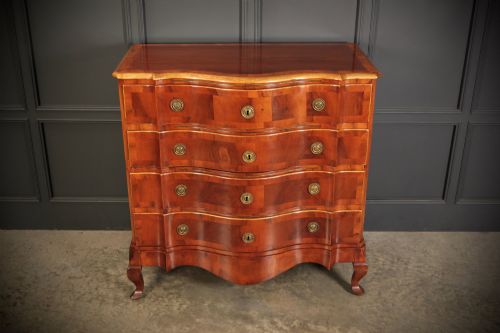
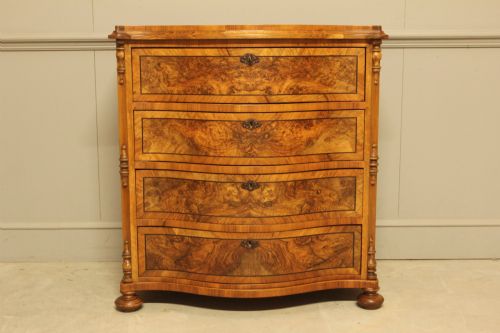
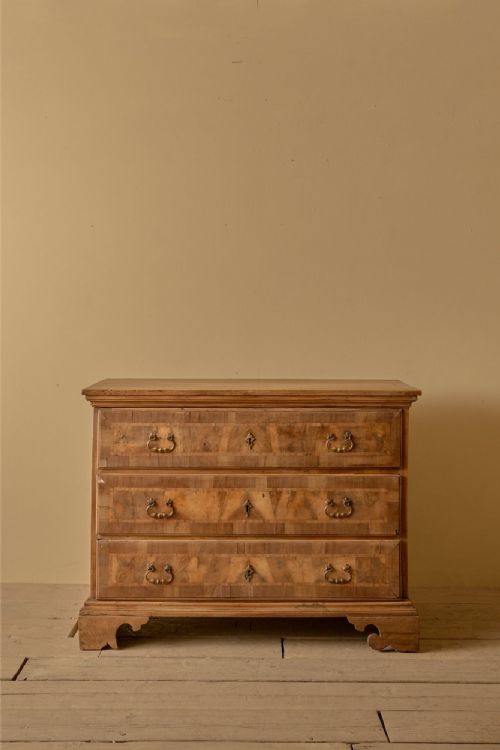
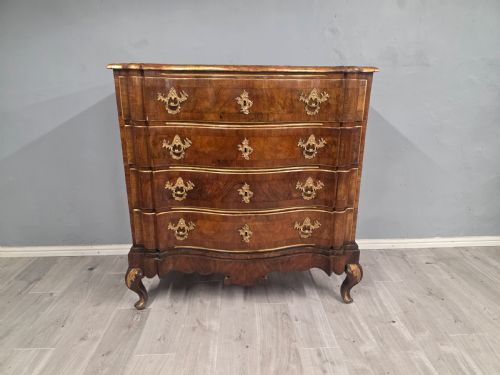

Continental Walnut Chest
A continental walnut chest brings rich grain and substantial form to a room, spanning Baroque commodes to elegant Biedermeier drawers.

Continental Walnut Chest
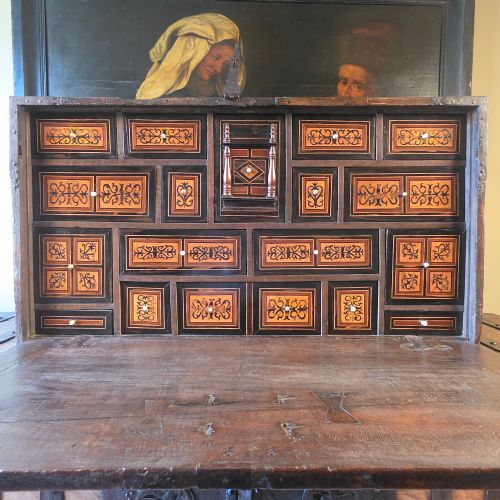
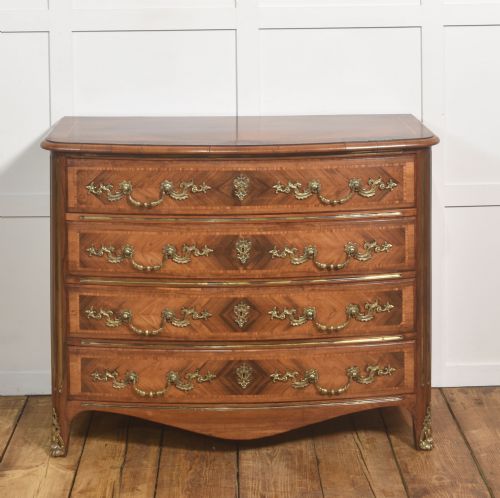
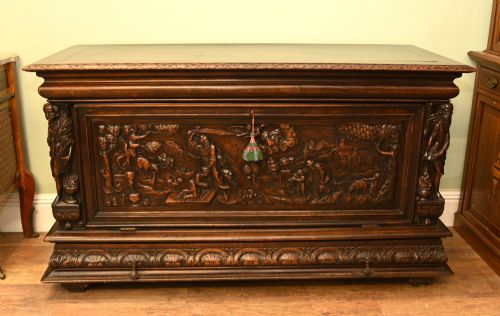
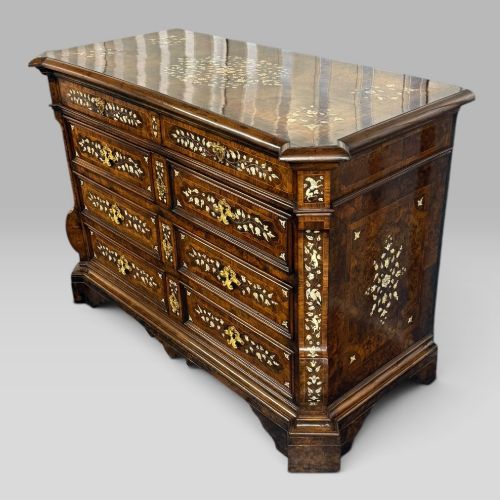
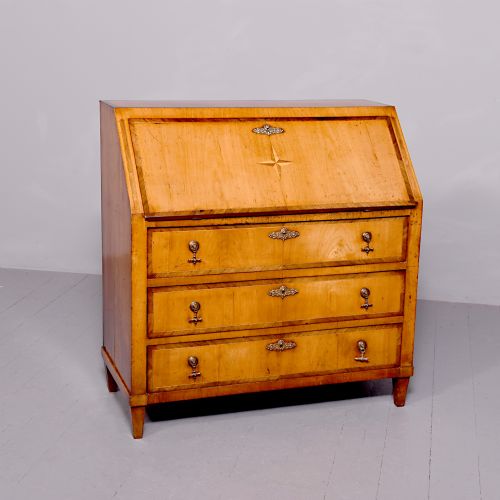
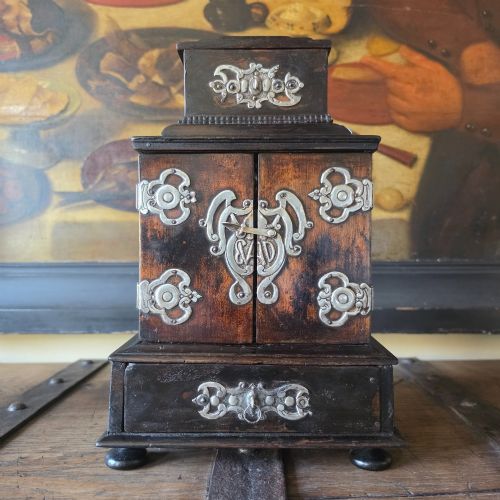
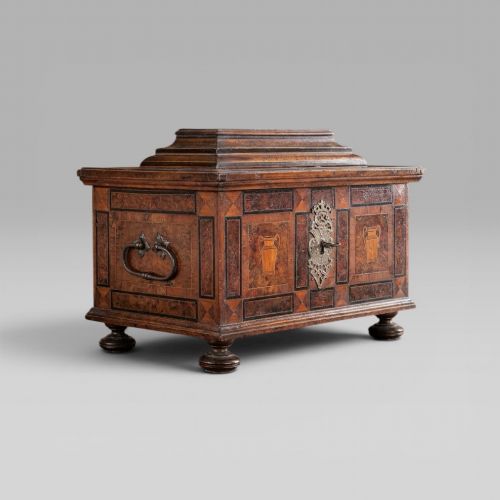
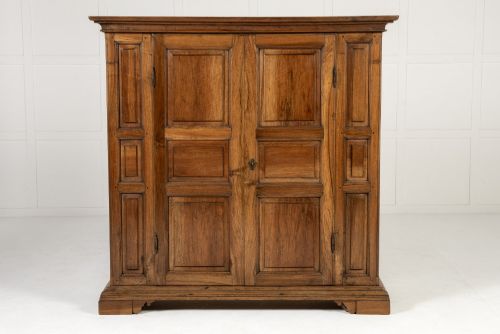
A continental walnut chest encompasses a range of storage pieces, from monumental seventeenth-century commodes to refined nineteenth-century bureaus and cabinets. Walnut provides the primary timber, often selected for its deep colour and pronounced figuring.
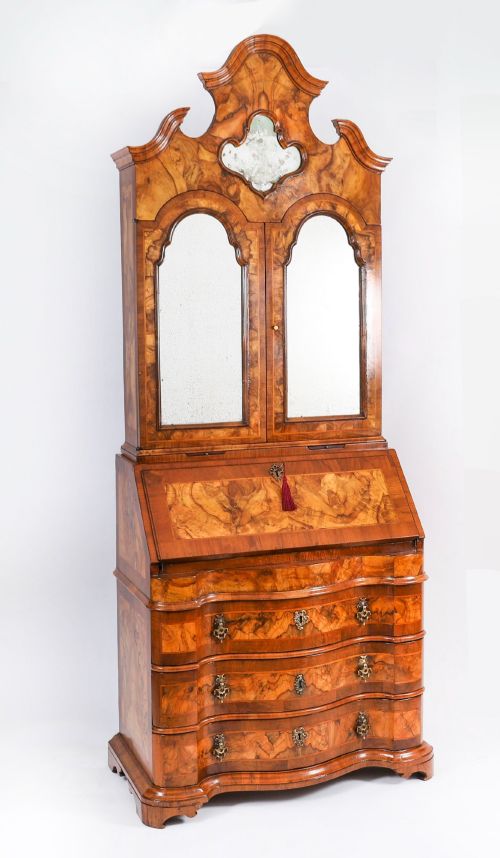
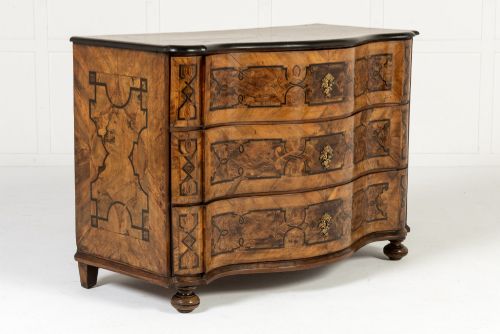
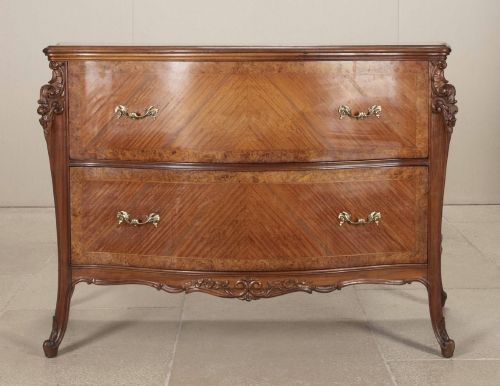
The pieces originating from European workshops display distinct regional forms, including Italian serpentine shapes, Dutch burr veneers, and German bureau bookcases. Drawers, coffers, and cabinets dominate the selection, serving both display and storage functions.
Meticulous construction defines these items, which bridge seventeenth, eighteenth, and nineteenth-century eras. Regional styles such as Baroque and Biedermeier dictate the silhouettes encountered by collectors.
How they were made
Cabinetmakers utilised solid walnut and applied burr walnut veneers to construct primary carcases, often reinforcing internal structures with oak or fruitwood. Marquetry and inlay incorporate contrasting timbers, brass, or satinwood to delineate geometric and floral panels.
Surface ornamentation relies on polished finishes that highlight the natural grain patterns of walnut and burr walnut. Metal mounts in brass or ormolu, alongside iron hardware, secure doors and drawer fronts on sophisticated commodes and cabinets.
Continental Walnut Chest Retail Price Guide 2026
Typical asking prices for continental walnut chest among the pieces listed under this phrase on Sellingantiques today, from the lower quarter to the upper quarter. They describe what is for sale here now, not the wider market.
Listings feature walnut, burr walnut, oak, fruitwood, brass, ormolu, iron, and marble across eighteenth and nineteenth-century continental forms.
What varies in quality
The intricacy and execution of veneer selection distinguish master workshops from provincial joinery, particularly in matching burr walnut across large drawer fronts and serpentine facades. Superior examples exhibit precise marquetry and harmonious grain orientation without disruption.
Structural integrity and the retention of original hardware, such as brass pulls and escutcheons, elevate a piece. The refinement of carved details, drawer linings, and overall proportions determines the standing of a continental walnut chest.
Grand Ducal Workshops
The Continental Walnut Chest Glossary
- Commode
- A low chest of drawers, often with serpentine or bombe contours, originating in French and Italian continental traditions.
- Burr walnut
- A figured wood veneer obtained from walnut tree growths, prized for its swirling, intricate grain patterns on cabinet facades.
- Bombe
- A swollen or outward-curving front and side profile characteristic of advanced continental cabinetmaking.
- Marquetry
- The art of applying decorative veneer pieces in wood, brass, or other materials to form pictorial or geometric designs.
- Bureaux
- Sloped-front writing desks fitted with internal drawers and pigeonholes, frequently set upon a chest of drawers base.
Continental Walnut Chest: Frequently Asked Questions
How do I date a walnut chest?
Dating relies upon examining construction methods, hardware, timber preparation, and stylistic markers such as Baroque curves or Biedermeier minimalism. Seventeenth and eighteenth-century examples frequently feature hand-cut dovetails and specific regional veneers.
Later nineteenth-century pieces often display machine assistance or distinct revival styles like Neo-Rococo. Comparing secondary woods and decorative inlay helps establish the period of origin.
Where were these chests made?
These chests originated across continental Europe, with notable production centres in Italy, Germany, France, the Netherlands, Austria, and Spain. Each region developed distinct aesthetic preferences, from Italian serpentine commodes to German bureau bookcases.
Local timber availability and prevailing court styles heavily influenced regional cabinetmaking traditions throughout the seventeenth, eighteenth, and nineteenth centuries.
How should I care for walnut furniture?
Walnut furniture requires a stable environment away from direct sunlight and extreme humidity fluctuations to prevent veneer lifting or timber splitting. Gentle dusting with a dry cloth maintains the polished surface without stripping natural oils.
Avoiding synthetic silicones and applying periodic traditional wax preserves the depth of the burr walnut grain. Professional conservation ensures structural stability for historic pieces.