25,677  PAGES BROWSED TODAY PAGES TODAY 21 ANTIQUES UPLOADED TODAYNEW ARRIVALS
21 ITEMS ADDED TODAY
Sort Order
Items Per Page
Browse Categories
Sort order
Relevant Links
Items per page
ID #SA1232912
FOR SALE
£125,000
Email
Save
Important Italian Baroque Commode Attributed Grand Ducal Workshops, C.1690–1720
Knight Fine Antiques and Collectables
for sale €146,250     $158,750
£125,000
Knight Fine Antiques and Collectables

Knight Fine Antiques and Collectables

Sellingantiques Verified Since Aug 2024
View Dealers Stock Page
Id #SA1232912
PDF SHARE
SAVE

Important Italian Baroque Commode Attributed Grand Ducal Workshops, C.1690–1720

18th century
Description

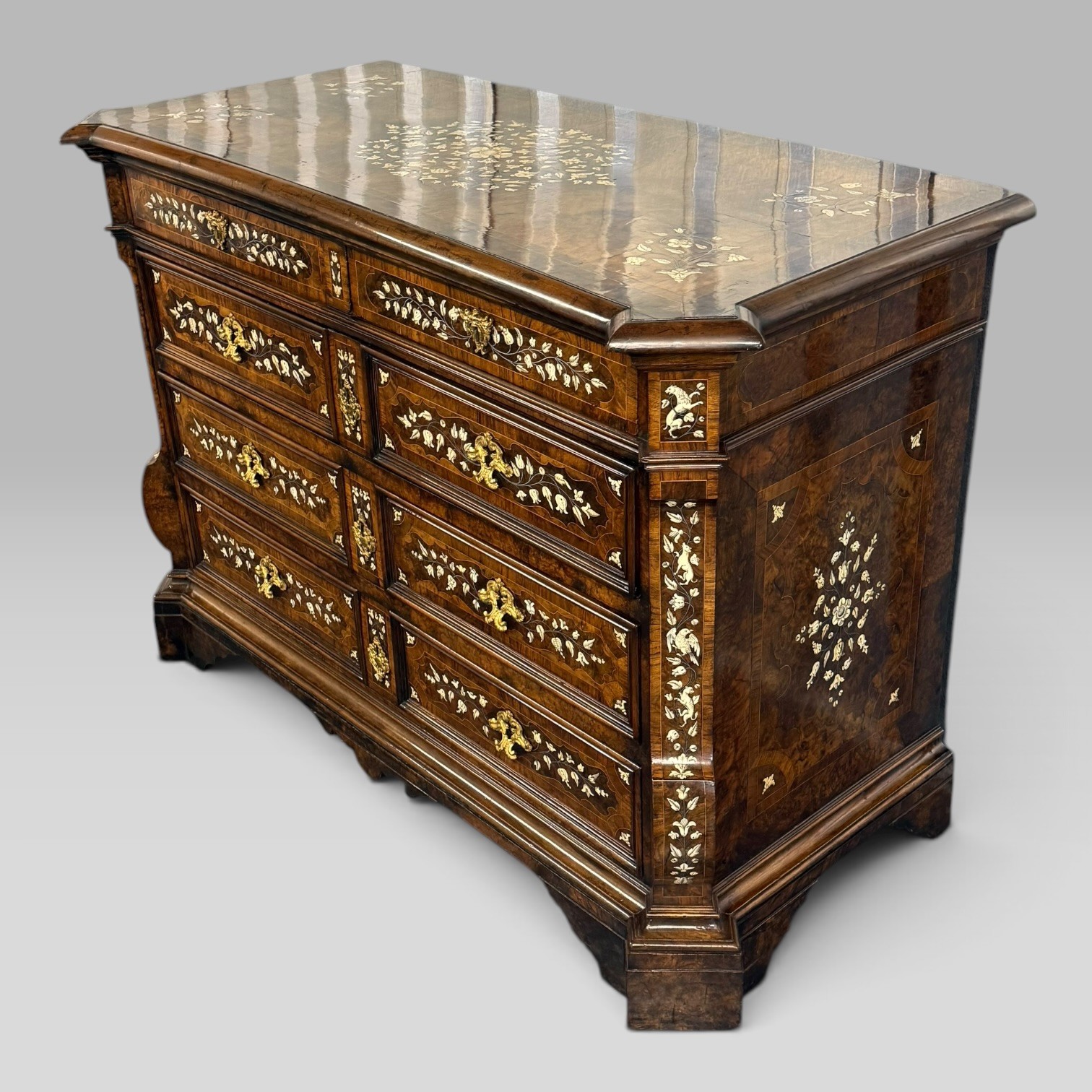
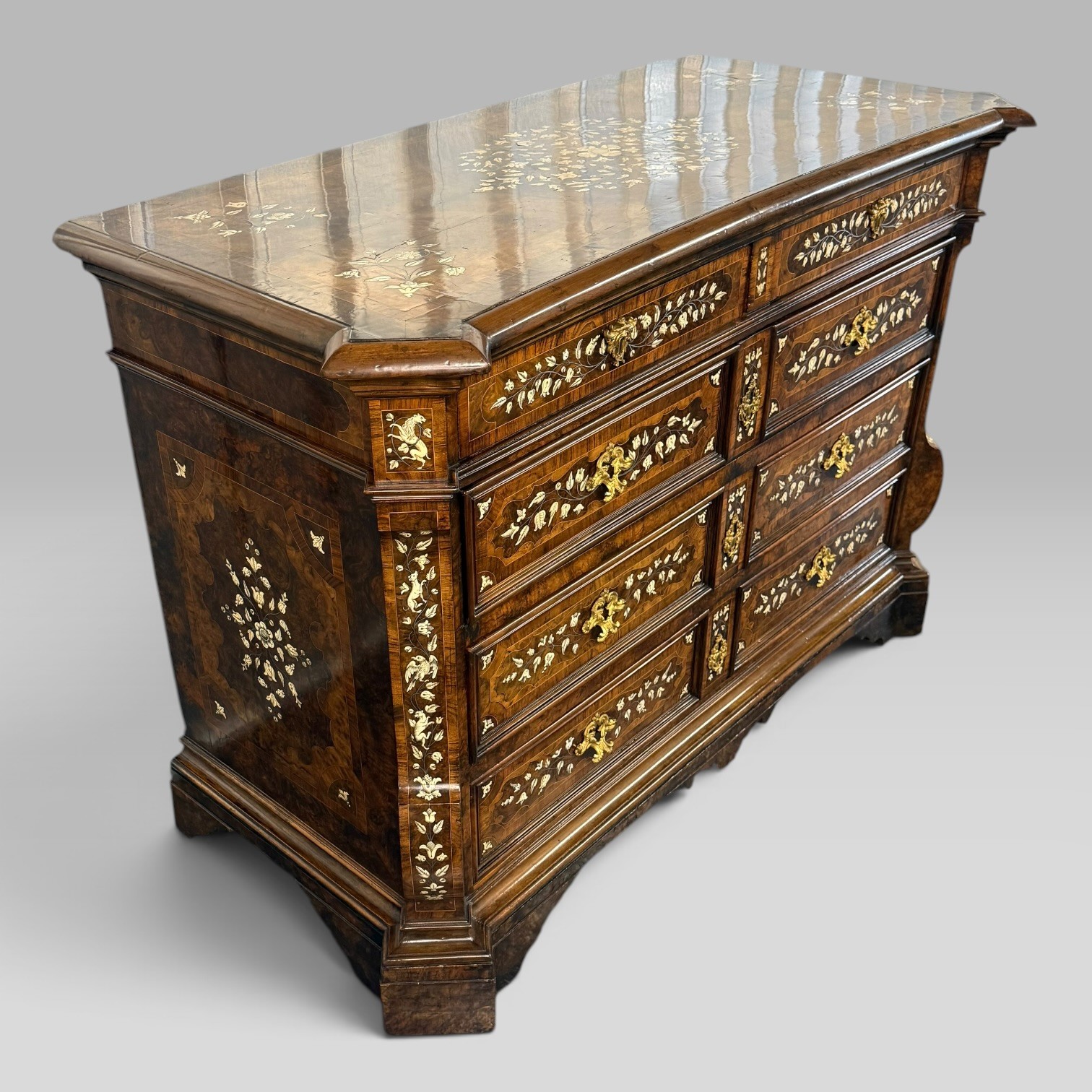
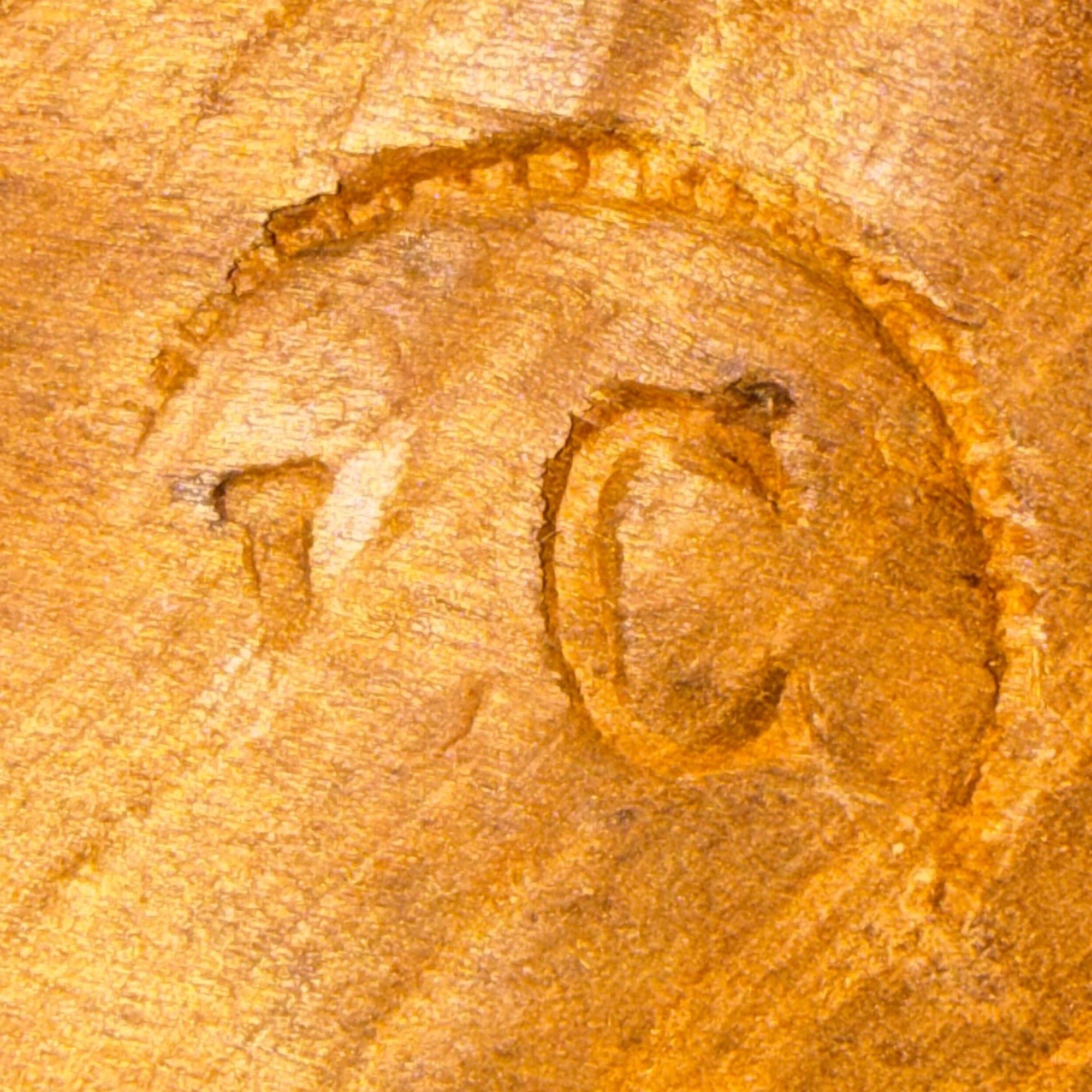
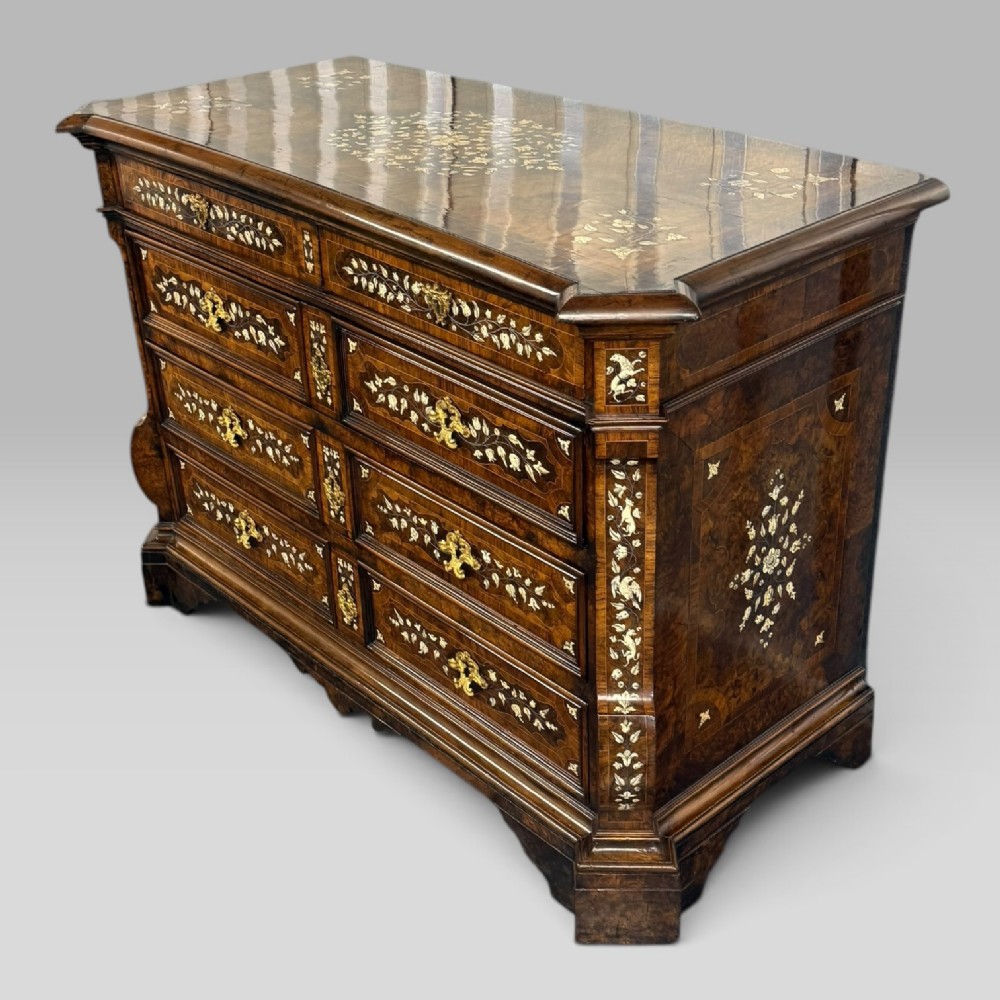
An important North Italian Tuscan Baroque commode, manufactured in Florence circa 1690–1720 and attributed to the Grand Ducal Workshops of the Medici court. Representing the highest level of Florentine cabinetmaking of the period, it is inlaid throughout with exceptionally fine ivory and pewter in the Venetian manner, fitted with finely cast ormolu handles based on designs by Giovanni Battista Foggini, and retains an original partially faded circular “LC” stamp to the underside.

Made for the wealthiest aristocratic and noble patrons by leading cabinetmakers and specialist craftsmen, the commode survives as an exceptional example of Florentine Baroque furniture. On the basis of its quality, rarity, construction, decoration and the comparative evidence identified during our research, we consider it among the most significant North Italian commodes of this period to appear on the market in recent years.
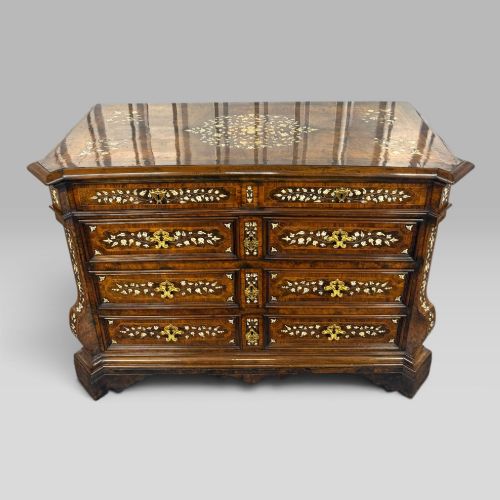
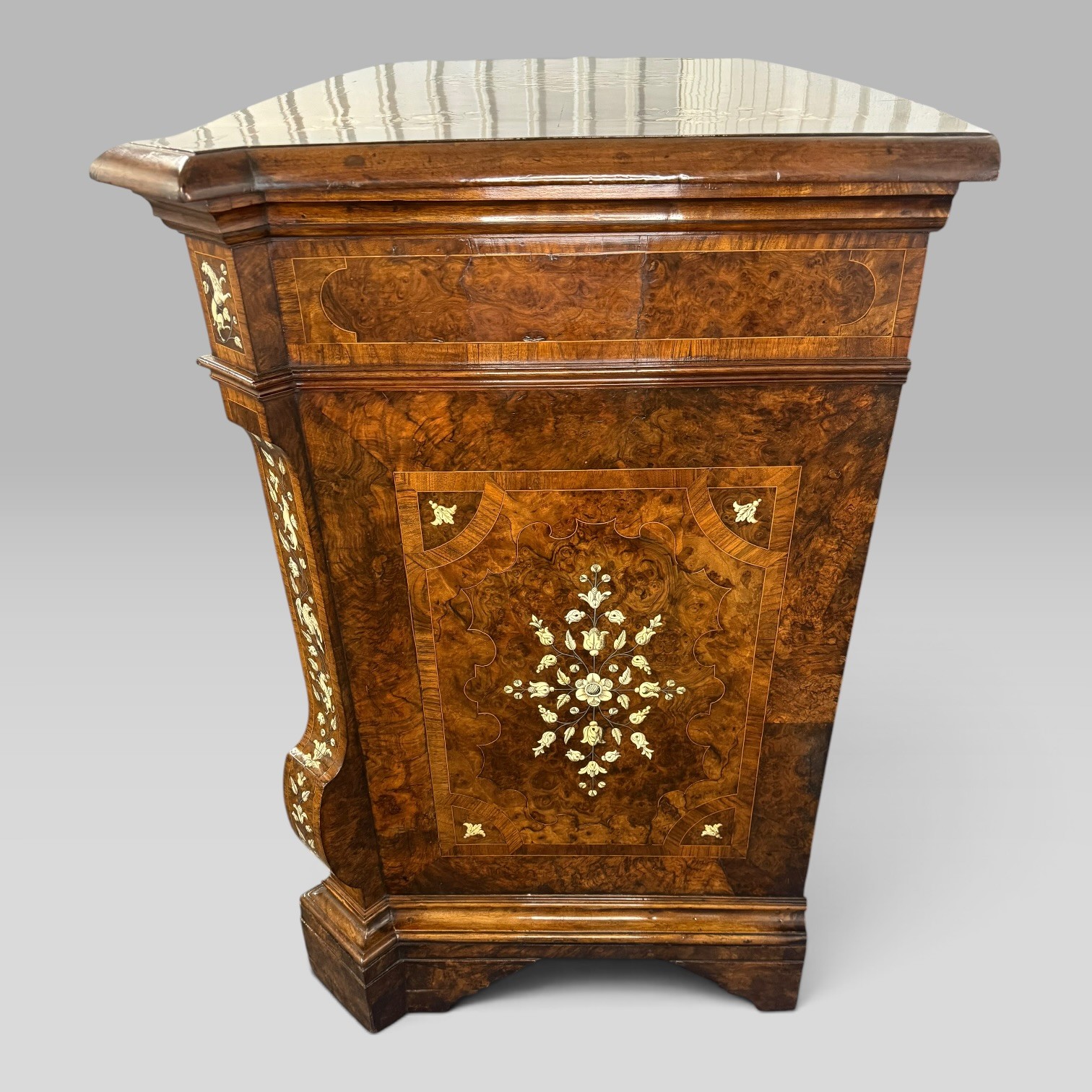
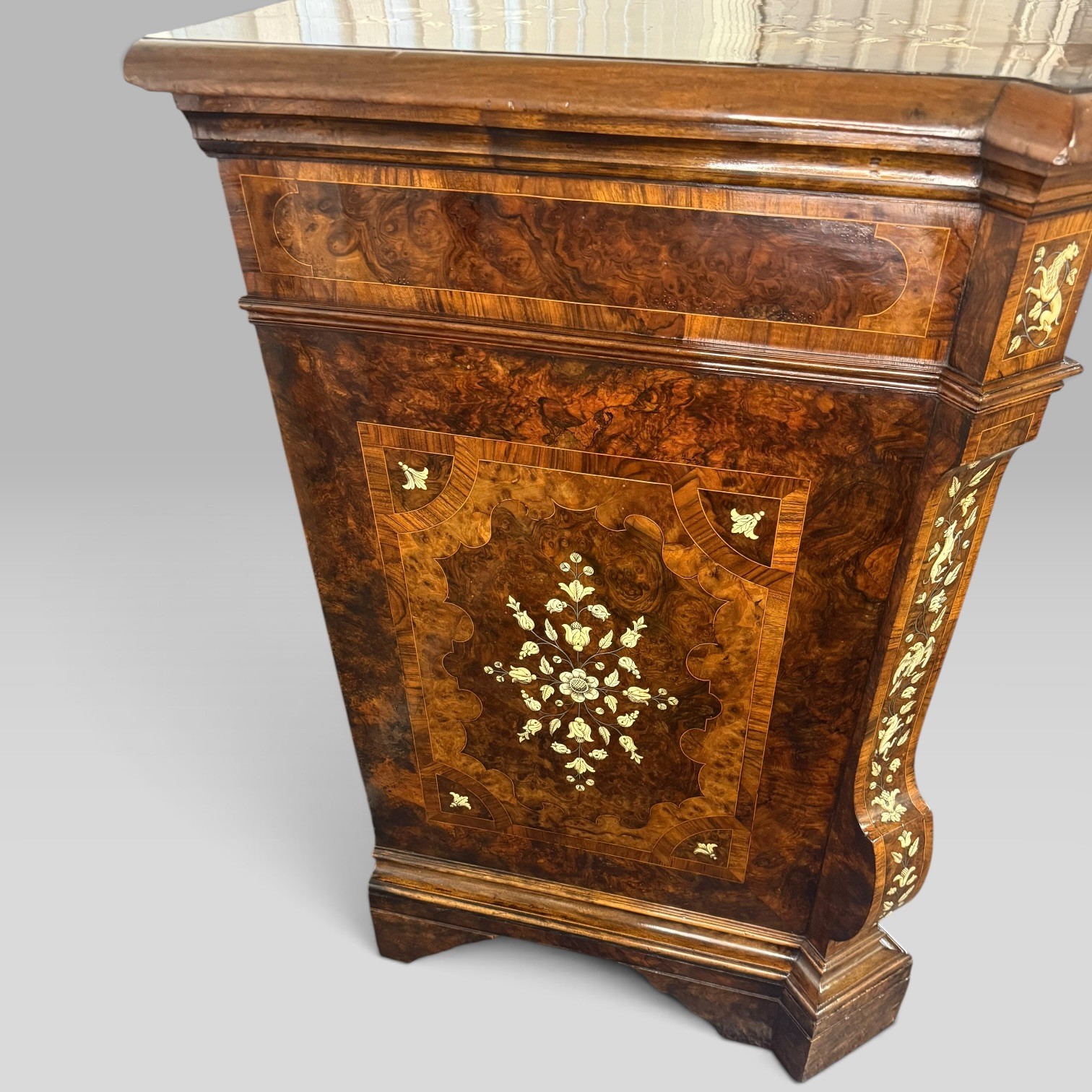
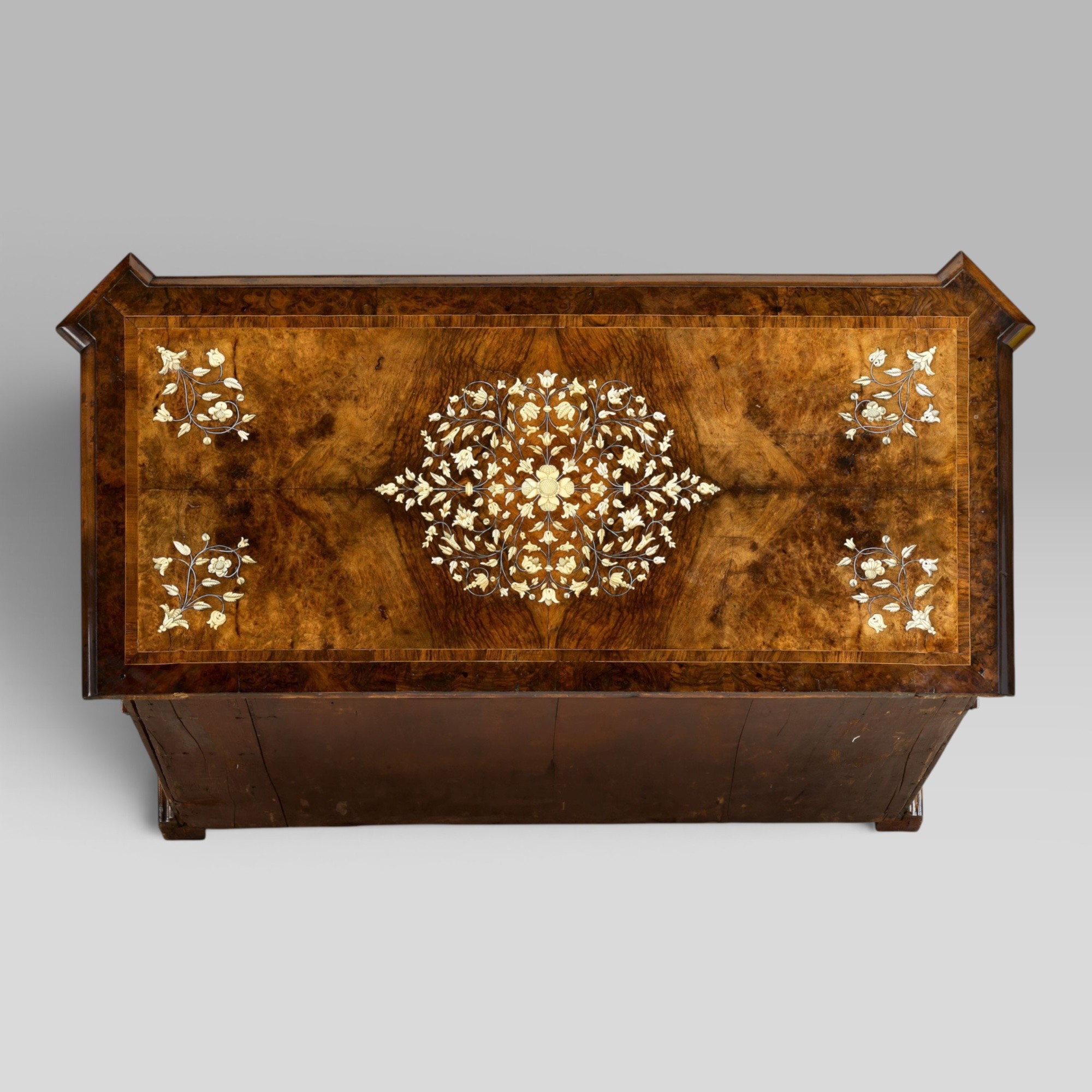
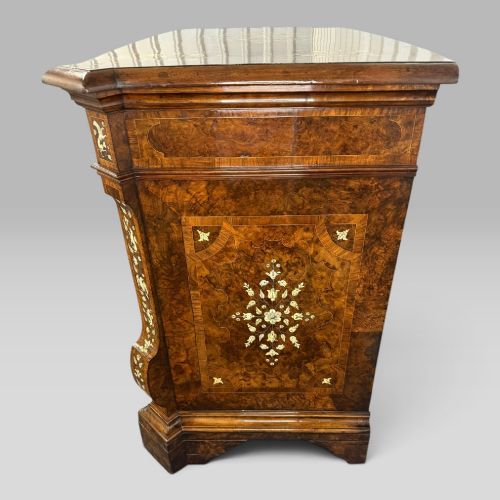
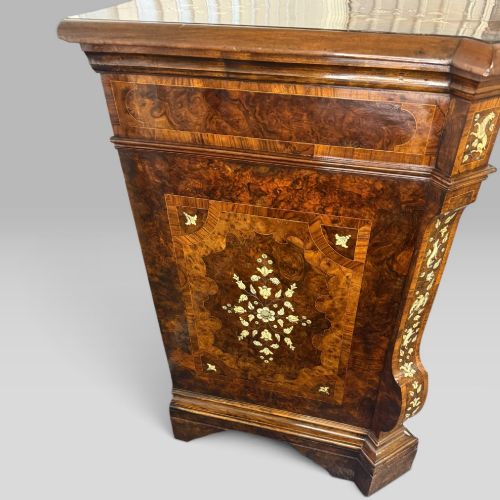
Of breakfront form with projecting canted corners, the rounded overhanging top is constructed in walnut with exceptional areas of richly figured burr walnut, framed by rosewood crossbanding, and centred with floral marquetry enclosed by inlaid borders. The same rosewood crossbanding continues around the sides, with further floral inlaid centrepieces set against walnut and burr walnut veneers.
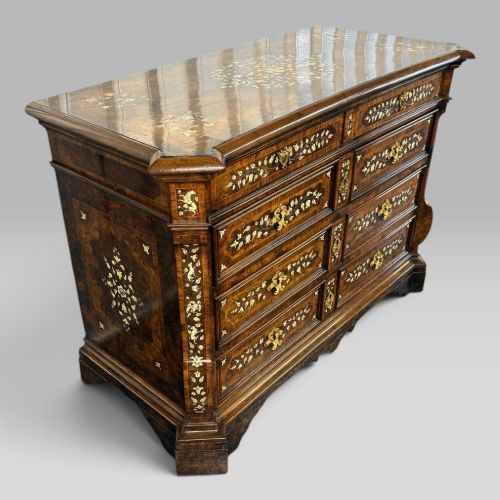
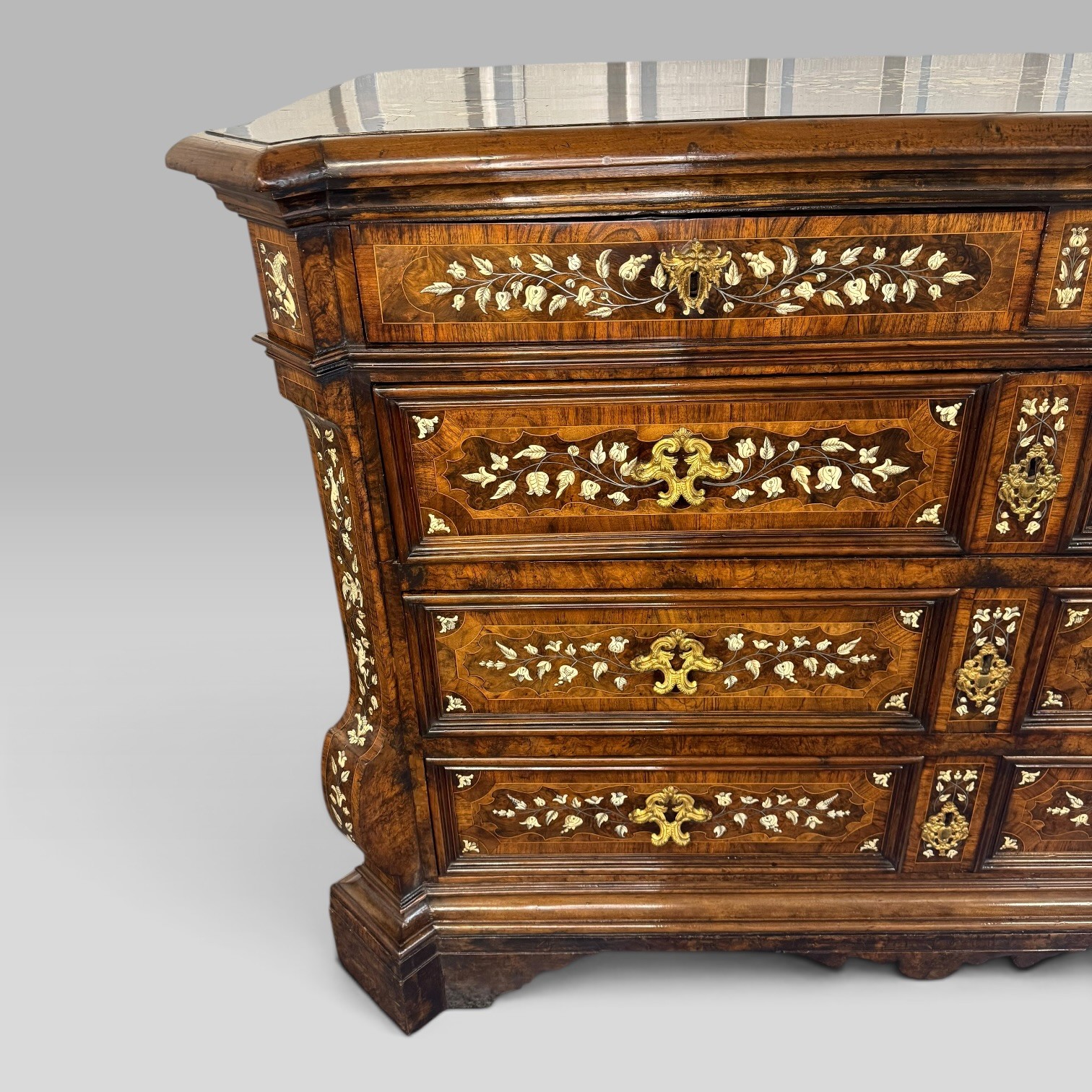
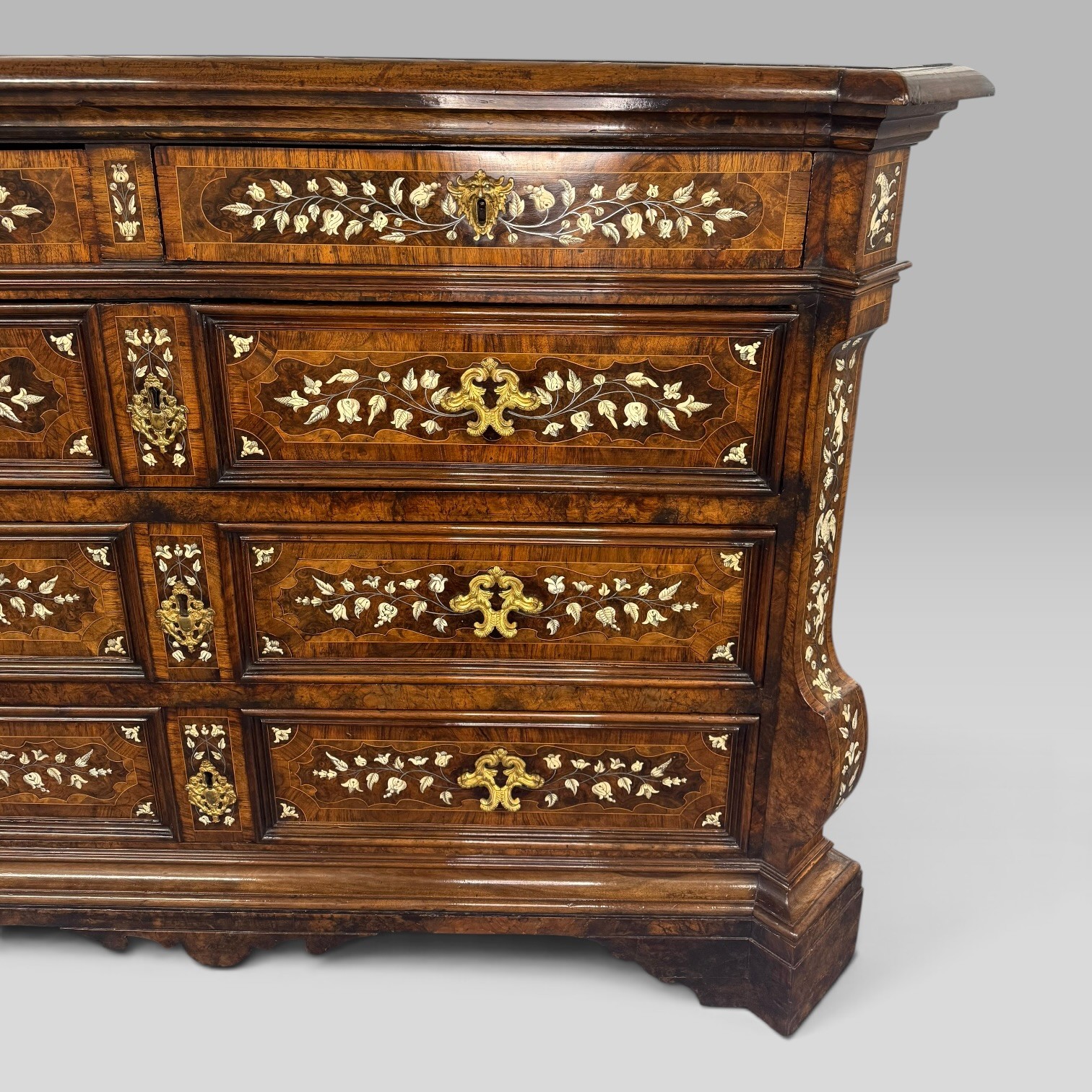
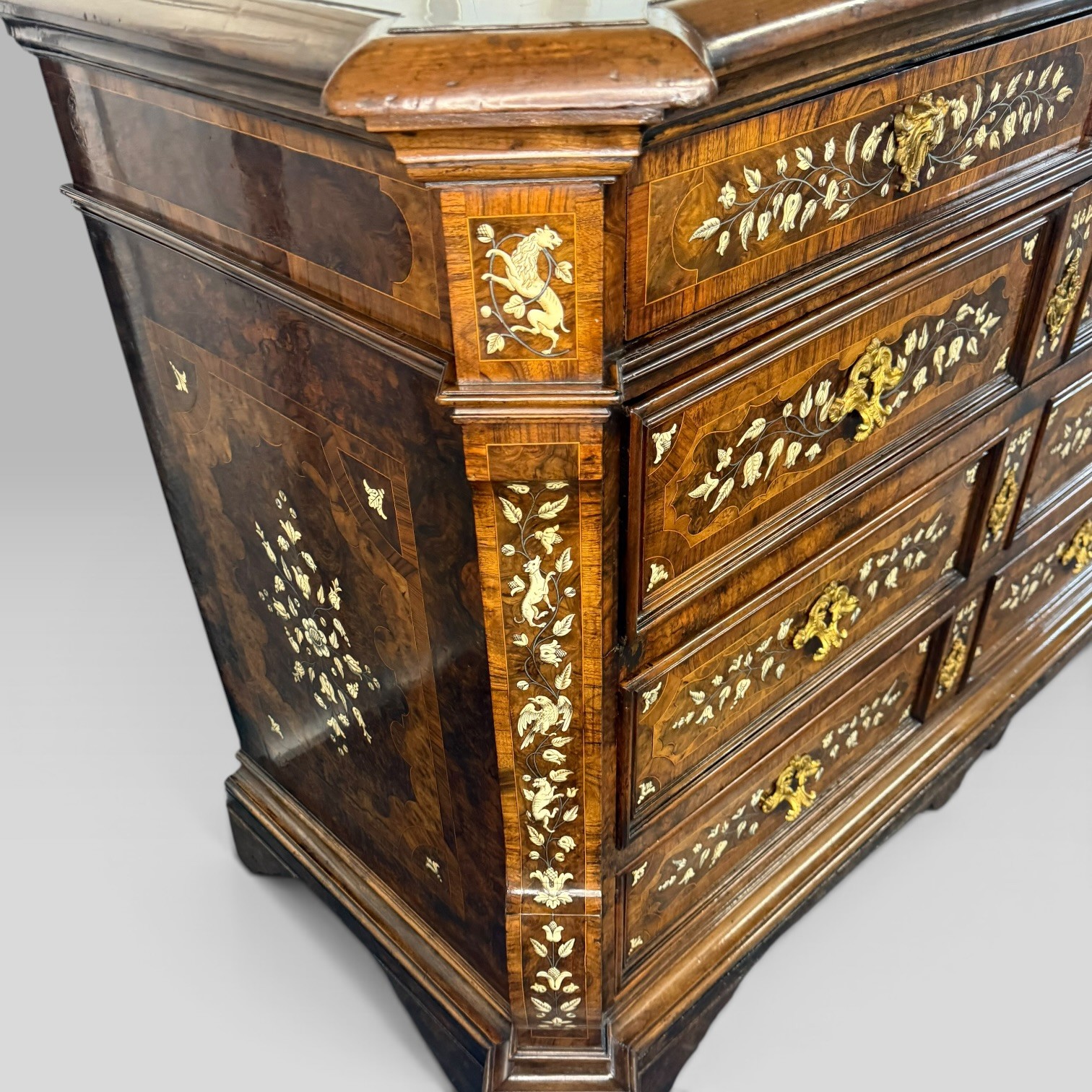
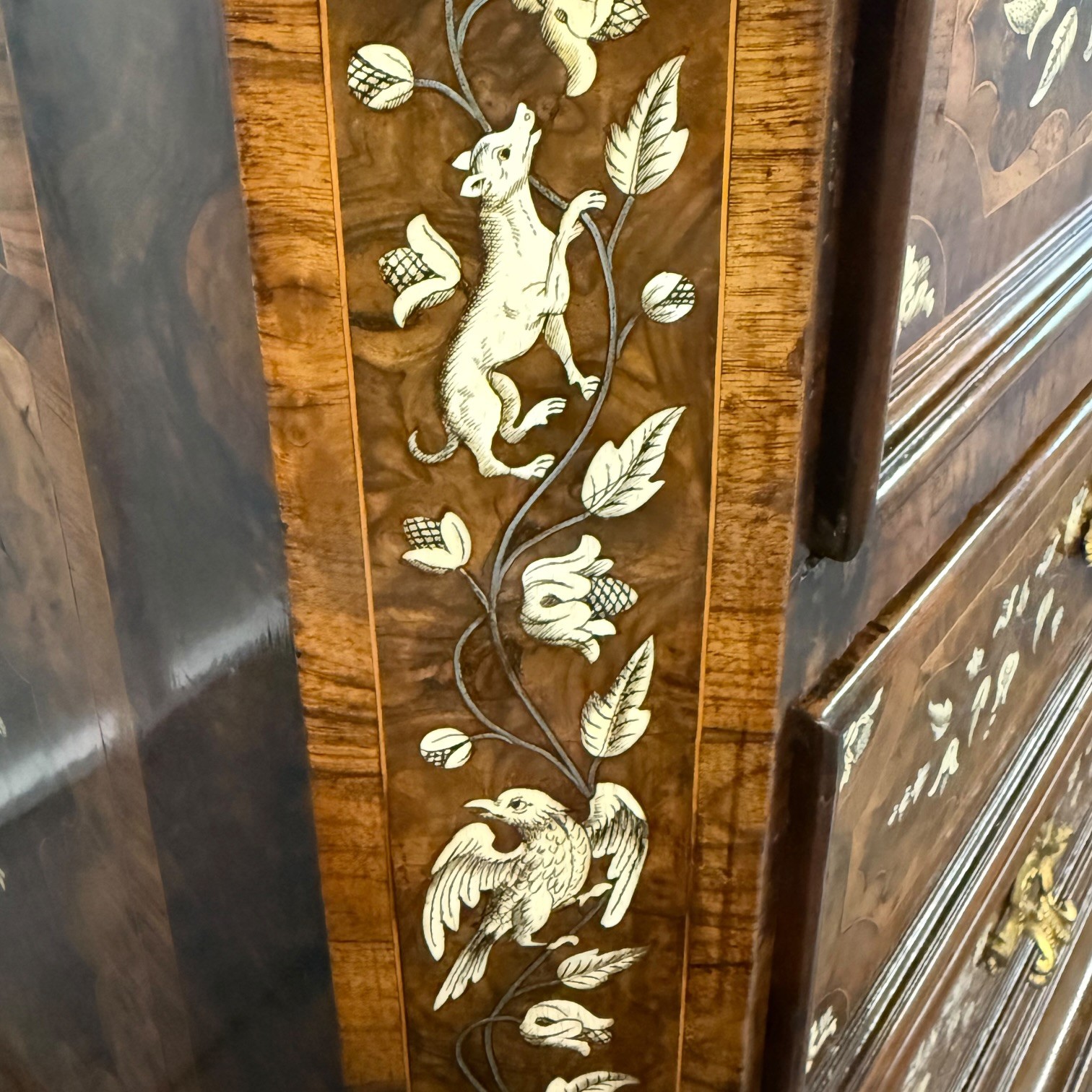
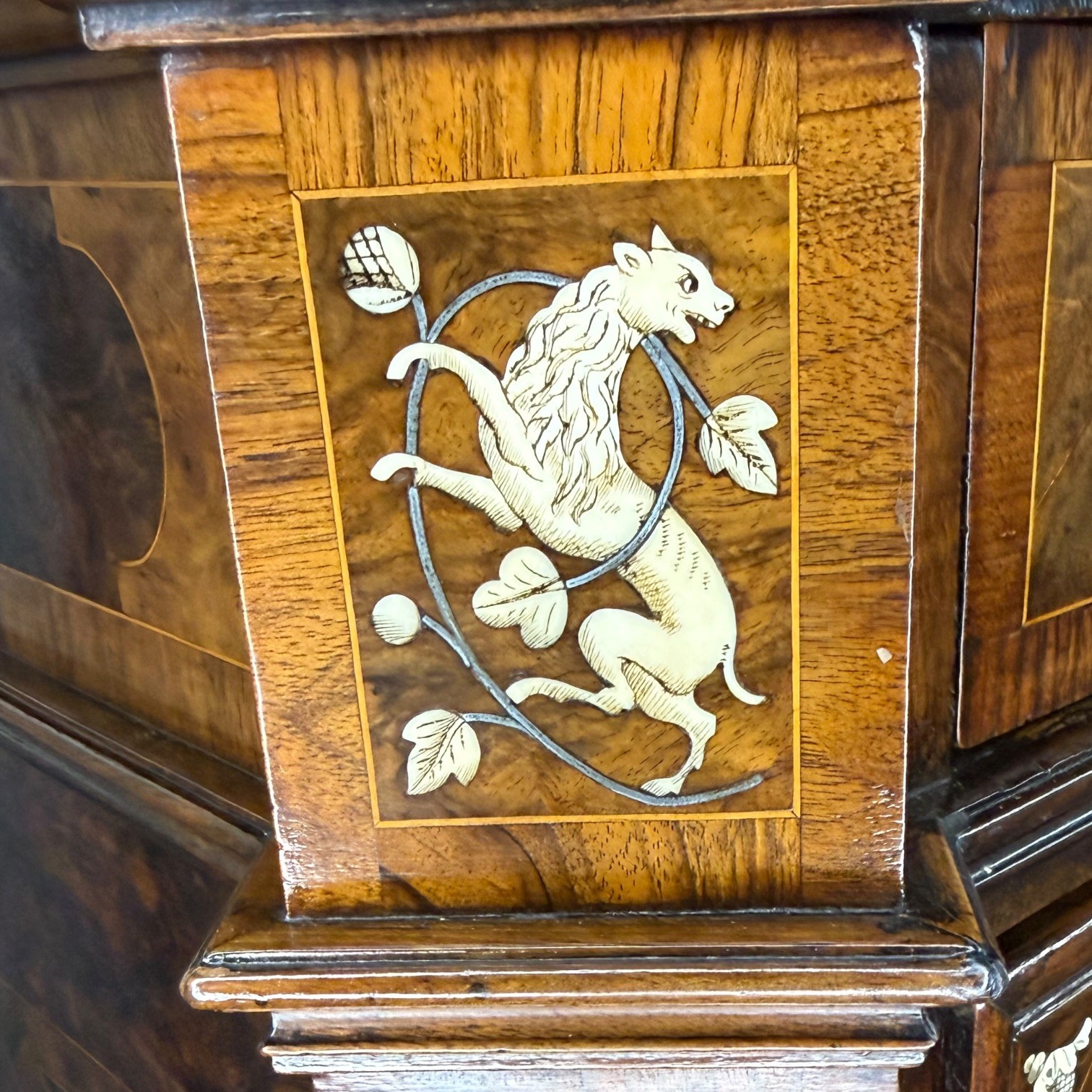
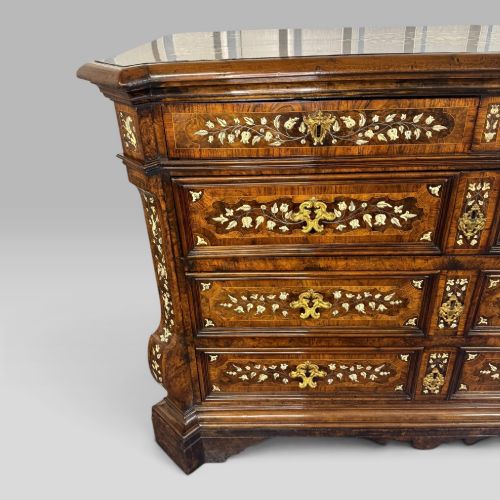
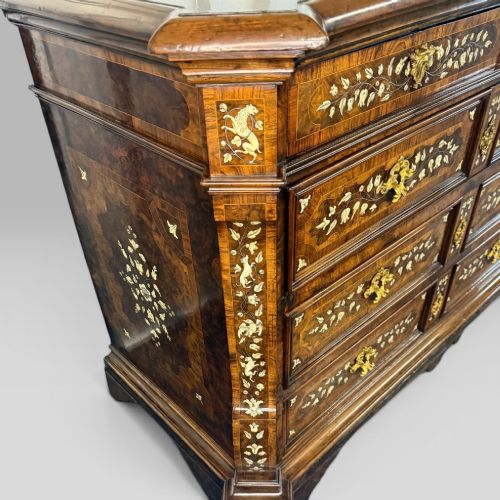
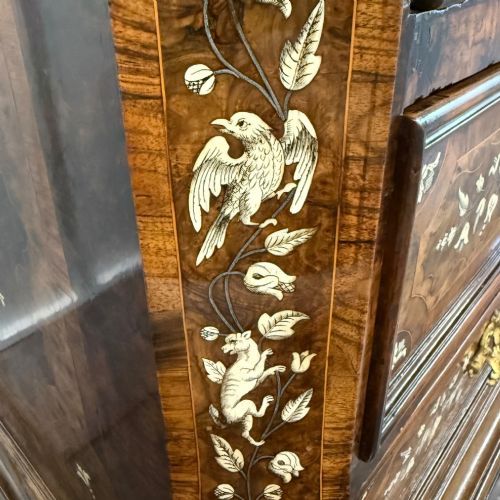
Each drawer is individually decorated with floral ivory and pewter inlay and fitted with Foggini-designed ormolu handles and ormolu key escutcheons. The canted corners are inlaid from top to bottom with finely engraved dogs, hounds, birds and scrolling foliage, culminating in a lion within the frieze above each corner.
Rarity, Research & Attribution

We have undertaken extensive research into this commode, consulting leading Italian furniture specialists, international dealers, authors and historians, and comparing it with documented examples in museums, former Medici residences, private collections and the international art market.
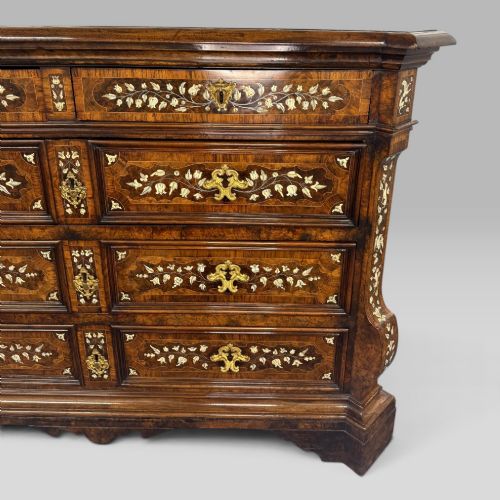
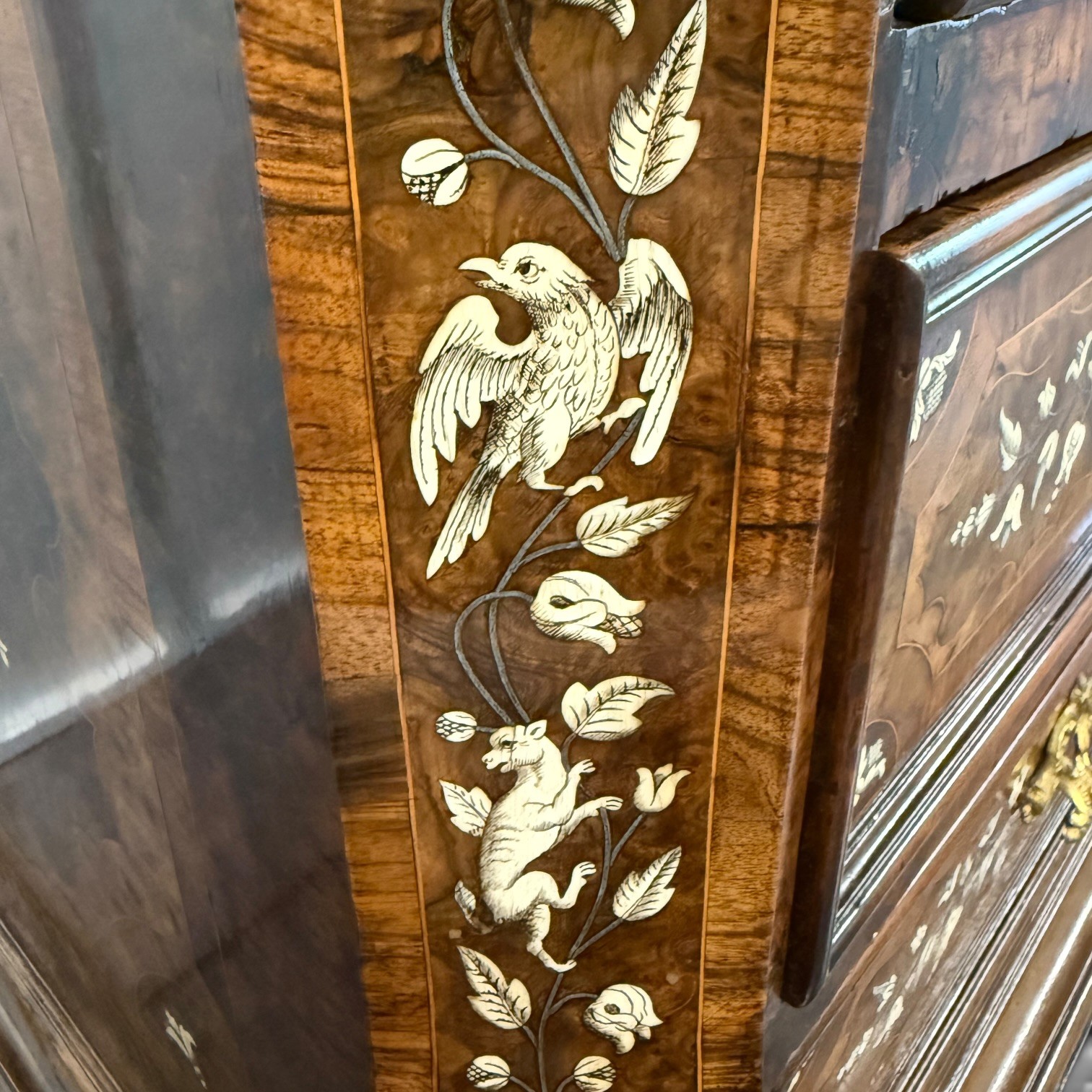
Although Florentine in manufacture, the ivory and pewter decoration is executed in the Venetian manner, combining eastern flowing floral and foliate ornament with Western figurative subjects including lions, dogs, hounds and birds, reflecting Venice’s historic position as a major trading port between East and West.
A particularly significant comparison appears in Professor Colle’s work on the Palazzo Pitti, where a Grand Ducal Workshop commode has one of the closest related carcass forms identified during our research. Its bronze handles are also remarkably close to those on the present commode and relate to designs by Giovanni Battista Foggini (1652–1725), Grand Ducal Sculptor to the Medici court.
A further closely related commode survives at Villa La Quiete, another former Medici residence, and is associated with the same Florentine court workshop tradition. The closest documented comparisons presently identified therefore come from furniture connected with the Medici court and Grand Ducal Workshops.
On the balance of the evidence, we attribute the commode to the Grand Ducal Workshops or to a leading Florentine master workshop working directly within the Medici court sphere. The Palazzo Pitti and Villa La Quiete comparisons, Foggini-designed mounts, exceptional workmanship and unusual inlay strongly support this attribution. No surviving document has yet been identified directly linking this specific commode to a recorded Medici commission or named Grand Ducal cabinetmaker, so the attribution remains based on the strongest available comparative evidence rather than a conclusively documented workshop identification.
Research into the commode is continuing, as we believe its exceptional quality and unusual decoration warrant further investigation.

(Please Note: this is a shortened description - please contact us for the full length description of this commode)

Ivory Reference: HJ5J96CX

Physical Dimensions
Height
105cm (41.34")
Width
157cm (61.81")
Depth
71cm (27.95")
Declaration

Knight Fine Antiques and Collectables has dated this Italian Baroque Inlaid Commode to the 1700s.

Reference Numbers
Sellingantiques Reference
SA1232912
Dealers Notes

Delivery:

Free UK mainland delivery (excluding Scottish islands and other UK islands).

International delivery available — please contact us or request a quote.

Description
An important North Italian Tuscan Baroque commode, manufactured in Florence circa 1690–1720 and attributed to the Grand Ducal Workshops of the Medici court. Representing the highest level of Florentine cabinetmaking of the period, it is inlaid throughout with exceptionally fine ivory and pewter in the Venetian manner, fitted with finely cast ormolu handles based on designs by Giovanni Battista Foggini, and retains an original partially faded circular “LC” stamp to the underside.
Made for the wealthiest aristocratic and noble patrons by leading cabinetmakers and specialist craftsmen, the commode survives as an exceptional example of Florentine Baroque furniture.
Knight Fine Antiques and Collectables

On the basis of its quality, rarity, construction, decoration and the comparative evidence identified during our research, we consider it among the most significant North Italian commodes of this period to appear on the market in recent years.

fig 1. An Italian Baroque walnut commode featuring floral bone inlays across six drawer fronts, side panels, and top surface, supported by bracket feet.
fig 1. Important Italian Baroque Commode Attributed Grand Ducal Workshops, C.1690–1720

Of breakfront form with projecting canted corners, the rounded overhanging top is constructed in walnut with exceptional areas of richly figured burr walnut, framed by rosewood crossbanding, and centred with floral marquetry enclosed by inlaid borders. The same rosewood crossbanding continues around the sides, with further floral inlaid centrepieces set against walnut and burr walnut veneers.

fig 2. An Italian Baroque walnut commode featuring floral bone inlays across six drawer fronts, side panels, and top surface, supported by bracket feet.
fig 2. Important Italian Baroque Commode Attributed Grand Ducal Workshops, C.1690–1720

Each drawer is individually decorated with floral ivory and pewter inlay and fitted with Foggini-designed ormolu handles and ormolu key escutcheons. The canted corners are inlaid from top to bottom with finely engraved dogs, hounds, birds and scrolling foliage, culminating in a lion within the frieze above each corner.

fig 3. An Italian Baroque walnut commode featuring floral bone inlays across six drawer fronts, side panels, and top surface, supported by bracket feet.
fig 3. Important Italian Baroque Commode Attributed Grand Ducal Workshops, C.1690–1720

Rarity, Research & Attribution

We have undertaken extensive research into this commode, consulting leading Italian furniture specialists, international dealers, authors and historians, and comparing it with documented examples in museums, former Medici residences, private collections and the international art market.

fig 4. An Italian Baroque walnut commode featuring floral bone inlays across six drawer fronts, side panels, and top surface, supported by bracket feet.
fig 4. Important Italian Baroque Commode Attributed Grand Ducal Workshops, C.1690–1720

Although Florentine in manufacture, the ivory and pewter decoration is executed in the Venetian manner, combining eastern flowing floral and foliate ornament with Western figurative subjects including lions, dogs, hounds and birds, reflecting Venice’s historic position as a major trading port between East and West.

fig 5. An Italian Baroque walnut commode featuring floral bone inlays across six drawer fronts, side panels, and top surface, supported by bracket feet.
fig 5. Important Italian Baroque Commode Attributed Grand Ducal Workshops, C.1690–1720

A particularly significant comparison appears in Professor Colle’s work on the Palazzo Pitti, where a Grand Ducal Workshop commode has one of the closest related carcass forms identified during our research. Its bronze handles are also remarkably close to those on the present commode and relate to designs by Giovanni Battista Foggini (1652–1725), Grand Ducal Sculptor to the Medici court.

fig 6. An Italian Baroque walnut commode featuring floral bone inlays across six drawer fronts, side panels, and top surface, supported by bracket feet.
fig 6. Important Italian Baroque Commode Attributed Grand Ducal Workshops, C.1690–1720

A further closely related commode survives at Villa La Quiete, another former Medici residence, and is associated with the same Florentine court workshop tradition. The closest documented comparisons presently identified therefore come from furniture connected with the Medici court and Grand Ducal Workshops.

fig 7. An Italian Baroque walnut commode featuring floral bone inlays across six drawer fronts, side panels, and top surface, supported by bracket feet.
fig 7. Important Italian Baroque Commode Attributed Grand Ducal Workshops, C.1690–1720

On the balance of the evidence, we attribute the commode to the Grand Ducal Workshops or to a leading Florentine master workshop working directly within the Medici court sphere. The Palazzo Pitti and Villa La Quiete comparisons, Foggini-designed mounts, exceptional workmanship and unusual inlay strongly support this attribution. No surviving document has yet been identified directly linking this specific commode to a recorded Medici commission or named Grand Ducal cabinetmaker, so the attribution remains based on the strongest available comparative evidence rather than a conclusively documented workshop identification.

fig 8. An Italian Baroque walnut commode featuring floral bone inlays across six drawer fronts, side panels, and top surface, supported by bracket feet.
fig 8. Important Italian Baroque Commode Attributed Grand Ducal Workshops, C.1690–1720

Research into the commode is continuing, as we believe its exceptional quality and unusual decoration warrant further investigation.

(Please Note: this is a shortened description - please contact us for the full length description of this commode)

Ivory Reference: HJ5J96CX

Height
105cm (41.34")
Width
157cm (61.81")
Depth
71cm (27.95")
Date of Manufacture

Knight Fine Antiques and Collectables has dated this Italian Baroque Inlaid Commode to the 1700s.

Reference Numbers
Sellingantiques Ref
SA1232912
Knight Fine Antiques and Collectables
Sellingantiques verified Since Aug 2024
Dealer Profile

You can view the stock and full dealer information on the Knight Fine Antiques and Collectables Profile Page
PDF SHARE
SAVE
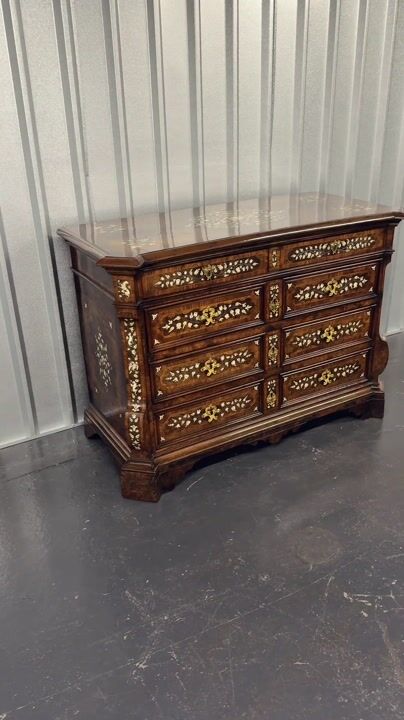
An Italian Baroque walnut commode featuring floral bone inlays across six drawer fronts, side panels, and top surface, supported by bracket feet.
1 / 13
Archive I An Italian Baroque walnut commode featuring floral bone inlays across six drawer fronts, side panels, and top surface, supported by bracket feet.

Important Italian Baroque Commode Attributed Grand Ducal Workshops, C.1690–1720
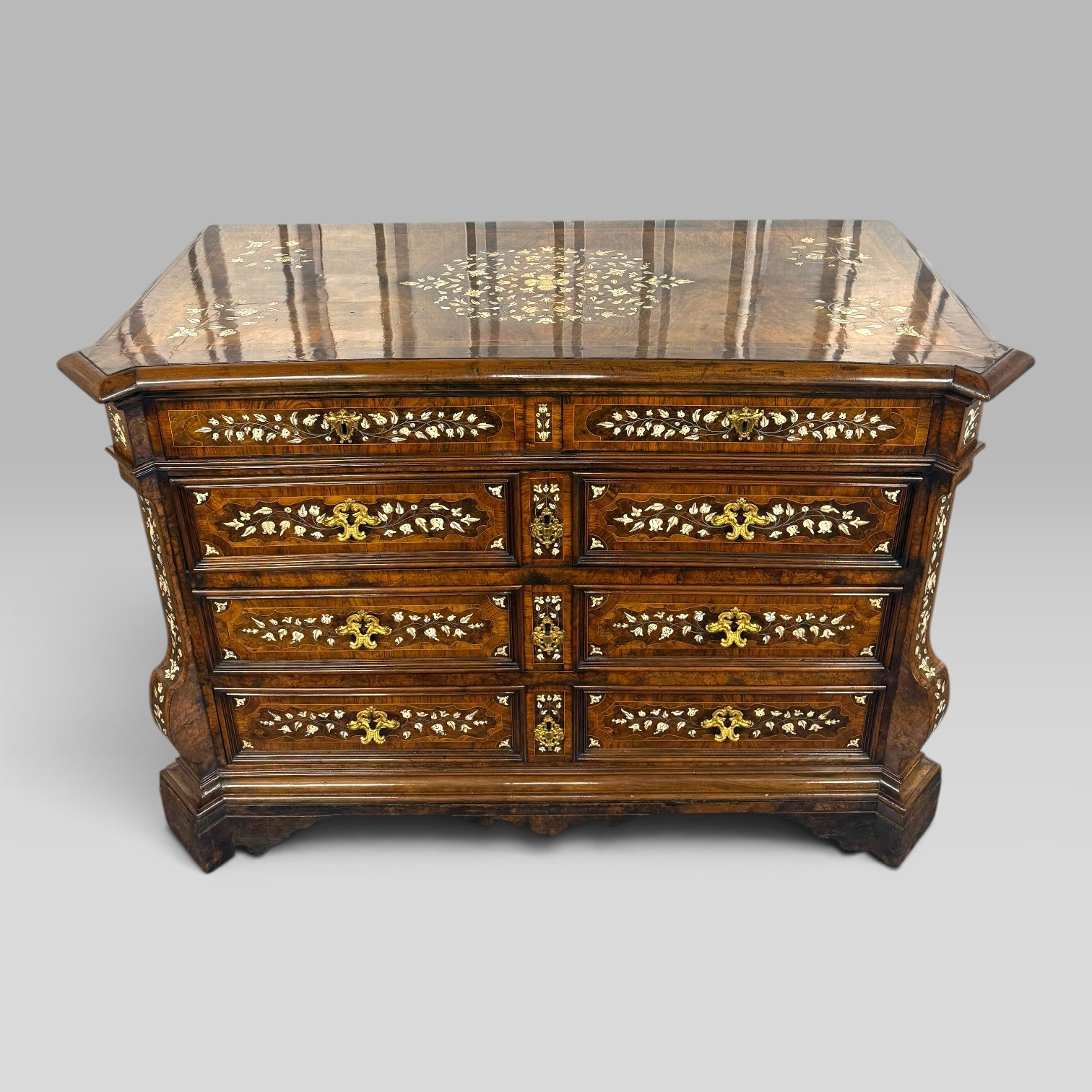
Archive II An Italian Baroque walnut commode featuring floral bone inlays across six drawer fronts, side panels, and top surface, supported by bracket feet. View II
Archive III An Italian Baroque walnut commode featuring floral bone inlays across six drawer fronts, side panels, and top surface, supported by bracket feet. View III
Archive IV An Italian Baroque walnut commode featuring floral bone inlays across six drawer fronts, side panels, and top surface, supported by bracket feet. View IV
Archive V An Italian Baroque walnut commode featuring floral bone inlays across six drawer fronts, side panels, and top surface, supported by bracket feet. View V
Archive VI An Italian Baroque walnut commode featuring floral bone inlays across six drawer fronts, side panels, and top surface, supported by bracket feet. View VI
Archive VII An Italian Baroque walnut commode featuring floral bone inlays across six drawer fronts, side panels, and top surface, supported by bracket feet. View VII
Archive VIII An Italian Baroque walnut commode featuring floral bone inlays across six drawer fronts, side panels, and top surface, supported by bracket feet. View VIII
Archive IX An Italian Baroque walnut commode featuring floral bone inlays across six drawer fronts, side panels, and top surface, supported by bracket feet. View IX
Archive X An Italian Baroque walnut commode featuring floral bone inlays across six drawer fronts, side panels, and top surface, supported by bracket feet. View X
Archive XI An Italian Baroque walnut commode featuring floral bone inlays across six drawer fronts, side panels, and top surface, supported by bracket feet. View XI
Archive XII An Italian Baroque walnut commode featuring floral bone inlays across six drawer fronts, side panels, and top surface, supported by bracket feet. View XII
Archive XIII An Italian Baroque walnut commode featuring floral bone inlays across six drawer fronts, side panels, and top surface, supported by bracket feet. View XIII
Enlarged Archival View
Telephone 01553 601578
Location
West Norfolk
United Kingdom
Verified Since Aug 2024
Items For Sale 63
Items Sold 191
Knight Fine Antiques and Collectables
Verified Since Aug 2024
View Dealer Info
Location: West Norfolk, United Kingdom
Verified
Aug 2024
For Sale
63
Sold
191
An Italian Baroque walnut commode featuring floral bone inlays across six drawer fronts, side panels, and top surface, supported by bracket feet.
Important Italian Baroque Commode Attributed Grand Ducal Workshops, c.1690–1720
Ref: SA1232912
An Italian Baroque walnut commode featuring floral bone inlays across six drawer fronts, side panels, and top surface, supported by bracket feet.
Detail View 1
Detail View 2
Detail View 3
Detail View 4
Detail View 5
Detail View 6
Detail View 7
Detail View 8
Detail View 9
Detail View 10
Detail View 11
Detail View 12
Archival Detail
Every single antique dealer on our platform is individually approved by our internal team. We verify their professional trade history, ethical standards, and photographic quality to ensure a secure, high-standard buying environment. Upon joining, every dealer agrees to a strict 9-point code of conduct. While issues can occasionally arise, our dealers typically resolve them swiftly and directly with the buyer. In fact, since our founding in 2002, Sellingantiques has only had to step in to help resolve an issue on roughly five occasions—a true testament to the quality of our dealers and their dedication to your happiness.
Our dealers are highly experienced in packing and shipping fragile, high-value antiques. Because you are in direct contact with the dealer, you will be able to easily go through all available shipping and insurance options together to ensure your item arrives safely.
Antiques are the ultimate green purchase. By choosing historical pieces over newly manufactured goods, you completely eliminate the carbon footprint of modern mass production while preserving exceptional, timeless craftsmanship.

Italian Baroque furniture from the late seventeenth and early eighteenth centuries is characterised by architectural proportions, marquetry inlays, foliage motifs, and veneer work.

Cabinetmakers typically utilised walnut, burl veneers, fruitwood marquetry, and bone or ivory inlays, complemented by gilt-bronze or brass ormolu hardware.

Authentic pieces exhibit hand-cut dovetail joinery, hand-sawn walnut veneers, age-related oxidation on secondary woods, and precise floral or arabesque inlay work.

An inlaid commode functions as a central focal point in an entry hall, living space, or bedroom when positioned against neutral wall tones.

Maintain a stable relative humidity to prevent wood movement, dust regularly with a clean lint-free cloth, and apply a high-quality beeswax paste sparingly to protect the finish.
items
Add keywords to the filter
Price
£100
£250000
Era
Movements
Material
Origin
Stock Location
Freshness
Online Payments
Categories