
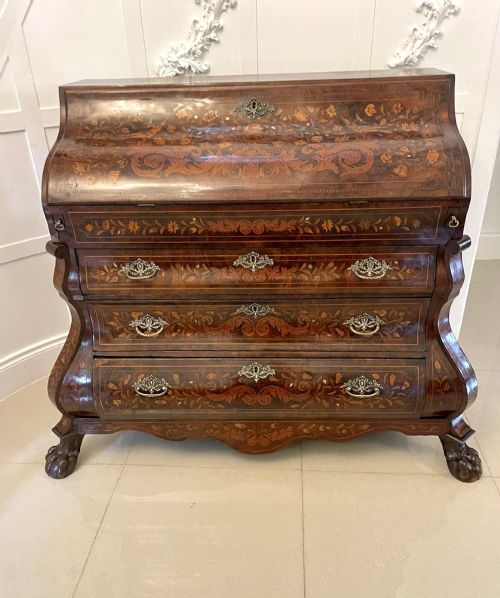
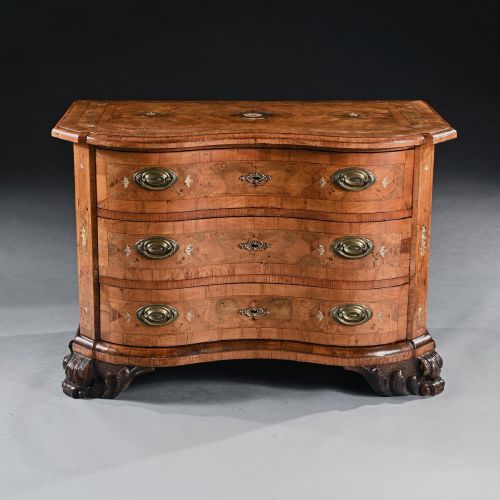
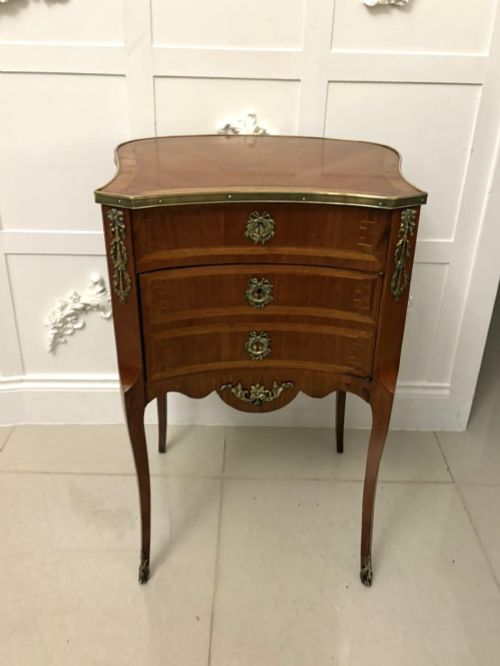
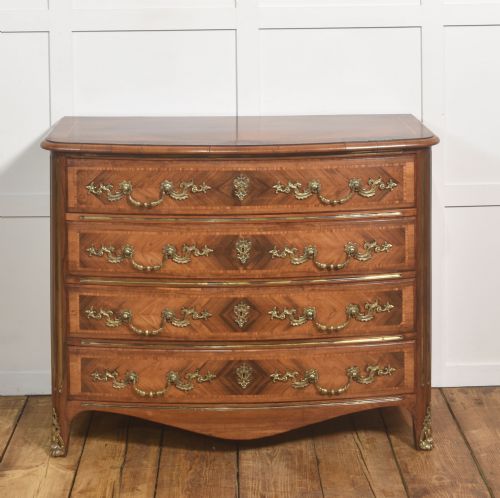
Inlaid Walnut Chest of Drawers
An inlaid walnut chest of drawers offers rich timber and intricate marquetry, anchoring a room with centuries of continental and British craftsmanship.
Inlaid Walnut Chest of Drawers
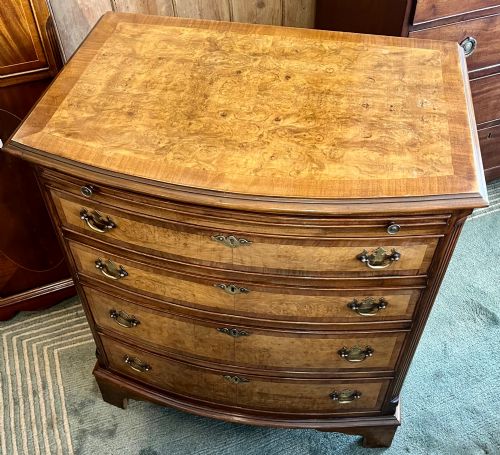
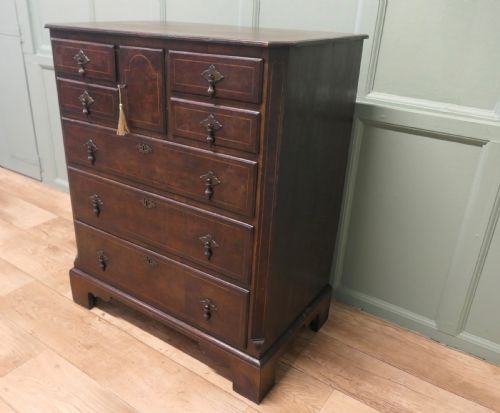
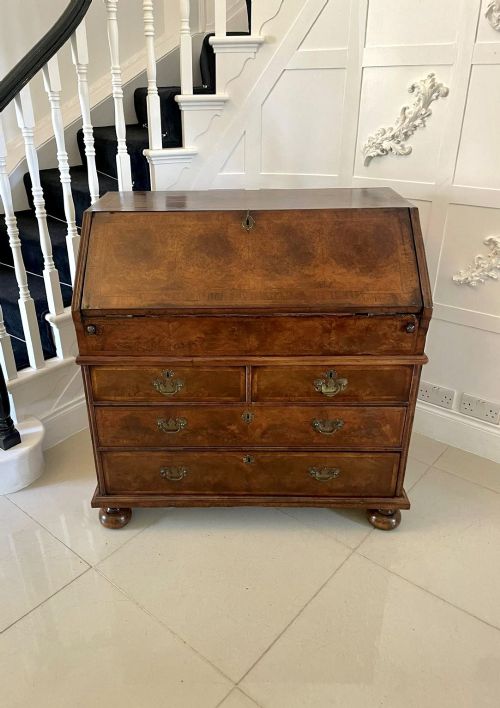
An inlaid walnut chest of drawers brings together figured cabinet timbers and decorative decorative patterns across periods ranging from the seventeenth century through the twentieth.
Buyers encountering this search phrase find low commodes, tall chests on chests, bureaus, and bedside cabinets produced in Britain, France, Italy, Germany, and the Netherlands.
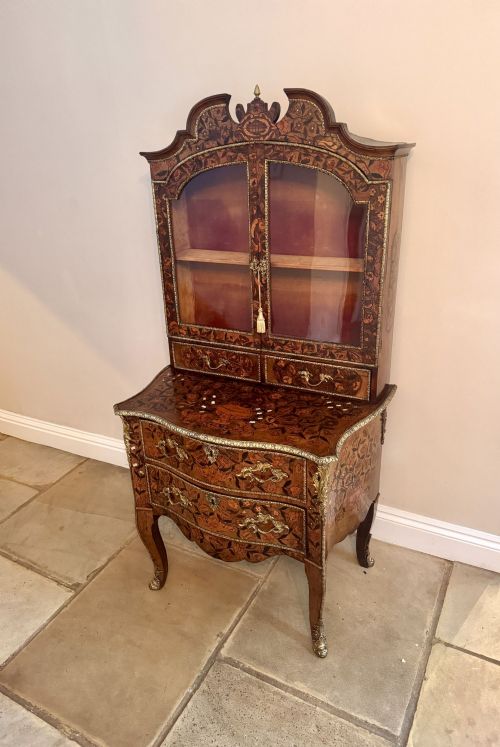
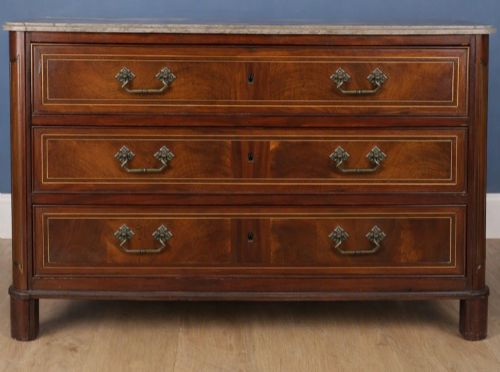
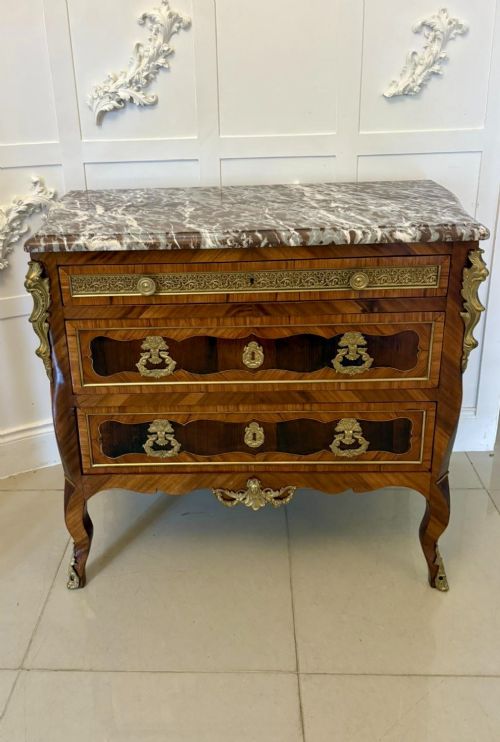
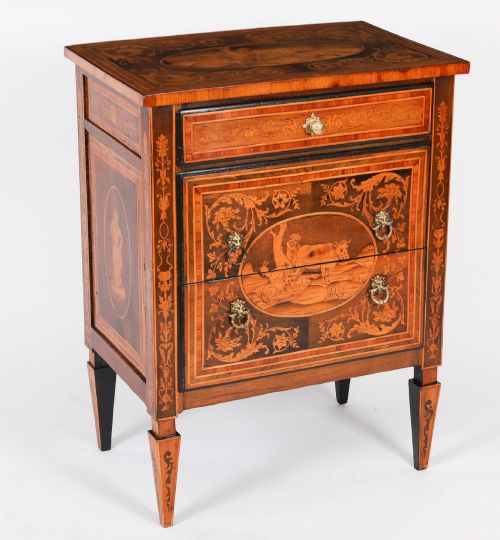
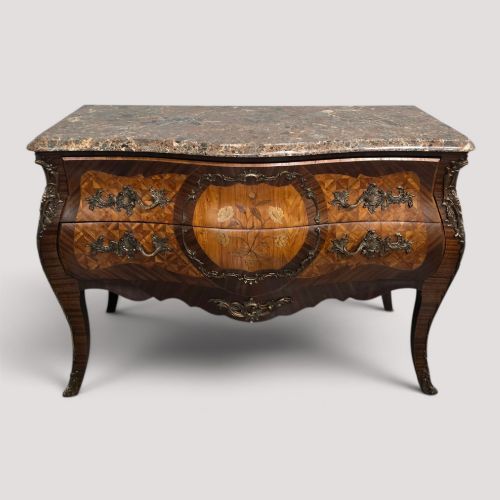
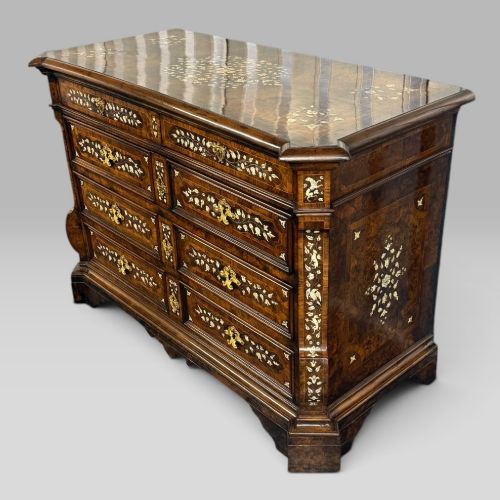
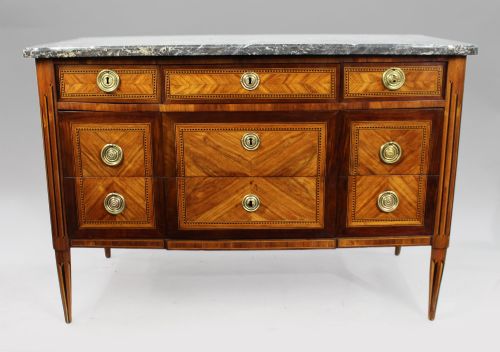
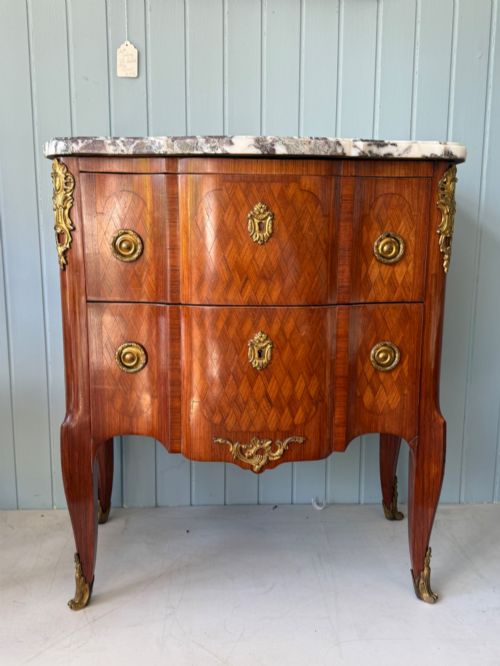
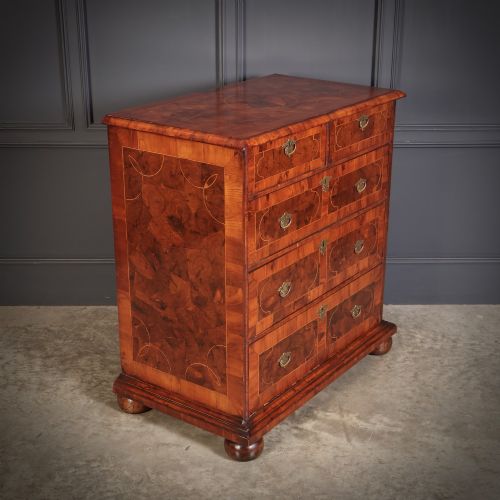
The prevailing forms on this page span Dutch marquetry cabinets, French commodes with marble tops, and Georgian cross-banded drawer units.
How they were made
Cabinet makers utilised solid walnut, burr walnut, and oak carcases, applying fine veneers in geometric herringbone patterns, oyster cuts, or elaborate floral marquetry.
Inlays incorporated fruitwood, satinwood, kingwood, pewter, and ivory to build contrasting pictorial or abstract designs across the drawer fronts and sides.
Many continental examples paired these timber surfaces with shaped marble tops and cast brass or ormolu mounts around the handles and corners.
German marquetry makers occasionally hid tiny carved insects among the floral walnut scrolls to test viewer observation.
What varies in quality
The distinction between tiers of execution rests on the depth of the timber figuring and the precision of the marquetry cuts.
Master workshops achieved seamless integration between the veneer panels and the carcase, whereas simpler pieces relied on surface painted lines or basic geometric bandings.
The sophistication of the internal drawer construction and the integration of original cast bronze or brass hardware further divide standard production from exceptional examples.
Edwards & Roberts·Grand Ducal Workshops
The Inlaid Walnut Chest of Drawers Glossary
- Marquetry
- Decorative veneer work forming pictures or patterns using various woods, shells, or metals. It transforms a flat drawer front into a detailed botanical or pictorial scene.
- Burr walnut
- Timber taken from the wart or growth on a walnut tree, yielding highly swirled and mottled grain patterns. Cabinet makers prized it for primary display surfaces.
- Commode
- A low French chest of drawers, often fitted with a marble top and curved serpentine sides. It serves as a principal decorative storage piece in reception rooms.
- Oyster veneering
- The practice of slicing small branches crosswise to produce circular wooden rings resembling oyster shells. This technique defines seventeenth-century surfaces.
- Parquetry
- Geometric mosaic woodwork arranged in regular patterns like cubes or triangles. It differs from marquetry by sticking to strict geometric grids rather than floral designs.
- Feather-banding
- Narrow strips of veneer laid diagonally to form a herringbone design around the edge of a drawer front. It frames the central walnut panel neatly.
Inlaid Walnut Chest of Drawers: Frequently Asked Questions
How do I date an inlaid walnut chest?
Dating relies on combining the construction methods of the carcase timber with the specific style of the marquetry and handles. Seventeenth-century pieces often use oak carcases with geometric or oyster veneers, while eighteenth-century examples lean towards serpentine shapes and floral marquetry.
Later revivals from the nineteenth and twentieth centuries mimic these earlier forms, but machine-cut veneers and secondary softwoods provide clues to their true age.
What is the difference between a commode and a chest?
A commode specifically denotes a continental European chest of drawers, usually shorter and wider than traditional British forms. French and Italian commodes frequently feature curved serpentine fronts and marble tops.
Standard chests of drawers found in British traditions tend to be upright rectilinear units, sometimes built in two stacked sections like a chest on chest.
Where should I place a walnut chest?
These cabinets suit reception rooms, hallways, or bedrooms where their figured timber can catch natural light without direct sun exposure. Keeping them away from heat sources protects the walnut veneers from drying out.
Bedside versions fit neatly beside sleeping quarters, offering enclosed storage with decorative marble or timber tops.
How do I care for walnut veneer?
Maintaining walnut veneer involves dusting with a dry lint-free cloth and applying occasional quality wax to preserve the moisture in the timber. Avoid liquid polishes and silicone sprays which damage old French polish surfaces.
Stable room humidity prevents the fine fruitwood and ivory inlays from lifting away from the walnut carcase.