


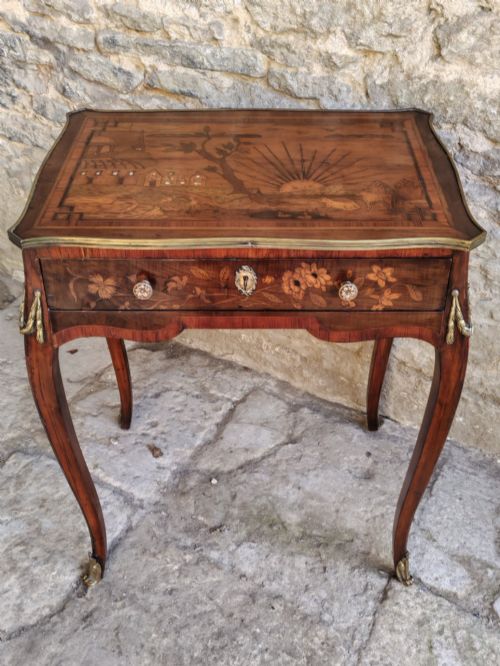
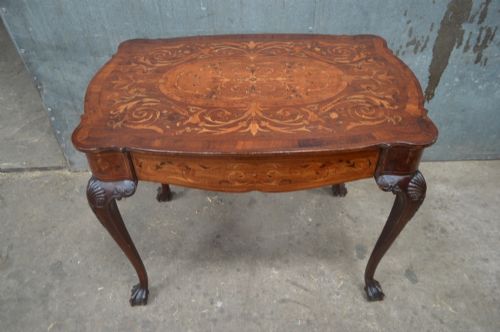
18th Century Dutch Marquetry
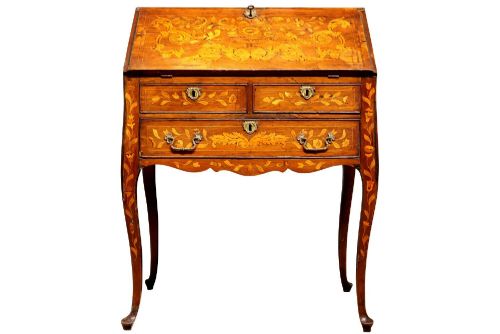
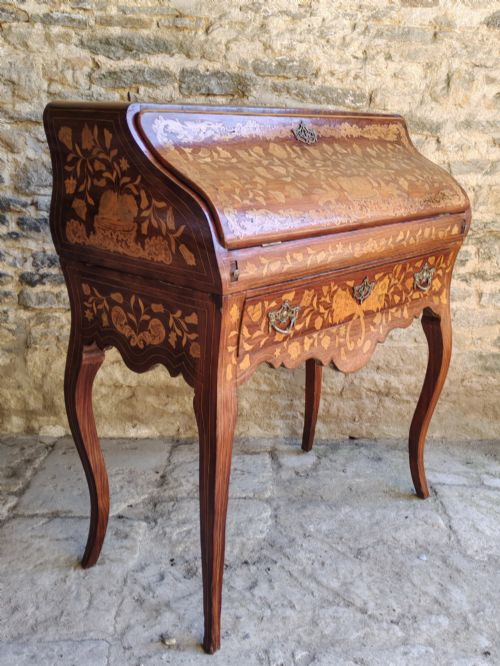
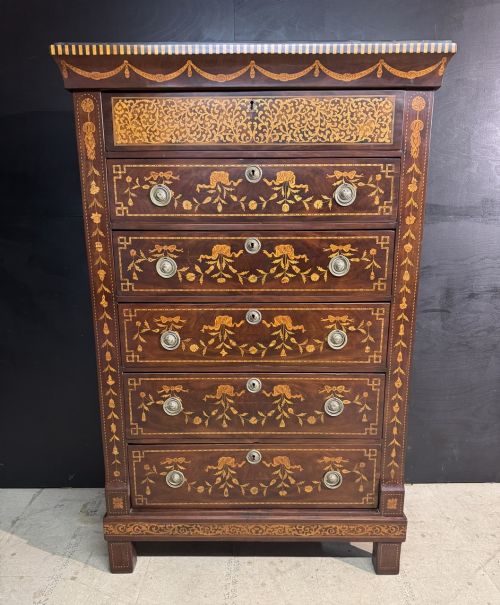
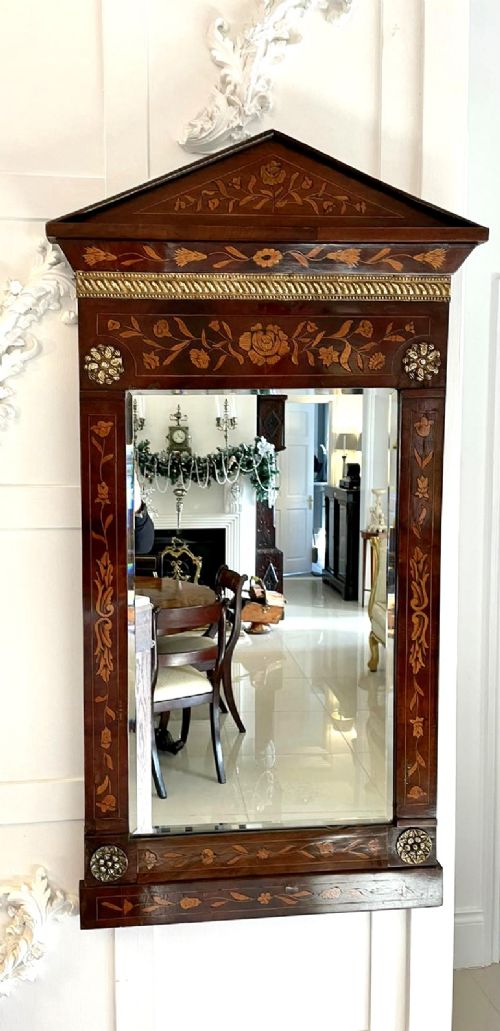
18th century dutch marquetry brings together intricate floral veneer work and robust cabinet forms from walnut, mahogany, and fruitwood.
18th Century Dutch Marquetry
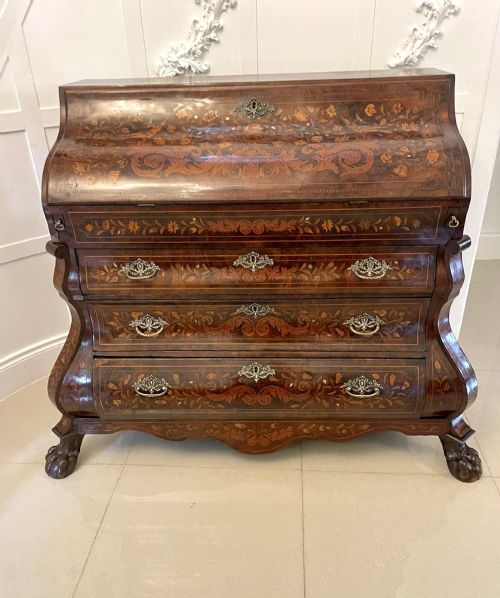
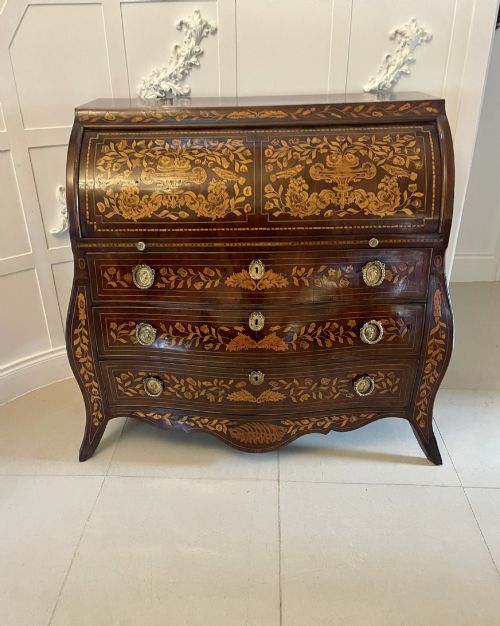
18th century dutch marquetry pieces comprise significant storage and display items, alongside smaller tables and seating, rooted in the 18th century and Georgian eras. Bureau bookcases, bombe chests of drawers, and tallboys dominate the selection, often presenting curved fronts and distinct regional proportions.
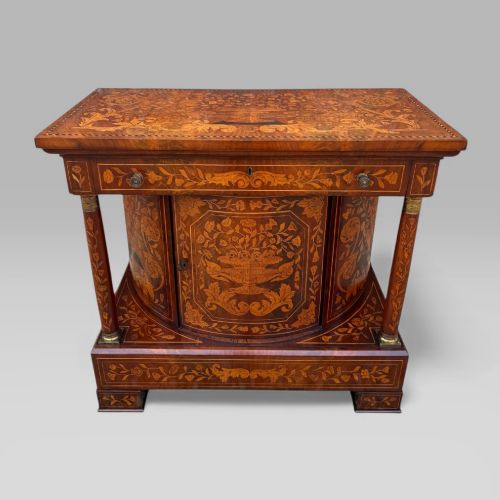
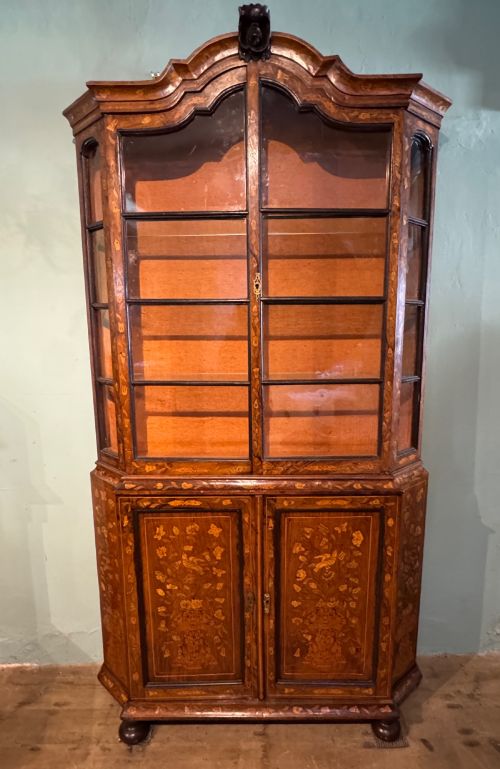
Buyers meet large cabinets on chests, display cabinets, and bureau bookcases frequently, alongside side tables, tea tables, and elbow chairs. Walnut and burr walnut form the primary carcases, complemented by dense floral and bird motifs across the panels.
Seating and smaller tables appear alongside the major case furniture, showing similar attention to patterned veneers. The surviving items reflect active domestic and reception spaces of the period, executed in regional interpretations of Baroque and Rococo styles.
Materials and Construction
Cabinetmakers constructed carcases in oak and pine before applying rich primary timbers such as walnut, mahogany, and occasional satinwood or rosewood. Fruitwood and fruitwood inlay provided contrasting lighter tones for the detailed botanical and avian imagery.
Veneers were sawn by hand and meticulously fitted together to form elaborate floral marquetry panels across drawer fronts, fall-fronts, and cabinet doors. Brass handles, escutcheons, and hinges completed the structural assembly.
Listings feature walnut, mahogany, fruitwood, and oak across bureau bookcases, bombe chests, and display cabinets from the 18th century.
Distinctions in Execution
The density and precision of the floral inlay separate standard cabinet work from superior examples, particularly where shading creates depth in leaves and petals. Grain selection in the underlying burr walnut or mahogany further distinguishes finer productions.
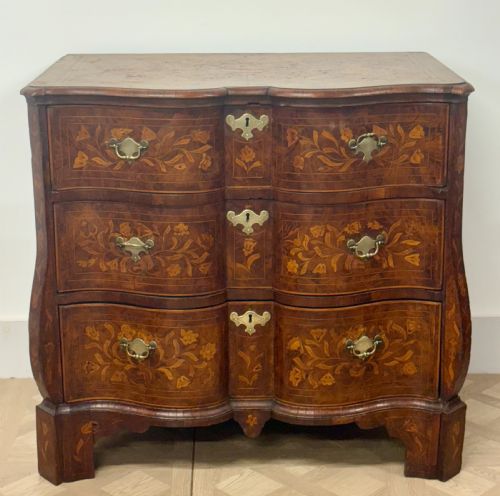
Bombe forms demonstrate quality through the smoothness of their outward swells and the alignment of veneer patterns across multiple moving drawers. Structural integrity in the carcase and original brass hardware contribute to the standing of a piece.
The 18th Century Dutch Marquetry Glossary
- Bombe
- A swollen, convex shaping applied to the front and sides of chests of drawers and desks. This curved profile demands advanced cabinetmaking skill to maintain structural strength while fitting complex veneers.
- Marquetry
- The art of forming decorative patterns by fitting together contrasting veneers of wood and other materials. Artisans use this technique to depict elaborate floral bouquets and birds across furniture surfaces.
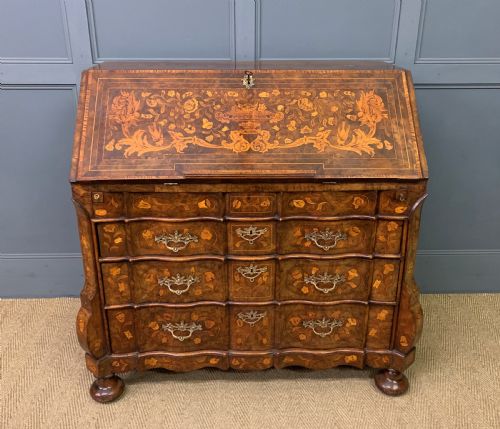
- Bureau Bookcase
- A desk featuring a sloping fall-front combined with a shelved upper cabinet enclosed by doors. These dual-purpose units provide both writing space and prominent display storage.
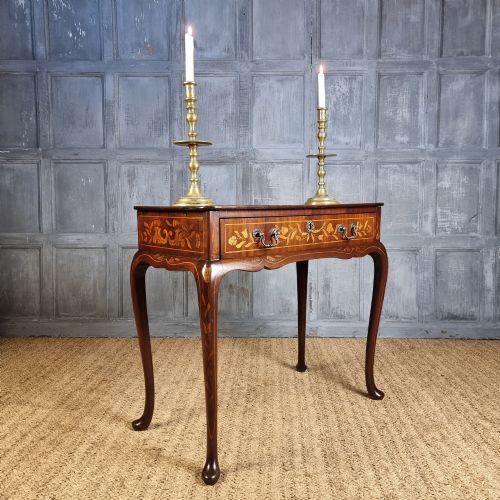
- Lowboy
- A small dressing or side table equipped with one or more tiers of drawers beneath a flat top. They rest on slender legs and often feature decorated drawer fronts.
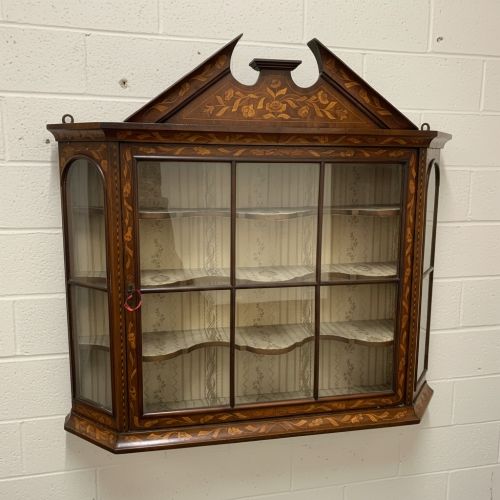
- Vitrine
- A glass-fronted display cabinet designed for exhibiting porcelain and valuables. The glazed doors and sides allow light to reach the interior shelves.
18th Century Dutch Marquetry: Frequently Asked Questions
What is 18th century dutch marquetry?
These items are case furniture and tables decorated with complex wood veneer pictures, predominantly featuring flowers and birds. Walnut and mahogany serve as the primary woods for these decorative surfaces.
Craftsmen built them during the Georgian and 18th-century periods, utilising local European timbers and specialised cutting techniques to achieve pictorial detail on functional furniture.
How were these cabinets used?
Bureau bookcases and desks provided spaces for correspondence and the storage of documents behind locked fall-fronts. Display cabinets and vitrines held precious porcelain and glassware in reception rooms.
Smaller tables functioned as tea tables, games tables, or side supports, while chests of drawers and tallboys managed household linens and garments.
How do I live with these pieces?
Placing these items away from direct sunlight protects the delicate fruitwood and walnut veneers from fading. Stable indoor humidity prevents the underlying oak or pine carcases from shifting.
Regular polishing with traditional wax maintains the sheen of the timber without damaging the historical surface. Their rich tones pair well with both traditional and modern interior schemes.
How do I identify periods and types?
Examination of the carcase construction, secondary woods like oak, and cabinet hardware helps distinguish 18th-century examples from later copies. Stylistic shifts between Baroque severity and Rococo curves offer dating clues.
Bombe shaping, floral complexity, and specific forms like bureau bookcases or lowboys reflect the prevailing tastes of the Georgian era in the Netherlands.