


Antique Dutch Chest
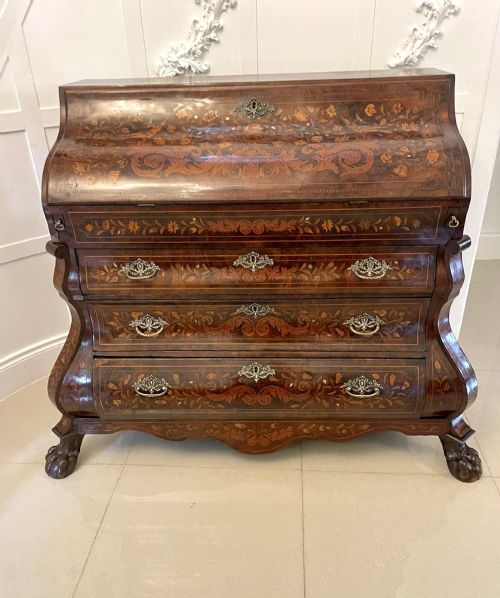
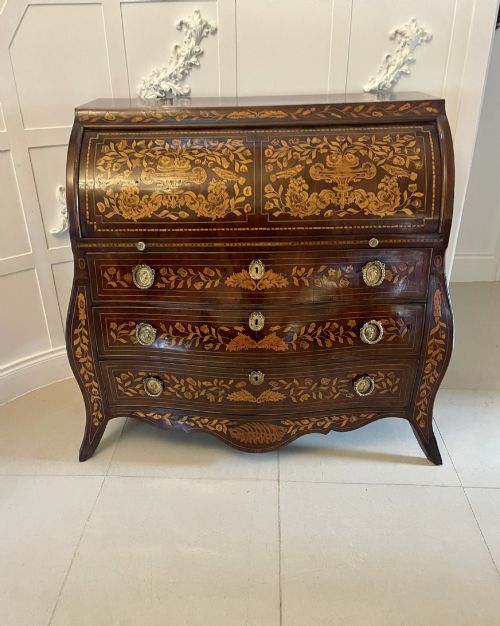
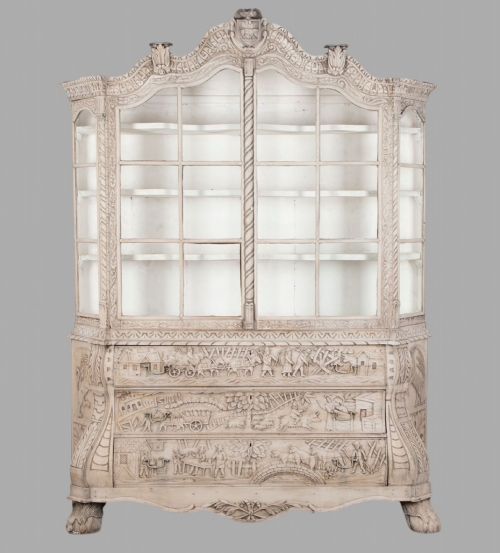
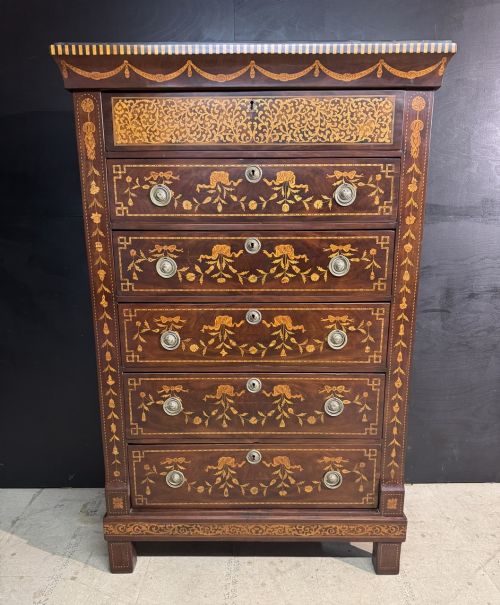
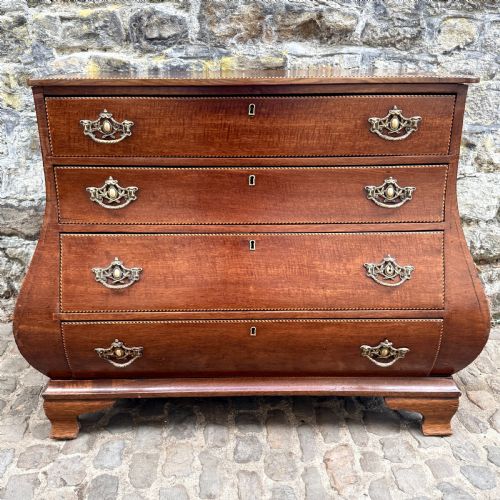
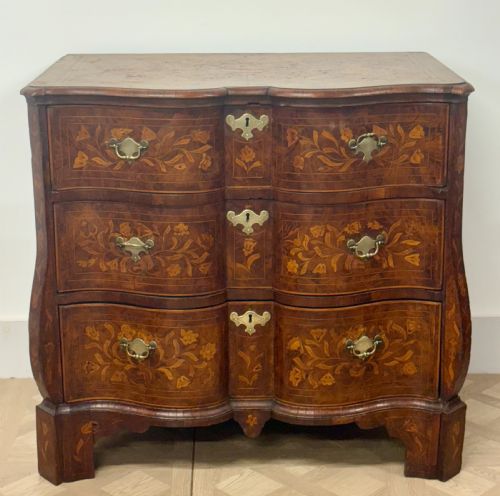
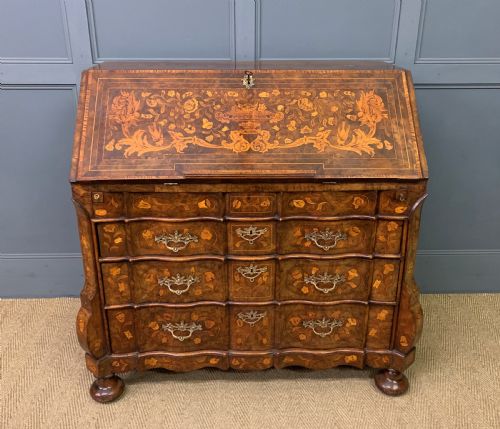
An antique dutch chest brings sculptural movement and intricate floral storytelling into a room through deeply curved bombé profiles and meticulous marquetry.
Antique Dutch Chest
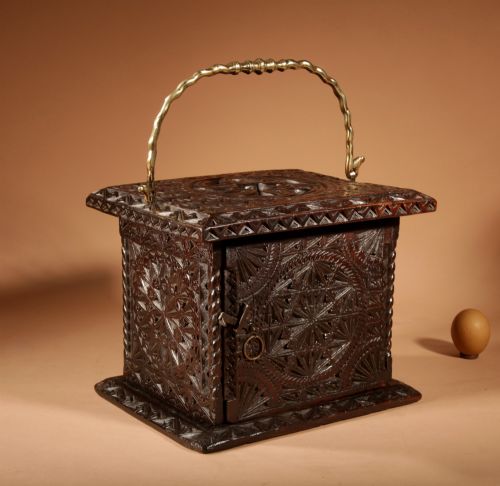
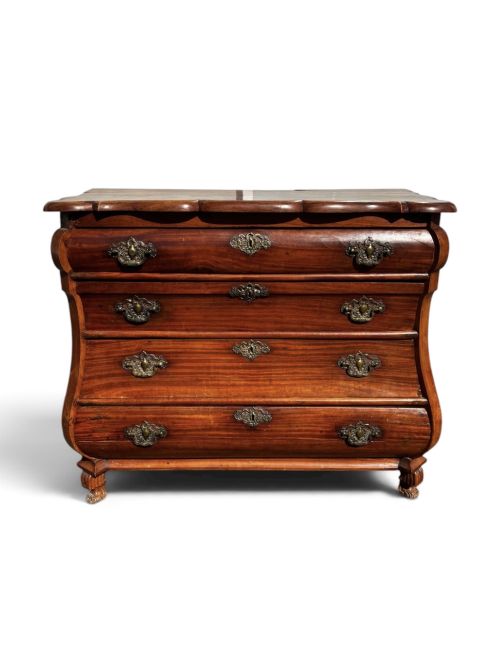
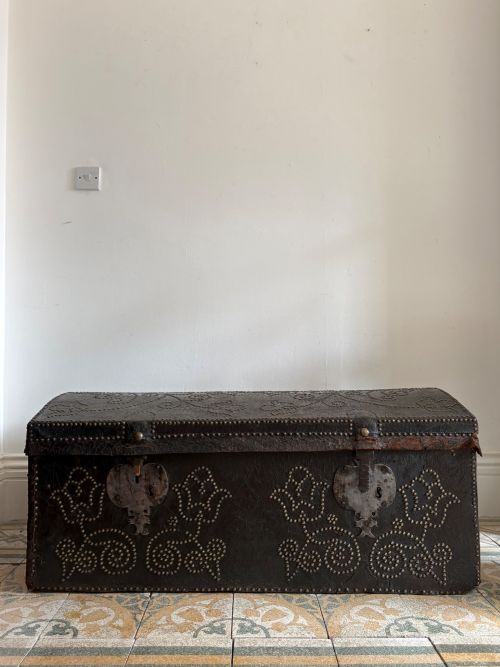
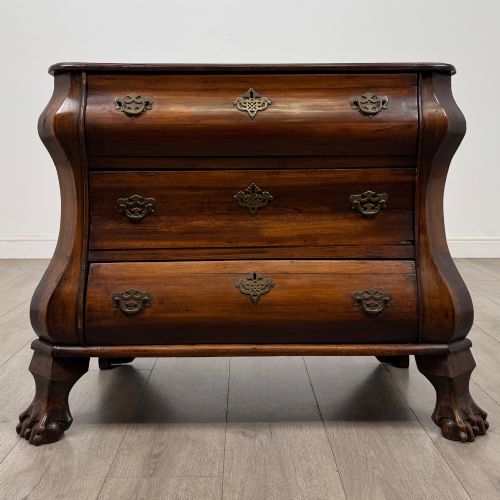
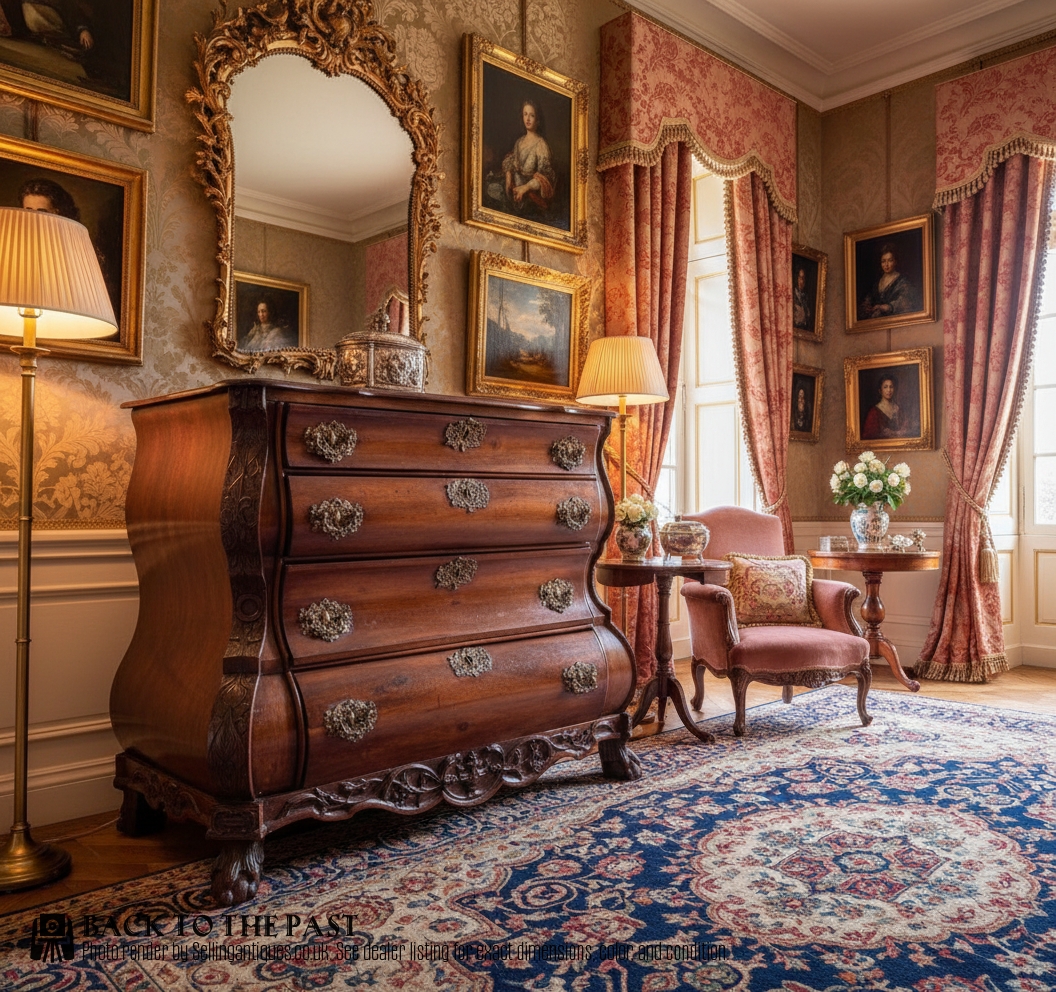
When you search for an antique dutch chest, you encounter a distinct tradition of storage furniture spanning the eighteenth and nineteenth centuries. These pieces encompass standard drawer forms alongside prominent bombé commodes and marriage chests shaped with pronounced swelling fronts.
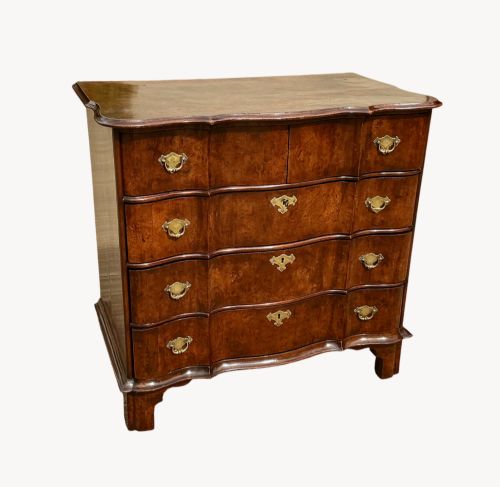
The versions most frequently met on this page date from the eighteenth century, constructed in rich walnut or burr walnut and layered with floral marquetry. Oak and mahogany also appear regularly, reflecting both domestic provincial workshops and sophisticated urban cabinet-making centres.
Beyond standard drawer units, the selection incorporates related forms such as tallboys, linen presses, and multi-drawer cabinets on stands. Each variation serves the primary purpose of concealing household textiles and valuables behind artfully figured timber surfaces.
How they were made
Cabinet-makers constructed carcass frames primarily from solid oak, pine, or mahogany before applying costly face veneers of walnut, burr walnut, and padouk. This foundational timbering provided the structural stability necessary to support sweeping convex and concave curves.
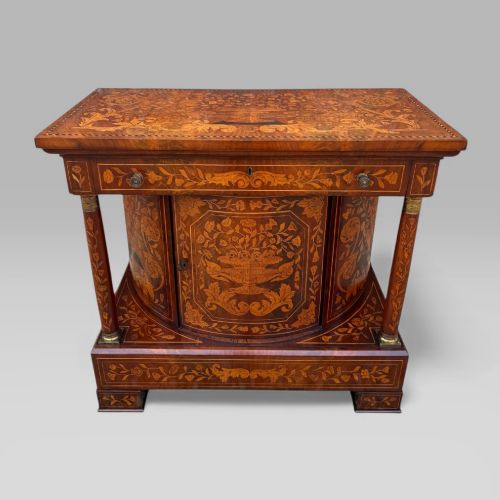
Marquetry ornamentation relied on hand-cut floral and botanical inlays using contrasting woods, bone, and pewter pressed into tailored recesses. Once assembled, surfaces received repeated shellac polishing to accentuate the natural figuring of the grain.
Antique Dutch Chest Retail Price Guide 2026
Typical asking prices for dutch chest among the pieces listed under this phrase on Sellingantiques today, from the lower quarter to the upper quarter. They describe what is for sale here now, not the wider market.
Listings feature eighteenth and nineteenth century periods, with materials spanning walnut, mahogany, oak, and marquetry inlays.
What varies in quality
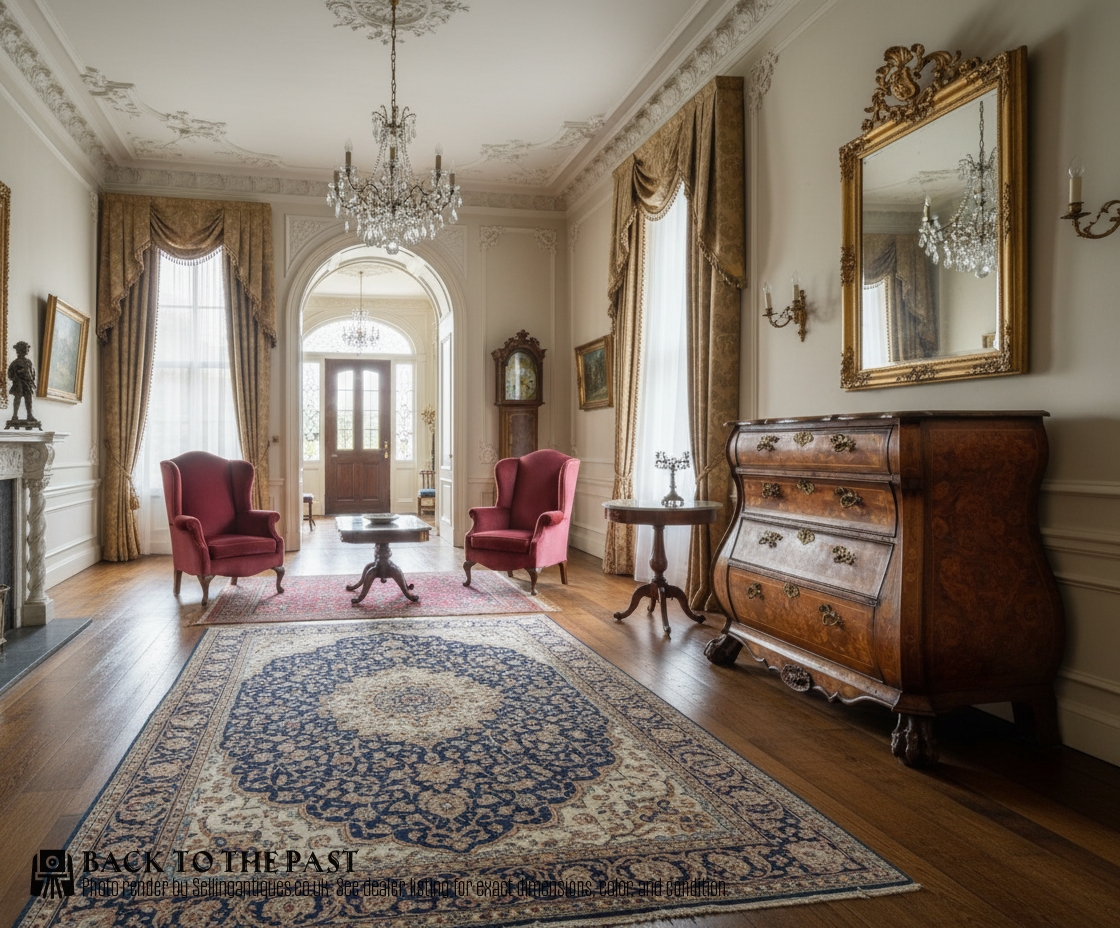
The refinement of the silhouette distinguishes finer examples, particularly the grace and symmetry of the bombé swell. Master craftsmen achieved organic, sweeping contours that maintain structural integrity, whereas lesser pieces display rigid or heavy proportions.
The complexity and execution of the floral marquetry dictate the upper tiers of craftsmanship. Superior panels exhibit delicate shading within individual petals and seamless integration of inlay, while simpler iterations rely on repetitive, coarse botanical motifs.
Edwards and Roberts
The Antique Dutch Chest Glossary
- Bombé
- A distinct swelling or outwardly curved furniture profile prevalent in eighteenth-century continental design. This bulging contour requires advanced woodworking skill to maintain joinery strength.
- Marquetry
- Decorative veneer work forming picture patterns by utilising thin slices of wood, pewter, and bone. Craftsmen arrange these elements meticulously across drawer fronts and top panels.
- Commode
- A low chest of drawers equipped with wide proportions, frequently standing on short cabriole or bracket feet. The form gained widespread popularity across European drawing rooms.
- Biedermeier
- A central European style emphasising utilitarian comfort and clean lines without excessive ornamentation. Walnut and birch veneers often replace heavy carving in these pieces.
- Linen Press
- A tall storage cupboard featuring upper sliding trays for textiles above lower drawers. These substantial case pieces served elite domestic households.
Antique Dutch Chest: Frequently Asked Questions
How do I spot an 18th-century piece?
Examine the secondary timbers inside the drawer linings, such as oak or pine, alongside hand-cut dovetails that show irregular spacing. Eighteenth-century examples also feature hand-bevelled panel backs and patination built up through generations of friction and wax.
Check for early brass hardware affixed with hand-turned threaded pins or wire loops rather than modern screws. The presence of dense burr walnut and organic floral marquetry further anchors the piece securely within the seventeen-hundreds.
How should I clean marquetry surfaces?
Maintain marquetry surfaces by dusting gently with a soft, dry lint-free cloth along the direction of the grain. Avoid chemical sprays, modern polishes, or excess moisture that might loosen the delicate wood and pewter inlays.
Feed the dry timber periodically with a microcrystalline wax to preserve the historic shellac finish. Keeping the piece away from direct sunlight and radiators prevents the veneer from shrinking and lifting away from the oak carcass.
Where were these chests used?
These chests originally served wealthy merchant and aristocratic households across the Netherlands as primary bedroom and reception room storage. They held valuable linens, official documents, and personal garments securely.
Today, their striking proportions and decorative marquetry make them suitable focal points for modern hallways, living rooms, and dining spaces. Their wide top surfaces additionally function well for displaying lamps and decorative objects.