

Antique Marquetry Commode
Selecting an antique marquetry commode brings intricate floral and pictorial woodwork into a room through historical chests designed for storage.
Antique Marquetry Commode
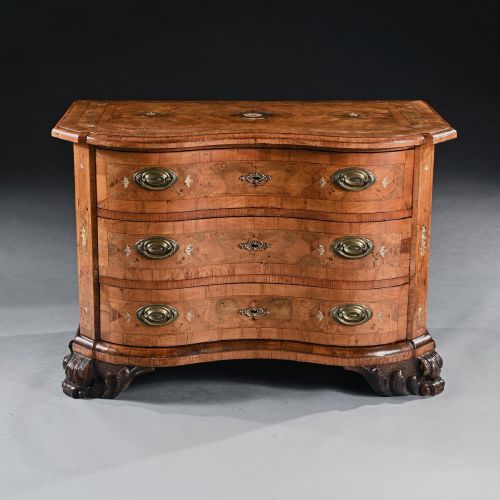
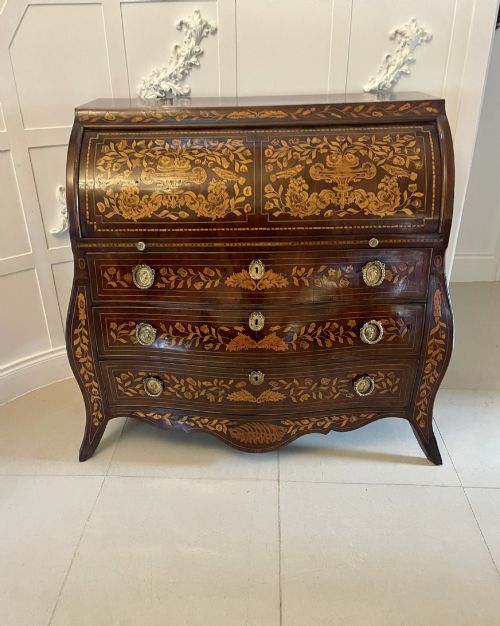
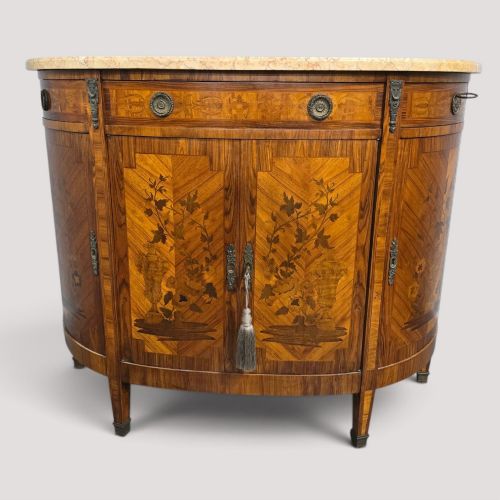
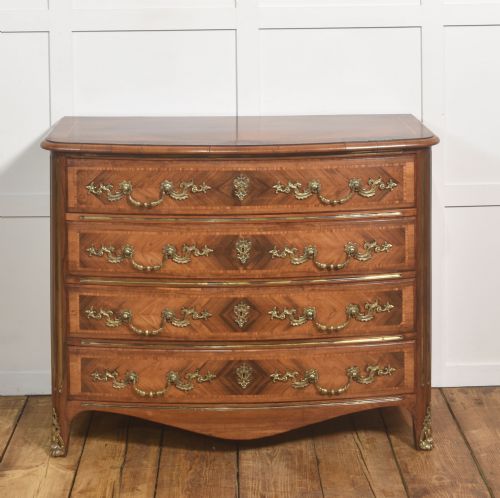
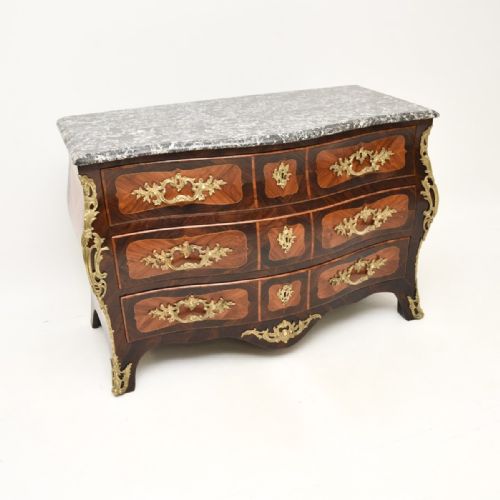
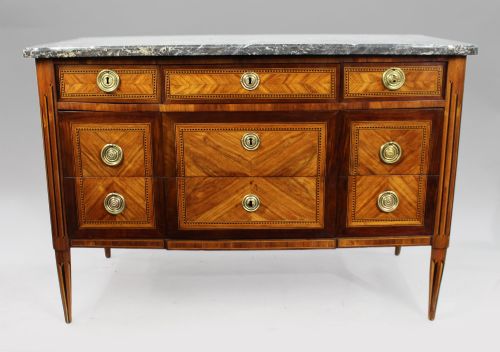
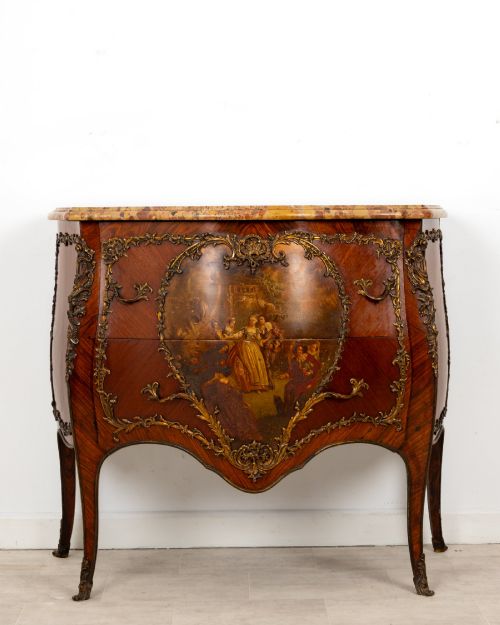
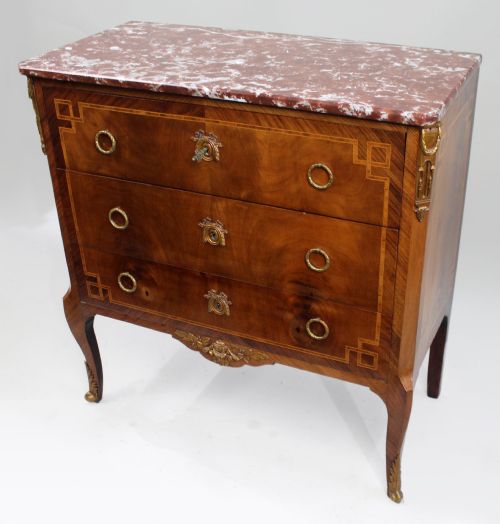
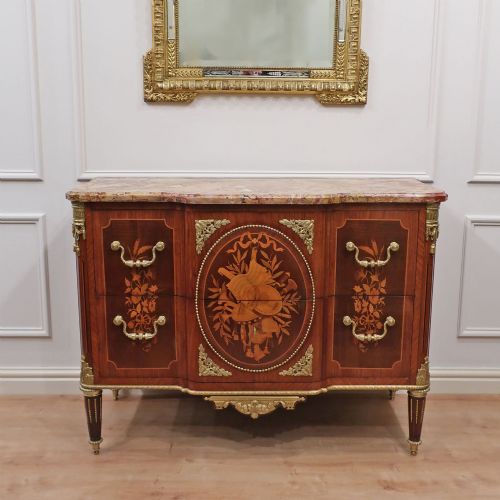
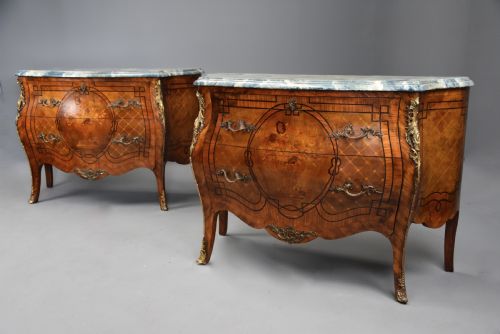
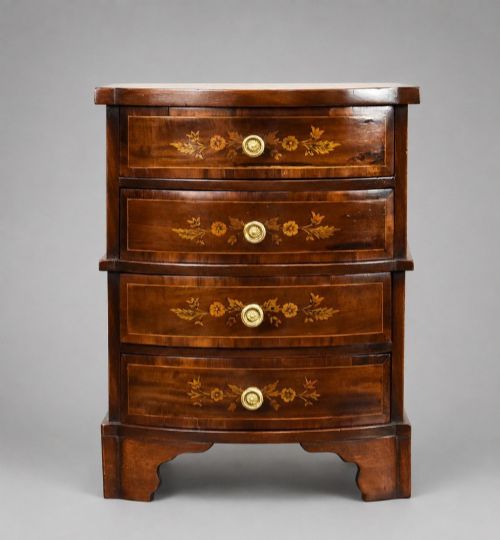
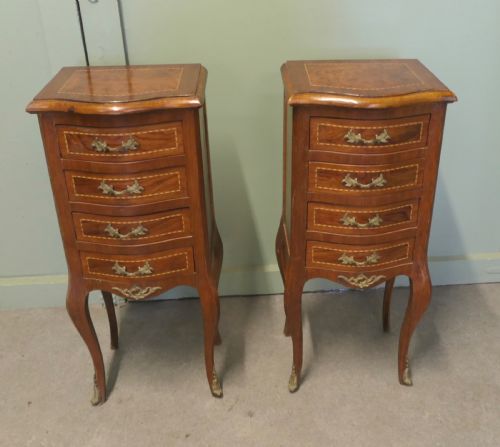
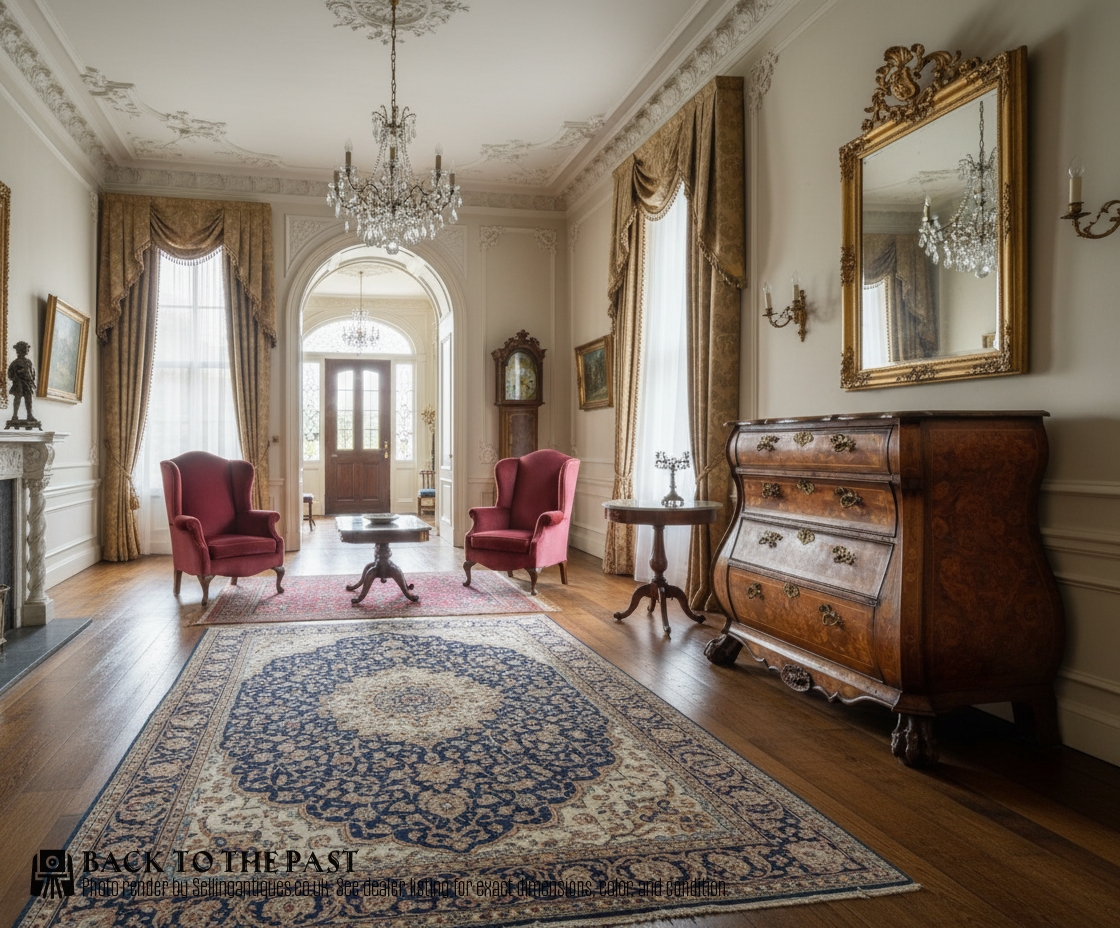
An antique marquetry commode serves as a low chest of drawers or storage cabinet, ornamented with detailed wood inlay. These pieces frequently appear in French Louis styles, including Louis XV and Louis XVI designs, alongside Dutch, German, and Italian regional examples.
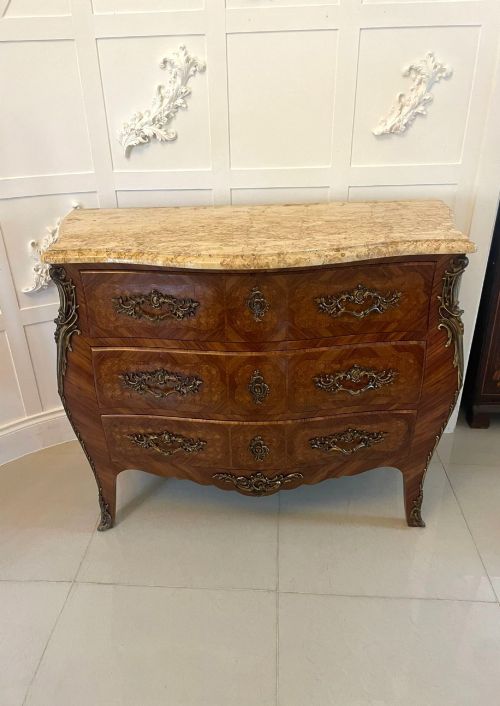
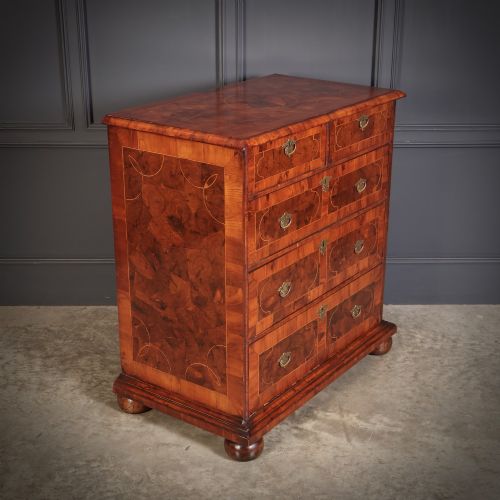
Makers and cabinetmakers construct these storage items in serpentine, bombe, or straight-front silhouettes. Surviving specimens span the seventeenth century through the early twentieth century, incorporating revival periods alongside eighteenth-century originals.
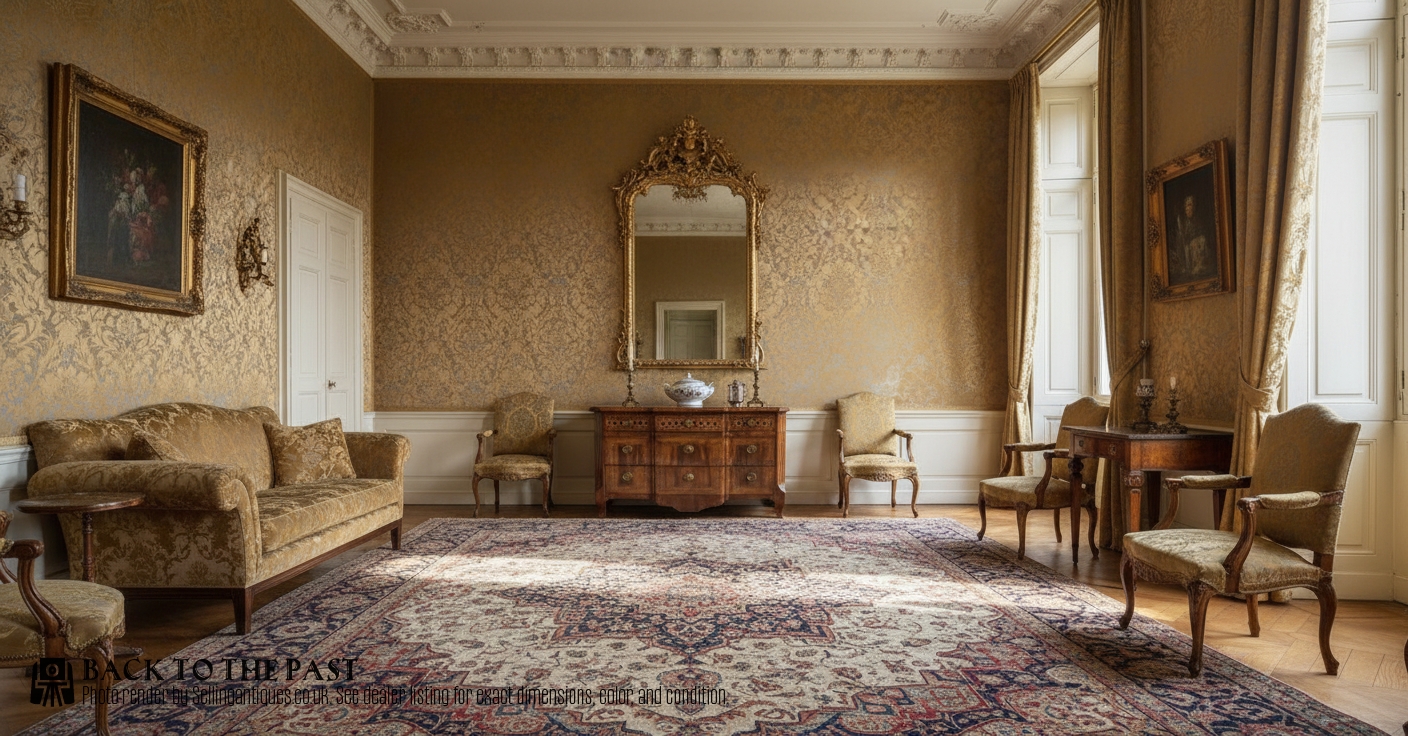
How They Were Made
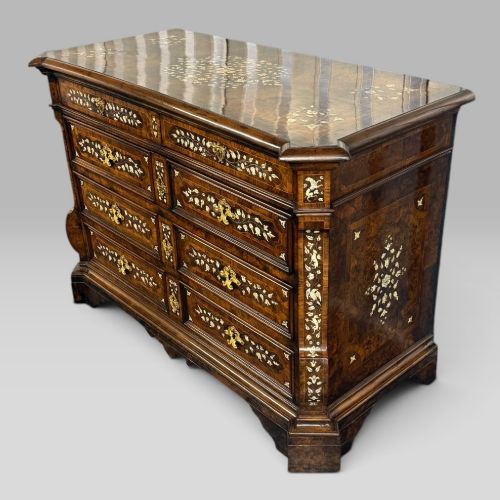
Craftsmen assemble these furniture pieces using supportive carcases of oak, walnut, or mahogany, veneered with decorative timbers such as kingwood, tulipwood, fruitwood, and olive wood. Artisans cut thin sections of contrasting woods, pewter, and ivory to form floral and arabesque patterns.
Metal mounts cast in ormolu or gilt bronze frame the drawers and corners, while polished marble tops in white, grey, or rouge varieties finish the upper surface.
Antique Marquetry Commode Retail Price Guide 2026
Typical asking prices for marquetry commode among the pieces listed under this phrase on Sellingantiques today, from the lower quarter to the upper quarter. They describe what is for sale here now, not the wider market.
Some seventeenth-century chests secretly hid intricate floral arabesques beneath layers of polished oyster veneer.
What Varies in Quality
The precision of the wood inlay work dictates the primary tier of craftsmanship, where individual fitted pieces create seamless floral and geometric motifs without excessive filler. The integration of high-grade mounts and genuine marble slabs alters the overall finish.
Structural integrity relies on the retention of original carcase timbers, authentic period mounts, and the preservation of the underlying veneers without extensive modern replacement.
Jacques Bircklé·Thomas Hache of Grenoble·Sormani
The Antique Marquetry Commode Glossary
- Marquetry
- Decorative woodwork where small pieces of veneer form pictorial or floral patterns across a surface.
- Commode
- A low French chest of drawers designed for domestic storage.
- Ormolu
- Gilt bronze mounts applied to furniture for decorative enrichment.
- Bombe
- A swollen, convex curving shape characteristic of continental furniture.
- Parquetry
- Geometric wood inlay arranged in patterns such as cubes or chequers.
Antique Marquetry Commode: Frequently Asked Questions
How do I clean an antique marquetry commode?
Dust the veneered surfaces regularly with a soft, dry cloth to prevent accumulation in the inlaid recesses. Avoid liquid polishes and wax buildup that can cloud the historic finish.
Protect the marble top from acidic spills by using coasters or mats. Professional wax maintenance preserves the timber without harming the delicate veneer joints.
Where should I place a commode?
Position the piece away from direct sunlight and heat sources to prevent the wood veneers from drying and cracking. Stable indoor humidity protects both the timber carcase and the delicate inlay work.
Allow sufficient clearance around serpentine and bombe silhouettes so the curved drawer fronts open freely without obstruction.
How do I identify French Louis styles?
Look for asymmetrical floral marquetry and curved cabriole legs on Louis XV pieces. Louis XVI examples display restrained symmetry, straight tapered legs, and classical geometric parquetry.
Examine the cast bronze mounts and marble top profiles for period-appropriate detailing that matches the structural carcase.
Are these commodes suitable for daily use?
These historical chests function well for light domestic storage when handled with care. Drawers operate smoothly when maintained, though heavy loads should be avoided in antique timber runners.
Marble-topped surfaces provide durable display areas for lamps and decorative objects within a modern interior.