


Brown Marquetry Chest
A brown marquetry chest brings together intricate wood inlay and practical storage across centuries of cabinetmaking.
Brown Marquetry Chest
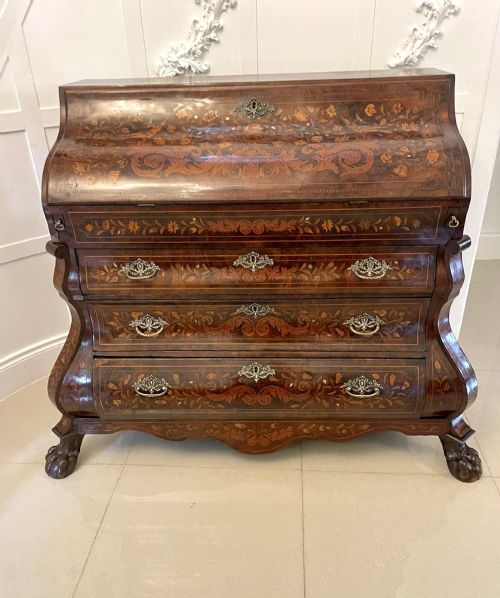
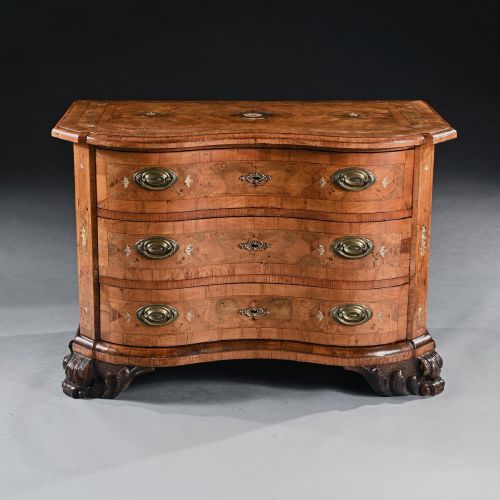
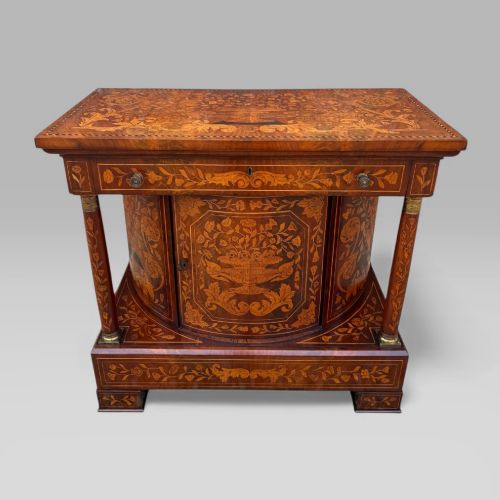
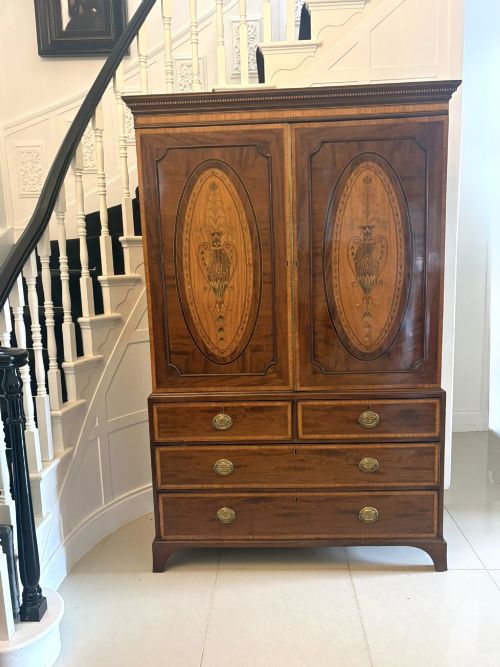
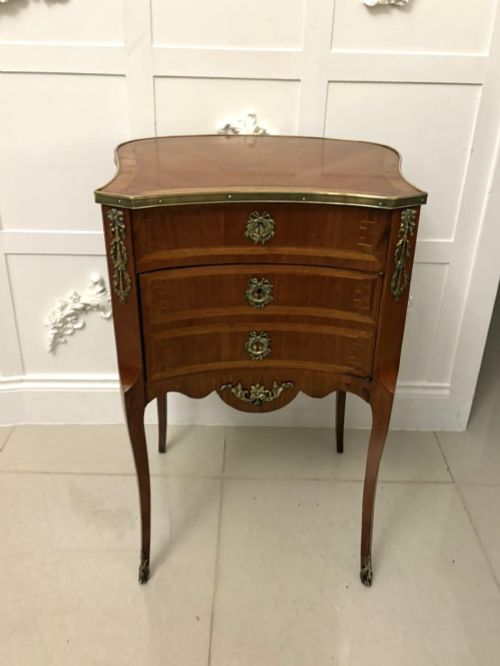
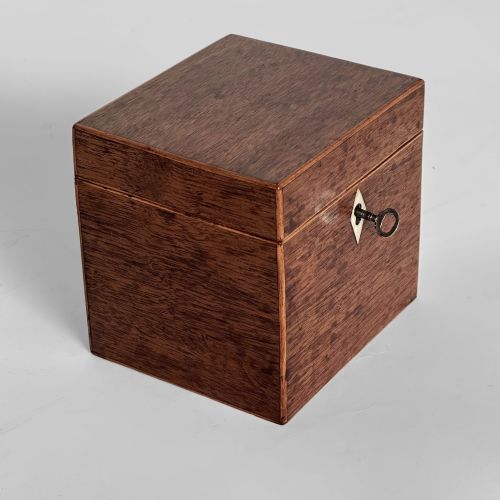
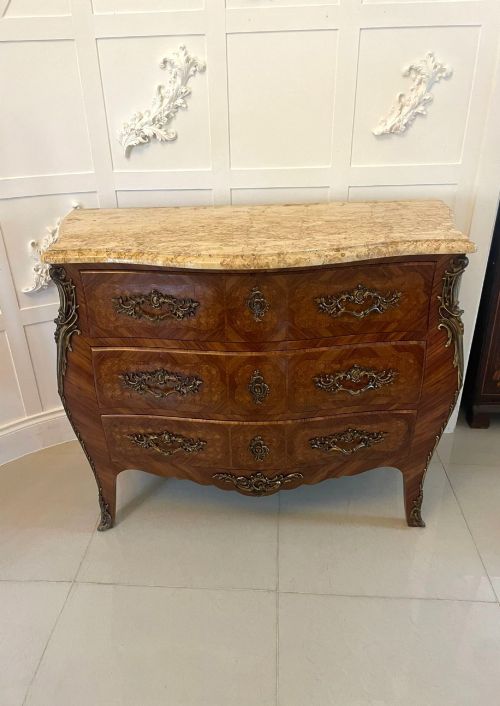
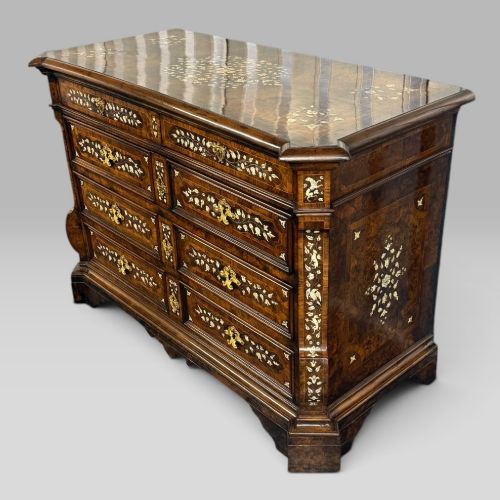
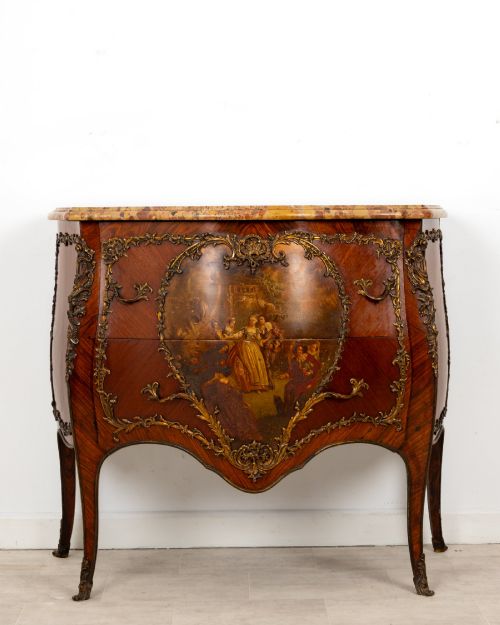
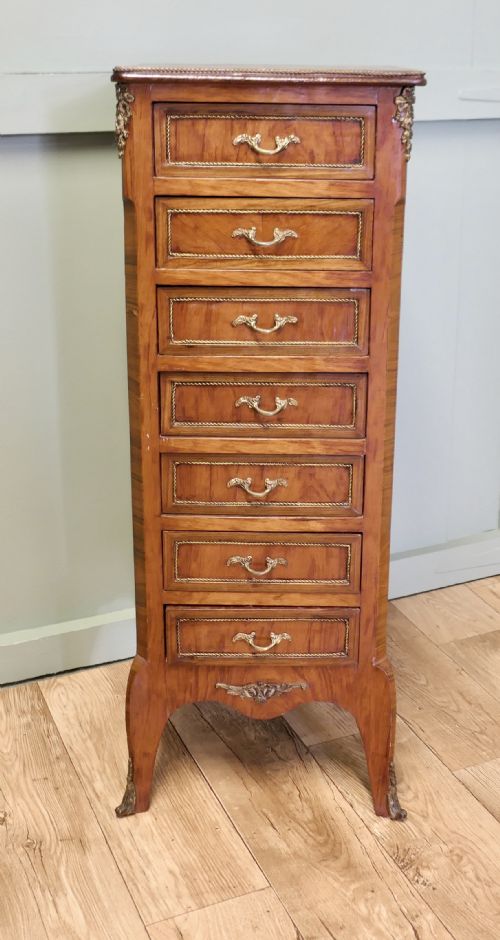
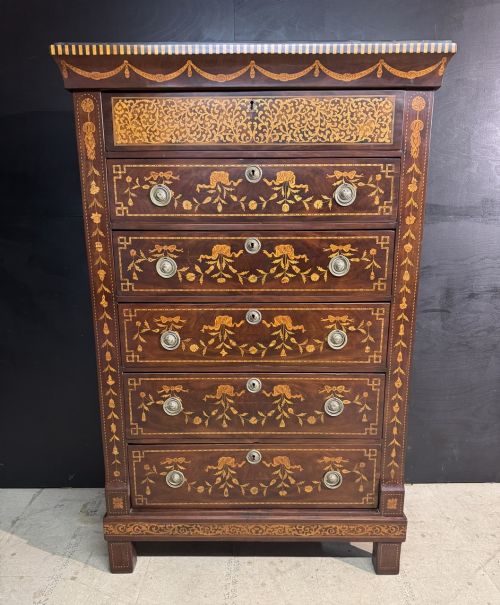
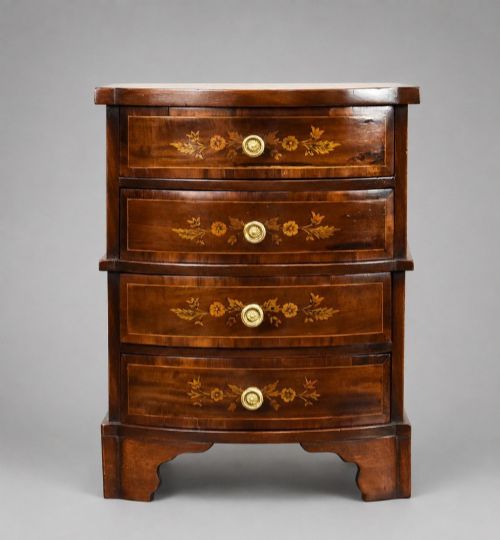
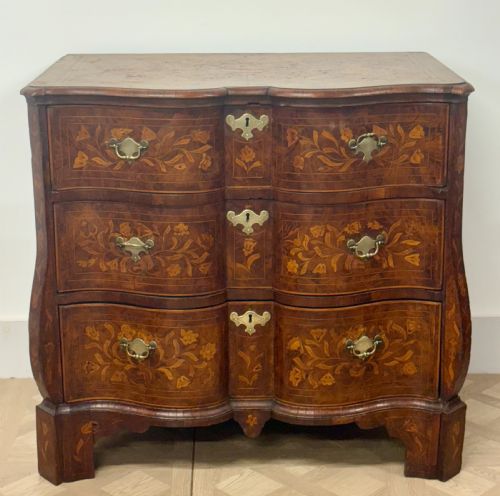
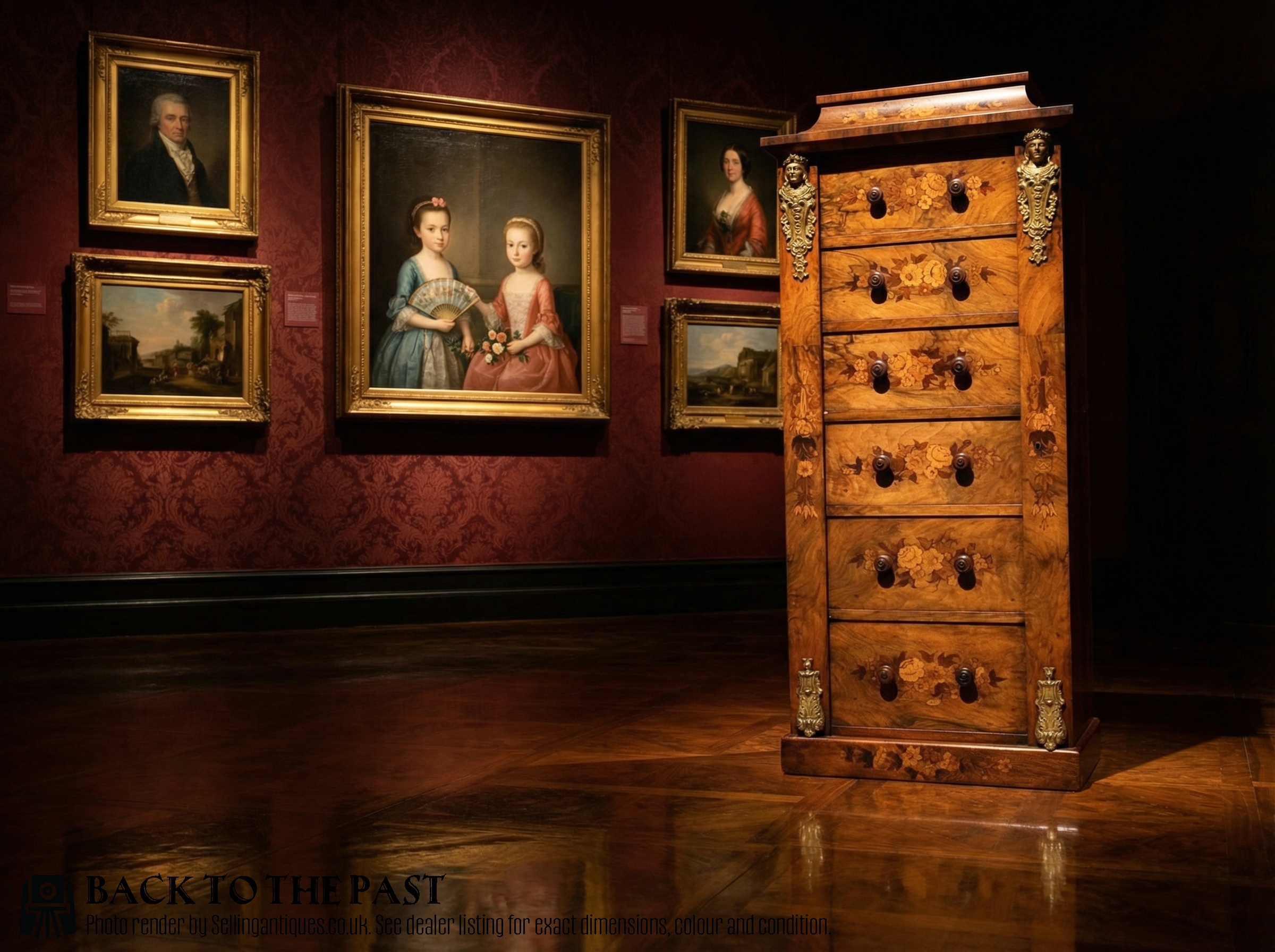
A brown marquetry chest encompasses various forms designed for storage, from tall chests of drawers and bedside cabinets to linen presses and commodes. The pieces reflect periods spanning the seventeenth century through to the early twentieth century, alongside styles such as Dutch Baroque, Georgian, and Louis XV Revival.
Buyers encountering this selection will most frequently meet eighteenth-century Dutch walnut and mahogany examples alongside nineteenth-century French commodes and side cabinets. These items combine structural cabinetry with pictorial or floral veneer patterns executed in contrasting timbers.
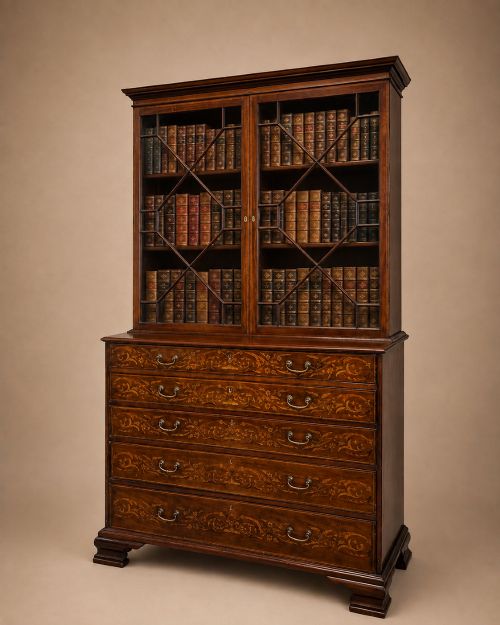
Beyond traditional drawer chests, the category extends to specialised forms like bureau bookcases, display cabinets, and smaller bedside tables. Each variant employs patterned wood veneers to create decorative surfaces across functional furniture.
Materials and construction
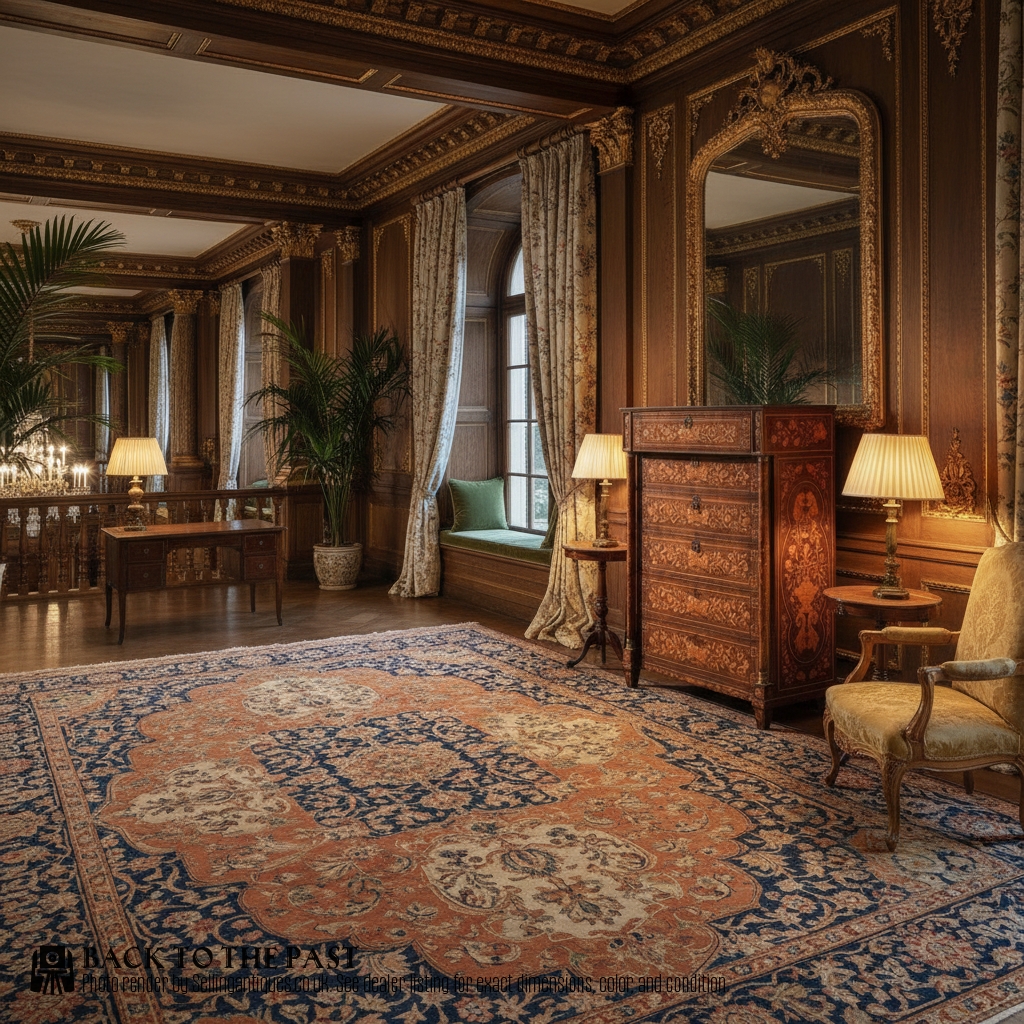
Cabinetmakers constructed these pieces using a carcase of oak, pine, or mahogany, applying fine veneers of walnut, kingwood, rosewood, and satinwood to the exterior surfaces. Marquetry panels were assembled by cutting intricate floral, pictorial, or arabesque designs from various dyed and natural woods.
Craftsmen enhanced the wooden surfaces with supplementary materials including brass hardware, gilt-bronze mounts, pewter, ivory, and marble tops. These elements were integrated into commodes, cabinets, and chests to punctuate the figured brown wood backgrounds.
Brown Marquetry Chest Retail Price Guide 2026
Typical asking prices for brown marquetry chest among the pieces listed under this phrase on Sellingantiques today, from the lower quarter to the upper quarter. They describe what is for sale here now, not the wider market.
Listings feature periods spanning from the seventeenth century through the 1930s, utilising walnut, mahogany, kingwood, and satinwood.
Distinctions in quality
Quality rests upon the precision of the veneer work and the complexity of the marquetry cutting. Superior examples demonstrate seamless alignment in floral and arabesque patterns, whilst simpler pieces rely on basic geometric bandings.
The choice of primary and secondary timbers dictates the standing of a piece, with burr walnut, kingwood, and dense mahogany commanding greater regard than plain domestic woods. Furthermore, the integration of original mounts, marble tops, and fitted interiors elevates the execution.
Druce & Co.·Edwards & Roberts·Sormani
The Brown Marquetry Chest Glossary
- Marquetry
- A technique where pieces of coloured wood veneer are assembled to form decorative pictures or geometric patterns on a furniture carcase. This differs from simpler inlay by covering the entire surface in a mosaic design.
- Commode
- A low French-style chest of drawers or cabinet fitted with doors or drawers, frequently topped with marble. The form evolved during the eighteenth century into highly decorative reception furniture.
- Bombe
- A swelling, rounded contour applied to the front and sides of furniture carcases, notably seen in Dutch and French pieces. This convex shaping requires advanced woodworking skill to fit the veneer accurately.
- Linen Press
- A tall piece of furniture featuring upper sliding trays or shelves enclosed by doors, above a base of lower drawers. These items served for storing household linens and textiles.
- Parquetry
- Geometric wood inlay forming repeating patterns such as cubes, diamonds, or chequers across a surface. It shares techniques with marquetry but uses strictly geometric motifs rather than pictorial scenes.
Brown Marquetry Chest: Frequently Asked Questions
How do I date a marquetry chest?
Dating relies upon examining the construction methods of the carcase, the timber species utilised, and the specific style of the marquetry motifs. Seventeenth and eighteenth-century pieces often display hand-cut dovetails and native walnut or oak structures, whereas later revival items utilise machine-prepared veneers and varied exotic woods.
Secondary indicators include the presence of original hardware, locks, and internal linings. Comparing the decorative vocabulary to known regional periods helps narrow the manufacturing window.
What is the difference between marquetry and inlay?
Marquetry involves assembling an entire picture or pattern from pre-cut veneer sheets before applying the complete sheet to the furniture carcase. Inlay involves cutting recesses directly into solid wood and inserting separate pieces into those channels.
While both techniques embellish brown furniture, marquetry creates elaborate pictorial surfaces such as floral sprays or arabesques. Inlay typically produces linear borders, banding, or simple geometric motifs.
Are these chests suitable for daily use?
These pieces function well for modern storage provided they are placed in stable environments away from direct heat sources and excessive moisture. Drawers and doors require gentle handling to preserve historical joints and delicate veneer work.
Regular dusting with a dry cloth and occasional wax maintenance will protect the polished wood surfaces. Avoiding heavy weight on delicate tops maintains the structural integrity of antique cabinets and commodes.