
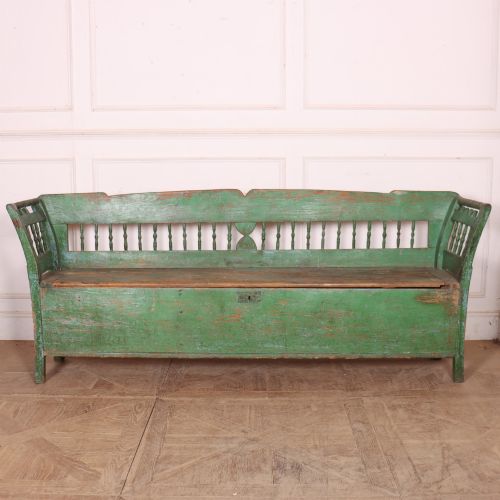
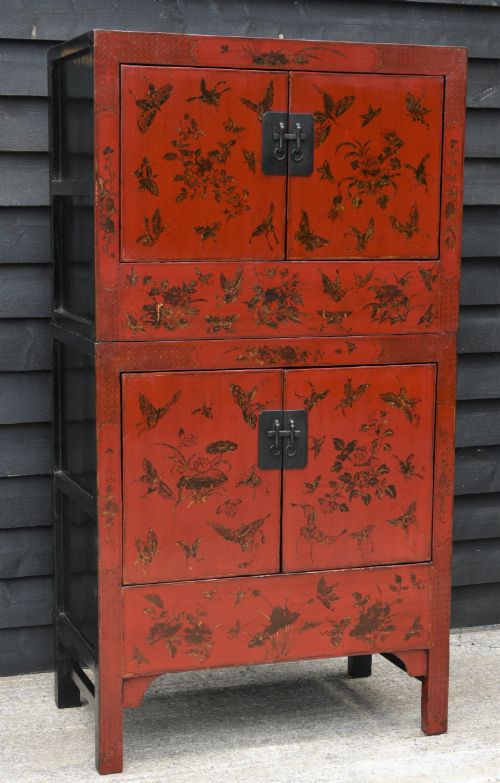
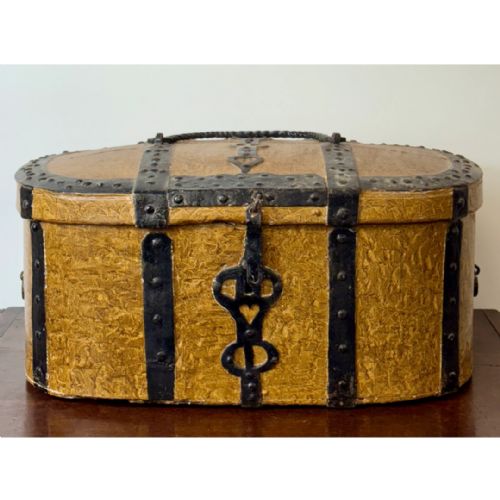
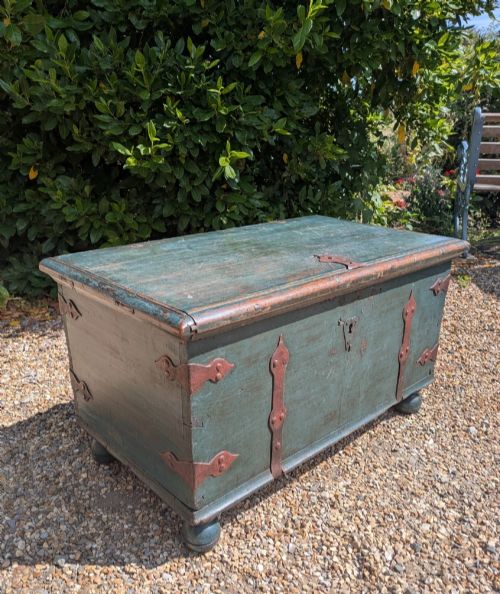
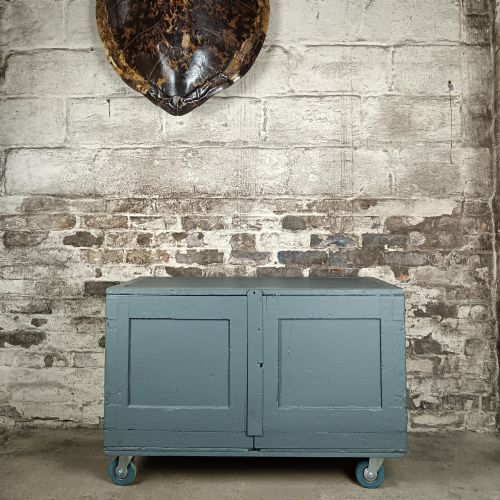
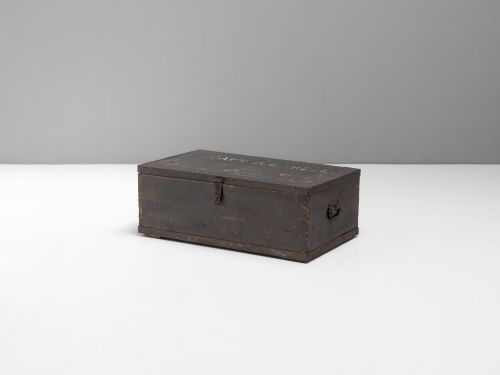
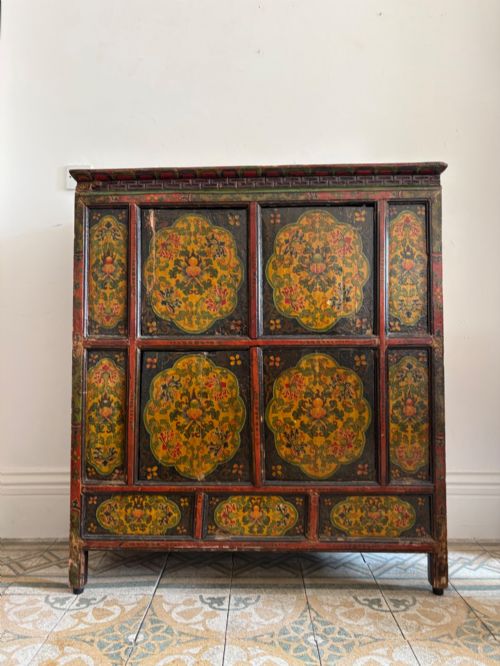
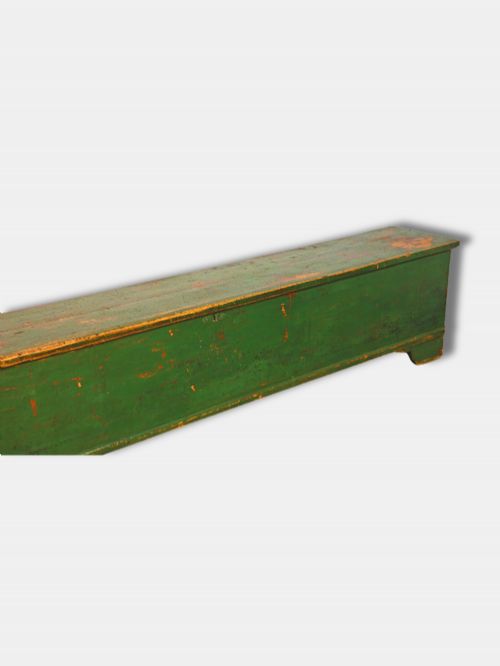


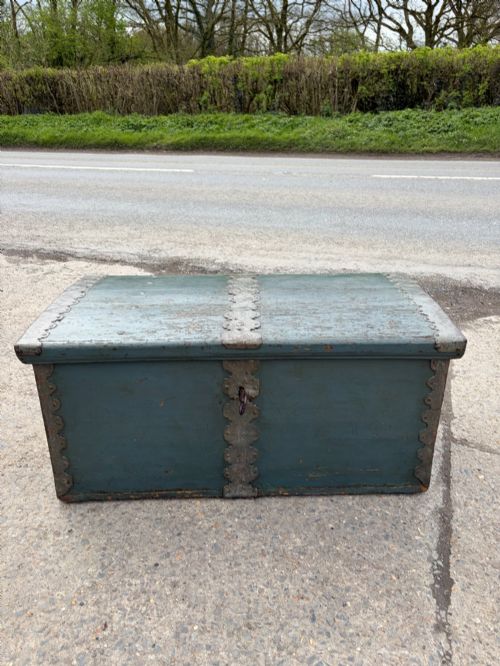
Painted Wooden Coffer
A painted wooden coffer offers both robust storage and striking folk art character for any room.
What a painted wooden coffer is
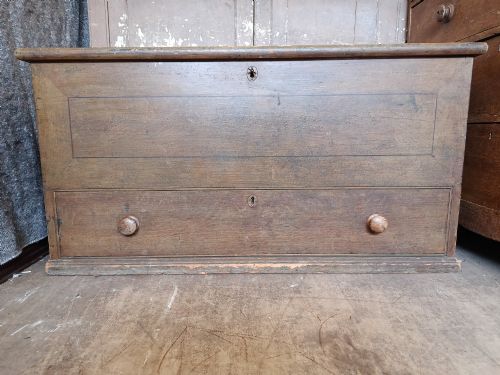
A painted wooden coffer provides deep storage inside a sturdy box format decorated with surface colour and pigment. These pieces range from folk art examples to utilitarian travel containers.
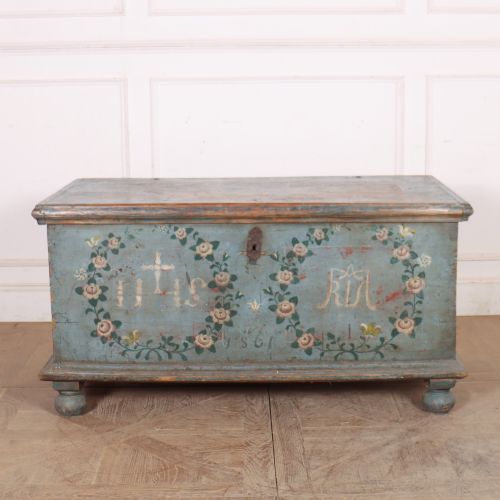
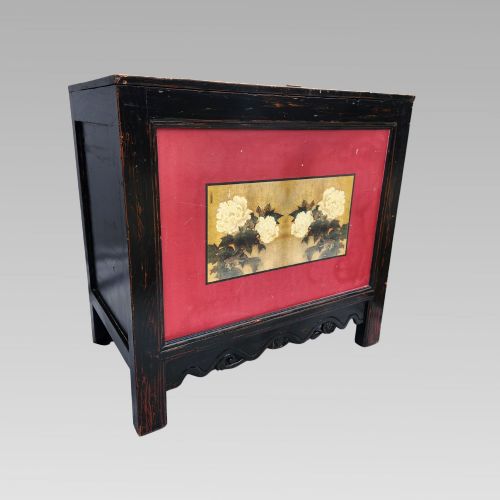
The most common form met here is the pine chest, often finished with green paint and fitted with handles or strapwork. Origins span Welsh vernacular workshops, Scandinavian country homes, Dutch interiors, and Chinese export studios.
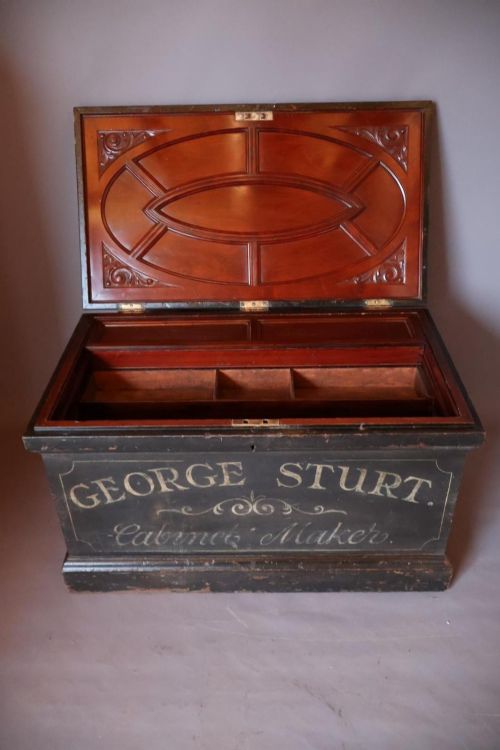
Dated pieces largely sit within the nineteenth century, running from around eighteen hundred through to early twentieth-century examples. Forms also include campaign military cases and primitive shepherds boxes.
How they were made
Construction relies primarily on solid timber bodies using pine or camphor wood for the main structure. Surfaces receive layers of paint, often in distinct green tones, alongside natural patination developed through age.
Hardware elements utilise iron, hand-forged strapwork, wrought iron reinforcements, and brass fittings. These metal components secure the corners and lids while adding functional contrast to the painted wood.
Retail Price Guide 2026
Typical UK retail prices for painted wooden coffer, calculated from the Sellingantiques database of over a million retail prices indexed since 2003. This retail price guide relies exclusively on Sellingantiques data; no external sources or auction records are used, so the figures do not describe the wider market.
Listings span the nineteenth century, incorporating pine, camphor, paint, iron, and brass across Welsh, Scandinavian, Dutch, and Chinese export origins.
What varies in quality
Quality rests in the survival of original painted surfaces and the integrity of the timber body. Hand-forged iron strapwork and early hardware elevate the character of country pieces.
Regional distinctiveness separates standard boxes from higher examples, such as specific Swedish folk art motifs or Welsh vernacular proportions. The depth of patination on the pine further distinguishes superior specimens.
The Painted Wooden Coffer Glossary
- Cofer
- An early term for a strong box or chest used for storage and transport. These vessels held valuables or textiles in domestic settings.
- Strapwork
- Ornamental bands of metal applied across the wooden exterior for reinforcement. Hand-forged iron examples provide structural strength alongside visual detail.
- Camphor
- An aromatic wood utilised in export chests made for travel. This material helped protect contents during long journeys.
- Patination
- The surface alteration and sheen acquired by wood and paint over decades of use. Good patination shows the natural ageing of the pigment and grain.
Frequently Asked Questions
What is a painted wooden coffer used for?
These pieces function primarily as storage chests for blankets, linens, and household goods. Their sturdy construction also allows them to serve as low tables or decorative focal points.
Historically, sturdy boxes secured valuables during transport or within domestic spaces. Today, they bring rustic texture and hidden storage to modern interiors.
How do I date a nineteenth-century coffer?
Dating relies on construction methods, timber choice, and the style of the painted finish. Nineteenth-century examples often feature hand-forged ironwork and period pigment layers.
Comparing hardware types and regional characteristics helps narrow the decade of production. Pine and camphor use also shifts depending on whether the piece has domestic or export origins.
Are these chests suitable for daily use?
Solid pine and camphor construction provides a durable frame for everyday storage needs. Hinges and lids operate much as they did when first made.
Care should be taken to protect original painted surfaces from excessive moisture and direct wear. Gentle cleaning preserves the historic pigment and surface patination.
What styles of painted wooden coffer exist?
Styles range from Scandinavian country and Swedish folk art to Welsh vernacular and Dutch pieces. Military campaign trunks and Chinese export luggage boxes offer alternative forms.
Each regional style brings distinct painted motifs and construction quirks. These variations reflect the local traditions of the workshops that made them.