


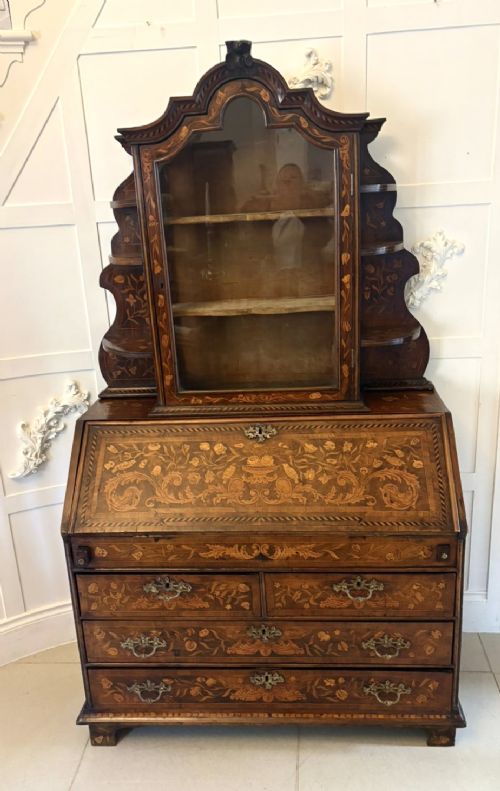


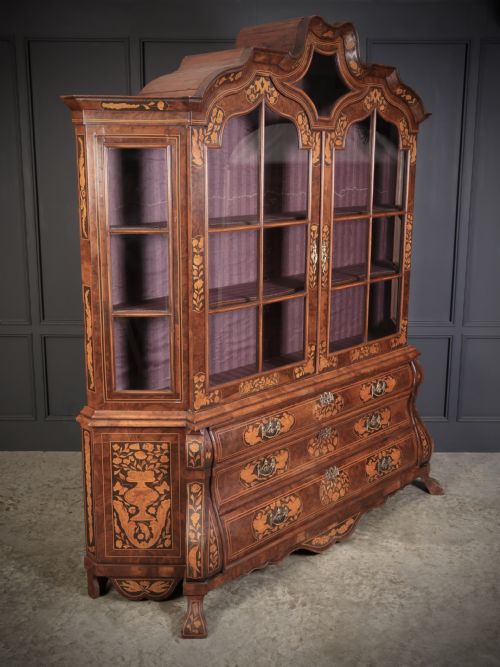

Floral Inlaid Bureau Cabinet
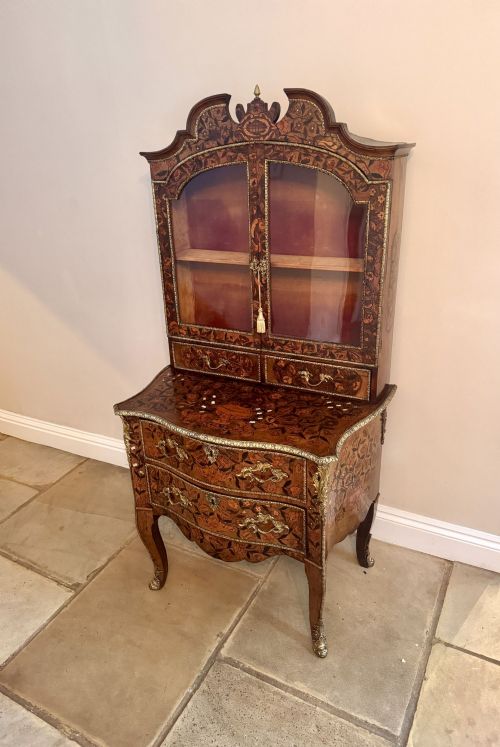
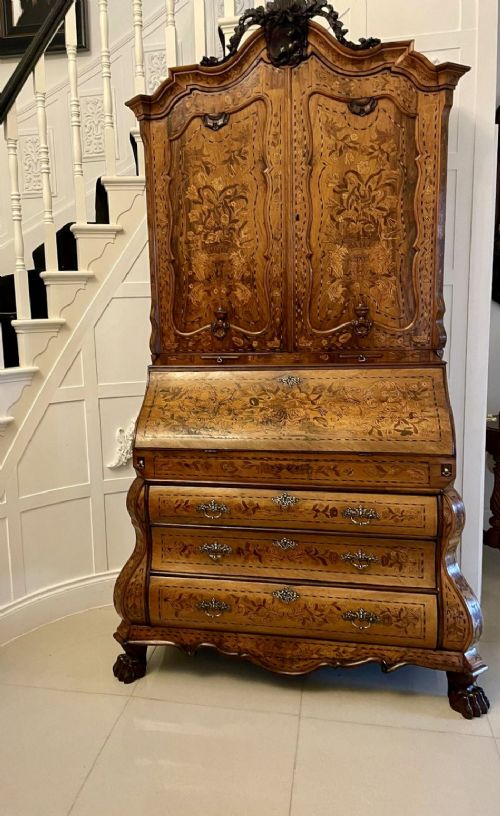
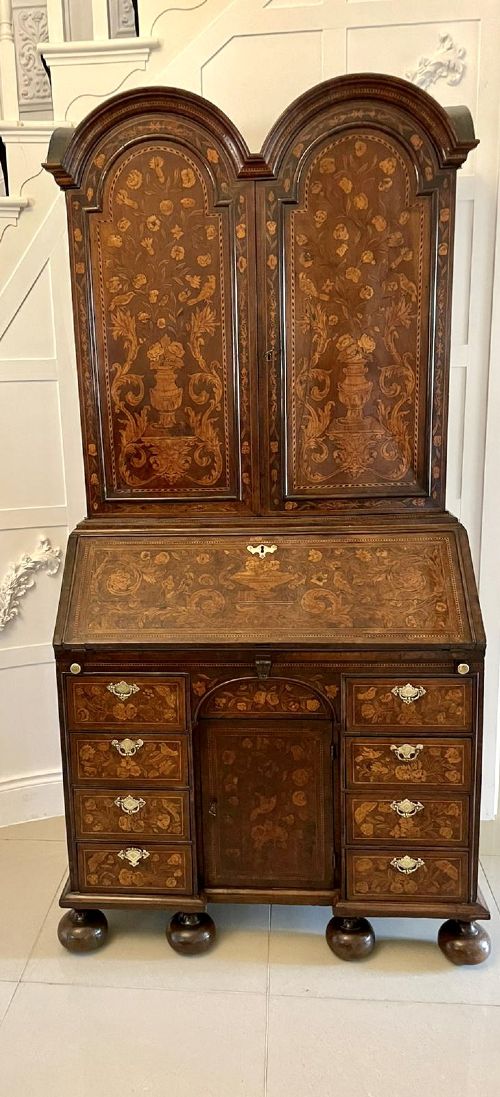
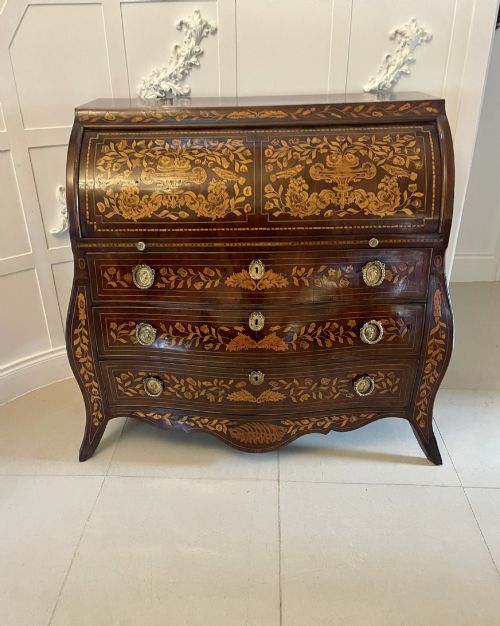
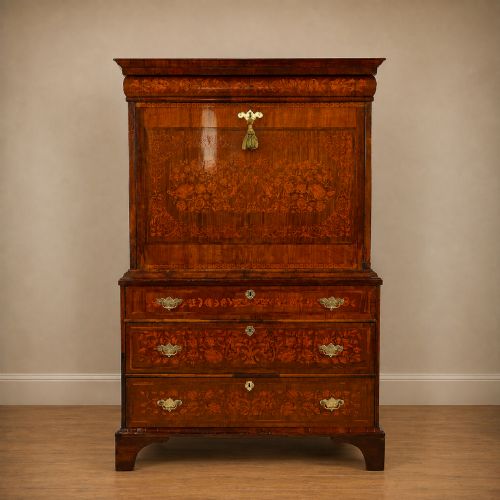
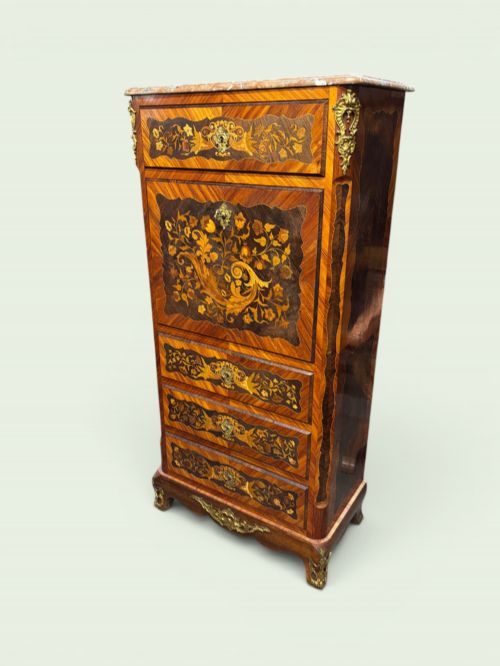
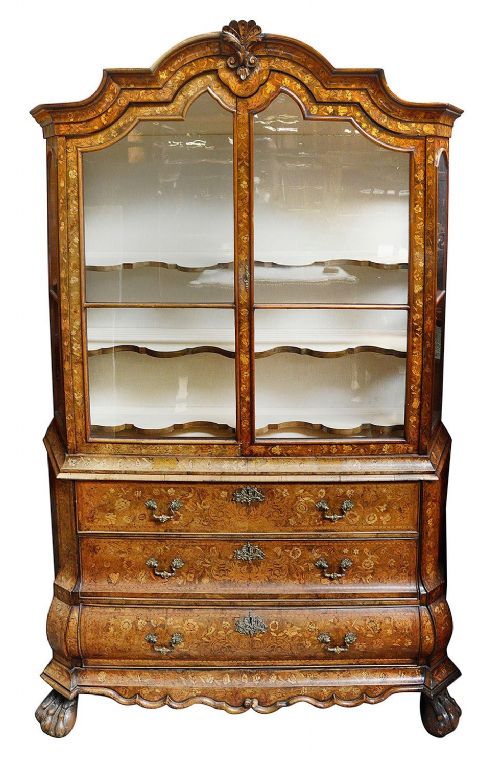
A floral inlaid bureau cabinet brings together a sloping writing desk and a display upper, all rich with wood marquetry.
Floral Inlaid Bureau Cabinet
A floral inlaid bureau cabinet combines a fitted writing compartment with a bookcase or display upper section. These pieces span centuries of cabinet making, appearing in Dutch Baroque, Georgian and revival styles. The form serves both workspace and display needs within a single footprint.
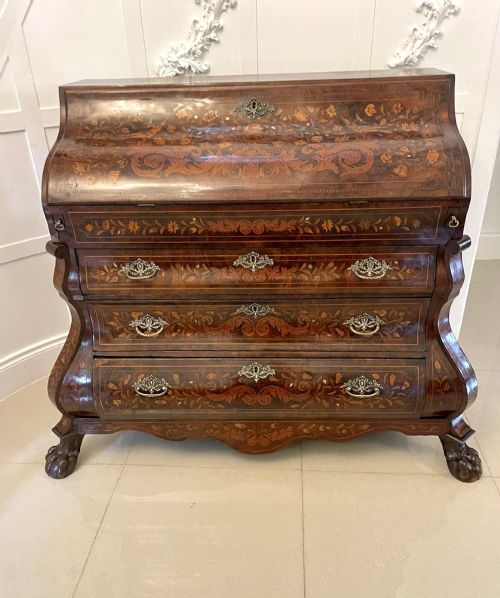
The defining characteristic across these varied forms is the meticulous floral marquetry. Garden blooms, urns and scrolling foliage sweep across the sloping fall, the drawer fronts and the crowning hoods. Buyers select these cabinets for their grand architectural presence and intricate surface decoration.
How they were made
Cabinet makers constructed these carcases using solid foundational timbers like oak or walnut, applied with choice veneers of burr walnut, fruitwood and rosewood. Delicate botanical motifs were hand cut from contrasting wood slices and fitted precisely into carved recesses across the surfaces. This marquetry technique required immense patience and steady knife work.
Brass hardware, including escutcheons, drop handles and occasionally ormolu mounts, secures the drawers and doors. Glass panels are fitted into wooden tracery for the upper bookcase sections, protecting the interior contents while maintaining visibility. Hand cut dovetails join the internal drawers together, marking the work of traditional joinery.
Hidden drawers inside the writing desk often required pressing secret interior springs to release their latch.
What varies in quality
The fineness of the floral marquetry dictates the tier of the piece. Superior examples display subtle shading in the wood petals and stems, achieved by scorching edges in hot sand before gluing them down. Lesser panels rely on flat, uniform veneer cuts with minimal tonal depth.
Architectural proportion and timber selection set the finer cabinets apart. Burr walnut figures with deep swirling patterns command attention, especially when matched symmetrically across the fall front and drawer banks. Robust carcase construction ensures the heavy upper bookcase rests securely on the lower bureau without sagging.
The Floral Inlaid Bureau Cabinet Glossary
- Marquetry
- Decorative veneer work forming pictures or patterns using different coloured woods. Craftsmen assemble these wooden puzzles piece by piece onto the carcase.
- Bureau bookcase
- A writing desk with a hinged sloping front, surmounted by a glazed or panelled cabinet for books. This combination piece serves both study and storage functions.
- Bombe
- A swelling, outward curved profile seen on drawer fronts and cabinet sides. This curved shaping demands advanced carpentry and careful veneer application.
- Escritoire
- A writing cabinet featuring a fall front or drawer that pulls down to reveal a writing surface and small compartments. It offers a compact alternative to larger bureaus.
- Secretaire abattant
- A tall vertical cabinet with a drop down writing flap concealing internal pigeonholes. The upper section usually houses a concealed drawer beneath the top cornice.
Floral Inlaid Bureau Cabinet: Frequently Asked Questions
How do I clean the marquetry surface?
Dust gently with a soft, dry cloth to protect the delicate veneer and inlaid details. Avoid harsh chemical polishes that can degrade the historic finish.
Feed the timber periodically with a traditional beeswax to maintain the natural lustre of the walnut and fruitwood.
Are the upper cabinets removable?
Many bureau bookcases separate into two distinct sections, making transport and placement considerably easier. The upper bookcase simply lifts off the lower bureau chest base.
Larger double dome or tall architectural editions require careful lifting by experienced handlers due to their significant height and weight.
What is inside the bureau section?
Lifting or pulling down the writing flap reveals an arrangement of small drawers, pigeonholes and occasionally a secret compartment. This inner nest provided a private space for correspondence and valuables.
The flat baize or leather writing surface provides a stable area for daily paperwork.
How do I date a marquetry cabinet?
Examine the secondary timbers inside the drawer linings, such as oak or pine, alongside the construction methods like hand cut dovetails. Stylistic cues like bombé curves or double dome hoods point to specific decades.
Floral marquetry styles evolved from stiff formal arrangements in earlier periods to more naturalistic sprays by the nineteenth century.